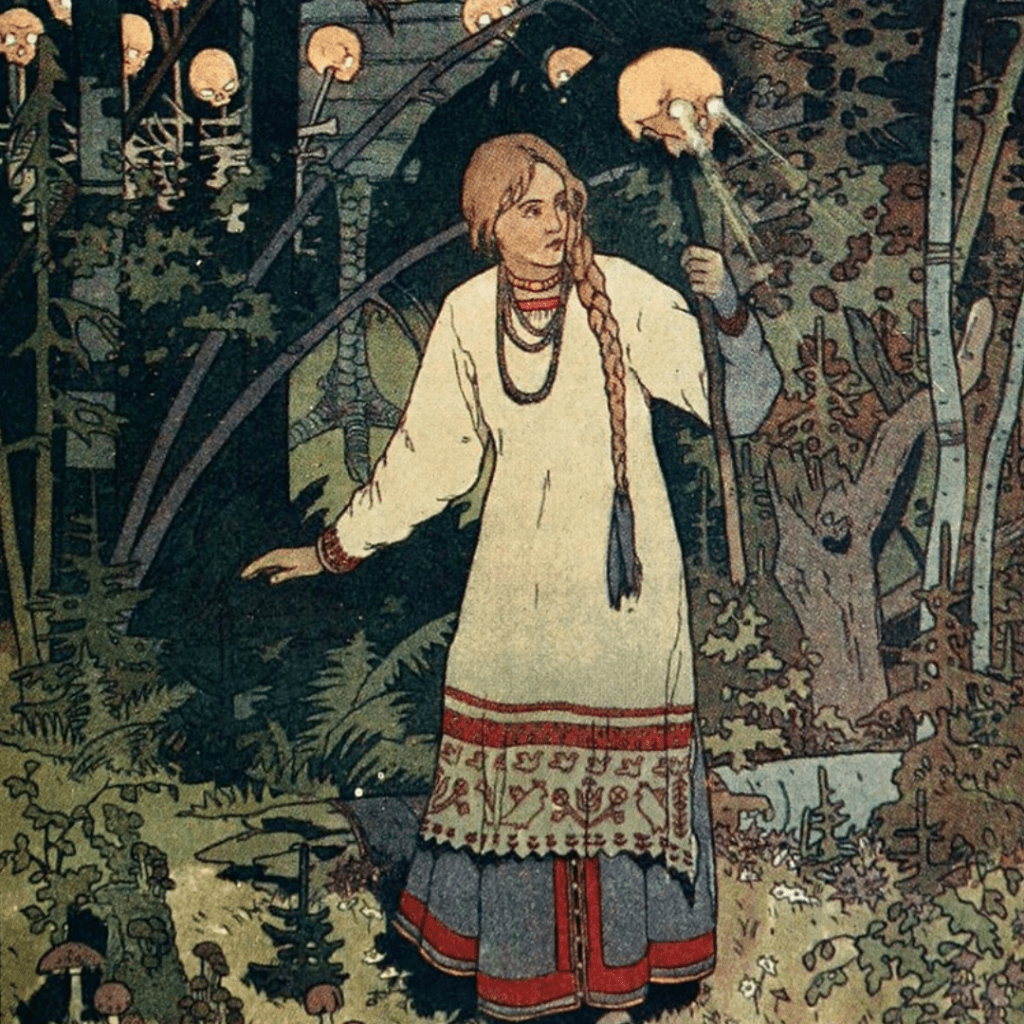
In her old age, Vasilisa still feeds the doll in her pocket, the one who holds her mother’s blessing, and asks questions about the past. ‘How did you manage to separate grains of soil from poppy seeds?’
‘Each seed,’ says the doll, ‘was as big as a world.’
‘And the rotten corn from the good?’
‘It was as easy as separating words from silence,’ the doll assured her. ‘Word-created worlds decay, while those that emerge from silence flourish.’
Vasilisa remembers her childhood, her stepfamily cloaking her in insults like rancid flesh. The stench of it, she feels, is still upon her.
‘If you and I were kernels of corn,’ she tells her doll, ‘I would be rotten, and you would be sound.’
‘That’s not what Baba Yaga thought,’ refuted the doll.
Vasilisa, at her loom, remembers. The old hag saw through the fetid cloak of language to the glowing, light-giving bones within. The memory flows through Vasilisa’s fingers. Warp and weft entwine to shape a fabric as wide as a world.
Would you like to know more about this story? Would you like to know more about this story? I discuss it in Episode 111 of Structured Visions, The linguistics of tapping. You can also sign up to the Grammar for Dreamers newsletter to get monthly updates on the ideas that inspire my work.
 Grammar for Dreamers