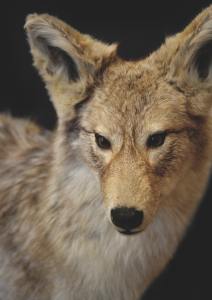
Coyote’s trick

Photo by Ben Hershey

Grammaticalization often corresponds to language change processes where linguistic expressions shift from objective to subjective meanings.

In the beginning, before there were people, the world was made of language. 

The buds on springtime hawthorns were unvoiced plosives. The caterpillars on their branches, focused interrogatives.

Tortoise was a non-finite clause.

One day, he decided to make people.

‘What will you make them from?’ Coyote asked. 

‘Water,’ said Tortoise. He thought it a good choice because it flowed within and around all the world’s linguistic forms. 

But the water people wouldn’t hold their shape. Making one was easy enough, but when he tried to make more than one, they merged into one another and lost their individuality.

Coyote laughed at Tortoise’s failed attempts. 

‘To keep each of your people unique,’ he advised, ‘you’ll need to make containers for them.’

‘What should I use to make the containers?’ Tortoise asked.  

‘Language,’ said Coyote.

So Tortoise set off on a long journey, gathering samples of the earth’s language from all the four directions. When he returned, he ground the language into dust. He moistened the resulting powder to make clay, which he shaped into vessels. These contained his new people beautifully. 

Pleased with his work, he settled in for a much needed rest. 

While Tortoise slept, Coyote crept in secret to the place where the new people lived. 

‘I know something,’ he whispered, ‘that Tortoise hopes you’ll never discover.’

The people looked up in surprise. 

Gently Coyote reached inside their mouths and scraped out some dried clay with his sharp claw. The fine dust in his outstretched paw caught glints of sunlight and sparkled before them. 

‘This is language,’ he said. ‘You’re the only creatures who have it. With language, you can rule the world.’

When he woke up from his long sleep, Tortoise saw the results of Coyote’s trickery, and he despaired.

Would you like to know more about this story? Watch the video I made about it. I also discuss ‘Coyote’s trick’ in Episode 64 of Structured Visions.

The oppressive instability of being

As deictic expressions are frequently egocentric, the center often consists of the speaker at the time and place of the utterance and, additionally, the place in the discourse and relevant social factors.

When Amy heard the classroom door open at the end of the school day she kept her focus on the surface of her desk. The unexpected visitor was likely to be Lydia, who didn’t do well with eye contact.

‘Miss?’

In her peripheral vision Amy could just make out the dishevelled dark curls that framed the girl’s ashen, spot-ridden face. She noticed the crevices that had worn into her forehead, the eyebrows tensed above deep-set, troubled eyes.

‘Yes, Lydia?’ Amy fixed her attention on the English language worksheets she was marking.

‘We’re making time machines in History, Miss.’

‘Time machines,’ repeated Amy, in the slow, deep tone that kept Lydia calm. In the subsequent silence she tried to recall the details of Gareth Jacobs’s most recent pedagogical experiment.

‘I can’t go back in time, Miss.’

Gareth wouldn’t have anticipated that Lydia would be troubled by this project. Nobody could have. None of the teaching staff knew quite what to do with Lydia. She’d mystified the specialists.

Even Amy, the only teacher Lydia had ever opened up to (if these regular after-school interactions counted as ‘opening up’), could rarely put her finger on what specifically triggered Lydia’s manifold anxieties. She certainly couldn’t understand what was troubling her about this particular project, and why it had only occurred to her to worry about it now.

She pictured the child-constructed cardboard monstrosities that were currently cluttering Gareth’s classroom. She caught a glimpse last week of pupils fastening flimsy foil pie plates onto the tops of the packing crates Gareth had somehow acquired. Satellite dishes, she guessed. By now they’d have moved on to the interior design stage of the project. She pictured dashboards sticky with glitter and glue, plastic dials repurposed from board game spinners, which the time travellers could adjust to set their course in their journey to the past.

Lydia’s hands covered her face now. She looked out through the gaps in her fingers.

Amy imagined those same fingers positioning a red plastic arrow to point toward some date from the Year 7 History curriculum—1066, or what year was the Gunpowder Plot? 1605. She wondered which historical period would trouble Lydia most. Did they do slavery in Year 7?

‘You can’t go back in time?’

She rifled through the language papers to take the pressure off the child. They were grammar worksheets, designed to help the pupils conceptualise tense and aspect. Her own pupils had completed the task complacently, if unenthusiastically, colouring in expansive rectangles on a timeline for past progressive and restrained, no-nonsense black dots for past simple. I was minding my own business when you interrupted me. The arrow on the timeline pointed backward, to what had come before the present moment.

None of her children had been troubled by anything about the exercise, not the linear illustration of time, not the leftward pointing arrow illustrating the infinite ineffability of time gone by.

‘Miss, if I go to the past, I won’t be there.’

Amy shifted her gaze from the grammar papers to the anguish on Lydia’s face, and it hit her. The other pupils did not worry about time travel because they had no experience of the precariousness of their own existence. 

So rooted were they in their solid notions of selfhood that they could not see it: any point on the timeline to the left of 2010 indexed a world that ruthlessly refused to contain them.

What could she say to Lydia now that would relieve her of the oppressive instability of her being?

‘How do you think time machines work?’ she asked.

‘You get inside them, and they travel to the past.’

‘Is that the way Mr Jacobs explained it?’

The fingers moved from Lydia’s face to below her chin. ‘I can’t remember,’ she admitted.

That was fortunate.

‘Time machines don’t actually travel through time,’ Amy said, committing her own words to memory so she could brief Gareth later. ‘The way they work is by establishing a deictic centre.’

‘A deictic-’ 

‘Centre,’ Amy confirmed. ‘The time machine produces a sort of force field around you that says you are here now. That keeps you safe and secure. Centred, right?’

Lydia dropped her hands to her sides. ‘So how do you get to the past?’ she asked.

‘You don’t,’ said Amy. ‘Once you’re in your deictic centre, you bring the past to you. You sort of reel it in, like a kite.’

Amy watched this explanation lock into place.

‘OK, Miss,’ Lydia said, and she’d left the room before Amy could say more.

For many long moments Amy found herself staring at the space that had once contained Lydia.

She felt a gripping sensation in her chest, like a fist clutching a reel of lengthening string, the kite flying farther and farther away, a black dot against an insatiable sky.

Would you like to know more about this story? Watch the video I made about it.

The first person

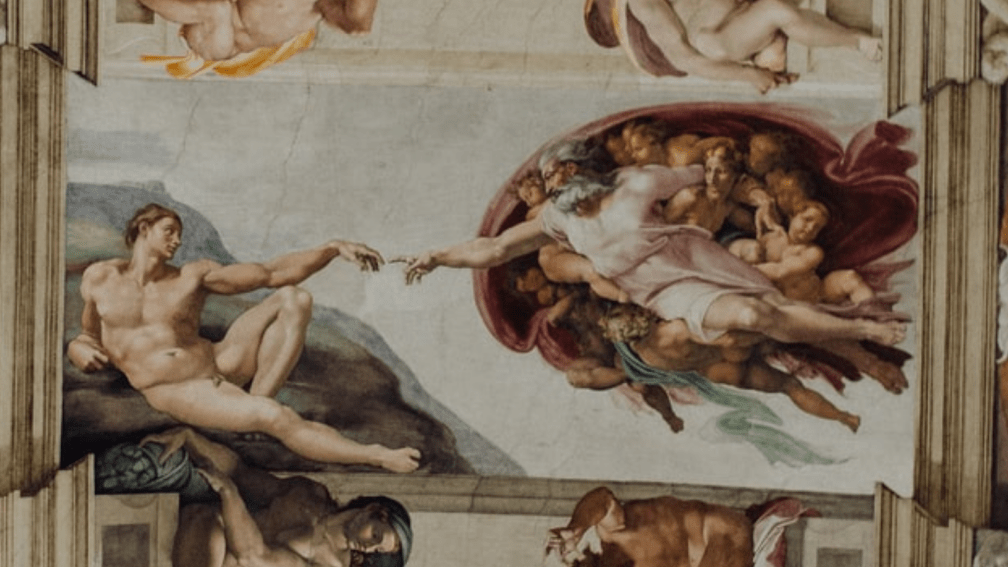
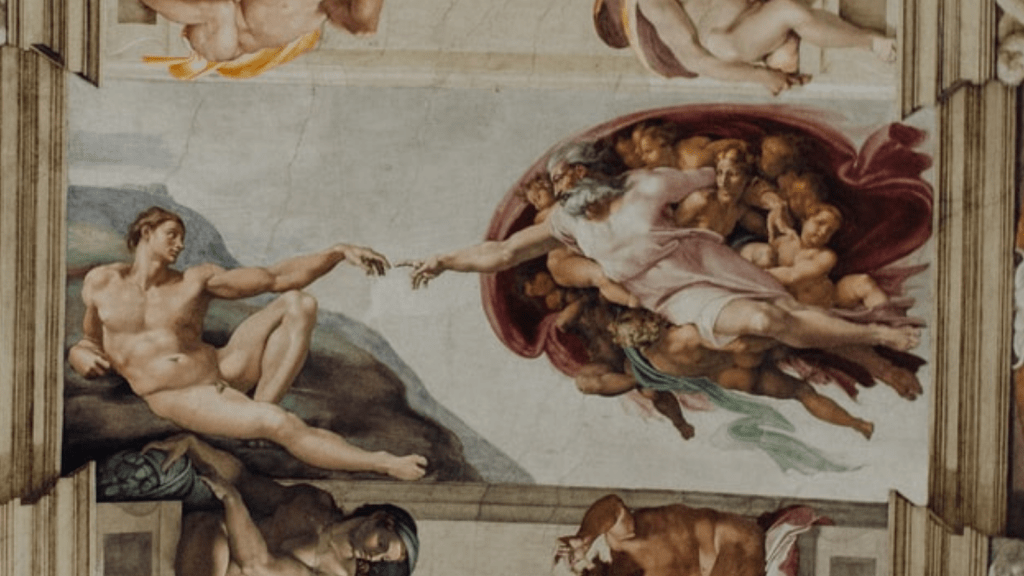
Close up of the Sistene Chapel: The Creation of Adam
Photo by Calvin Craig

Grammatical personhood has to do with levels of involvement in a linguistic expression. English and many other languages have three levels of personhood. It’s possible to have more than three levels of personhood. Blackfoot, a Native American language, has five.

At the end of the school day Zoë’s mother was waiting at the gates to walk her home. ‘Who was the first person?’ Zoë asked.

‘The first person to do what?’

‘Just, the first person. The first person there ever was.’ Her friend Holly had told her that the first person was called Adam, and he was made by God out of dust and he named all the animals. It was absurd—how could anybody know who the first person was? The thought made her head spin.

‘That sounds like a question for Uncle Joe. You can ask him when we get home.’

‘Uncle Joe’s here?’ It was always exciting to hear that Uncle Joe had stopped by, out of the blue, to stay with them for a couple of days. Uncle Joe was the best person she knew. He was big and furry, like a bear. He was also a little bit mad, but not in a scary way.

She found him sitting in the conservatory drinking a mug of milky tea. She gave him a bourbon biscuit to dunk. ‘Who was the first person, Uncle Joe?’ she asked.

When he smiled his whole beard moved, like a hedgehog waking up.

‘The first person isn’t an actual person, Zoë. It’s a concept.’

His eyes were like tiny blue eggs hidden in a nest of eyebrows.

‘It wasn’t some guy called Adam?’ She couldn’t wait to set Holly straight.

‘Well, it might’ve been called Adam. Concepts can have names. Most of them do.’

He’d left the biscuit too long in his tea. He pressed the remaining bit into his mouth. Some soggy crumbs lingered on his moustache.

‘So tell me about the first person,’ Zoë said.

‘The first person is a linguistic construct. Linguistic means language,’ he remembered to tell her. ‘In the beginning, language flowed over the earth, like the weather. It passed over everything, living and non-living, like the wind and rain, always in motion, always changing.’

Zoë had learned weather patterns in science class. They’d watched a video of clouds moving over the globe. She ate another biscuit and waited.

‘Then one day, language got stuck.’

‘It got stuck? How?’ The weather never got stuck—not in any of the videos Zoë had seen.

‘It got sucked into a human body, and the language thought that body was its own. The body and the language together began to imagine that they were a person. Me, me, me, me, they said. They thought they were the first person.’

‘Were they called Adam?’

‘Maybe,’ said Uncle Joe.

‘So who was the second person?’

‘There were lots of second persons,’ Uncle Joe said. ‘Every time the language-body saw another human body, it called that human body you. You, you, you, you. And each time that happened a little bit of language would enter into the second person, and they would believe they were the first person—me, me, me, me.

‘Wait. Were all of them called Adam?’

‘Probably not.’

‘Oh.’ Zoë wondered what it would be like to think you were the first person when you weren’t. ‘So how did language get unstuck?’ she asked.

Uncle Joe watched the swirling chunks of biscuit drowning in his mug. ‘It didn’t,’ he said. ‘Language stayed stuck.’ A heavy sorrow passed over his face, like a dark cloud, unmoving.

‘Oh,’ said Zoë. For a brief moment she knew how her uncle felt, like something exquisitely precious had been lost, like the only hope of retrieving it would be for everyone to go a little mad.

Listen to my podcast episode on this story here.

Kwinchuk

Cracking white paint
Photo by the blowup

There are two forms of the passive voice in English: the BE passive and the GET passive. With GET passives, the meaning is ‘dynamic’, which means it expresses an action rather than a state.

Tania Bettleheim can’t remember her PhD supervisor’s name. It’s awkward. She should have glanced at the plaque on the office door before she came in.

She was too excited about her discovery to think of it. She’ll have a look on the way out.

‘So Kwinchuk lacks a copular verb, that’s what you’re saying?’ asks what’s-her-name.

Tania nods enthusiastically. It had been a eureka moment to figure that out, after the painstaking weeks she’d spent acquiring enough of the language to begin to chart its grammar. No one before had studied Kwinchuk. It would have been humiliating to come back with nothing.

But she hasn’t come back with nothing. She’s come back with a linguistic discovery of monumental import. The copular verbs thing is just the beginning.

Her mentor seems unconvinced. ‘I’d have expected in such a case for the copula to be inflected on a stative adjective stem. Did you consider the possibility of an unmarked zero form?’

‘It’s not zero marked,’ Tania insisted. ‘There’s a verb in the copular slot.’

‘A verb in the copular slot is necessarily a copular verb, Ms Bettelheim.’

‘But Professor, Professor, ehm…’

Perhaps this conversation would be going better if there weren’t so many distractions. Like not knowing what to call her supervisor. And those cracks in the walls. Tania’s sure these have been expanding in the course of this meeting, thin grey lines branching through the white paint like tree diagrams, growing more complex with each passing second.

‘Copular verbs express stative meanings,’ Tania explains. ‘The verb that appears in that slot in Kwinchuk is always dynamic. The nearest equivalent in English I can find is auxiliary “get”. In Kwinchuk it is impossible to say something like “I am happy”, except to express it dynamically.’

‘I get happy?’ suggests her supervisor.

‘Exactly!’ says Tania. She can tell her enthusiasm is not shared. The cracks in the walls are still spreading. Chunks of plaster are dropping from them. Her supervisor mindlessly stirs the falling white powder into her coffee.

‘Where’s the evidence of equivalence with the English “get” auxiliary?’ she demands.

‘It’s consistent with how the Kwinchuk experience their world,’ Tania argues. ‘Nothing for them is ever at rest, nothing ever simply is. Everything’s an event. Everything’s a story. A Kwinchuk has no way of saying something like, “That’s just the way things are.” They’d have to say something like, “Things got hard.” And so all their evaluations inevitably imply another eventive possibility, such as, “Things could get better.”’

It does not look as though Professor No Name thinks things could get better. The cracks in the walls have grown to gaping holes, and the masonry is now crumbling around them. The ceiling is buckling, and if Tania doesn’t leave immediately she’ll be trapped in a pile of rubble.

If she turns back now in her flight, she’ll catch a glimpse of the plaque that has fallen from the Professor’s door. She’ll see her own name engraved upon it in gold-painted letters.

She does not look.

She gets away.

In charge

Photo by milan degraeve

Utterances are called ‘performative’ when voicing them changes social reality in some way.

‘What does “in charge” mean?’

‘Why do you ask?’ Amy said. She never gave direct answers, always responding with questions of her own. ‘Where did you hear that term?’

Amy was his LCSW, which meant licenced clinical social worker. Joshua went to her office every Tuesday after school.

‘Before Mom went out yesterday she said to Marcie, “You’re in charge.”’

‘It means your mother was making your sister responsible while she was gone.’

‘Oh.’

‘Joshua, how long was your mom away for?’

He didn’t know. He was asleep when she got back.

After the appointment he sat next to the aquarium in the waiting room to wait for his mom. The two fish swam around each other in threatening spirals. He named the yellow one Joshua and the blue one Marcie.

He put his face close to the glass and whispered a decree.

‘Joshua,’ he said. ‘You’re in charge.’

The following Tuesday, the blue fish was gone. 

‘What happened to Marcie?’ he asked.

‘What do you mean?’ Amy was alarmed. ‘Did something happen to your sister?’

‘I didn’t mean to say Marcie. I meant to say what happened to the blue fish.’

Amy looked glum. ‘It died last week,’ she said. ‘I found it floating in the aquarium when I came in on Wednesday morning.’

‘Oh,’ said Joshua.

‘Did you name the blue fish Marcie?’

Joshua didn’t answer.

Marcie had been replaced with a different fish, an orange one. Joshua named it ‘Amy’. 

‘You’re in charge,’ he told Amy.

The following Tuesday, Joshua was gone.

‘Why are all your fish dying?’ he asked his LCSW.

‘It was the water,’ Amy said. ‘There was too much chlorine in it.’

‘Is it better now?’

Amy nodded. ‘We had a filter installed.’

Relief washed over Joshua like a clean, safe current.

There were lots of fish now, a bustling undersea world of colours and shapes. Floating in the tank was a small air pump. Joshua watched the bubbles rising from it, buoyant and inexhaustible.

The fish darted about, fearless and carefree. There were too many to keep track of, so he spoke his message to the spaces between them, to the life-giving liquid that kept them safe and thriving.

‘You’re in charge,’ he said to the water. He felt his body relax. Quiet tears flowed in a study stream down his cheeks.

Listen to my podcast episode on this story here.

Origo

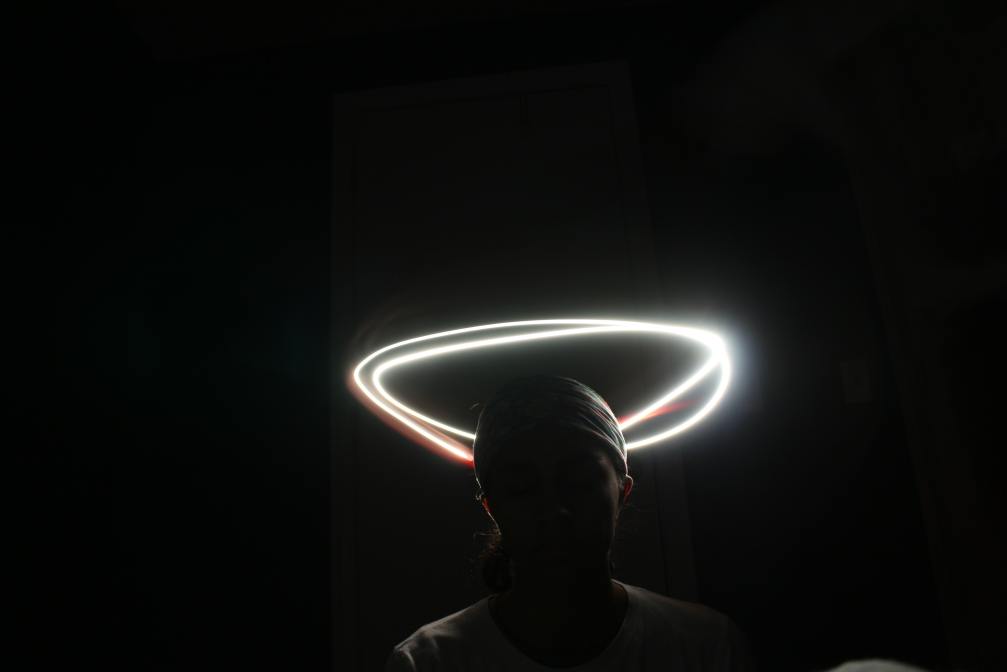
Photo by Adrian Smith

The deictic centre—sometimes called the ‘origo’ or zero-point—represents the originating source in relation to which deictic expressions gain their context-dependent meaning.

In Renaissance art, angels and other spiritual emissaries were painted with haloes. Sir Oliver Iveson now knew why.

The one he fashioned for himself out of tin foil was crude but effective. When he wore it, he could communicate with extraterrestrial intelligence.

‘You’re highly respected by the scientific community,’ said the psychiatrist they’d hired to perform his evaluation. Her name was Dr Mary Bryan.

He had no need of reassurance. It had been only six months since Stockholm.

‘For as long as I can remember,’ he’d said in his acceptance speech, ‘I’ve looked with longing to the stars, to communicate with the intelligent beings I was certain were there.’ He squinted into the dazzling lights. 

‘I’ve read your Nobel address,’ Dr Bryan said. She pulled a printed sheet from among the papers on her desk. ‘You write, several times, of failure.’

She read the passages back to him. He’d failed in his childhood dreams of communicating with the people in the stars. But it was his dogged pursuit of this unlikely mission that had produced theoretical discoveries that innovated communication systems on earth.

‘Do you still feel that you’ve failed, even after all the recognition you’ve received for your work?’

‘I haven’t failed.’

‘You were dishonest in your speech?’

‘No. I’ve succeeded since then.’

‘You’ve succeeded at locating extraterrestrial life? And communicating with them? How is that possible?’

Sir Oliver leaned forward in his seat. He rested his elbows on his thighs. ‘If I were a three-year-old boy, and I asked you where the stars were, what would you say?’

‘I would tell a three-year-old boy that the stars are up there,’ she said, pointing to the ceiling. ‘Up there in the sky.’

‘And if I were to ask you, What is up? What is there? What would you say then?’

‘They’re words that are relative to the position of the speaker, I suppose,’ she said. ‘Up is above me. Here is where I am. There is where I am not.’

Sir Oliver nodded excitedly. ‘And if you did not have these words? Without language, there would be no speaker, no me, and thus no position relative to me. There would be no up, no there.’

He watched her scribble something on her notepad. He waited for her to look up again.

‘I have come to an understanding,’ he said, ‘of why the technologies I developed in the lab could never succeed at discovering and communicating with extraterrestrial life. They were being blocked by another, more primitive technology.’

‘What technology is that?’

‘Speech. Human language. The stuff that positions the stars as up, as far away, as out there, out of reach.’

‘That the stars are far away from us is an empirical, measurable fact, Sir Oliver. It’s true regardless of the language we use to describe it.’

Sir Oliver shook his head. ‘Linguistic expressions,’ he explained, ‘require an originating source, a zero point, which places the self at the centre, relegating the rest of the universe’—he swept his arms above his head, grandly—‘to somewhere out there.’

The doctor was no longer bothering to mask her disapproval. Sir Oliver noticed the force with which she pressed her pen into the page, underlining something she’d written previously, then repeating the gesture with even more urgency.

He respected her skepticism. He’d have to offer proof.

He removed a folded silver sheet from his shirt pocket. It rustled in his hands like distant, high-pitched thunder.

Dr Bryan looked at the tin foil with alarm. ‘Sir Oliver,’ she warned.

He saw her eyes dart behind him, toward the door.

He worked quickly, shaping the foil into a snake, which quickly transformed to ouroboros, an empty-centred halo which would free its wearer of the deictic positioning of language, from the tyrannical constraints of up and down, I and you, here and there.

He rose slowly so as not to spook her further. He eased toward her, making senseless soothing sounds, as if she were a frightened deer stuck in a barbed wire fence.

Carefully he centred the halo on the crown of her head.

He stood back to witness the transfiguration, the erasure of distance, the blissful annihilation of the self, and the miraculous opening of her portal to the stars.

Echos and their others

In linguistics, an echo response is a way of answering a polar question without using words for yes or no.

Everything Pernicus knows about the Echo People of the Northern Plains comes from Introduction to Astroanthropology, a required text from his early studies.

Each member of the remote Echo tribe is born with an other, and no Echo can survive if his other perishes. The phenomenon has a particularly interesting linguistic component. Each utterance an Echo voices is immediately restated by his other, with reverse polarity. 

If an Echo child tells his mother, ‘I am hungry,’ his other protests, ‘I am not.’

Pernicus had puzzled over how the mother’s response would be calibrated. To offer the child food (‘Eat this’) would provoke her own other to refuse him food (‘Don’t eat this’).

The Echos who survived, Pernicus reasoned, would be those who cultivated rebelliousness and greed.

How strange that his aeronautical accident should leave him stranded in the same Northern Plains that he’d puzzled over those many years ago. The fates must have conspired to expose the naivety of his undergraduate notions. 

‘I am hungry,’ says the Echo child.

‘I’m not,’ says his other. 

‘I’m surprised,’ says the mother. She feeds the child’s other. 

‘I’m not,’ says the mother’s other. She feeds the child. 


Listen to my podcast episode on this story here.

The words of your language

Photo by Tegan Mierle

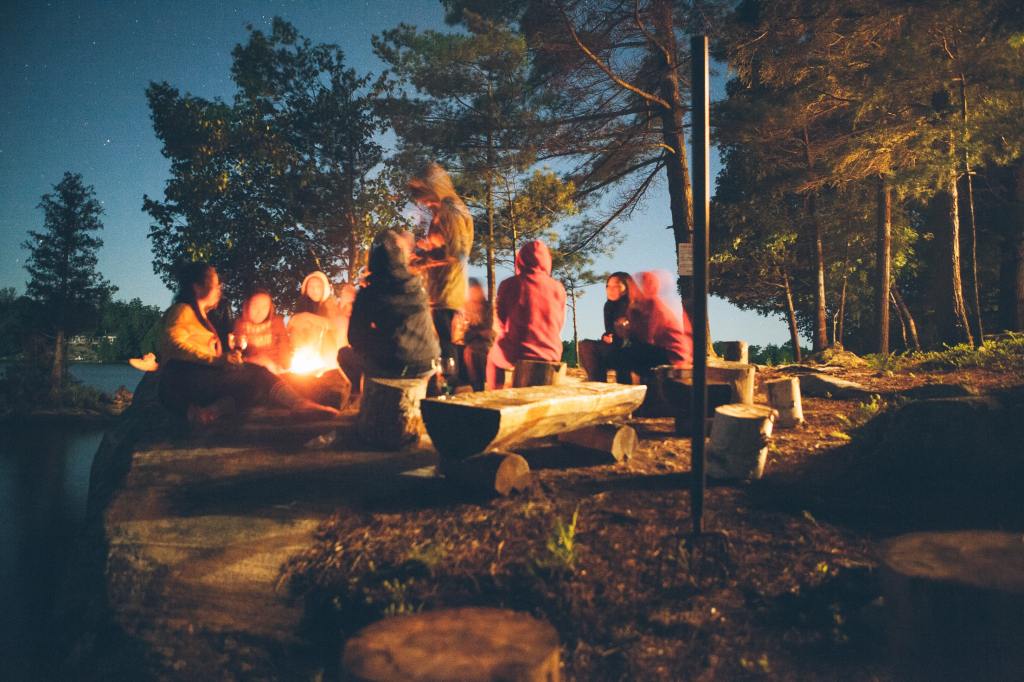
Billy’s just announced the next topic.

‘The one that got away.’

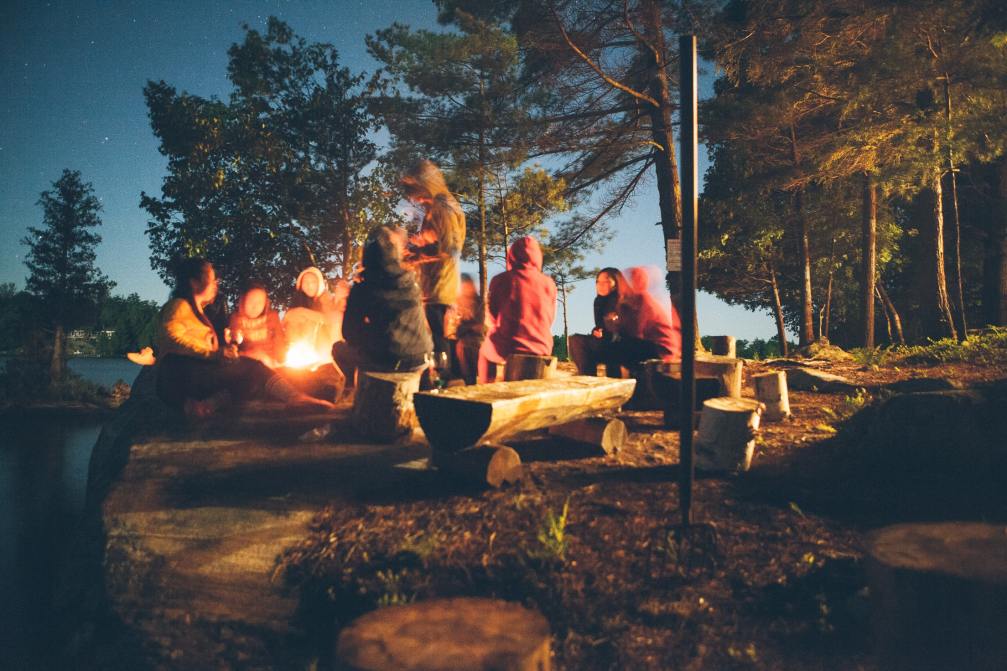
I’m on my third can of Stella and I need a piss. But Andrew’s already taken up the challenge and it seems rude to walk away. Besides, as soon as I leave the campfire I’ll be ambushed by the swarm of midges I know is waiting in the dark, surrounding our badly protected little company.

And then there’s the fire itself, which holds me in its seductive trance. It ripples the air, ripping otherworldly openings in the spaces between the dancing licks of flame.

They’re portals, I think. You could travel into one of them, if you didn’t mind getting scorched.

I hold my Stella at arm’s reach. It’s been a while since I’ve been this buzzed.

‘The one that got away,’ repeats Andrew.

As he plays for time, my mind fixates on the phrase itself, on its structure, its underlying grammatical patterns. It’s a noun phrase, though it doesn’t have any nouns in it. ‘The’ is a determiner, ‘one’ is a pronoun, and the rest of it is a relative clause. But how can a pronoun follow a determiner? And could you put any other determiner in front of ‘one’? I try it out, as Leila has taught me to do.

A one that got away.

My one that got away.

That I’ll never be able to ask Leila about this hits me like a punch in the gut.

Read the rest of ‘The Words of Your Language’ at After Happy Hour Review, Issue 13, p. 55-62.

Would you like to know more about this story? I discuss it in Episode 64 of Structured Visions.