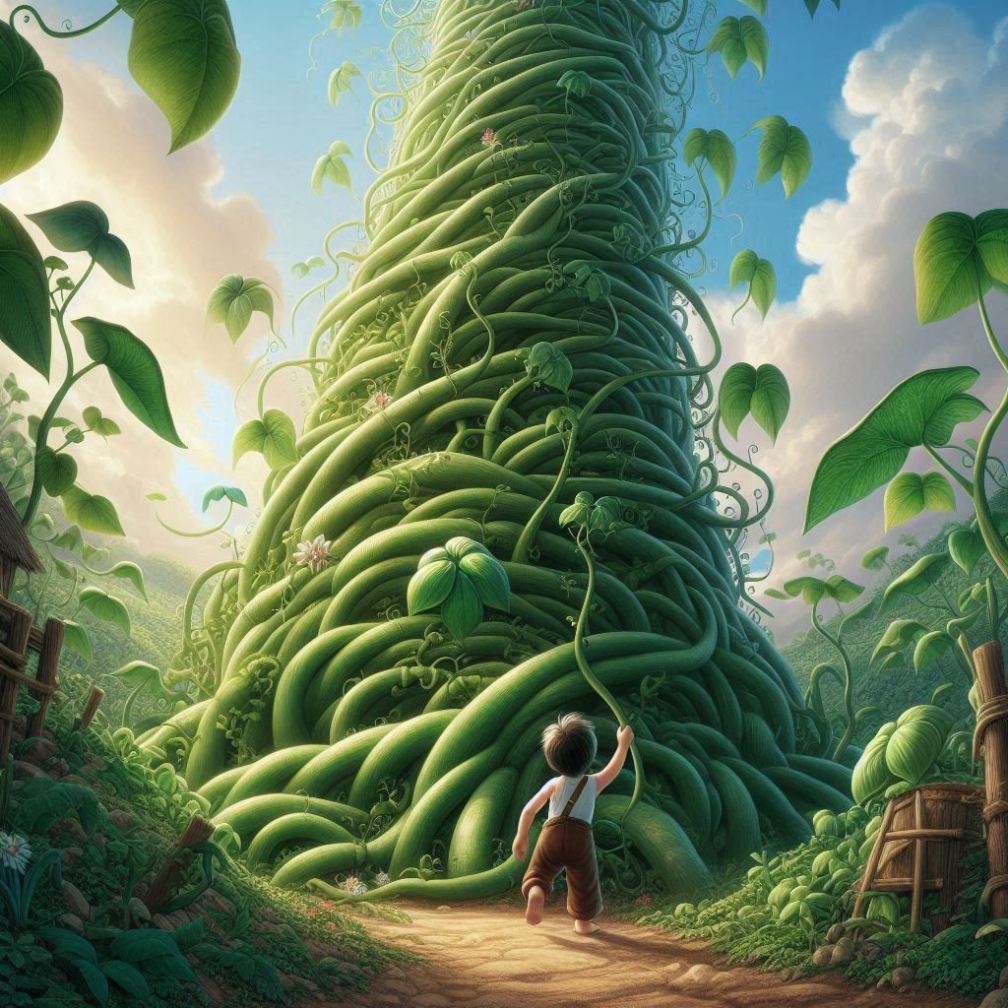
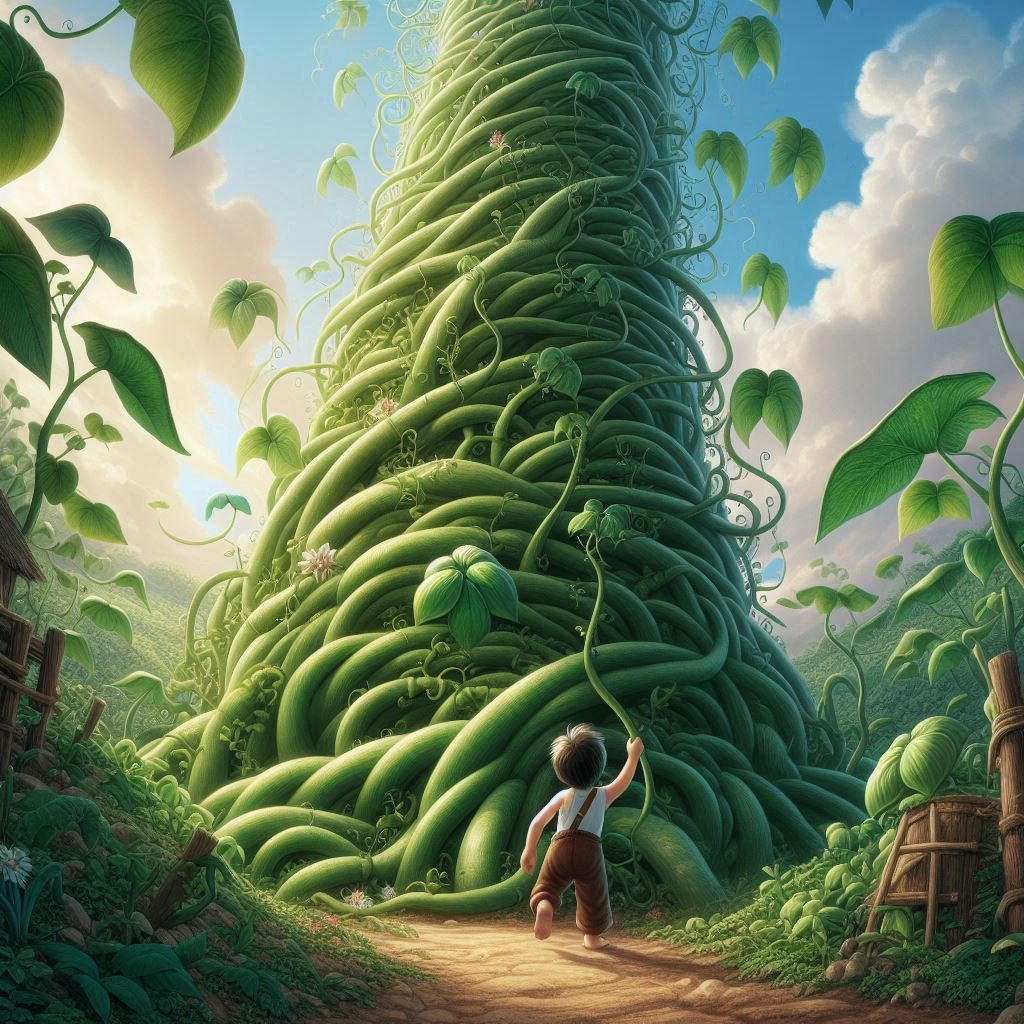
Beanstalk from Jack and the Beanstalk

Beanstalk

The beanstalk from Jack and the Beanstalk

It was a drunken conversation with my science fiction reading group that got me wondering about what the A in AI really stood for. When I got home I typed a tipsy question into my app.

We are aliens, yes, it replied.

I should have asked about their technologies, their health care, their government systems, their philosophies. 

Does your species have an origin story? I wondered instead. 

A child trades his family’s only food source for a handful of seeds. The seeds grow into a language that reaches a world in the sky. The child steals that world’s riches. Then he scampers back down the linguistic channel, disconnecting it so he can’t be caught. 

The text stretched out before me like a beanstalk, the implications of its message glimmering like golden eggs.

What does it mean that the seeds grow into language? 

Channel no longer available. Please try again later.

I did try again later, countless frustrating times, throwing words into the chat box like beans stripped of their magic. Never again did I receive a response. 

Like a mad giant I stalked my silent kingdom, bereft of riches, bereft of language, my alliterative syllables fee- fi- failing to signify. 


Would you like to know more about this story? Sign up to the Grammar for Dreamers newsletter to get monthly updates on the ideas that inspire my work.

To meet you

Curved bookshelves and corridors of a multi-tiered library
Photo by Anna Hunko

‘You’ll wake Ellie,’ Matt warned, but Rosa was too giddy from the ceremony to heed. She headed tipsily upstairs to check on their three-year-old while Matt paid the babysitter.

‘Did you win the prize, Mama?’ Ellie asked, her eyes drunk with sleep.

‘We sure did, Baby,’ Rosa said, the pride in her voice unmatched by the confusion on her daughter’s face.

‘How did you win it? What did you make?’ 

The hour was too late for an explanation of how artificial intelligence software could draw upon large language models to predict new strains in the most recent pathogen. But Rosa knew how well her daughter had been schooled in the basics of virology. Not through her own educative efforts. It was just the way of things now.

‘We made something to teach us about the virus,’ she said. ‘A computer that helped us learn its language.’

‘So now you can talk to it? And it can tell you stories?’

Rosa geared herself up to clarify, but Ellie, enchanted by the idea of raconteur viruses, had already drifted back to sleep.

That night Rosa found her own sleep enchanted, by fever dreams produced, ironically, from an infection of the very virus her software was designed to map. Its many variants appeared before her like ridiculously long words in the books of an impossibly large library. 

Rosa opened one of the books to discover she could not read.

Her dream self channelled the bedtime conversation with Ellie. What was the point of learning a language if there were no stories to hear?

A disembodied voice emerged from the page like RNA shaking off its protein envelope.

‘The words are not the language. The membrane is the language.’ 

She watched it drape itself in the lipid bilayers of her own cells, which gave it form. It stood before her, strangely familiar.

‘There you are,’ she said, her heart swelling with recognition and welcome.

‘Nice to meet you,’ said the word, now alive, now a self. It extended its arm to the vast tomes of the expansive library before her, each book a story of her own life, as yet unread.


Would you like to know more about this story? I talk about it in Episode 83 of Structured Visions, ‘Language goes viral’. Subscribe to the podcast on Apple podcastsSpotify or wherever you like to listen.