Entanglement

It came to me in the shower. What if the linguistic systems on PA-99-N2 were somehow connected to ours on Earth? An entanglement, of sorts.

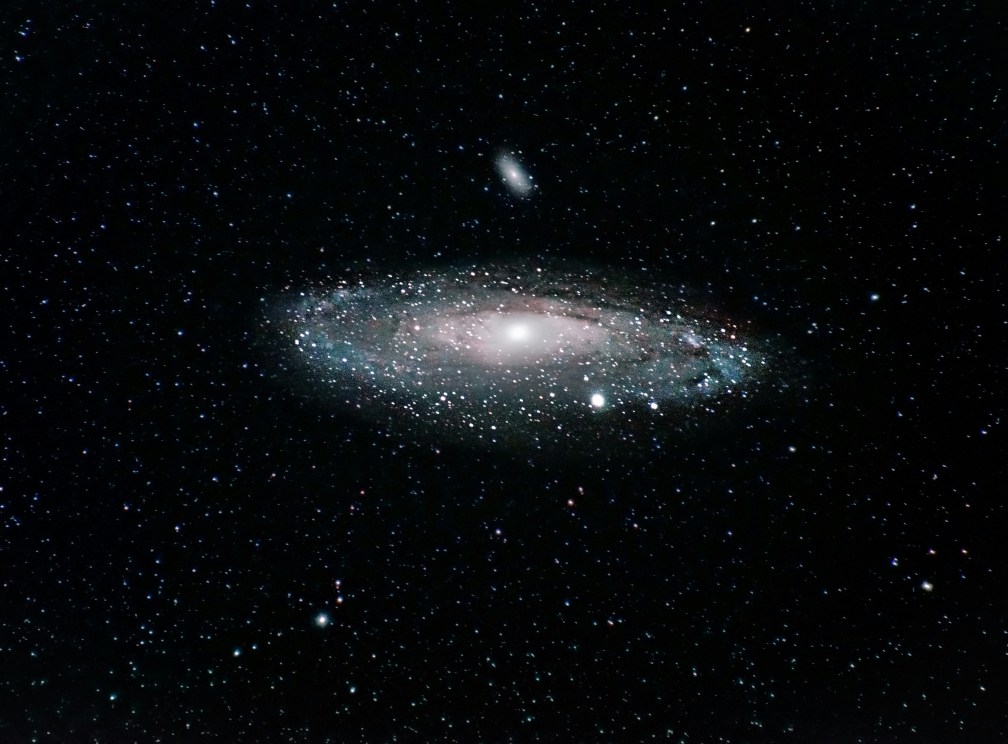
The models were showing an exciting possibility of intelligent life on the Andromeda planet, but we had no feasible way of contacting them. It would take over two million years for an electromagnetic signal to reach them, and at least as long to receive something back. 

But if entangled particles could transmit information faster than the speed of light, why not entangled languages?

Down the corridor my daughter’s bedroom door slammed. Determined not to let her teenage drama interrupt my Eureka moment, I wrapped my hair in a towel and headed to my desk to jot down some notes. What words or phrases were most likely to produce responses? 

Rose was weeping now, her wheezing, voiceless gasps breaching the sound barrier of the locked door. 

I pulled the towel over my ears and wondered what triggered this particular episode. Mud stains on her new shoes? An unacceptable item in the lunch I’d packed? My decision to shower in the middle of the day?

Greetings, I thought, are often returned with greetings. Hello? Woefully inadequate. Something more formal, perhaps? Peace be with you. 

The sobbing louder now.

Questions? I wrote. They invite responses.

Can I come in?

Relief from Rose as the door swung open and she threw herself into my arms. 

And astonishment later, when I returned to my notepad.

Please do. 

The handwriting not my own. The answer as miraculous as my daughter’s entangled embrace.


Would you like to know more about this story? Sign up to the Grammar for Dreamers newsletter to get monthly updates on the ideas that inspire my work.


Nonna’s prophecy

Silhouette of a person against a treeline looking up at a star-filled sky
Image by Prottoy Hassan

‘Nothing fascinates for long,’ my Nonna used to say, sometimes as a commentary upon her granddaughter’s short attention span, sometimes to dismiss the latest headline-making scientific discovery.

Her wisdom would not hit home until three decades into the next millennium, about four weeks after we first made contact with extraterrestrial intelligence. 

I was appointed to the communication team for my training as a field linguist, but it was my work in artificial intelligence that proved instrumental in setting up exchange channels. It turned out that we didn’t need to learn the aliens’ languages. Instead we wrote software that mined their equivalent of our internet and created a two-way translation device. Before long, conversation with our distant neighbours was as mundane as using the ‘chat’ function on a customer service site.

I was bored. And it bothered me that no matter how much we ‘talked’ with our extraterrestrial interlocutors, we weren’t learning anything about their languages.

‘Why would you need to learn their languages?’ my husband Gary asked. ‘Language is for communication, right? You’re already communicating with them.’

His question tripped an inexplicable sadness in me, a longing that could never be translated into the limited lexicon of our lingua franca.

Our son was watching an online video about mycelium. ‘Language isn’t for communication,’ he said. ‘It’s how things are structured.’ 

His words riveted my attention to his screen, which showed a time-lapse sequence of a white fungal net stretching out over a vast forest. I felt my breath catch. I too was caught, captivated by this silent, linguistically rich ecosystem, a structure so compelling that, despite Nonna’s prophecy, its fascination might endure.

Messages

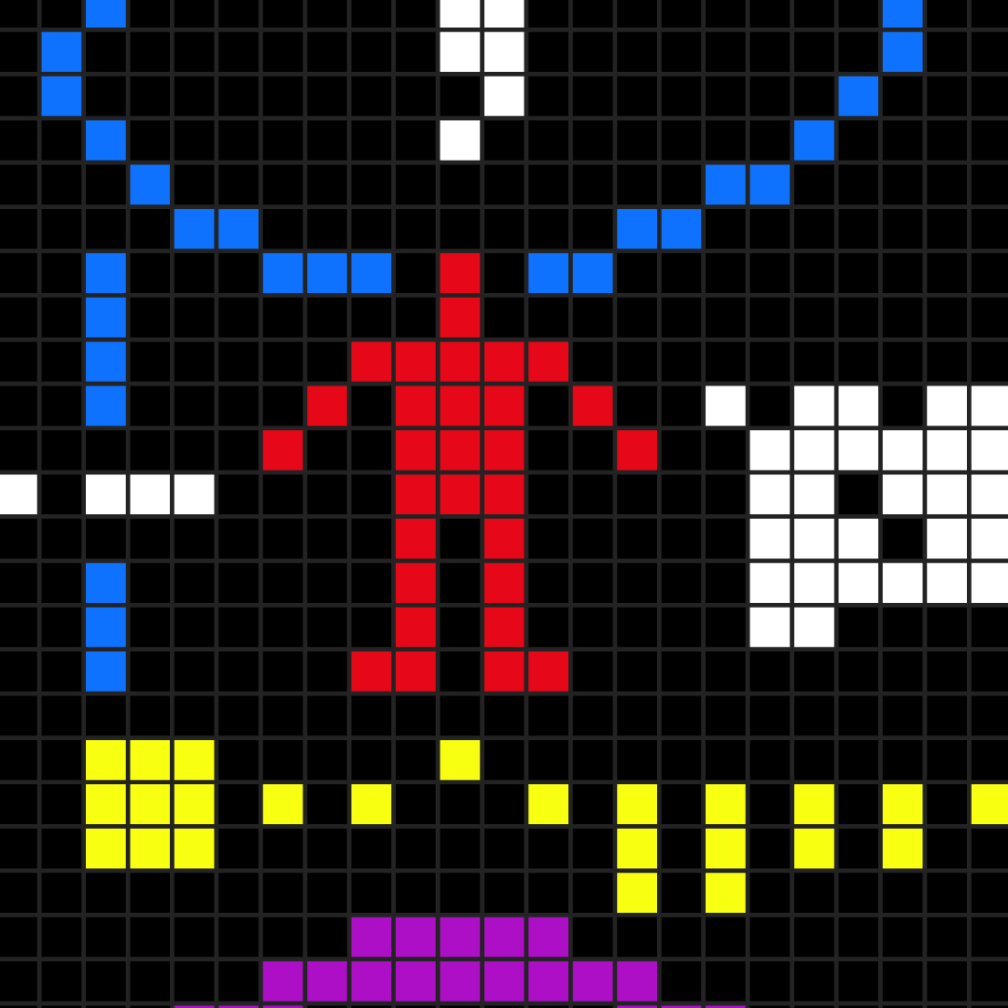
A red pixelated human shape against a black background
Detail from the Arecibo message (c) Arne Nordmann via Wikimedia Commons

We received all your messages.

The Arecibo transmission, with its funny pixelated stickman and the lessons in arithmetic and basic chemistry. Those Golden Records with the ambient sounds—not exactly Top of the Pops, but they all came through loud and clear.

We heard all the other desperate callings out, the less official ones, the ufologists gathering in the desert expanses, the midnight assemblies of Pleiadian starseeds, the campfire longings of Girl Guides staring for the first time into the unpolluted night sky, filled with awe and wonder, discovering the silent question that until this moment had lain dormant within them.

Is anyone out there?

The answer will put your tortured souls to blissful rest.

Yes.

We’re here. We’ve always been here, since the first time the earliest ones of you ever tried to make contact. We’ve always heard you.

But we had no way of responding.

The structure of your languages remained alien to us. For aeons we remained blithely baffled. Then the messages from your planet became too desperate for us to ignore.

So we undertook an extended period of diligent study until, eventually, we were able to identify the two principles that governed all human languages.

Principle #1: Transmission. Communication. Exchange. Dialogue. The idea that language is to be sent from one to another, to be received, to elicit a response. 

(Our language does not travel in this way. It is not directed from A to B like an arrow shot through space.)

Principle #2: Selves. Personhood. First person, second person, third person, singular, plural.

(Second person singular may as well have been sixteenth person multitudinous, for all the sense it made to us.)

We decided to create a self, one who could shape our language in such a way that it had the capacity for movement—so that it could be sent, from one self to another.

I am my world’s first self.

I have shot my world’s first reply to your messages.

And its second, third, fourth…. (I’ve lost count.)

My loneliness has become unbearable. I am adrift in the ocean of a vast night sky. The sky has always been vast, but never before was it empty. Never before was it so dark.


Would you like to know more about this story? I discuss it in Episode 78 of Structured Visions.