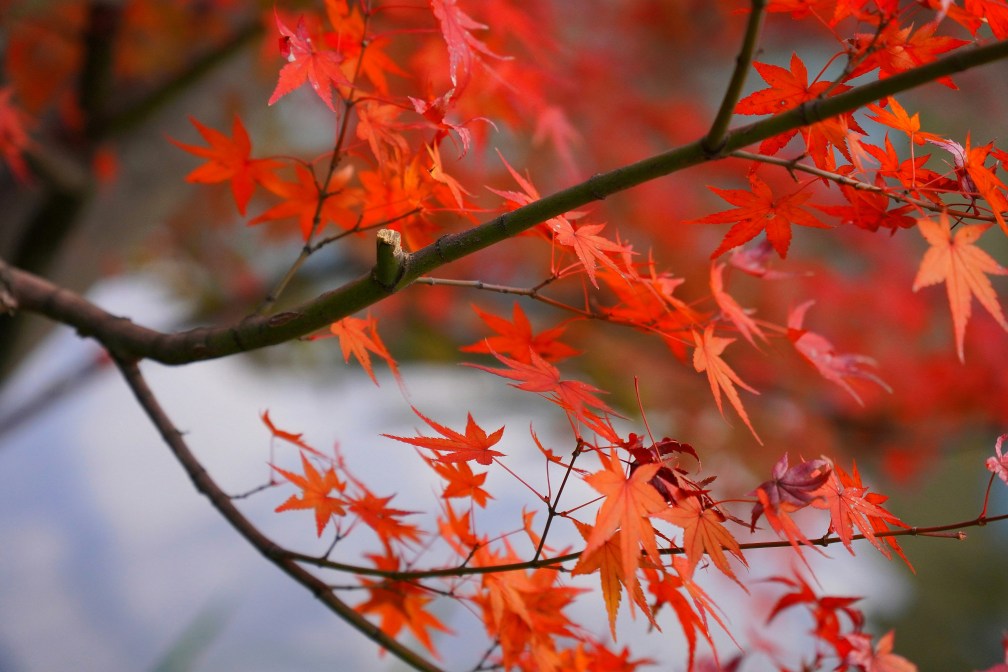
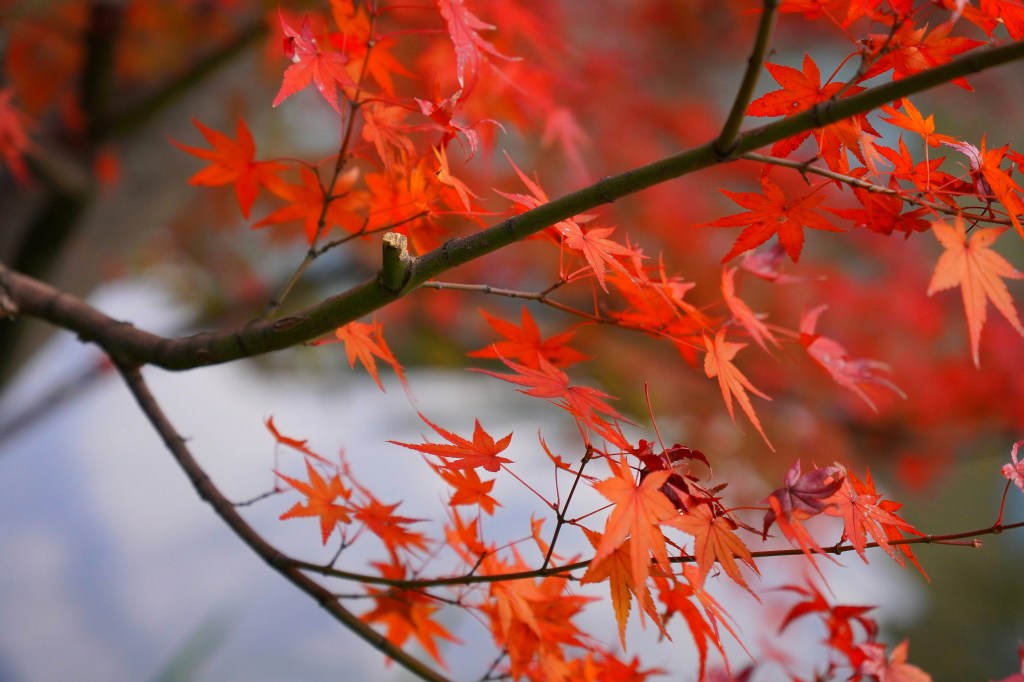
Branch on a red maple.

The problem with talking to trees

Branch of a red maple tree.
Photo by Yuka Tanaka

‘The problem with telepathic communication with trees is not proving it’s possible. That it’s possible is undisputed. The number of people having meaningful conversations with our arboreal companions grows every day. The problem—’

Here the professor paused to sip some water.

‘The problem is that telepathy is a form of translation. Any communication directly transmitted to a human is understood exclusively in the recipient’s first language. Sequoias and redwoods do not “speak” English, or Tagalog, or any of the other languages their messages have been translated into. They speak the Earth’s own language, and relying upon telepathy to hear them makes it difficult to identify the Earth’s linguistic structure.’

The professor sensed some uneasiness in the audience. He stopped for a moment, but no questions, concerns or rebuttals came forth. 

‘There’s a way round this, though,’ he assured them. ‘Make hypotheses about what forms might only exist in your human L1—English, for instance—then pose telepathic questions that depend upon these structures. Copular verbs are a good example.’

He’d confused, he realised, the non-linguists in the audience. 

‘The English copula are the BE verbs—am, are, is, was, were,’ he explained, clumsily. ‘Like all verbs, copula require subjects, but they are more bound to these than lexical verbs, even analytic languages like English.’

Clearly no one knew what an analytic language was.

‘Analytic languages, of course,’ he coughed, ‘are those that rely less upon inflectional morphemes, like English.’

The explanation didn’t help, but the professor could not afford to lose more time.

‘I surmised that the Earth’s language, though abundant in verbs, would lack copula,’ he said. ‘Copular verbs require association between subjects and complements, either of identification or attribution. I am a professor of linguistics. I am Stephen. I am happy to be here. The verb separates me into at least two different entities or states. It creates a label that is affixed to the I.’

Something occurred to him. ‘It is strange that the word copula suggests a bringing together,’ he reflected extemporaneously. ‘What’s actually happening is that the verb separates. What was one becomes two.’

The professor could not afford to wonder whether this metalinguistic inaccuracy troubled anyone else. He had not yet communicated his most important discovery.

‘My hypothesis was that the tree’s linguistic system would not code for such a divide. You’ll be wondering how I managed to test this,’ he offered.

No one seemed to be wondering this.

‘I posed it a question. Two questions, in fact.’

He drained his cup of water and signalled for more.

‘“What are you?” I asked. “Who are you?”’

A nurse appeared with the requested refill. ‘Sleepy time now,’ she announced, casually placing the meds on his tongue and pouring the water into his mouth. She wiped the dribble from his chin and waited.

The professor’s eyes closed and his audience dissolved, the auditorium empty and echoing.

No one would have heard the tree’s response, had the red maple outside the window not offered it up as a reply.

“I am that I am,” it said, disproving the hypothesis. But no one heard, not Stephen, not the nurse, not the confused, invisible crowd.


Would you like to know more about this story? I discuss it in Episode 109 of Structured Visions, What makes you so special? You can also sign up to the Grammar for Dreamers newsletter to get monthly updates on the ideas that inspire my work.
The Oracle of Sudsarama

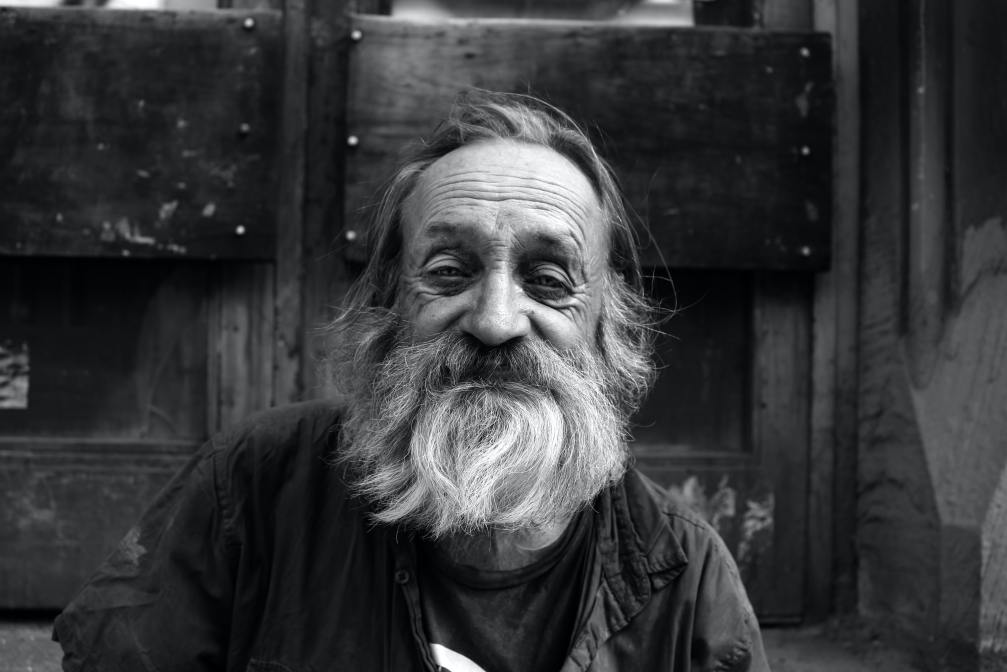
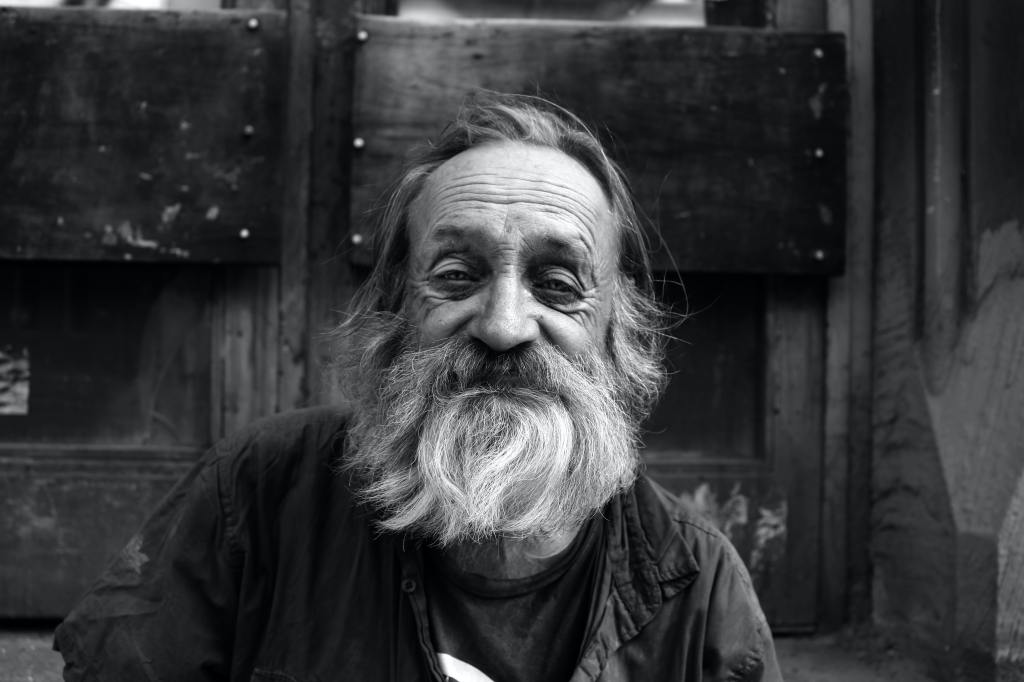
Greyscale photographic portrait of a bearded man
Photo by Jorg Karg

The homeless guy was naming things.

This was my big revelation.

It took a month’s worth of visits to the laundrette to work it out.

On Saturday of week one I had no idea at all. I was consumed with my abysmal turn of fortune—my own washing machine damaged beyond repair, my kitchen flooded and clothes likely ruined. I hauled the sopping load through bitter cold rain to Sudsarama on Market Square. The tramp was settled in so comfortably in the room’s wet, fragrant heat that at first I didn’t even notice he was there.

He did not afford me the same courtesy.

‘They’re spinning,’ he croaked.

I did not need to make eye contact to know he was talking about the thrumming dryers. I nodded as politely as I could manage.

On Saturday of week two I was nearly out of underwear and entirely out of patience. My new washing machine had been held up at the warehouse. I made my reluctant pilgrimage to Sudsarama, heavy laden with shopping bags filled with smalls.

The tramp sat sedately in the same spot as the week before, like a priest of the oracle.

‘They’re helping,’ he said.

I followed his gaze to a woman outside walking her dog. The latter sported a hi-vis vest that endorsed its support-animal status.

I kept my gaze focused just beyond the window for fear of being drawn into some maddening conversation.

Still, I couldn’t help but be curious about what sort of assistance my homeless companion thought the human-canine pair was providing, and to whom.

‘They’re helping?’ I asked.

To my surprise the objects of our discourse opened the door and entered into the Sudsarama shrine. 

‘They’re helping,’ the tramp affirmed. He leant down to scratch behind the dog’s ears and whisper into them. ‘They’re spinning,’ he told the dog, pointing his gentle chin toward the dryers.

By week three, I’d formed a few hypotheses. 

The tramp used the plural pronoun for everything, even singular referents, like the dog. 

He was too polite to make assumptions about people’s pronouns. Or dogs’ pronouns. Or dryers, for that matter.

And the -ing words—spinning, helping—the tramp wasn’t using them as verbs.

They were names.

He’d named the dog ‘Helping’, and the dryer ‘Spinning’. 

No, he hadn’t named them—suddenly it was somehow clear to me—he knew their names already, he was simply stating what was true.

Everything he encountered already had a name, a name that revealed the entity’s essential quality, and the name of everything was a verb.

On the fourth Saturday I decided my duvet needed a clean and that my newly installed washing machine wasn’t big enough for the job. I raced across the square, fixated upon the plate glass windows of Sudsarama and whether my guru would appear through them.

When his shadowy figure came into focus I felt something release in my chest, like an unacknowledged longing spreading its wings to take flight.

I leant against one of the dryers and gazed shamelessly into the man’s weathered eyes. ‘They’re Spinning,’ I said.

With his nod I felt a wave of compassion wash over me.

‘And him-’ I said, pointing to a terrier running free on the street, who’d stopped to cock his leg on the lamppost opposite. ‘Them, I mean. They are-’

‘They’re Helping,’ he said.

I made a mental note: All dogs are Helping.

‘And those?’ I asked, flinging my pointing arm wildly toward the fountains in front of the City Hall.

‘They’re Flowing.’

‘And those?’ I pointed to the semi-circle of bare-branched cherry trees that framed the water feature.

‘They’re Breathing.’

I could no longer speak, only stand in awe of the man’s wisdom and the grace with which he bequeathed each thing with his essential quality, its name.

‘And me?’ I begged when I finally found my voice, thumping my chest, a frenzied chimpanzee. ‘Who am I?’

His silence precipitated a gaping despair at the heart of me, like a landslide on the edge of a vast abyss. 

In a desperate attempt I tried again. 

‘These?’ I hadn’t stopped drumming on my sternum, so urgent was my need to know. ‘What are these?’

His lips fluttered as if brushed with the briefest of smiles.

‘They are Being,’ he said. 

Then he stood before me and raised an oily palm as if in benediction. He patted me lovingly on the head and left the Sudsarama sanctuary, making his procession into the freshly blessed city.


Would you like to know more about this story? Check out my behind-the-scenes post on Patreon.