Wordfall

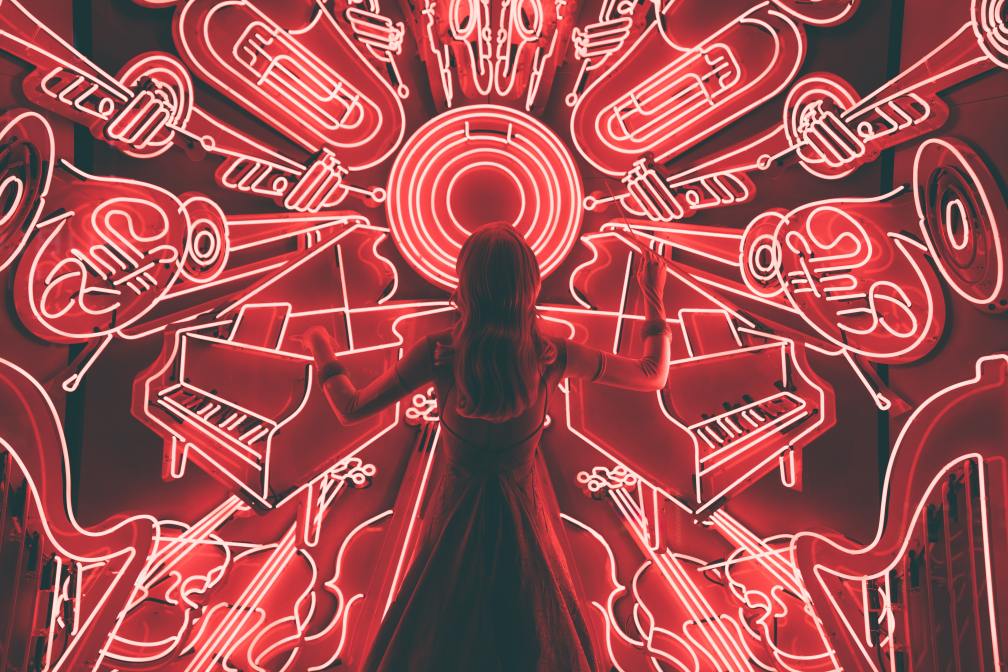
Photo by Yang Shuo

The most difficult question for most linguists to answer is ‘What’s a word?’

Always, it’s exactly the same.

I’m exhausted by the climb. I stand at the top to catch my breath, to rest my overtaxed muscles. They quiver like jelly. My heart flings itself against my ribcage as if trying to escape.

My body never seems to adjust to the exertion of the climb, no matter how many times I do it. My muscles never grow stronger, my lung capacity never increases, my heart never stabilises.

There’s a sign at the top of the mountain. Sometimes I read it, but I never manage to remember the words printed on it. Observe? Observation? Observatory? And another word that sounds scientific, but which is actually about language. Language observatory? Lexical observatory? Observatoire linguistique?

The sign marks only the halfway point of my journey to the site, but the road levels out here and the going is easier. The view is stunning, when I remember to look.

When I reach the site I inevitably encounter the scientific instruments and the team of people who operate them.

They never used to acknowledge my presence. I’ve since learned they were being cautious about approaching me directly, for fear of scaring me away. Eventually curiosity gets the better of me and I start asking questions.

‘What are these instruments?’

They look a little like radio telescopes, shaped like big bowls, their rims horizontal with the sky.

One day I remember the words on the sign (observe-observation-observatory-observatoire) and ask what they’re observing. 

‘Words,’ they say.

‘What words?’

They point to the sky.

‘The ones that land in our instruments.’

‘Where do they come from?’

‘Outer space.’

‘Wait. You’ve discovered intelligent extraterrestrial life? In outer space? Are they talking to us? What are they saying?’

We’ve had this conversation at least a dozen times, I’m embarrassed to admit. And I can never get it through my thick skull that ‘words from outer space’ aren’t spoken by extraterrestrials, they’re not part of some alien broadcast, they’re not communicated at all. They’re just falling from the sky, like inert little specks, like stardust.

They actually fall into those radio telescope things. It turns out those big bowls are like water butts or reservoirs, capturing words, not rainfall. Wordfall. The sensitive equipment the team uses helps them study each word, to learn its qualities and eventually to decide which ones they want to incorporate into Earth.

When I finally understand that much they hook me up to a network of electrodes so I can know what a word is like. A word is not, it turns out, a combination of letters, or sounds, or symbols of any kind. Words are like…

I don’t know. Every time I try to grasp it I’m back down at the bottom of the mountain again, and I can’t always be bothered to climb back up.

Really, it’s exhausting. Physically and mentally.

Here it is—I’ve got it now. Don’t try to imagine what a word is, or what it means. Better to say words have qualities. They make you feel a certain way. Itchy, or wise, or bereft, or curious. They’re like little blue pulses of energy—zip! They infuse you with some unique way of feeling or thinking—some new idea.

It’s probably twenty more trips up the mountain before I learn how they integrate the new words into Earth. I keep making the mistake of thinking that they’ll translate them into something that sounds like English, Spanish or Inuit. Maybe they’ll use Esperanto. I keep inventing clever little neologisms for the outer-space words I’m experiencing until eventually—poof! It’s straight back down the mountain for me.

It’s actually quite a difficult thing, this business of incorporating new words. The words need a safe space to exist within, and creating that environment takes a lot of calibration. That’s what most of the instrumentation is for, in fact.

And here’s the confusing bit, but it starts to make sense after lots of trips up here. The space that accommodates the new words is made out of language. 

Language is different from words, it turns out. 

Language makes stories. It makes… selves.

That’s it!

Stories and selves—selved stories, self stories? Self stories are containers made out of language, specially calibrated to welcome words from outer space.

‘You’re ready,’ one of them tells me now.

‘Ready for what?’

But I know what they mean. They think I’m ready to be a human storage compartment for one of their alien words.

What have they been doing to me all this time? Have they been messing with me when they’ve hooked me up to their instruments? I’ve changed, somehow. I can’t quite figure it out.

Poof!

The mountain looms ahead of me. I’m at the bottom again. 

This time I won’t go back. Nobody’s making me climb that road again. I’m nobody’s guinea pig.

Half an hour later, I’m standing by that sign again, something-something observatoire, something-something transformation. I can’t read it properly. My lungs feel like they’re about to explode.

It’s OK, though, I’ve done this before. I know the way from here, it’s easy going the rest of the way.

Would you like to know more about this story? Watch the video I made about it. I also discuss ‘Wordfall’ in Episode 68 of Structured Visions.
Gold

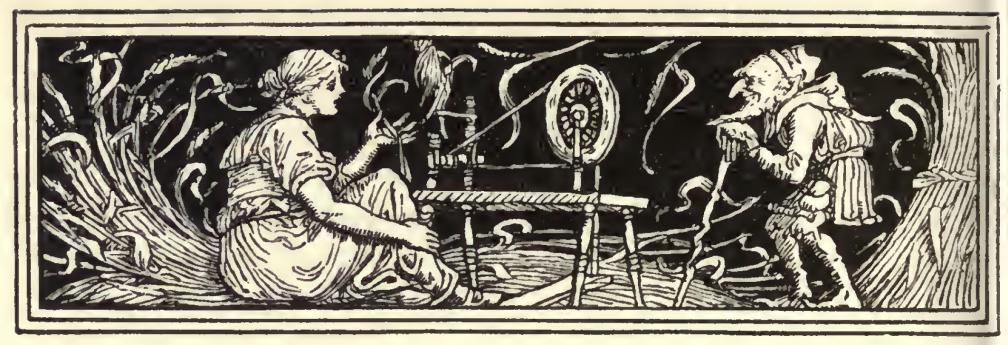
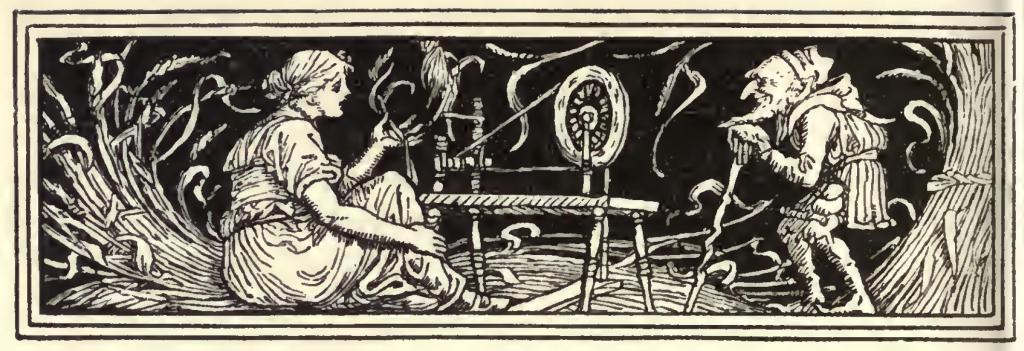
Line drawing illustration of Rumpelstiltskin and the future queen trying to spin straw into gold

English verbs take inflections for two tenses only—present and past.

In his dotage, the king has become obsessed about what is to come and has taken to consulting soothsayers.

The queen has known for many years the impossibility of changing the future, let alone trying to predict it.

She learned these and many other valuable lessons from a demon she met in her early years. His name was Rumpelstiltskin.

The name, it turns out, is important. Not the name itself—the quaternity of syllables, the clustered consonants, the complex portmanteau of simple English words (rump, stilt, skin). What matters is that the demon was possessed of a name at all, and that he guarded it so closely. The name is powerful.

The realisation made the queen question the composition of the straw he’d famously spun into gold. It could not have been ordinary straw. Perhaps it too, was made of a name, or whatever magic thing names were made of. She undertook a few clandestine experiments with the spinning wheel.

The straw he used had tremendous plasticity. It could be made into anything—almost anything. Gold was one of the simpler projects, surprisingly easy to master. The queen was eager to move on to new challenges.

The king’s current obsession with the future coincides with her own realisation that she can change the past. With her deft fingers on the spinning wheel, she creates any number of alternative histories.

In one her father’s boasts about her spinning skills go unnoticed, and she remains a peasant, blissfully ignorant of the complications of royal life.

In another, sweeter version, she confesses her ineptitude and the prince marries her anyway.  

Once she dares to spin the thread into an unthinkable past, in which she fails to discover the demon’s name and her firstborn is lost to her. She follows Rumpelstiltskin to his underworld lair and consents to be his consort.

Though she keeps her new skill secret, occasionally she’s tempted to tell the king. What she knows might be enough to convince him to sack those charlatan soothsayers. 

There is no need to worry about the future if you know how to change the past.

Perhaps one day she’ll tell him. For now she enjoys her hobby in solitude, and the wisdom that it affords her.

The straw is made of language. What she spins are stories.

Would you like to know more about this story? Watch the video I made about it.

The end of language

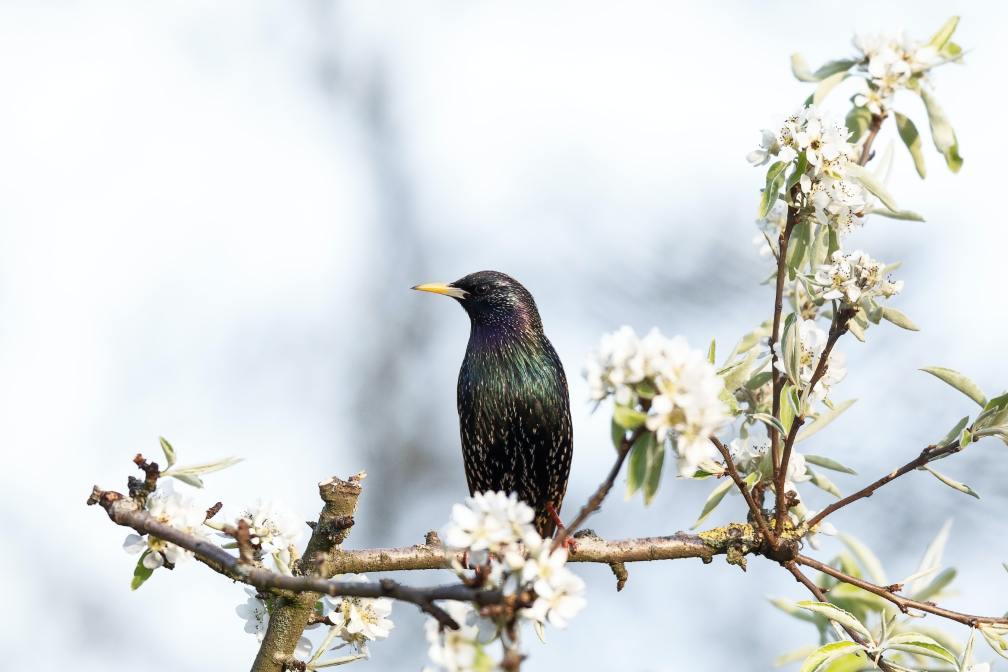
A lone starling sitting on a flowering branch
Photo by Hans Veth

Language death occurs when a speech community loses its competence in its language variety, until it reaches a point where no more native or fluent speakers exist. 

A tale used to be told about the end of language. It went like this.

A monk stood in contemplation on a hillside at twilight.

As the sun dipped lower and the valley’s shadows grew, a flock of starlings rose in the darkening sky. Their numbers multiplied in rhythmic ripples until the liquid beads of their consciousness merged into one fluid wave. 

The monk felt his own thoughts dissolve, like an eroding shoreline, swept up in the birds’ murmuration, and he was enlightened.

He travelled into the valley to share with the people there the pathway to wholeness.

His teachings spread like a mighty wave, sweeping up the distracting thoughts of all the people in its wake. As their thoughts slipped away, so did their language.

No one knows this story now but me.

I am the one to whom language has been restored.

It came to me as I stood on the hillside at sunrise, contemplating the birdsong. From the richly layered harmonies of that dawn’s chorus, one strain rose above, distinct and piercing. Each note of the melody made itself known as singular, like drops of dark ink on a white page.

The persistent soloist set words to its tune. 

Startled, I turned to see a solitary starling casting its shadow on my shoulder, dropping shimmering feathers as it flew away.

Would you like to know more about this story? Watch the video I made about it. I also discuss ‘The end of language’ in Episode 66 of Structured Visions.

The Maker of Language

One of the functions of ‘like’ in everyday speech is as a quotative, or introducer of speech or thought. Research on conversational narratives shows that quotative ‘like’ has a similar effect as the progressive aspect, as an internal evaluation device. 

OK, so you’re about to die.

You’re one of those who thinks there’s an afterlife, and that you’ll meet your Creator there.

You’re seventy-five percent correct.

Here’s what you’re wrong about: you actually get to meet two Creators in the afterlife.

The one people line up to see is the famous one, the Maker of Heaven and Earth.

The one no one seems to even know about is Me, the Maker of Language.

I had a different plan for creation than the other God.

His design was of a world that was already perfect, balanced and complete, something He could sit back and be proud of. You know, ‘He saw that it was good’, and all that.

I wanted to make something that wouldn’t ever be finished, something that could make itself up as it went along.

We didn’t argue about it or anything. We collaborated. We were the first great musical duo. He wrote the chords and the bassline, and I produced linguistic sequences that could be improvised over them.

The problem was that language made people nervous. It made them feel like they were separate from the perfect harmonies the other God had made. Language made them feel like they were supposed to do something more than the rest of creation, which made them feel powerless, like they’d been kicked out of some garden. Then came resentment, which brought out a destructive quality neither I nor the other God had anticipated.

In heaven we share an office, but like I said before, the queues are for Him, not Me.

Everyone assumes I’m the receptionist, or some sort of archivist. It’s probably all the filing cabinets.

When you do finally cop it, can I ask a favour?

Stop by my desk and talk to Me. Bring a few friends along. Help Me get the message out so that in your next life, you might be a little less miserable.

When you come, I’ll be like, Of course you felt separate! That was the point!

You were the goddamned melody!

You were supposed to improvise!


Would you like to know more about this story? Watch the video I made about it.

The greenhouse

Photo of exotic plants in a Victorian greenhouse
Photo by Echo Wang

The desire for social structures that celebrate otherness can be investigated empirically through the analysis of the grammatical structures of participants’ accounts of their social worlds. —Jodie Clark, Selves, Bodies and the Grammar of Social Worlds

The experimental planets are like new strains of exotic plants cultivated in a greenhouse. Earth is one of those rare plants. Imagine it being lovingly observed and tended to by a wise, attentive Botanist.

You believe your name is Rosie (short for Rosemary), and that you’re a middle-school kid who keeps getting bullied. The Botanist believes you are much more—that you carry deep within you the secrets to whether the experimental Earth will thrive.

Imagine he’s gazing hopefully into his microscope now, like he’s focusing on a plant cell, but the cell is your life. Imagine he’s talking to his Apprentice.

‘Aren’t the toxicity levels unusually high?’ worries the Apprentice.

‘For Earth, these are pretty normal,’ sighs the Botanist.

‘What’s causing it?’

‘Names. They’re calling her names.’

He means the other kids in your class.

‘I wouldn’t have expected those names to bind,’ says the Apprentice, confused. ‘They’re not a match for her true name.’

When the Apprentice says ‘her true name’, he doesn’t mean ‘Rosie’ or ‘Rosemary’. He’s referring to the unique linguistic sequence that defines every self.

It’s kind of hard to explain.

What the Botanist knows about Earth is hard to explain, too, but he tries it anyway. It’s important that the Apprentice understand.

‘The language sequence that defines Rosie and her species is not native to the planet they’re inhabiting,’ he says. ‘As a result, their linguistic signatures are…’ He searches for the right word. ‘Vulnerable.’

What the Botanist and the Apprentice take for granted is something that to you would seem a great mystery. All worlds, and all that’s in them, are made of language. All things come into being from the midst of their unique linguistic signatures.

‘The Earth is an experiment in grafting,’ the Botanist reminds the Apprentice. ‘The language that defines the members of Rosie’s species has been spliced into the Earth’s originary language.’

‘I see,’ says the Apprentice. He watches with sorrow as the cruel names continue to penetrate the weak boundary of Rosie’s personhood. He observes the sequences that have emerged in response from within the language of her thoughts. I’m so stupid. No one likes me. I wish I didn’t exist.

‘Is there anything we can do?’ asks the Apprentice. There’s worry in his voice.

‘Watch and hope,’ replies the Botanist. ‘That’s about it.’

The Botanist actually does more than watch and hope, but his methods are too unconventional to share. At night, when the greenhouse is empty, he returns to the microscope and whispers his messages to you.

‘Hang in there, Rosie. We’re pulling for you. You matter to us.’

On the nights when his voice resonates enough to pierce through your veil of tears, you hear his words. You draw them up through your roots like a thirsty flower.

Would you like to know more about this story? Watch the video I made about it. I also discuss ‘The greenhouse’ in Episode 65 of Structured Visions.

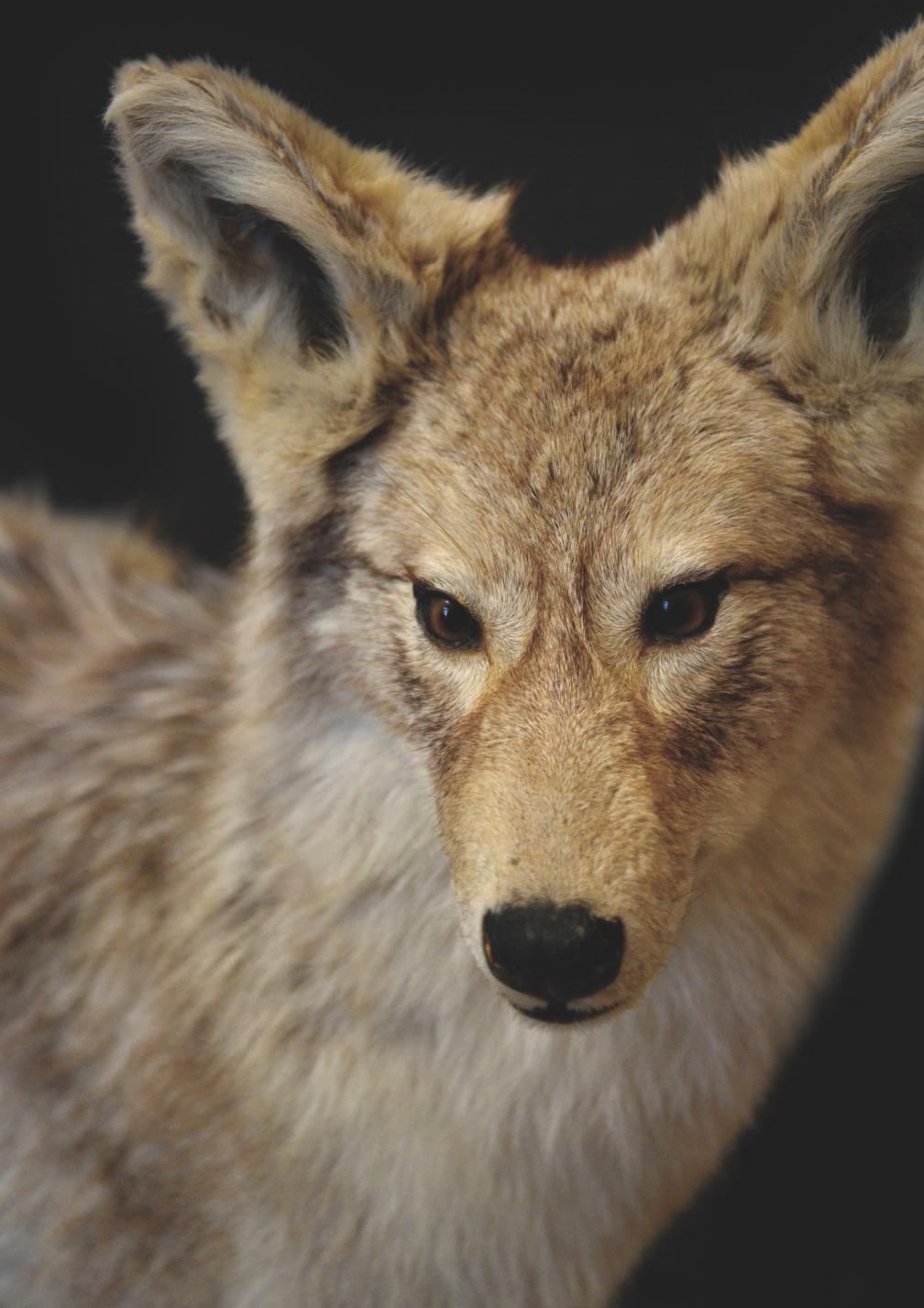
Coyote’s trick

Photo by Ben Hershey

Grammaticalization often corresponds to language change processes where linguistic expressions shift from objective to subjective meanings.

In the beginning, before there were people, the world was made of language. 

The buds on springtime hawthorns were unvoiced plosives. The caterpillars on their branches, focused interrogatives.

Tortoise was a non-finite clause.

One day, he decided to make people.

‘What will you make them from?’ Coyote asked. 

‘Water,’ said Tortoise. He thought it a good choice because it flowed within and around all the world’s linguistic forms. 

But the water people wouldn’t hold their shape. Making one was easy enough, but when he tried to make more than one, they merged into one another and lost their individuality.

Coyote laughed at Tortoise’s failed attempts. 

‘To keep each of your people unique,’ he advised, ‘you’ll need to make containers for them.’

‘What should I use to make the containers?’ Tortoise asked.  

‘Language,’ said Coyote.

So Tortoise set off on a long journey, gathering samples of the earth’s language from all the four directions. When he returned, he ground the language into dust. He moistened the resulting powder to make clay, which he shaped into vessels. These contained his new people beautifully. 

Pleased with his work, he settled in for a much needed rest. 

While Tortoise slept, Coyote crept in secret to the place where the new people lived. 

‘I know something,’ he whispered, ‘that Tortoise hopes you’ll never discover.’

The people looked up in surprise. 

Gently Coyote reached inside their mouths and scraped out some dried clay with his sharp claw. The fine dust in his outstretched paw caught glints of sunlight and sparkled before them. 

‘This is language,’ he said. ‘You’re the only creatures who have it. With language, you can rule the world.’

When he woke up from his long sleep, Tortoise saw the results of Coyote’s trickery, and he despaired.

Would you like to know more about this story? Watch the video I made about it. I also discuss ‘Coyote’s trick’ in Episode 64 of Structured Visions.

The oppressive instability of being

As deictic expressions are frequently egocentric, the center often consists of the speaker at the time and place of the utterance and, additionally, the place in the discourse and relevant social factors.

When Amy heard the classroom door open at the end of the school day she kept her focus on the surface of her desk. The unexpected visitor was likely to be Lydia, who didn’t do well with eye contact.

‘Miss?’

In her peripheral vision Amy could just make out the dishevelled dark curls that framed the girl’s ashen, spot-ridden face. She noticed the crevices that had worn into her forehead, the eyebrows tensed above deep-set, troubled eyes.

‘Yes, Lydia?’ Amy fixed her attention on the English language worksheets she was marking.

‘We’re making time machines in History, Miss.’

‘Time machines,’ repeated Amy, in the slow, deep tone that kept Lydia calm. In the subsequent silence she tried to recall the details of Gareth Jacobs’s most recent pedagogical experiment.

‘I can’t go back in time, Miss.’

Gareth wouldn’t have anticipated that Lydia would be troubled by this project. Nobody could have. None of the teaching staff knew quite what to do with Lydia. She’d mystified the specialists.

Even Amy, the only teacher Lydia had ever opened up to (if these regular after-school interactions counted as ‘opening up’), could rarely put her finger on what specifically triggered Lydia’s manifold anxieties. She certainly couldn’t understand what was troubling her about this particular project, and why it had only occurred to her to worry about it now.

She pictured the child-constructed cardboard monstrosities that were currently cluttering Gareth’s classroom. She caught a glimpse last week of pupils fastening flimsy foil pie plates onto the tops of the packing crates Gareth had somehow acquired. Satellite dishes, she guessed. By now they’d have moved on to the interior design stage of the project. She pictured dashboards sticky with glitter and glue, plastic dials repurposed from board game spinners, which the time travellers could adjust to set their course in their journey to the past.

Lydia’s hands covered her face now. She looked out through the gaps in her fingers.

Amy imagined those same fingers positioning a red plastic arrow to point toward some date from the Year 7 History curriculum—1066, or what year was the Gunpowder Plot? 1605. She wondered which historical period would trouble Lydia most. Did they do slavery in Year 7?

‘You can’t go back in time?’

She rifled through the language papers to take the pressure off the child. They were grammar worksheets, designed to help the pupils conceptualise tense and aspect. Her own pupils had completed the task complacently, if unenthusiastically, colouring in expansive rectangles on a timeline for past progressive and restrained, no-nonsense black dots for past simple. I was minding my own business when you interrupted me. The arrow on the timeline pointed backward, to what had come before the present moment.

None of her children had been troubled by anything about the exercise, not the linear illustration of time, not the leftward pointing arrow illustrating the infinite ineffability of time gone by.

‘Miss, if I go to the past, I won’t be there.’

Amy shifted her gaze from the grammar papers to the anguish on Lydia’s face, and it hit her. The other pupils did not worry about time travel because they had no experience of the precariousness of their own existence. 

So rooted were they in their solid notions of selfhood that they could not see it: any point on the timeline to the left of 2010 indexed a world that ruthlessly refused to contain them.

What could she say to Lydia now that would relieve her of the oppressive instability of her being?

‘How do you think time machines work?’ she asked.

‘You get inside them, and they travel to the past.’

‘Is that the way Mr Jacobs explained it?’

The fingers moved from Lydia’s face to below her chin. ‘I can’t remember,’ she admitted.

That was fortunate.

‘Time machines don’t actually travel through time,’ Amy said, committing her own words to memory so she could brief Gareth later. ‘The way they work is by establishing a deictic centre.’

‘A deictic-’ 

‘Centre,’ Amy confirmed. ‘The time machine produces a sort of force field around you that says you are here now. That keeps you safe and secure. Centred, right?’

Lydia dropped her hands to her sides. ‘So how do you get to the past?’ she asked.

‘You don’t,’ said Amy. ‘Once you’re in your deictic centre, you bring the past to you. You sort of reel it in, like a kite.’

Amy watched this explanation lock into place.

‘OK, Miss,’ Lydia said, and she’d left the room before Amy could say more.

For many long moments Amy found herself staring at the space that had once contained Lydia.

She felt a gripping sensation in her chest, like a fist clutching a reel of lengthening string, the kite flying farther and farther away, a black dot against an insatiable sky.

Would you like to know more about this story? Watch the video I made about it.

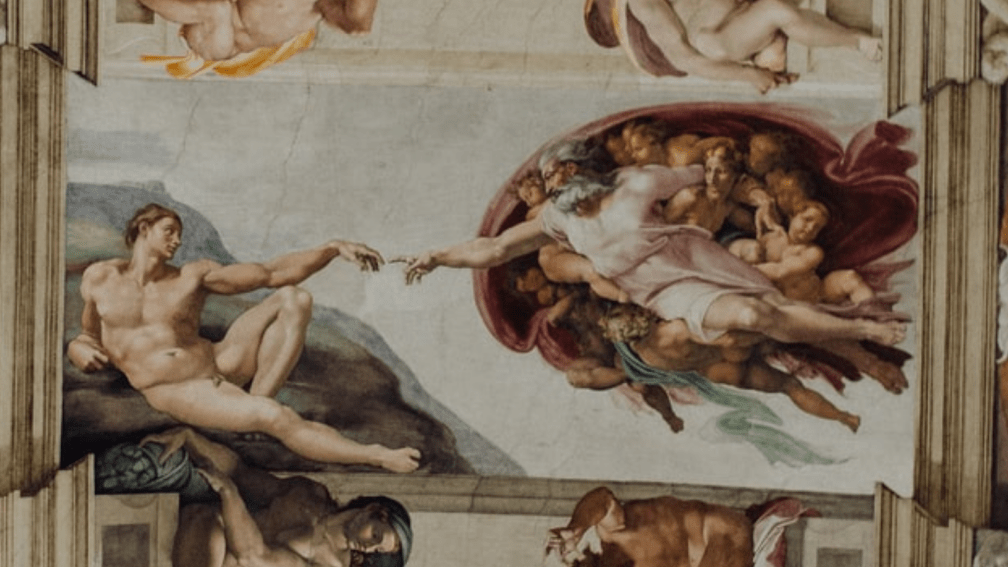
The first person

Close up of the Sistene Chapel: The Creation of Adam
Photo by Calvin Craig

Grammatical personhood has to do with levels of involvement in a linguistic expression. English and many other languages have three levels of personhood. It’s possible to have more than three levels of personhood. Blackfoot, a Native American language, has five.

At the end of the school day Zoë’s mother was waiting at the gates to walk her home. ‘Who was the first person?’ Zoë asked.

‘The first person to do what?’

‘Just, the first person. The first person there ever was.’ Her friend Holly had told her that the first person was called Adam, and he was made by God out of dust and he named all the animals. It was absurd—how could anybody know who the first person was? The thought made her head spin.

‘That sounds like a question for Uncle Joe. You can ask him when we get home.’

‘Uncle Joe’s here?’ It was always exciting to hear that Uncle Joe had stopped by, out of the blue, to stay with them for a couple of days. Uncle Joe was the best person she knew. He was big and furry, like a bear. He was also a little bit mad, but not in a scary way.

She found him sitting in the conservatory drinking a mug of milky tea. She gave him a bourbon biscuit to dunk. ‘Who was the first person, Uncle Joe?’ she asked.

When he smiled his whole beard moved, like a hedgehog waking up.

‘The first person isn’t an actual person, Zoë. It’s a concept.’

His eyes were like tiny blue eggs hidden in a nest of eyebrows.

‘It wasn’t some guy called Adam?’ She couldn’t wait to set Holly straight.

‘Well, it might’ve been called Adam. Concepts can have names. Most of them do.’

He’d left the biscuit too long in his tea. He pressed the remaining bit into his mouth. Some soggy crumbs lingered on his moustache.

‘So tell me about the first person,’ Zoë said.

‘The first person is a linguistic construct. Linguistic means language,’ he remembered to tell her. ‘In the beginning, language flowed over the earth, like the weather. It passed over everything, living and non-living, like the wind and rain, always in motion, always changing.’

Zoë had learned weather patterns in science class. They’d watched a video of clouds moving over the globe. She ate another biscuit and waited.

‘Then one day, language got stuck.’

‘It got stuck? How?’ The weather never got stuck—not in any of the videos Zoë had seen.

‘It got sucked into a human body, and the language thought that body was its own. The body and the language together began to imagine that they were a person. Me, me, me, me, they said. They thought they were the first person.’

‘Were they called Adam?’

‘Maybe,’ said Uncle Joe.

‘So who was the second person?’

‘There were lots of second persons,’ Uncle Joe said. ‘Every time the language-body saw another human body, it called that human body you. You, you, you, you. And each time that happened a little bit of language would enter into the second person, and they would believe they were the first person—me, me, me, me.

‘Wait. Were all of them called Adam?’

‘Probably not.’

‘Oh.’ Zoë wondered what it would be like to think you were the first person when you weren’t. ‘So how did language get unstuck?’ she asked.

Uncle Joe watched the swirling chunks of biscuit drowning in his mug. ‘It didn’t,’ he said. ‘Language stayed stuck.’ A heavy sorrow passed over his face, like a dark cloud, unmoving.

‘Oh,’ said Zoë. For a brief moment she knew how her uncle felt, like something exquisitely precious had been lost, like the only hope of retrieving it would be for everyone to go a little mad.

Listen to my podcast episode on this story here.

Kwinchuk

Cracking white paint
Photo by the blowup

There are two forms of the passive voice in English: the BE passive and the GET passive. With GET passives, the meaning is ‘dynamic’, which means it expresses an action rather than a state.

Tania Bettleheim can’t remember her PhD supervisor’s name. It’s awkward. She should have glanced at the plaque on the office door before she came in.

She was too excited about her discovery to think of it. She’ll have a look on the way out.

‘So Kwinchuk lacks a copular verb, that’s what you’re saying?’ asks what’s-her-name.

Tania nods enthusiastically. It had been a eureka moment to figure that out, after the painstaking weeks she’d spent acquiring enough of the language to begin to chart its grammar. No one before had studied Kwinchuk. It would have been humiliating to come back with nothing.

But she hasn’t come back with nothing. She’s come back with a linguistic discovery of monumental import. The copular verbs thing is just the beginning.

Her mentor seems unconvinced. ‘I’d have expected in such a case for the copula to be inflected on a stative adjective stem. Did you consider the possibility of an unmarked zero form?’

‘It’s not zero marked,’ Tania insisted. ‘There’s a verb in the copular slot.’

‘A verb in the copular slot is necessarily a copular verb, Ms Bettelheim.’

‘But Professor, Professor, ehm…’

Perhaps this conversation would be going better if there weren’t so many distractions. Like not knowing what to call her supervisor. And those cracks in the walls. Tania’s sure these have been expanding in the course of this meeting, thin grey lines branching through the white paint like tree diagrams, growing more complex with each passing second.

‘Copular verbs express stative meanings,’ Tania explains. ‘The verb that appears in that slot in Kwinchuk is always dynamic. The nearest equivalent in English I can find is auxiliary “get”. In Kwinchuk it is impossible to say something like “I am happy”, except to express it dynamically.’

‘I get happy?’ suggests her supervisor.

‘Exactly!’ says Tania. She can tell her enthusiasm is not shared. The cracks in the walls are still spreading. Chunks of plaster are dropping from them. Her supervisor mindlessly stirs the falling white powder into her coffee.

‘Where’s the evidence of equivalence with the English “get” auxiliary?’ she demands.

‘It’s consistent with how the Kwinchuk experience their world,’ Tania argues. ‘Nothing for them is ever at rest, nothing ever simply is. Everything’s an event. Everything’s a story. A Kwinchuk has no way of saying something like, “That’s just the way things are.” They’d have to say something like, “Things got hard.” And so all their evaluations inevitably imply another eventive possibility, such as, “Things could get better.”’

It does not look as though Professor No Name thinks things could get better. The cracks in the walls have grown to gaping holes, and the masonry is now crumbling around them. The ceiling is buckling, and if Tania doesn’t leave immediately she’ll be trapped in a pile of rubble.

If she turns back now in her flight, she’ll catch a glimpse of the plaque that has fallen from the Professor’s door. She’ll see her own name engraved upon it in gold-painted letters.

She does not look.

She gets away.

In charge

Photo by milan degraeve

Utterances are called ‘performative’ when voicing them changes social reality in some way.

‘What does “in charge” mean?’

‘Why do you ask?’ Amy said. She never gave direct answers, always responding with questions of her own. ‘Where did you hear that term?’

Amy was his LCSW, which meant licenced clinical social worker. Joshua went to her office every Tuesday after school.

‘Before Mom went out yesterday she said to Marcie, “You’re in charge.”’

‘It means your mother was making your sister responsible while she was gone.’

‘Oh.’

‘Joshua, how long was your mom away for?’

He didn’t know. He was asleep when she got back.

After the appointment he sat next to the aquarium in the waiting room to wait for his mom. The two fish swam around each other in threatening spirals. He named the yellow one Joshua and the blue one Marcie.

He put his face close to the glass and whispered a decree.

‘Joshua,’ he said. ‘You’re in charge.’

The following Tuesday, the blue fish was gone. 

‘What happened to Marcie?’ he asked.

‘What do you mean?’ Amy was alarmed. ‘Did something happen to your sister?’

‘I didn’t mean to say Marcie. I meant to say what happened to the blue fish.’

Amy looked glum. ‘It died last week,’ she said. ‘I found it floating in the aquarium when I came in on Wednesday morning.’

‘Oh,’ said Joshua.

‘Did you name the blue fish Marcie?’

Joshua didn’t answer.

Marcie had been replaced with a different fish, an orange one. Joshua named it ‘Amy’. 

‘You’re in charge,’ he told Amy.

The following Tuesday, Joshua was gone.

‘Why are all your fish dying?’ he asked his LCSW.

‘It was the water,’ Amy said. ‘There was too much chlorine in it.’

‘Is it better now?’

Amy nodded. ‘We had a filter installed.’

Relief washed over Joshua like a clean, safe current.

There were lots of fish now, a bustling undersea world of colours and shapes. Floating in the tank was a small air pump. Joshua watched the bubbles rising from it, buoyant and inexhaustible.

The fish darted about, fearless and carefree. There were too many to keep track of, so he spoke his message to the spaces between them, to the life-giving liquid that kept them safe and thriving.

‘You’re in charge,’ he said to the water. He felt his body relax. Quiet tears flowed in a study stream down his cheeks.

Listen to my podcast episode on this story here.