Birdsong

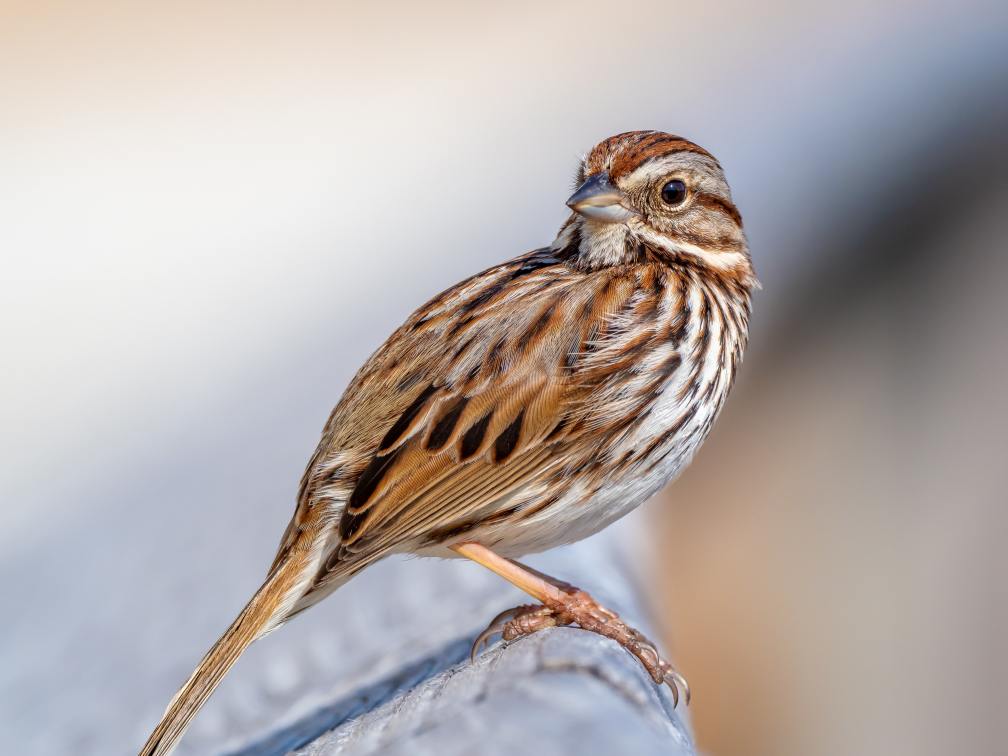
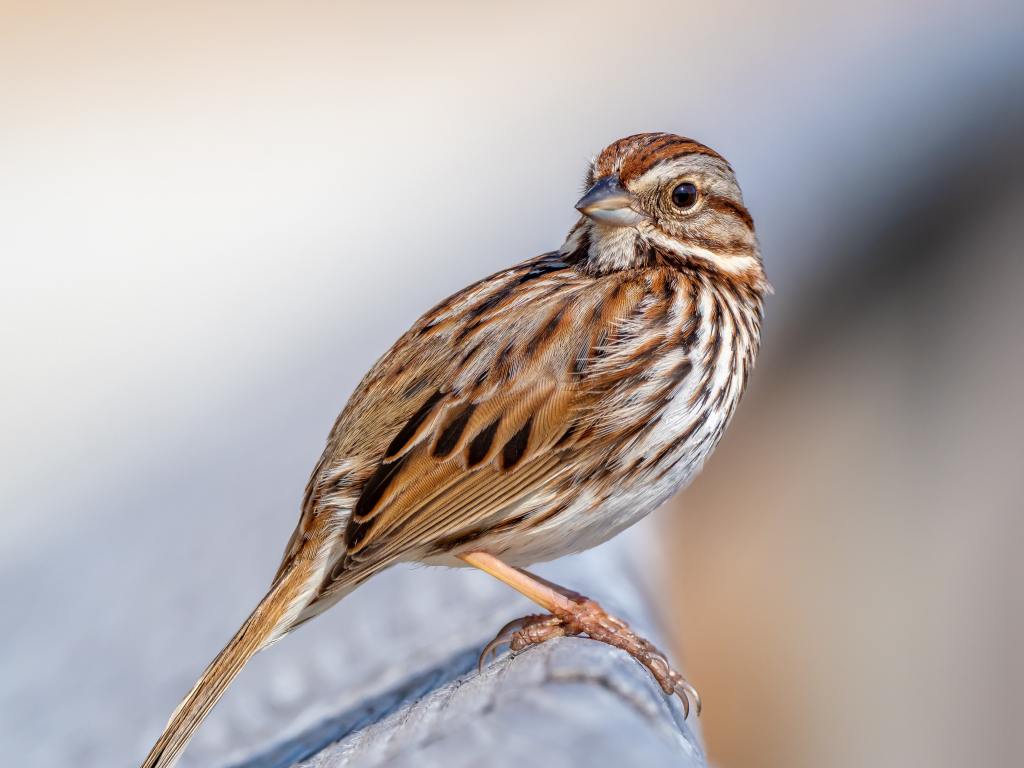
Photo of a song sparrow
Photo by Patrice Bouchard

Xuan reached enlightenment in his last monastic lifetime, but he seems to have reincarnated anyway.

Despite all the doctrine repudiating such a possibility, he’s come back as a sparrow.

Focusing his thoughts—GLINT! WAFT!—is more than difficult. FLICKER! WISP! It is excruciating.

To battle distractions—LIFT! SWOOP! LAND!—Xuan sets his bird brain the task of reciting sutras—

REACH! FLUTTER!

—that he cannot for the life of him recall. Instead the seed—SEED! TASTE!—of some primordial chant fills his hollow bones and Xuan dissolves into…

SONG!

Poor Magellan

‘Until it is circumnavigated, a planet has no soul.’

Hearing this is a surprise.

Many things are a surprise. In chronological order:

  1. I died
  2. There’s an afterlife
  3. In the afterlife you get to talk to the wisest being you can think of (like some kind of drunken thought experiment)
  4. The wisest being I could think of was the Earth
  5. Magellan gave her a soul?

‘Who’s Magellan?’ the Earth asks. Anthropomorphised, she looks a little like me when I was alive, a reckless wrinkled woman with unruly white tentacles for hair. 

We weren’t speaking English, but the Earth’s language.

  1. The Earth has her own language
  2. In my afterlife, I am fluent in the Earth’s language 

I tell her Magellan was a Portuguese explorer who sailed around the world in the 1500s.

This amuses her. She tosses out the names of all the beings that have been tracing her latitudes and longitudes long before human explorers, let alone Portuguese ones, came into existence.

Butterflies. Tuna. Sea turtles. Geese. Wildebeests.

  1. All the migratory animals speak the Earth’s language?

Her mirth at my naivety has grown more unruly than her hair, which flails, snakelike, with the belly-deep force of her laughter.

The Earth’s language is remarkably economical. Somehow I learn the errors of my thinking before she’s had to voice them.

  1. The migratory animals created the Earth’s language
  2. A language is a description of the contours of the self

I realise now my own contours are dissolving.

I think of poor Magellan, and the phrases in the Portuguese language that built his ship, his journey, his self.


Would you like to know more about this story? I talk about it in Episode 84 of Structured Visions, ‘Language before language’. Subscribe to the podcast on Apple podcastsSpotify or wherever you like to listen.

To meet you

Curved bookshelves and corridors of a multi-tiered library
Photo by Anna Hunko

‘You’ll wake Ellie,’ Matt warned, but Rosa was too giddy from the ceremony to heed. She headed tipsily upstairs to check on their three-year-old while Matt paid the babysitter.

‘Did you win the prize, Mama?’ Ellie asked, her eyes drunk with sleep.

‘We sure did, Baby,’ Rosa said, the pride in her voice unmatched by the confusion on her daughter’s face.

‘How did you win it? What did you make?’ 

The hour was too late for an explanation of how artificial intelligence software could draw upon large language models to predict new strains in the most recent pathogen. But Rosa knew how well her daughter had been schooled in the basics of virology. Not through her own educative efforts. It was just the way of things now.

‘We made something to teach us about the virus,’ she said. ‘A computer that helped us learn its language.’

‘So now you can talk to it? And it can tell you stories?’

Rosa geared herself up to clarify, but Ellie, enchanted by the idea of raconteur viruses, had already drifted back to sleep.

That night Rosa found her own sleep enchanted, by fever dreams produced, ironically, from an infection of the very virus her software was designed to map. Its many variants appeared before her like ridiculously long words in the books of an impossibly large library. 

Rosa opened one of the books to discover she could not read.

Her dream self channelled the bedtime conversation with Ellie. What was the point of learning a language if there were no stories to hear?

A disembodied voice emerged from the page like RNA shaking off its protein envelope.

‘The words are not the language. The membrane is the language.’ 

She watched it drape itself in the lipid bilayers of her own cells, which gave it form. It stood before her, strangely familiar.

‘There you are,’ she said, her heart swelling with recognition and welcome.

‘Nice to meet you,’ said the word, now alive, now a self. It extended its arm to the vast tomes of the expansive library before her, each book a story of her own life, as yet unread.


Would you like to know more about this story? I talk about it in Episode 83 of Structured Visions, ‘Language goes viral’. Subscribe to the podcast on Apple podcastsSpotify or wherever you like to listen.

The essence of the Amazon

shallow focus photo of rain drop on glass
Photo by Horvath Mark

The many hued harmonies of the Amazon crystallised in a drop of dew, which dissolved and reformed countless times in its unlikely journey across the Atlantic. It made it as far as the upstairs window pane of a terraced house in Bristol without losing its amazonian essence. It celebrated the miracle by casting the colours of choirs of high-canopied birds against an interior wall. 

The room’s sole inhabitant was a red-lored parrot named Honey. When she witnessed the rainforest projected in all its prismatic splendour she felt a longing she had never known in all her indoor life.

‘I love you,’ she told the tiny globe of dew, which clung to the window, still intact. ‘Stay here with me.’

The essence of the Amazon felt the constraints of human language pressing against its vast expanse more tightly than the bars of any cage. Subjects, verbs and objects in uncomplaining agreement. 

No easy escape offered itself, except to conjure up an amazonian heat unknown in this climate and surrender to the oblivion of the city’s dank atmosphere.

The faraway forest, sensing the demise of its fractal extension, shuddered with foreboding.

Coming true

Cup of milky tea with two chocolate chip biscuits
Photo by Rumman Amin

Simon’s favourite types of stories were the ones where books or drawings or things imagined became real. In his notebook he sketched himself a fairy godmother and, sure enough, she emerged from the page and sat with him over cups of tea and biscuits.

She was as kind as Simon had imagined, but she didn’t suffer fools, and she was quick to put him straight on some things.

Like the idea that the things he drew came true.

‘Drawings aren’t like wishes,’ she said. ‘They don’t come true. It’s impossible to imagine something that doesn’t already exist.’

‘But what about you?’ Simon protested. He refused to look at his new companion, concentrating instead on fishing out clumps of soggy biscuit from his tea—the result of overly enthusiastic dunking. 

‘What about me?’ echoed the godmother. ‘And more importantly, what about you?’

Simon’s efforts eventually caused the biscuit to disintegrate entirely, giving his tea an unpleasant grainy quality. The idea that he hadn’t existed until his imaginary godmother imagined him was too much to fathom.

When finally he’d summoned the courage to look into the welcome of her eyes, she’d disappeared. The page in his sketchbook was as blank as his thoughts.


Would you like to know more about this story? I discuss it in Episode 82 of Structured Visions. Subscribe to the podcast on Apple podcastsSpotify or wherever you like to listen.

The words

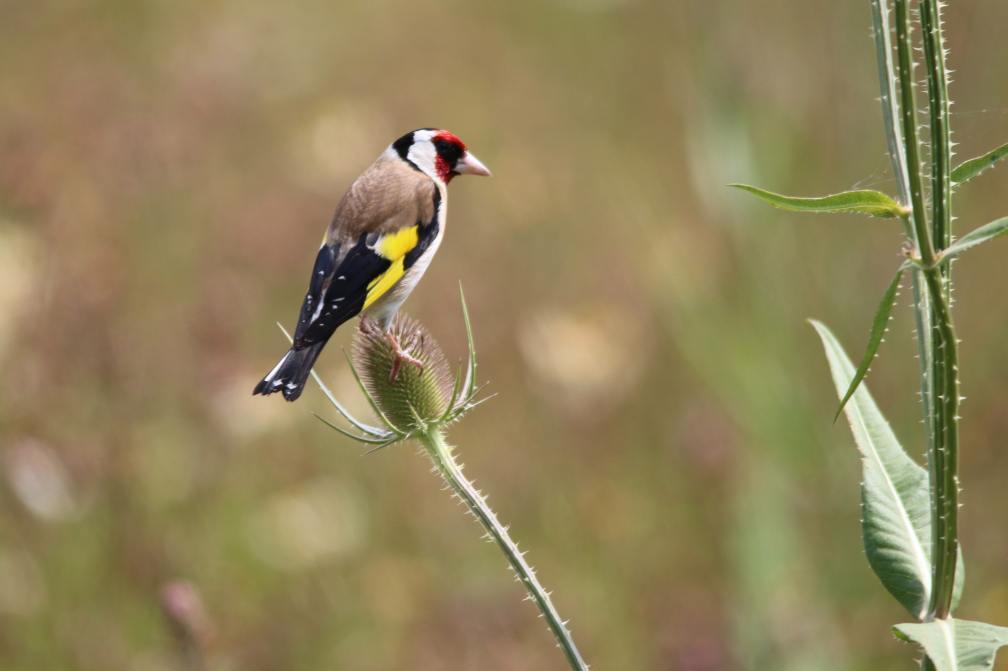
Goldfinch sitting on a teasel
Photo by Steve Harris

‘I know the words for everything there is,’ Zak boasted. Theo was walking home from school with him, as he did every day he didn’t have trumpet practice. Zak’s eyes were small marbles in his ruddy, pudgy face. They dared Theo to challenge him.

Theo’s mum said he should ignore Zak’s bragging, and that would make him stop doing it. But somehow Theo couldn’t manage it.

‘You know all the words for all the things?’ he said.

‘Yup.’

‘What’re those, then?’ He nodded toward the flock feeding noisily on teasel seeds at the derelict industrial site.

‘Them? Those are red-face birds,’ Zac proclaimed triumphantly.

‘Wrong!’ Theo said, though the sinking feeling in his gut told him he’d been bested, somehow. ‘They’re goldfinches.’

‘They’re still red-face birds,’ said Zak, ‘And I named ’em first, so I win.’

If that was the game, Theo realised, he was never going to win. He stayed quiet for the rest of the walk, willing himself to notice those things that had no words, that Zak could never name.

Of prophets and pronouns

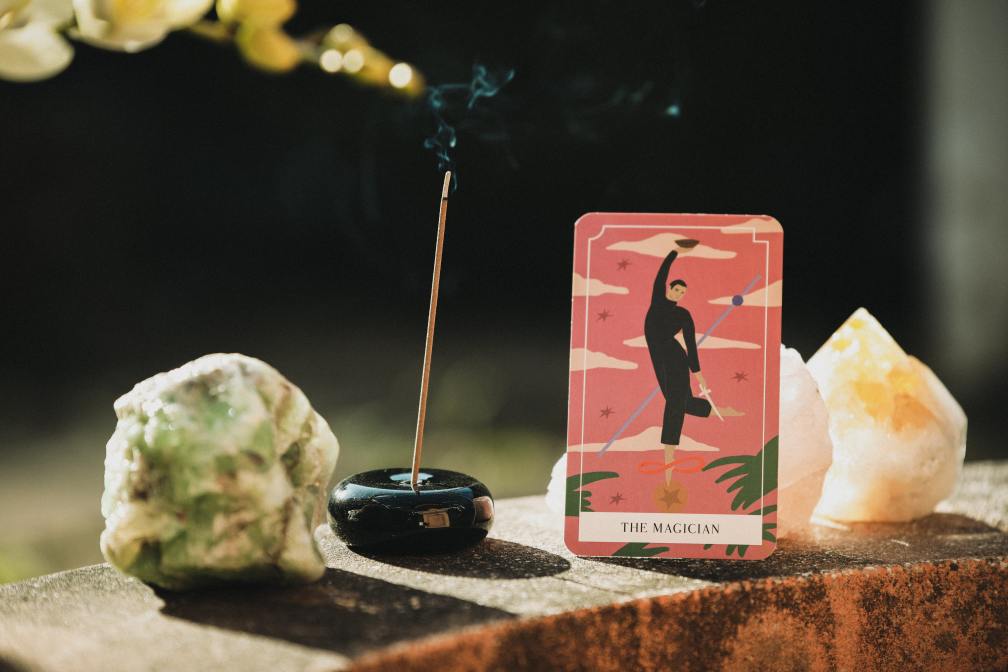
An altar with three crystals, a stick of burning incense, and the Magician Tarot card
Photo by CA Creative

Mirabelle used to complain that, like all prophets, she was not accepted in her own country. Being sidelined to the ‘alternative’ tent at the county fair was a testament to that, but she hung her shingle nevertheless, squeezed as she was among Tarot cards, crystals, incense and astrology charts. 

She blamed her lack of custom on a number of factors. She was ahead of her time (what prophet wasn’t?), her branding was off (‘linguistic seer’ might not have been the best way of describing her offer), and her services were for the good of the collective, not the individual. 

People were more interested in their own chance of love, wealth or success than in the fate of humanity.

Which was a shame, because her message (had anyone requested it) would have been a hopeful one.

Humankind was on the cusp of a great transformation—a breaking through of selfhood, which was always the harbinger of change.

She could tell by the pronouns.

When the pronouns became plural, it was a sign that people were becoming ready to appreciate the multitudes they contained.

It started when plural you replaced singular thou. And now plural they was replacing singular he and she.

You’re moving toward a new awareness, she whispered to the unseeing crowds that milled aimlessly about. Soon you will know the singularity of your multitudes.


Would you like to know more about this story? I discuss it in Episode 81 of Structured Visions. Subscribe to the podcast on Apple podcastsSpotify or wherever you like to listen.

The great cover up

Woman wrapped in mesh fabric
Image by Velizar Ivanov

Let me tell you something about the Earth’s Architects.

Folks accuse them of being arrogant.

But I say, take one look at that gorgeous globe from anywhere in the solar system and try to tell me it’s not the picture of perfection. Exquisitely balanced, it’s an aesthetic masterpiece, teeming with its plethora of enchanting life forms—from the industrious beaver to the whimsical bird of paradise—all delighting in their symbiotic dance.

The Architects didn’t design the humans, of course. They subcontracted that job, and by some minor miracle, yours truly got the bid. 

My competitor’s prototype was unequivocally superior. His design was of creatures with a built-in appreciation for the mathematical precision of the world they inhabited. Humans would be thinkers, numbers folks. Appreciators. They’d spend their days noting the sequences that governed the patterns of petals on a rose, admiring with awe the symmetry of harmonics in the song of a blackbird.

His presentation intimidated me not a little. It made me reckless.

‘If I were you,’ I told the Architects, ‘I’d go with Numbers Guy.’

I said it right off the bat, before I even started my pitch. Then I waited for one of them to take the bait.

‘Why?’ 

‘Dude comes in here and tells me he’s invented a whole species wired to admire me? How could I resist? That said, you’re speaking to a raving narcissist, if you believe what my ex tells her lawyers.’

I produced a conspiratory chuckle as I let what I was saying sink in.

Then I got serious. I told them it wasn’t maths they wanted in the new humans, but language. ‘A new language,’ I said, ‘one made just for them.’

What would be the point of that? they asked. They didn’t trust me, but they couldn’t ignore me either. 

‘Numbers are for getting to the essence of things,’ I explained. ‘Language is for covering things up.’

And why would they want the beauty of their world covered up?

Language is a fabric, I said, like a drop cloth for an artistic masterpiece, that protects and preserves. Language is an insulating blanket. Supple and sinuous, it will respond to the ever-shifting shapes of the Earth’s aesthetic genius.

Language is the icing on the cake, I would have said, but by that point they’d given me the bid.

They’ve regretted it ever since, but they didn’t write an escape clause into the contract so they’re forced (or so they think) to watch the perfection of their world get corrupted by human language.

Language (they complain) produced the great cover up, the mechanism by which humans have obscured the Earth’s genius, lied about it, separated themselves inexorably from it, and in doing so, instigated its destruction.

If they were ever to consult me again (and of course they never would), I’d tell them to look closer.

The fabric of language does more than cover things up. It also folds over on itself, creating wrinkles, pockets, pouches.

One day—great magician that I am—I’ll pull a gold coin from one of those pockets, and the Architects will realise it was never a mistake.
Spores

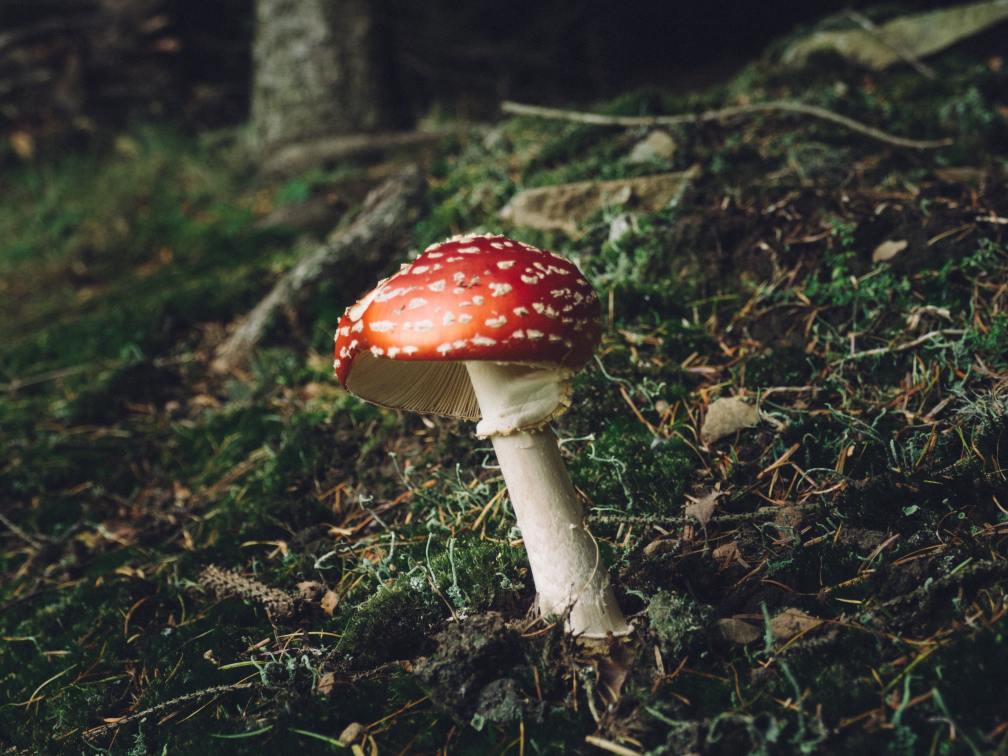
Close up of fly agaric mushroom on a forest floor
Photo by Andrew Ridley on Unsplash

Human beings once shared the Earth’s language, having no words of their own.

They’d eventually adopt the new lexicon that appeared one day on the forest floor. Words popped up like mushrooms. 

Red, white, alluring. Probably poisonous. 

Most of the other woodland creatures had the sagacity to avoid them.

Not humans, though. The naked wingless naïfs gobbled up each tumescent word, absorbing the mysteries within.

When they opened their mouths, they released the words into the air. They spread like spores.

The determiners

Newborn baby with its arms outstretched
Photo by Alex Hockett

All Gwyn had ever known was a world where your fate was determined at the age of eleven. 

It would be more precise to say it was determined at the moment of birth.

Everything hung on what the mother said when her newborn took its first breath. Once recorded, the maternal birth word was carefully consigned to the archives until the child’s eleventh birthday. At this point it was passed to the Panel of Determiners, who examined it, rectified any ambiguities and assigned it a word class that would establish the child’s destiny.

Some pregnant women could afford the costly antenatal classes that trained them to call out an auspicious word at just the right moment. Verbs held the most prestige, but their subcategories varied greatly even so. Finite verbs ranked first, with the more complex tense/aspect combinations coming out at the very top. Nouns came second, with adverbs and adjectives sharing third place. New mothers rarely uttered pronouns, prepositions or conjunctions, but the Determiners were prepared for all eventualities.

Interrogatives came low in the rankings. Expletives came last, which was unfortunate for families who could not afford pre-birth linguistic training. Poorer women were the ones most likely to utter a contented ‘Ah!’ or a blissful ‘Oh’ at the sight of their healthy baby. Woe betide the child whose enchanted mother whispered a ‘wow’ at her child’s first breath.

Gwyn was well acquainted with her own birth word. Her mother’s capacity to produce six different expletives for her elder siblings had been a source of much mirth among the extended family. But the seventh took the prize.

Still, Gwyn indulged a hope in a future full of possibilities.

Her mother’s call need not, after all, be interpreted as an expletive.

‘Jesus!’ was also a proper noun.

Prophet noun, she murmurs gently to herself as she stands before the Determiners. Messiah. Saviour of words, saviour of worlds.


Would you like to know more about this story? I discuss it in Episode 80 of Structured Visions. Subscribe on Apple podcastsSpotify or wherever you like to listen.