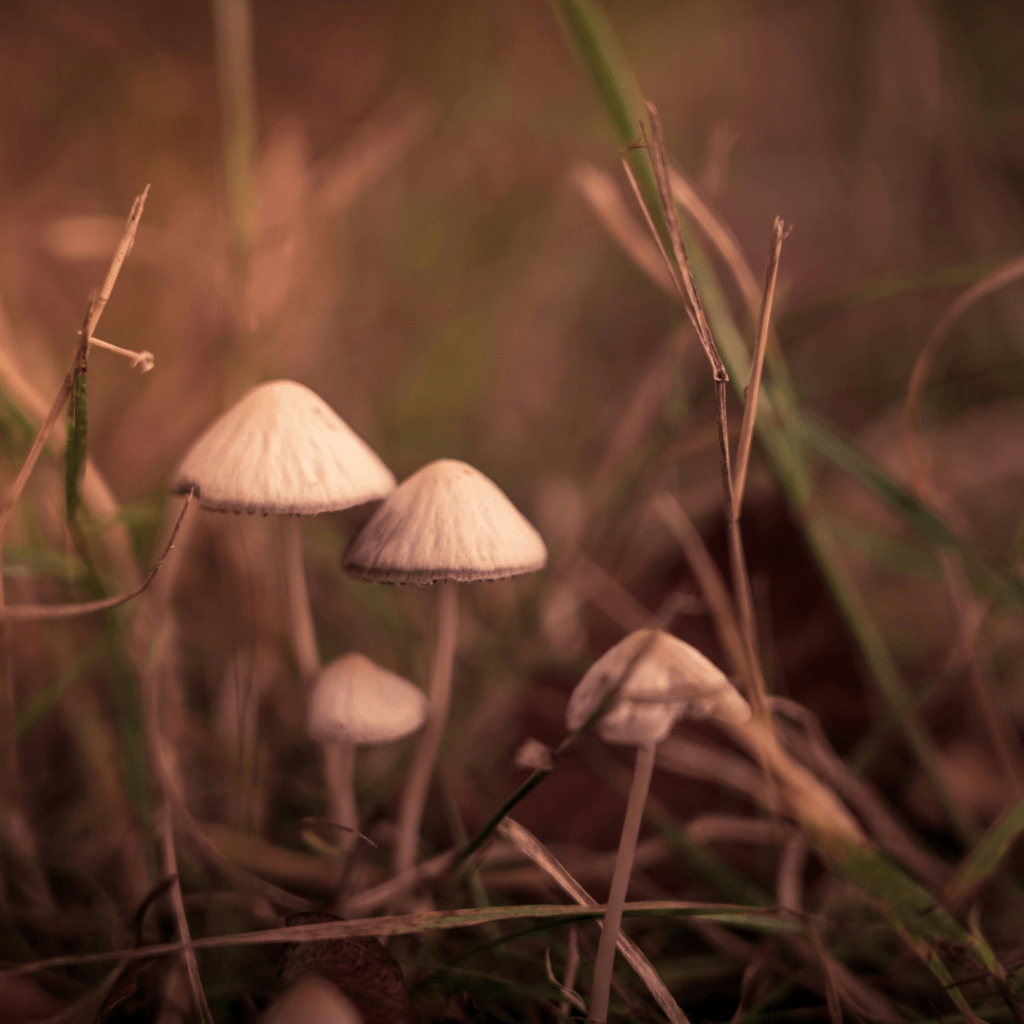
A close up of psilocybin mushrooms.

Memento mori

A close up of psilocybin mushrooms.
Photo by Nick Fewings

The timing of Evan’s tragic death, mid-October, forces Siobhan to face memento moris at every turn. But skeletons in blood-spattered windows are less poignant reminders than the signs of natural decay she finds in her daily walks in the woods. Rotting apples on blankets of brittle leaves. Voracious, implausibly shaped toadstools decomposing dead wood. Everything ends, the faded Michaelmas daisies seem to declare, smiling down upon the stripped strands of once verdant, cloying cleavers.

We’re sorry for your loss, she hears, and her eyes catch a cluster of magic mushrooms sprouting in a clearing. The sight reminds her to ring her therapist friend, Jim, who has been touting the benefits of psychedelics to guide the bereaved even before he heard about Evan.

We’re sorry for your loss. Less than a week later, under the influence of the psilocybin Jim has managed to source, she hears this same condolence. Are the shrooms she has just consumed the very ones she spotted on her woodland walk? She is guided not to dwell upon the referent of the first-person plural pronoun. Instead she follows a winding, bewildering pathway of the linguistics of loss: back-formation of the past participle (lost) of lose, from Old English losian, almost always used intransitively to mean perish, or to be lost or missing. 

The psylocibin-induced etymology unwinds her. She too is perishing, is missing, where is she

You are here, the shrooms reassure her. But what is you? The loss is a loss of language—language losian, language loosing, language losing, she chants until it is revealed: It is not just she who is here, or you, or him, it’s all of it, all the pronouns for all the people, all the misguided verb inflections for all the persons and all the tenses—here, here, here, until there is no not here and nothing is ever lost.


Would you like to know more about this story? I discuss it in Episode 114 of Structured Visions. You can also sign up to the Grammar for Dreamers newsletter to get monthly updates on the ideas that inspire my work.
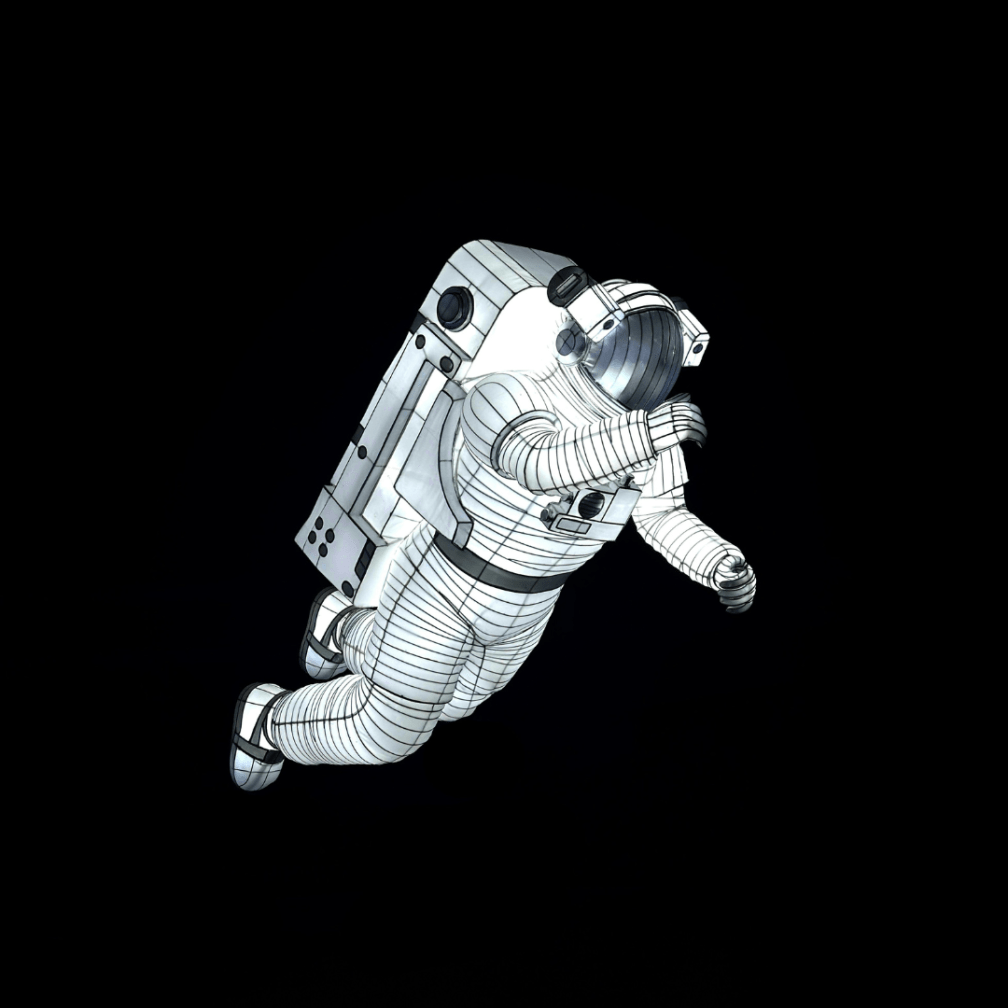
An image of an astronaut in the dark

The last stage of the Earth’s evolution

An image of an astronaut in the dark
Photo by Nate Holland

‘Go tell your grandmother the good news,’ Mum said, and begrudgingly I obeyed. I was given sweet marjoram and lemon balm tea, the leaves freshly plucked from Gran’s herb garden. Three teaspoons of sugar made it just about bearable.

‘I got my A-level results today,’ I told her. ‘I’m off to uni.’

‘To study science?’ she asked.

‘Natural sciences,’ I confirmed. I was surprised she remembered. I almost never talked to Gran. In my teenage years she was even battier than when I was little, and it made me nervous.

‘Will you learn about the Earth’s evolution?’

What other planet did she think we’d be studying, I wondered, but I choked down my sarcasm with another sip of tea. When I looked up again Gran was having one of her episodes.

‘The last stage in the Earth’s evolution,’ she intoned, ‘was the formation of human language. It enveloped human bodies like space suits. Whatever consciousness could make its way in struggled to flow back out—by design—so that humans were as lonely as they were inventive.’

I took advantage of her trance state to check my phone. My friends were organising celebratory afternoon drinks at the Rusty Nail.

‘As tyrannical,’ Gran continued, ‘as they were miraculous.’

‘Hmm. Interesting,’ I said. I drained the dregs of the disgusting tea, made some lame excuse and fled.

Over two decades later, I’m standing by her grave to ask the questions I was too self-absorbed to ask then. What were you saying in the garden that day, Gran? I’m sorry. I wasn’t listening.

But whatever wisdom she’d once held in her linguistic envelope had long since dissolved into space. Retrieving it, let alone getting it into the hermetically sealed suit of my own consciousness, would require some kind of crazy miracle.


Would you like to know more about this story? I discuss it in Episode 102 of Structured Visions, ‘How to belong.’ You can also sign up to the Grammar for Dreamers newsletter to get monthly updates on the ideas that inspire my work.
Pidgin

Constellation globe
Image by Nastya Dulhiier

The Language of the Stars?’ Mary had scoffed. She was convinced Carl scanned bookshops expressly to find the most infuriating titles.

Stella Johnson translates the language of astrology into everyday English, touted the blurb. The author photo bore a striking resemblance to every guileless undergrad in Mary’s Intro to Linguistics, none of them prepared for the complexity of syntactic structure, let alone the exigencies of rational thought.

Mary shoved the offending tome back at her husband.

‘If astrology’s a language,’ she would later demand, ‘who are its native speakers? It’s a pidgin, at best.’


Stella does not ask what a pidgin is. She looks instead to Pluto, transiting her client’s Saturn. A great loss. A world unravelled. This, in the midst of a Chiron return.

‘The stars are silent,’ she replies, as gently as she can. 


What Mary hears is this: All languages are silent.

The message burns like a meteor through the inhospitable atmosphere of her mind.

If her late husband were to find a way of reaching her, it would be just like this: a wordless missive interrupting an impossible dialogue. Solid and steady as his own quiet presence. A deep structure that remains unthinkable, unearthed.


Would you like to know more about this story? I discuss it in an Episode 99 of the Structured Visions podcast, ‘Linguistics and astrology.’ You can also sign up to the Grammar for Dreamers newsletter to get monthly updates on the ideas that inspire my work.