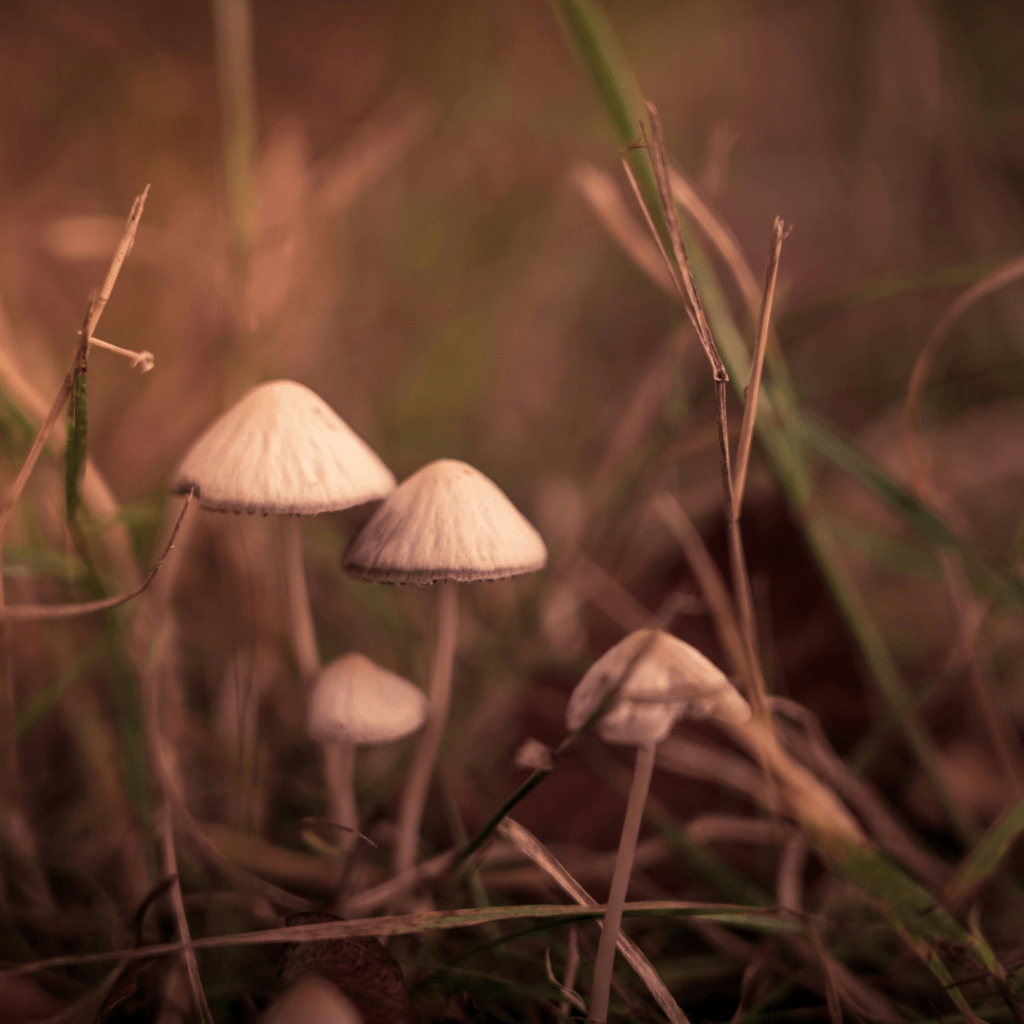
A close up of psilocybin mushrooms.

Memento mori

A close up of psilocybin mushrooms.
Photo by Nick Fewings

The timing of Evan’s tragic death, mid-October, forces Siobhan to face memento moris at every turn. But skeletons in blood-spattered windows are less poignant reminders than the signs of natural decay she finds in her daily walks in the woods. Rotting apples on blankets of brittle leaves. Voracious, implausibly shaped toadstools decomposing dead wood. Everything ends, the faded Michaelmas daisies seem to declare, smiling down upon the stripped strands of once verdant, cloying cleavers.

We’re sorry for your loss, she hears, and her eyes catch a cluster of magic mushrooms sprouting in a clearing. The sight reminds her to ring her therapist friend, Jim, who has been touting the benefits of psychedelics to guide the bereaved even before he heard about Evan.

We’re sorry for your loss. Less than a week later, under the influence of the psilocybin Jim has managed to source, she hears this same condolence. Are the shrooms she has just consumed the very ones she spotted on her woodland walk? She is guided not to dwell upon the referent of the first-person plural pronoun. Instead she follows a winding, bewildering pathway of the linguistics of loss: back-formation of the past participle (lost) of lose, from Old English losian, almost always used intransitively to mean perish, or to be lost or missing. 

The psylocibin-induced etymology unwinds her. She too is perishing, is missing, where is she

You are here, the shrooms reassure her. But what is you? The loss is a loss of language—language losian, language loosing, language losing, she chants until it is revealed: It is not just she who is here, or you, or him, it’s all of it, all the pronouns for all the people, all the misguided verb inflections for all the persons and all the tenses—here, here, here, until there is no not here and nothing is ever lost.


Would you like to know more about this story? I discuss it in Episode 114 of Structured Visions. You can also sign up to the Grammar for Dreamers newsletter to get monthly updates on the ideas that inspire my work.
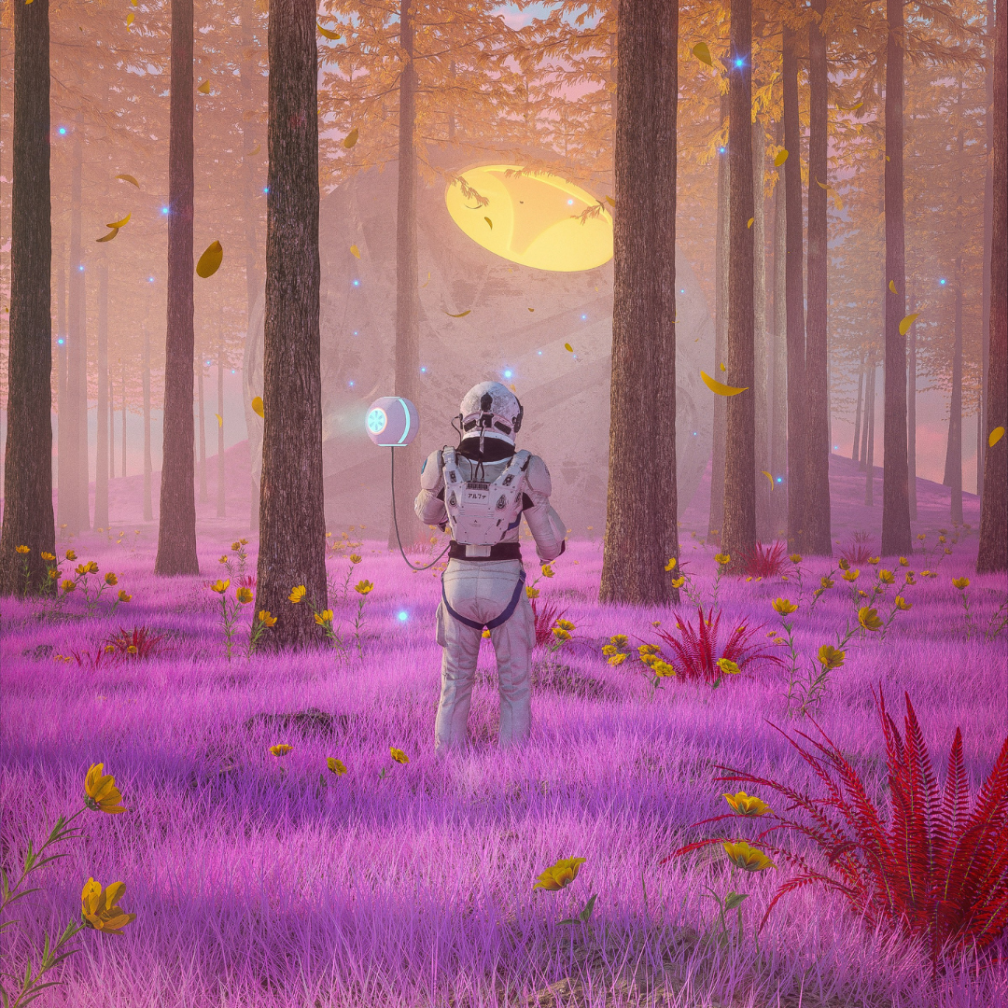
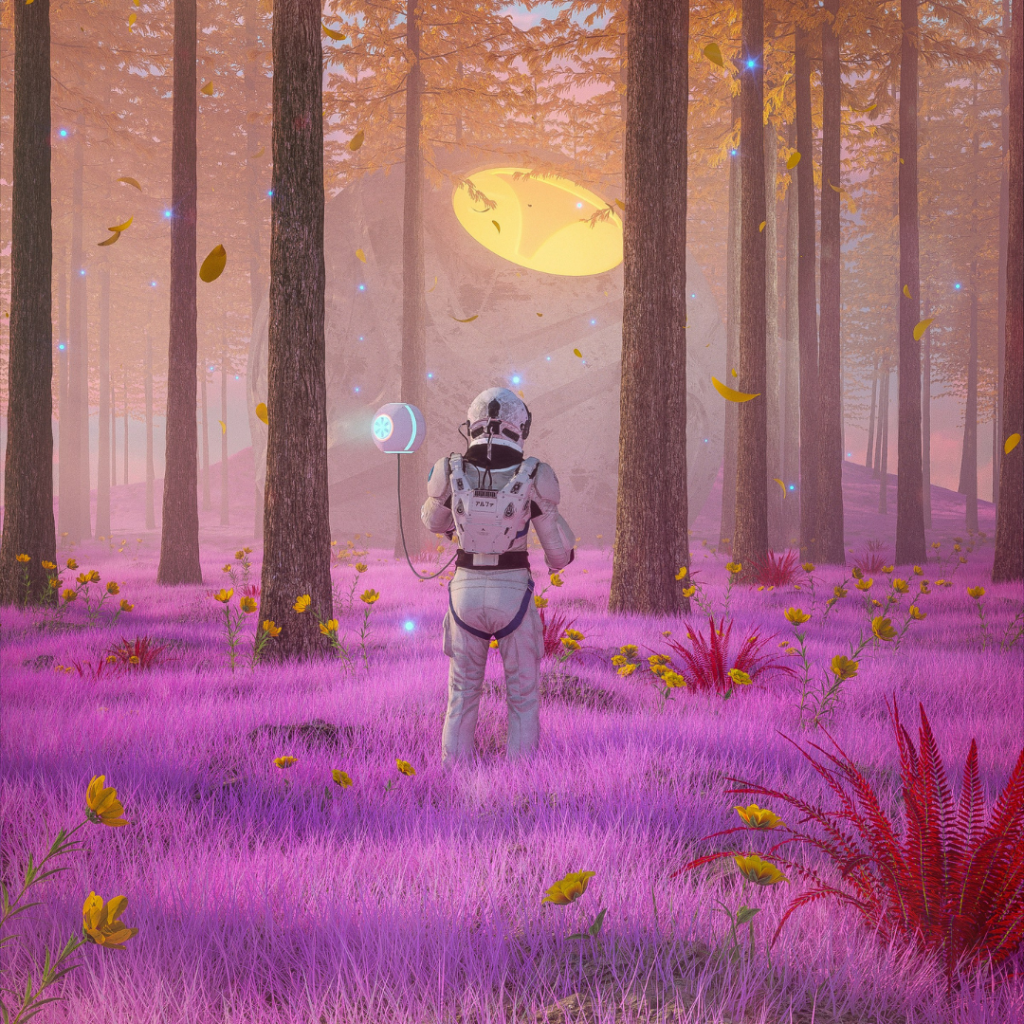
A person in a space suit standing in a field of purple flowers.

F in the ELLPH

A person in a space suit standing in a field of purple flowers.
Image by Rohit Choudhari

Corcoran and I went alone to planet F in the ELLPH system, where microbial and plant life had been discovered. The mission was to discover a proto-language. If F developed similarly to Earth, its vegetation would produce the early stages of the desire for separation, which would evolve into what we call human language, to be adopted eventually by hominid-like animals once their brains developed the capacity to house such an innovation. 

The army didn’t approve of two men alone on this special op. The risk of romantic attachment in such a lengthy, close-quarters critical mission was too high. But Corcoran was the only one in the training who met the essential requirement, so he was the only one who could go with me.

I didn’t notice anything special about him at first. A stocky, Midwestern fresh-faced kid, eyes wide as saucers. Strong Minnesotan accent, but only when he spoke English. His Portuguese, French and Russian were radio perfect in pronunciation, but in syntax and vocabulary he fell behind the other shortlisted multilinguals.

It wasn’t until he referred himself for a psych eval on the selection exercise in Yucatán that I took notice of him.

‘What part of your psyche needs evaluating, Sergeant?’

‘I’m seeing fairies, Sir.’

A Mayan medicine man had led the unit in a ritual the night before. I suspected half of the men in the unit had caught a glimpse of the fae, but Corcoran was the only one admitting it.

‘That’s the psychedelics talking, Corcoran.’ 

He didn’t stop admitting it, even after I gave him an out. He believed they were real. 

‘You were right about the fairies,’ I revealed on the craft that would bring us to F. ‘We’ve discovered that the elemental forces that on Earth are known as fae—or Alux, among the Maya—are the first attempts of a planet to produce linguistic expression.’

You were right about the romance, I’d have confessed to my superiors, if we hadn’t lost contact with them shortly before arrival. The elemental language prototypes that abounded on F had brought tears to the scrying pools of Corcoran’s eyes.

‘The separation creates the Mystery,’ he breathed. We held each other, weeping. The curious fairies gathered round.


Would you like to know more about this story? I discuss it in Episode 110 of Structured Visions, ‘Clap if you believe in fairies.’ You can also sign up to the Grammar for Dreamers newsletter to get monthly updates on the ideas that inspire my work.