
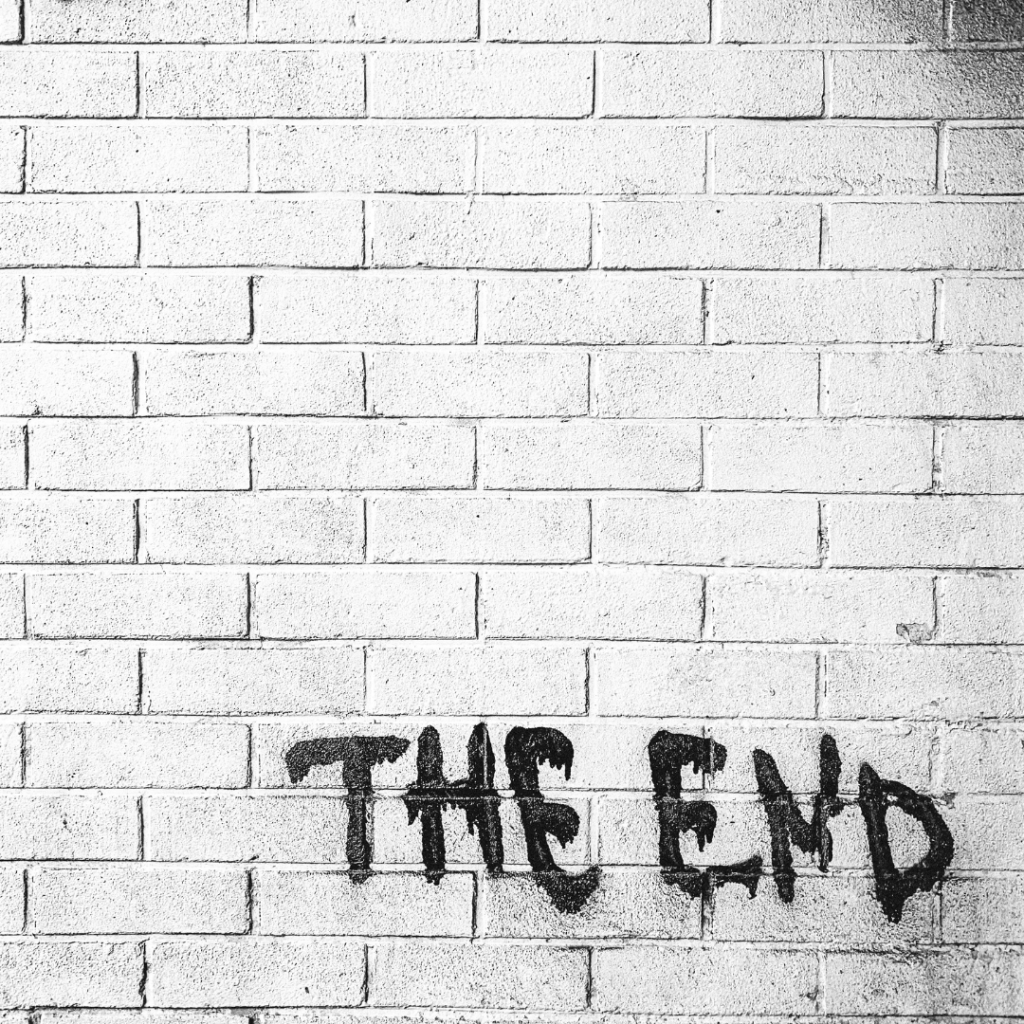
In the city centre, at the cathedral, a lexical error. Writ large on a sign held aloft by brittle, needle-tracked arms.
Ellen has just returned from a hospital appointment where she learned she has nothing left to lose. Whatever harm might come from correcting this error pales in comparison to her prognosis. She interrupts the ranting tramp.
‘It’s supposed to be The end is nigh.’
The addict lowers his arms to reflect upon his sign. The end is now.
With her linguistics training, Ellen can diagnose the reason for the error—the unfamiliarity of the archaic word paired with the phonological similarity between the diphthongs in now and nigh. Both are monophthongised in local accents. Nigh to nah in the American south. Now to nah in northern England.
The man’s eyes are upon Ellen now, and they flood with a compassion that soaks her very synapses, dousing the incendiary syntax of her malignant thoughts.
The end is now, he’s telling her, though his voice remains silent. The end is always, has always been now. It was only ever the stretching threads of mind-made language that could convince her otherwise, metastasising lies about the shape and structure of time.
Would you like to know more about this story? I discuss it in Episode 104 of Structured Visions, Consciousness is more than just a little cutie pie. You can also sign up to the Grammar for Dreamers newsletter to get monthly updates on the ideas that inspire my work.
 Grammar for Dreamers