‘The problem with telepathic communication with trees is not proving it’s possible. That it’s possible is undisputed. The number of people having meaningful conversations with our arboreal companions grows every day. The problem—’
Here the professor paused to sip some water.
‘The problem is that telepathy is a form of translation. Any communication directly transmitted to a human is understood exclusively in the recipient’s first language. Sequoias and redwoods do not “speak” English, or Tagalog, or any of the other languages their messages have been translated into. They speak the Earth’s own language, and relying upon telepathy to hear them makes it difficult to identify the Earth’s linguistic structure.’
The professor sensed some uneasiness in the audience. He stopped for a moment, but no questions, concerns or rebuttals came forth.
‘There’s a way round this, though,’ he assured them. ‘Make hypotheses about what forms might only exist in your human L1—English, for instance—then pose telepathic questions that depend upon these structures. Copular verbs are a good example.’
He’d confused, he realised, the non-linguists in the audience.
‘The English copula are the BE verbs—am, are, is, was, were,’ he explained, clumsily. ‘Like all verbs, copula require subjects, but they are more bound to these than lexical verbs, even analytic languages like English.’
Clearly no one knew what an analytic language was.
‘Analytic languages, of course,’ he coughed, ‘are those that rely less upon inflectional morphemes, like English.’
The explanation didn’t help, but the professor could not afford to lose more time.
‘I surmised that the Earth’s language, though abundant in verbs, would lack copula,’ he said. ‘Copular verbs require association between subjects and complements, either of identification or attribution. I am a professor of linguistics. I am Stephen. I am happy to be here. The verb separates me into at least two different entities or states. It creates a label that is affixed to the I.’
Something occurred to him. ‘It is strange that the word copula suggests a bringing together,’ he reflected extemporaneously. ‘What’s actually happening is that the verb separates. What was one becomes two.’
The professor could not afford to wonder whether this metalinguistic inaccuracy troubled anyone else. He had not yet communicated his most important discovery.
‘My hypothesis was that the tree’s linguistic system would not code for such a divide. You’ll be wondering how I managed to test this,’ he offered.
No one seemed to be wondering this.
‘I posed it a question. Two questions, in fact.’
He drained his cup of water and signalled for more.
‘“What are you?” I asked. “Who are you?”’
A nurse appeared with the requested refill. ‘Sleepy time now,’ she announced, casually placing the meds on his tongue and pouring the water into his mouth. She wiped the dribble from his chin and waited.
The professor’s eyes closed and his audience dissolved, the auditorium empty and echoing.
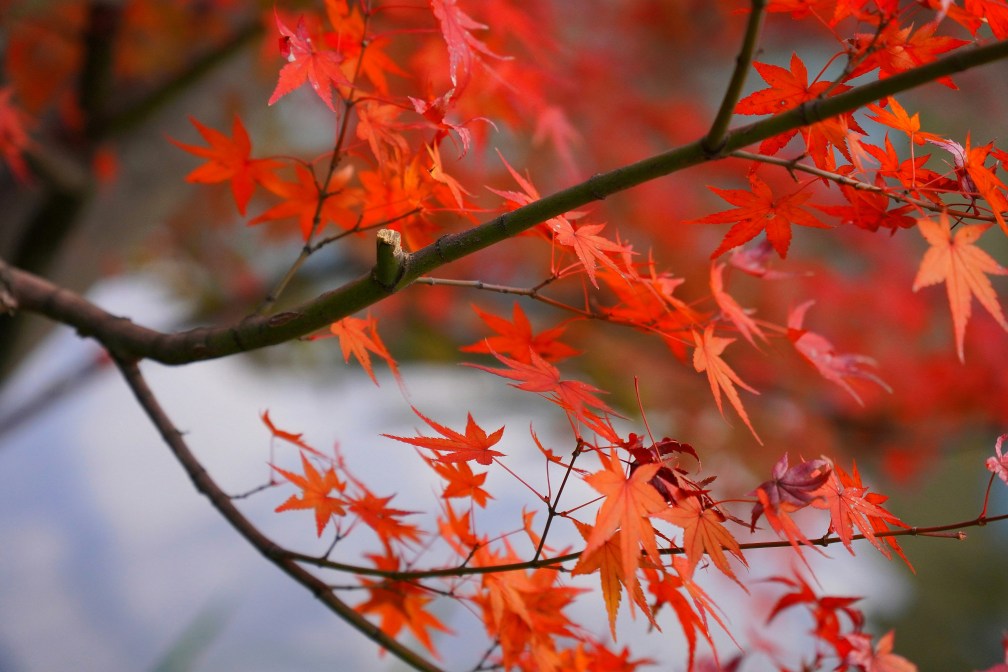
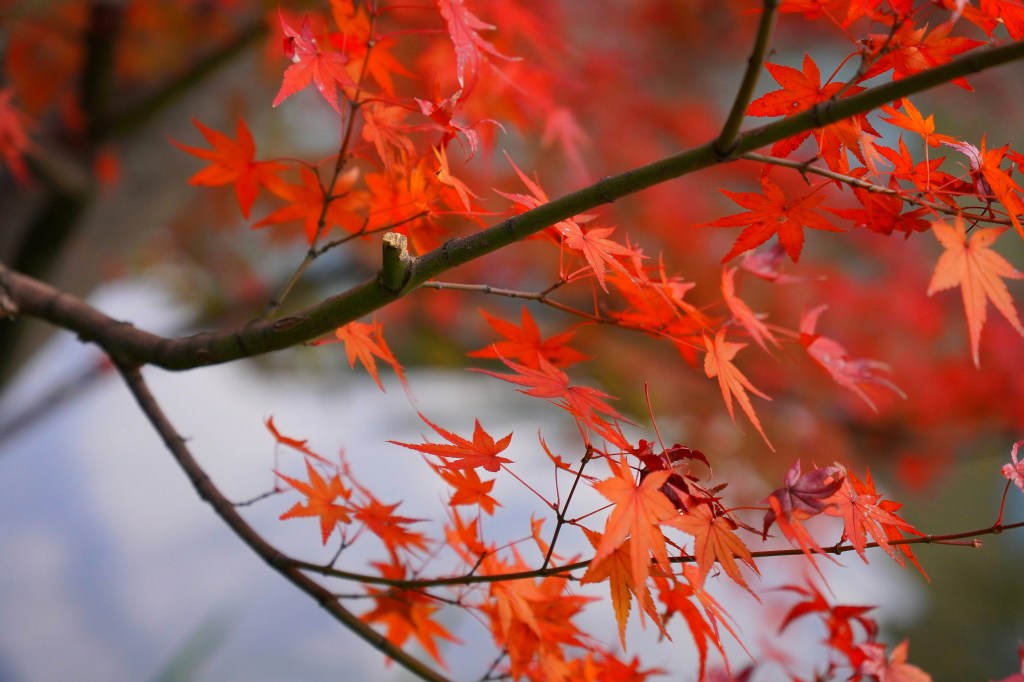
No one would have heard the tree’s response, had the red maple outside the window not offered it up as a reply.
“I am that I am,” it said, disproving the hypothesis. But no one heard, not Stephen, not the nurse, not the confused, invisible crowd.
Would you like to know more about this story? I discuss it in Episode 109 of Structured Visions, What makes you so special? You can also sign up to the Grammar for Dreamers newsletter to get monthly updates on the ideas that inspire my work.
 Grammar for Dreamers