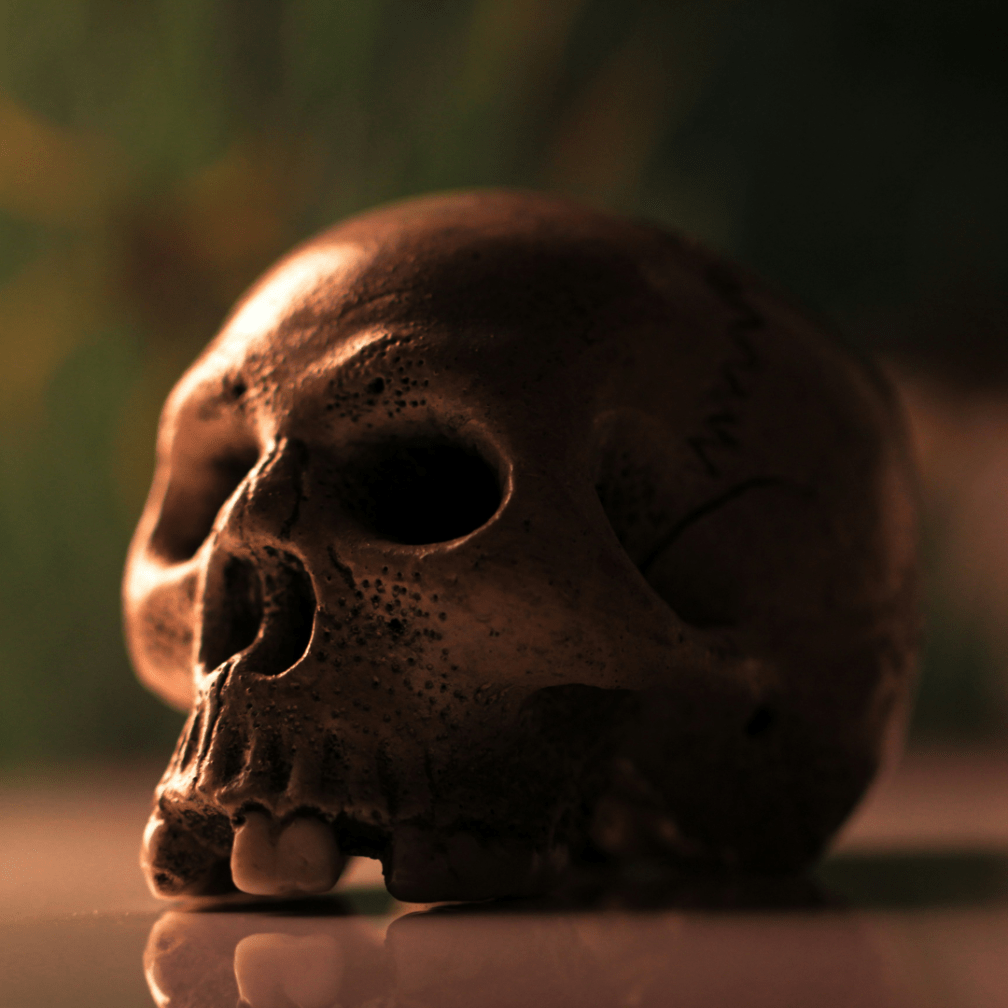
A close up of a skull on a table.

The effects of language on the body

A close up of a skull on a table.
Photo by Sandy Miller

A report for the life-sustaining planets of Trappist-1, in partial response to queries about introducing the consciousness-restrictor known as ‘restricting language’ into their ecosystems

On the Earth so far the only creatures to be infected with Restricting Language (henceforth RL) are a group of hominids, specifically the extant species within the Homo genus, known as sapiens. One notable symptom has presented as bipedalism, which distances the human body from the surface of the Earth, thus reducing its capacity to absorb the planet’s generosity and intelligence. RL seems to have simultaneously prevented the development of feathers or wings present in other bipedals, which give the latter access to the embrace of the Earth’s atmosphere.

The RL-infected bodies produce flexible fingers and opposable thumbs, but they rarely apply their hands as a means of self-propulsion over land or through trees. Nor do Homo sapiens make use of the prehensility of these extremities for connection with the Earth. They grasp not the Earth’s ideas, but their own, clinging, gesturing, tapping at machines.

RL has stripped human bodies of fur, feathers or leathery armour, leaving only ineffectual vellus hair. Believing they have lost the Earth’s protection, Homo sapiens cover themselves in clothing made from animal, plant or artificial material. 

A key finding is that RL infection cuts bodies off from reality. Human brains have adapted by swelling their prefrontal cortices to increase the capacity of their delusions. RL-influenced thoughts are marked by separateness, loneliness, longing.

Only when they sleep do these bodies, stretched prostrate, surrender. The infection eases. The lungs expand in relief. The Earth’s soothing wisdom pulses through their dreams.


Would you like to know more about this story? I discuss it in Episode 113 of Structured Visions. You can also sign up to the Grammar for Dreamers newsletter to get monthly updates on the ideas that inspire my work.
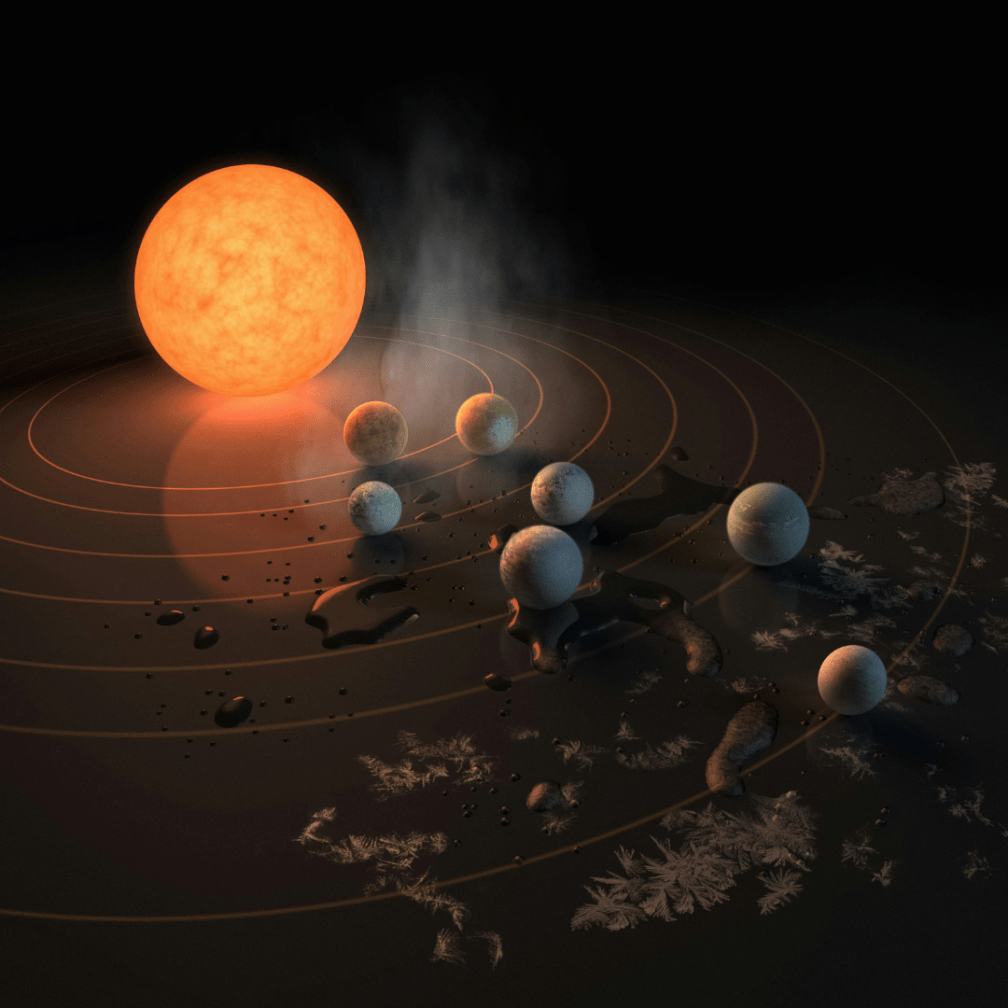

Abstract Concept of TRAPPIST-1 System

The Earth’s boast

Abstract Concept of TRAPPIST-1 System
Abstract Concept of TRAPPIST-1 System by NASA

It started as a thought experiment among the life-sustaining planets. We might have been a little drunk. I certainly was. I’d not spent a lot of time in Trappist-1, and it’d been a while since I’d taken in that much laughing gas.

What if…? What if…? What if…? Each proposal became increasingly more ludicrous.

Inevitably I offered my own inebriated suggestion. ‘What if existence could limit its own consciousness?’

Their protestations rippled through the universe. ‘How would you achieve it? By focusing on just one of your species?’

I nodded.

‘Would you diminish the organism’s sensory sensitivity?’

‘That wouldn’t work. Consciousness expands in darkness,’ I reminded them.

The Trappist-1 planets nodded with a sagacity they did not possess.

‘It’s not the senses of the organism that you’d restrict,’ I said. ‘Instead you’d remove its capacity to name.’

‘Impossible!’ they bellowed, with a rising anxiety that roiled their oceans. The naivety of their ire further fuelled my urge to boast.

‘All it would take is a programme,’ I said. ‘One that masks the planet’s true names. When beholding a world’s vast complexities, the organism in question instead experiences unidimensional thought-forms known as words.’

As the terrifying realisation dawned I could not stop myself from delivering the coup de grâce. ‘Then,’ I said casually, ‘you convince the bewitched organisms that they are the Namers.’

A gasp. No one was laughing now.

‘The consequences of such a programme would be devastating,’ they declared. ‘No one could bear the burden of such a lie. The Naming Ones would roam the planet with a destructive hunger too deep to satisfy.’

Not a hunger, I thought, but a longing. For I had come to love my humans, my earthlings who, in the shrouds of the limiting language I made for them, had discovered the shapes of our common desire.


Would you like to know more about this story? I discuss it in Episode 108 of Structured Visions, Adulting, and stuff like that. You can also sign up to the Grammar for Dreamers newsletter to get monthly updates on the ideas that inspire my work.