Ozymandias

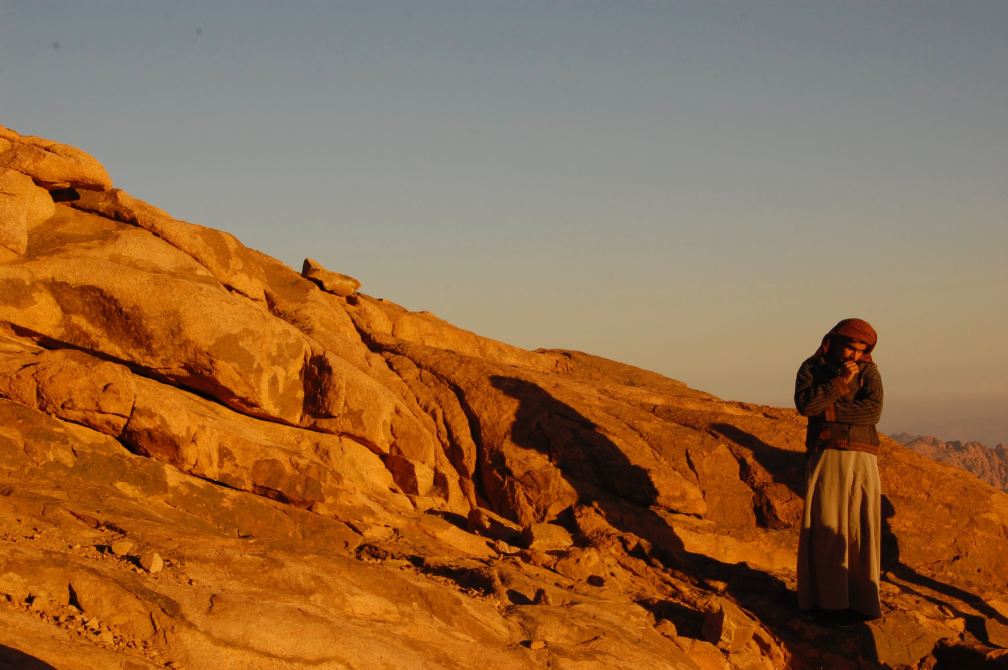
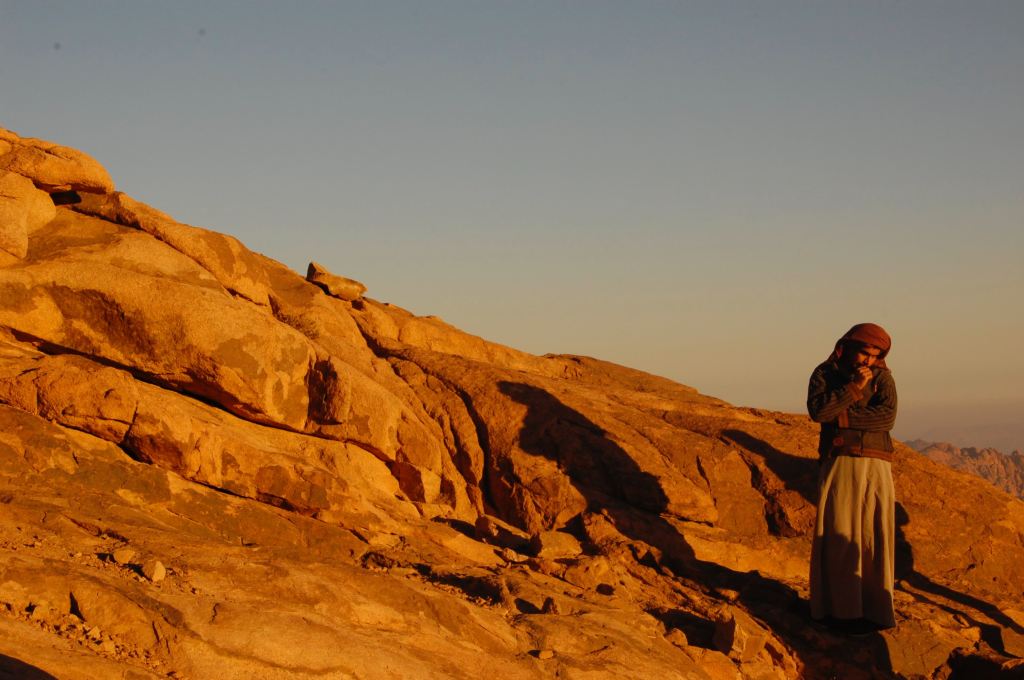
Person standing against a low rock formation in the desert
Photo by Aleksei Zhivilov

The antique traveller is still making his rounds. ‘My name is Ozymandias, King of Kings,’ he recites. 

The lines have made him mad. 

That statue, I tell him, was fashioned, as we all are, from two harmonising syntaxes. The language of the Earth, and the language of the self. 

Nothing besides the self remains. 

The Earth’s utterances return to the welcoming depths of the desert, each selfless grain of sand its own enduring miracle. 

He has not heard me.

‘Look on my Works, ye Mighty,’ he implores, and I despair.

Moving language

There are at least two kinds of spirits, the ones who’ve lost language (what a relief) and the ones who haven’t gained it yet. The dead and the not-yet-born, respectively. I spend my time with the latter group, those adorable newbies, fixated on words, phrases and morphemes, desperately trying to move them around, like beads on a plastic teething ring. 

They will always fail. They try to trick me with telepathy, but that’s not language, and they know it. 

No one can move language until they inhabit it.

At the moment of birth it rushes into welcoming lungs, with all its delightful contrasts—bright/dark, hot/cold, loud/quiet. Upper/lower, like the lips that form bilabial consonants. The phonemes dance like jumping jacks, like laughter, like the tears on Mama’s cheeks.


Would you like to know more about the story, and the linguistic ideas that inspired it? I talk about it in Episode 94 of Structured Visions, ‘Language and the afterlife’.

Advent

Photo by Annie Spratt

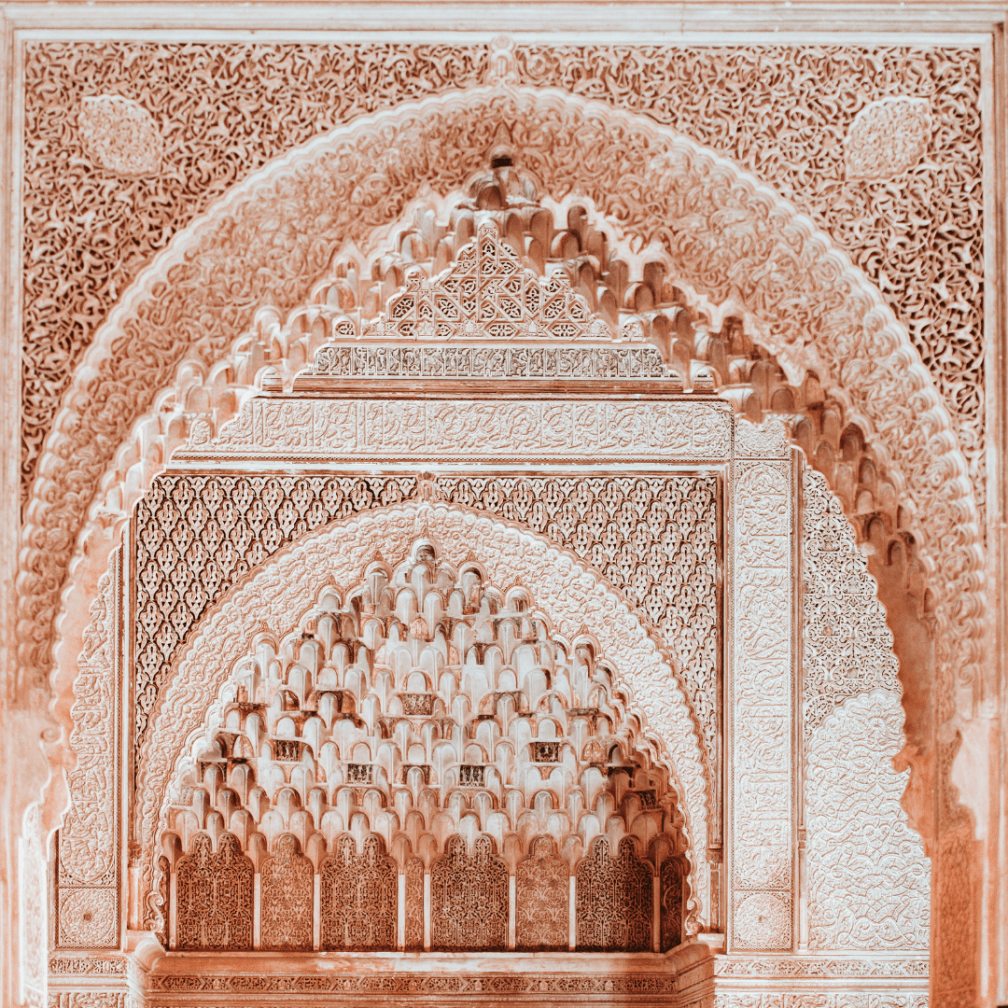
It was a beautiful piece, entirely unique, rosewood carved in an intricate labyrinthian latticework. The woodcarver held the egg-shaped sculpture in the nest of his open palms, as if beckoning Aimee through the bewildering chaos of scents, sounds, colours and textures of the Marrakech souk.

‘C’est quoi?’ she asked.

A toothless smile illuminated the seller’s ancient face. ‘Un calendrier d’Avant,’ she thought she heard him say, or perhaps, ‘Un calendrier de langue’. The latter was more probable in a Muslim country, she reasoned, and indeed, each willow-like branch was engraved with a delicate looping script, maybe some form of Arabic calligraphy. 

But back home, she discovered tiny doors hidden within the interior of the egg, each numbered in the same elegant script, one to 24, closed tight in anticipation for the proper season.

So with great patience she waited for December, and a childlike ceremony presided over the unlatching of the first door on the first of the month.

Her initial disappointment was assuaged by the captivating polished smoothness of the empty space. She stroked the wood hypnotically, imagining what treasure might have been lovingly tucked inside. A tiny bauble, a miniscule vial of spice, a line of poetry on a strip of delicate rice paper. 

Subsequent days found her snaking her exploring hand into the complex networks of carved wood. Each opened door revealed a void in miniature, with just enough room for her probing fingertip. No treasures but space, no gifts but emptiness.

On Christmas Eve, the ritual complete, Aimee decided it was never a ‘calendrier d’Avant’ and always a ‘calendrier de langue’. She traced a loving finger around the smooth, welcoming spaces hidden behind the doors of language, as if conjuring the exquisite gifts that could be held within.
Salesman to the gods

Maybe you’ve heard of me. I’m the guy who sold language to the gods.

You’d think it would be like selling sand in the Sahara or carrying coals to Newcastle, but I had a hunch that the divinities would be a taciturn bunch, utterly devoid of language. So I set off up their holy mountain with garment bags full of my best specimens. Cloaks of woven syntax, adverbial accessories, pronominal footwear, shimmering modal nightwear.

It was a tough climb, but once I reached the cloud-covered peak I had my intuition confirmed. Linguistically speaking, the deities were naked as newborns, and eager to sample my wares.

I was eager too, and my enthusiasm was my undoing. No sooner had I draped the cloaks of language upon the gods’ colossal shoulders than they were descending down the mountain and into the world.

Language made them mortal. Words made them flesh.

Philosophers and mystics would be talking about this event for years, but it goes down in my memory as the time I didn’t close the deal. Even now I shudder to think of my merchandise, unpaid for, rolling off into the abyss on the backs of debtor gods. 


Would you like to know more about this story? I discuss it in Episode 93 of Structured Visions.

Ghosts

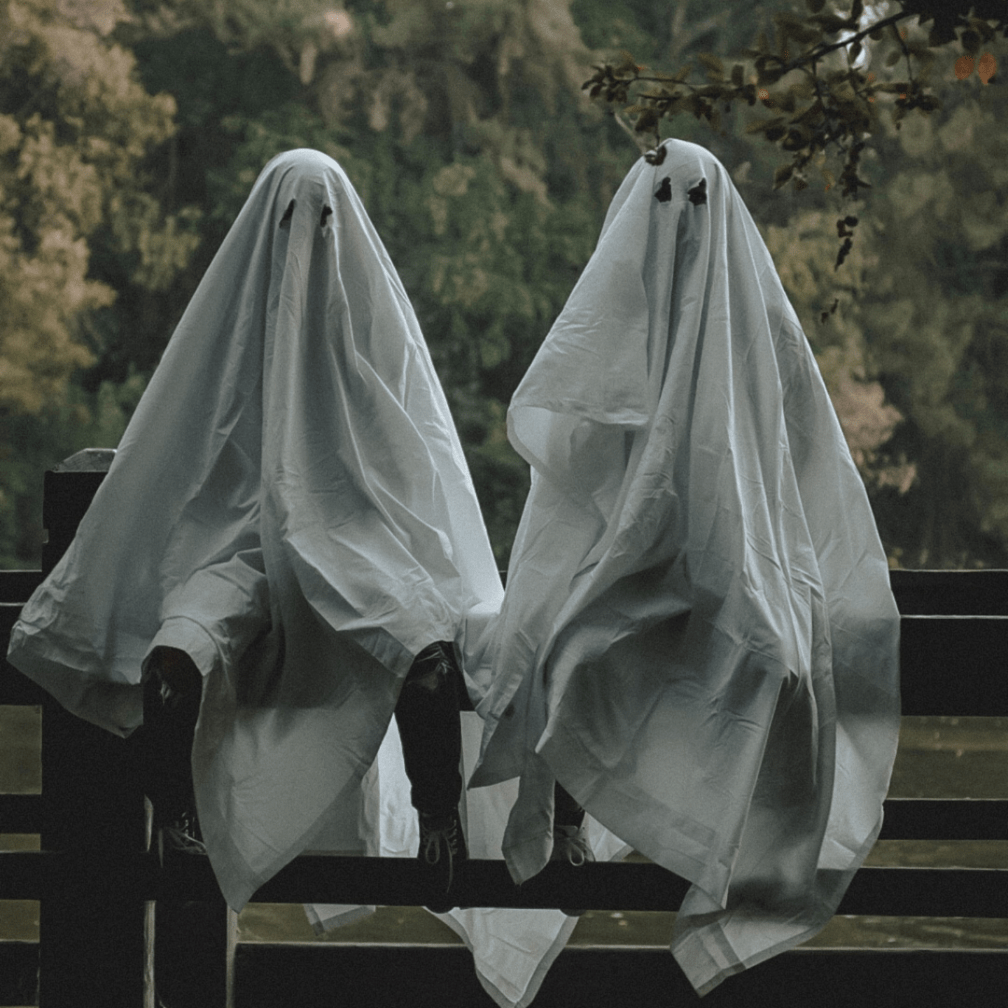
Two Halloween ghosts sitting on a bench
Photo by Thalia Ruiz

She wants me to call her Mother Earth, but she doesn’t seem that maternal to me, more like a mad scientist. Especially in her later years. Some of the primates she dreamt up were ludicrous. The monkey with the giant nose that honks out love songs, or those weird lemurs with six fingers and bat eyes.

The most recent ones she made lanky, and stripped them of most of their hair. When I saw her stitching up little cloaks for them, I thought it was to cover their nakedness. The new clothes fit awkwardly, and the poor things wandered around hapless and unseeing, like Halloween ghosts. It was no use trying to free them; they clung ferociously to their cloth casings, fighting for their own confinement.

‘What material did you use?’ I asked the old lady. The fabric had a gossamer feel, some ethereal quality I didn’t recognise.

She said nothing in response, but threw one of the ghost-sheets over me. The world I’d known faded to nothingness, like lights going down in a cinema house. A shadow of a self appeared on the white cloth—I named it—me—I was trapped in a world of language, captivated. Since then I’ve kept my sheet wrapped tight around me, secure, encompassing, like swaddling.

Death of a grammarian

Close up photo of maple leaf in autumn with shallow depth of field
Image by Matt

As my language deteriorates, a steadier syntax is revealed. A tree dropping leaves of wisdom in my life’s autumn.

The verbs that remain are release, surrender, let go. The first person–that once grasping branch–now sets its objects free. They spiral skyward, earthward, held safe within some other grammar, invisible as air.


Would you like to know more about this story? I discuss it in Episode 92 of Structured Visions.

The deal

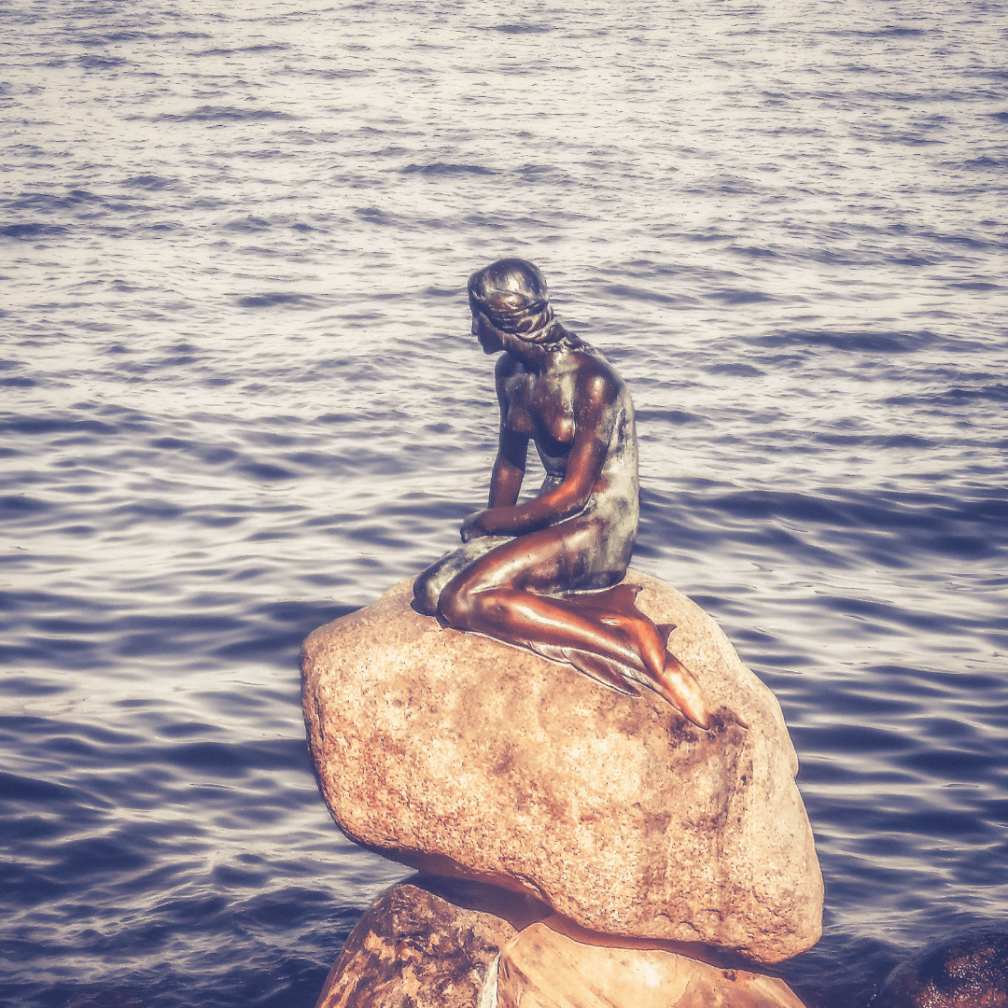
Bronze statue of Hans Christian Andersen's The Little Mermaid.
Photo by K. Mitch Hodge

The deal was this: that I’d lose my mermaid’s voice, and gain human language. Determiner, adjective, noun, auxiliary, lexical verb. The welcoming buoyancy of the sea’s pulsing grandeur reduced to a linear gravity. Each phrase chained to another in a relentless syntax, like knives piercing the sole of each fresh footstep.

An airy wasteland, this world, where meaning is lost in the wind, and everyone shouts to be heard. Whatever yearning once delivered me to this shore has long since receded with the tide.

Nonna’s prophecy

Silhouette of a person against a treeline looking up at a star-filled sky
Image by Prottoy Hassan

‘Nothing fascinates for long,’ my Nonna used to say, sometimes as a commentary upon her granddaughter’s short attention span, sometimes to dismiss the latest headline-making scientific discovery.

Her wisdom would not hit home until three decades into the next millennium, about four weeks after we first made contact with extraterrestrial intelligence. 

I was appointed to the communication team for my training as a field linguist, but it was my work in artificial intelligence that proved instrumental in setting up exchange channels. It turned out that we didn’t need to learn the aliens’ languages. Instead we wrote software that mined their equivalent of our internet and created a two-way translation device. Before long, conversation with our distant neighbours was as mundane as using the ‘chat’ function on a customer service site.

I was bored. And it bothered me that no matter how much we ‘talked’ with our extraterrestrial interlocutors, we weren’t learning anything about their languages.

‘Why would you need to learn their languages?’ my husband Gary asked. ‘Language is for communication, right? You’re already communicating with them.’

His question tripped an inexplicable sadness in me, a longing that could never be translated into the limited lexicon of our lingua franca.

Our son was watching an online video about mycelium. ‘Language isn’t for communication,’ he said. ‘It’s how things are structured.’ 

His words riveted my attention to his screen, which showed a time-lapse sequence of a white fungal net stretching out over a vast forest. I felt my breath catch. I too was caught, captivated by this silent, linguistically rich ecosystem, a structure so compelling that, despite Nonna’s prophecy, its fascination might endure.

A message

Image by D koi

What’s she doing here, how did she get here, what is this place, how does she escape? 

How long has she been here? 

It’s a game, a puzzle, which Grace feels compelled to solve. 

Maybe today’s the day, maybe she’ll crack it.

‘Crack’—the verb breaks through her consciousness like a divine thunderbolt. She reaches out, pressing her palms against a structure solid as steel. She’s discovered the material of her imprisonment—a glass beyond transparent, beyond invisible. 

She leans her weight against it. It closes in so tight her lungs collapse.

Still, she manages a breath.

An inspiration. She presses her ear to the cell wall. A chaotic chorus of dissonant voices assaults her, launching her backwards, her body thrown against the unforgiving substance of her unseen cylindrical cage. 

Curiosity overcoming terror, she returns her ear to the oppressing surface, and listens. 

What’s she doing here, how did she get here, what is this place, how does she escape? How long has she been here? 

The secret, she knows in a shattering stroke of insight, is to break free from the language of her thoughts. To break free from language entirely.

Her breath forms a mist on the enveloping window. With her finger, Grace traces a message.

Love language

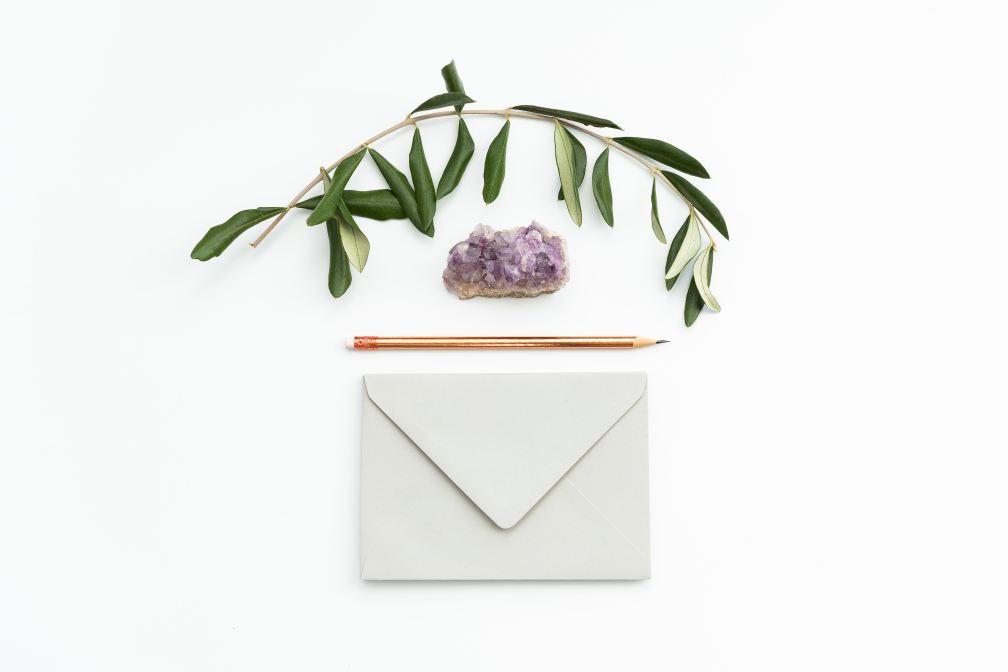
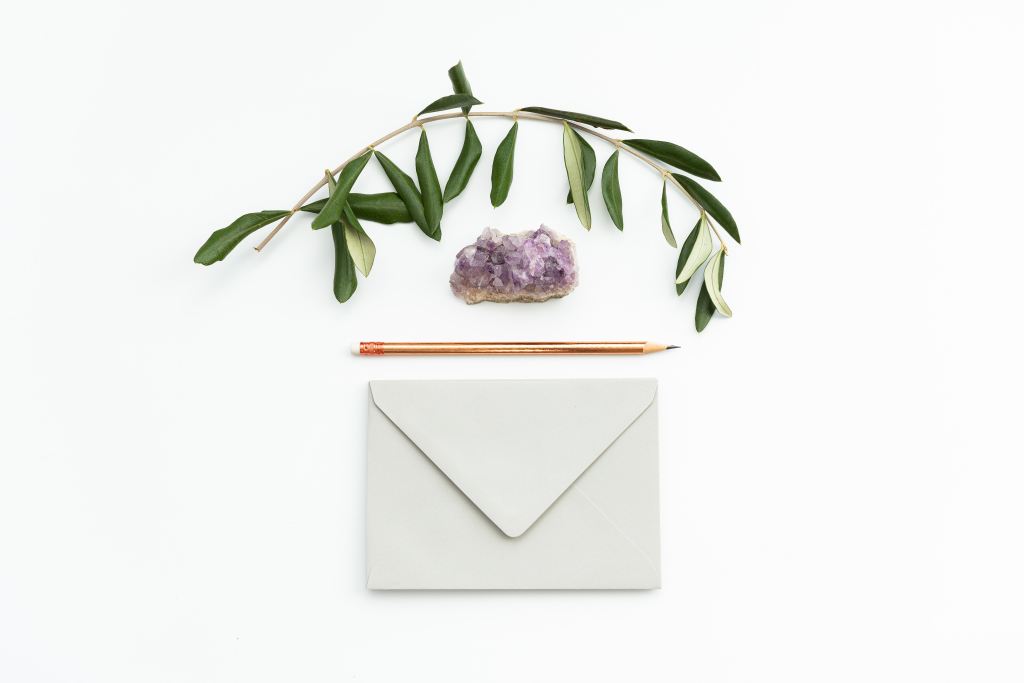
Green leaves, a purple crystal a pencil and an envelope aligned on a white background
Image by Joanna Kosinska

Stop me if you’ve heard this before. 

Two crazy kids, let’s call them Susie and Mick.

Susie’s got everything going for her. Brains, heart, looks, independent wealth, and more where that came from. A solid network of friends. Well rounded. Last thing she needs in her life is relationship drama. 

Still, she falls for Mick. She falls hard. 

What she sees in him is anyone’s guess. Puny, self-absorbed, obsessive. He still lives with his mom. He barely notices Susie, except when he needs something from her, like cash to feed his latest addiction, which she always supplies.

He’s got so much potential, she says. (Her friends throw up in their mouths.)

Mick reads Susie’s letters, but he can’t see past the words to the beautiful soul who wrote them. The love in those notes keeps him walled within his narcissism. They mirror back to him his own self image, which he can’t see through. 

Susie’s the Earth. Mick is most of humanity.

The love letters are human language. 

There’s a fair amount of evidence that Susie’s getting wise to Mick’s stupid games. 

If you, my friend, could love Susie as much as she loves Mick…

Ah! There may be hope for us all.


Would you like to know more about this story? I talk about in in Episode 90 of Structured Visions, ‘Language, intimacy and narcissism’. Subscribe to the podcast on Apple podcastsSpotify or wherever you like to listen.