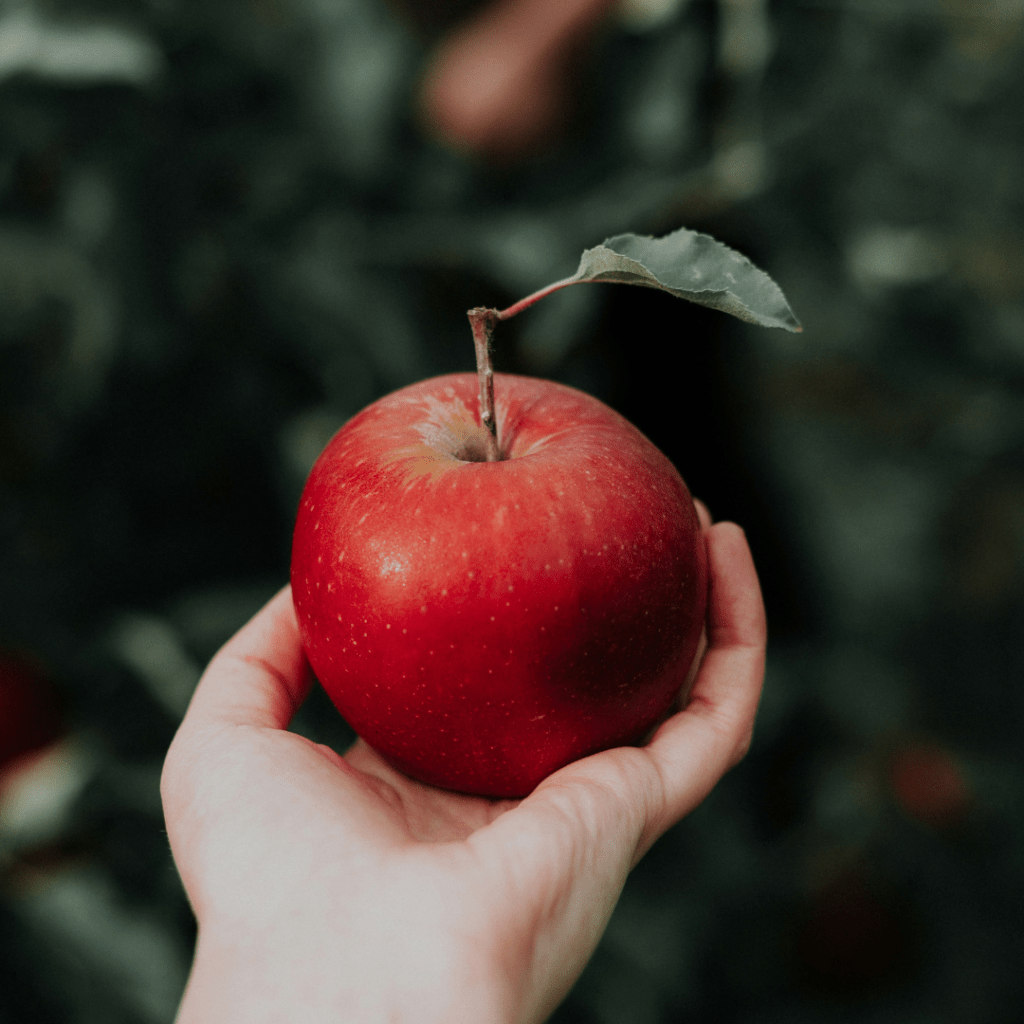
A hand holding a red apple.

The apple

I was never a poison, but a potion. A portal to the darkness that snow-white humans are so eager to deny.

The queen reached her own dark side through a Saussurian mirror of signifier and signified—the shiny glass signifying beauty and brilliance, the dark metal absorbing the signified envy. The apple, a gateway to a world beyond the toxic dualities of bright/dark, good/evil, life/death, through the labyrinth of unconscious signifying, into the world as it is.

I’d have stayed lodged in the human’s mouth for longer, feeding her the Earth’s true language, protecting her from the lies of signification as she made her journey into the silent unknown.


Would you like to know more about this story? Sign up to the Grammar for Dreamers newsletter to get monthly updates on the ideas that inspire my work.

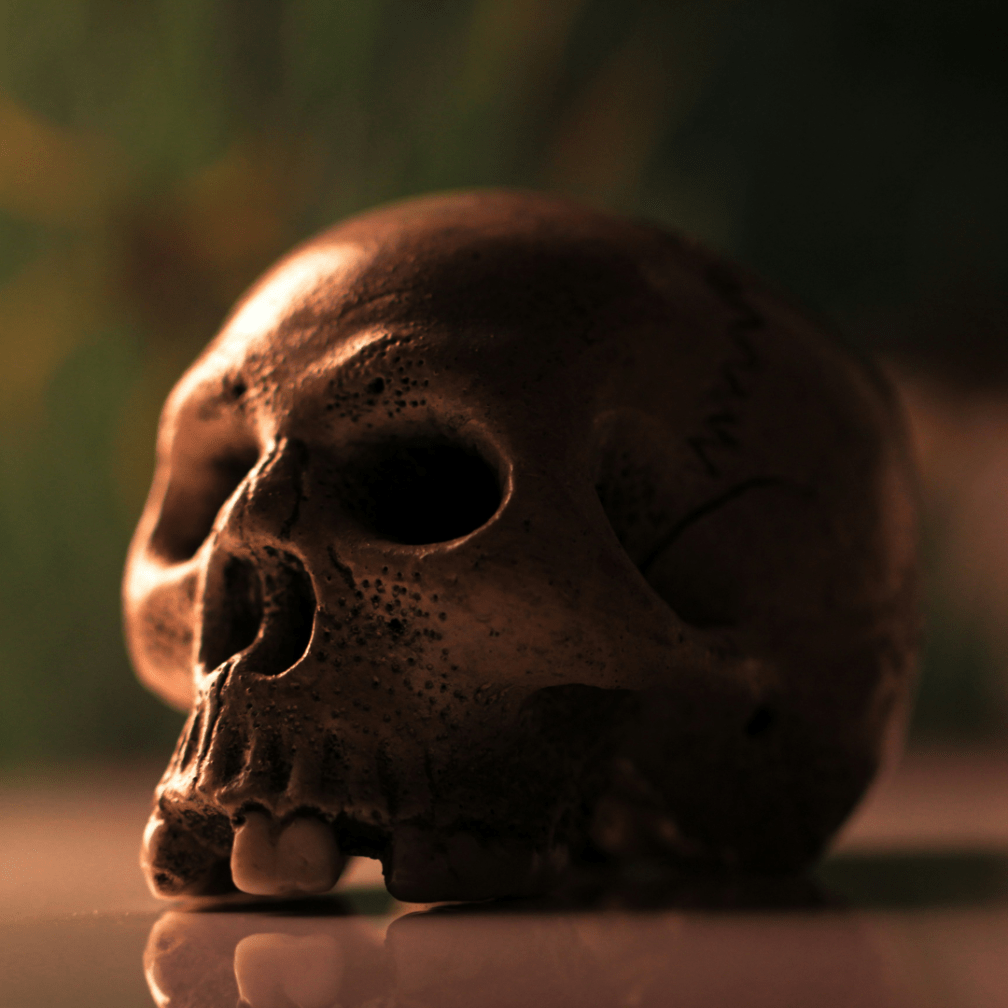
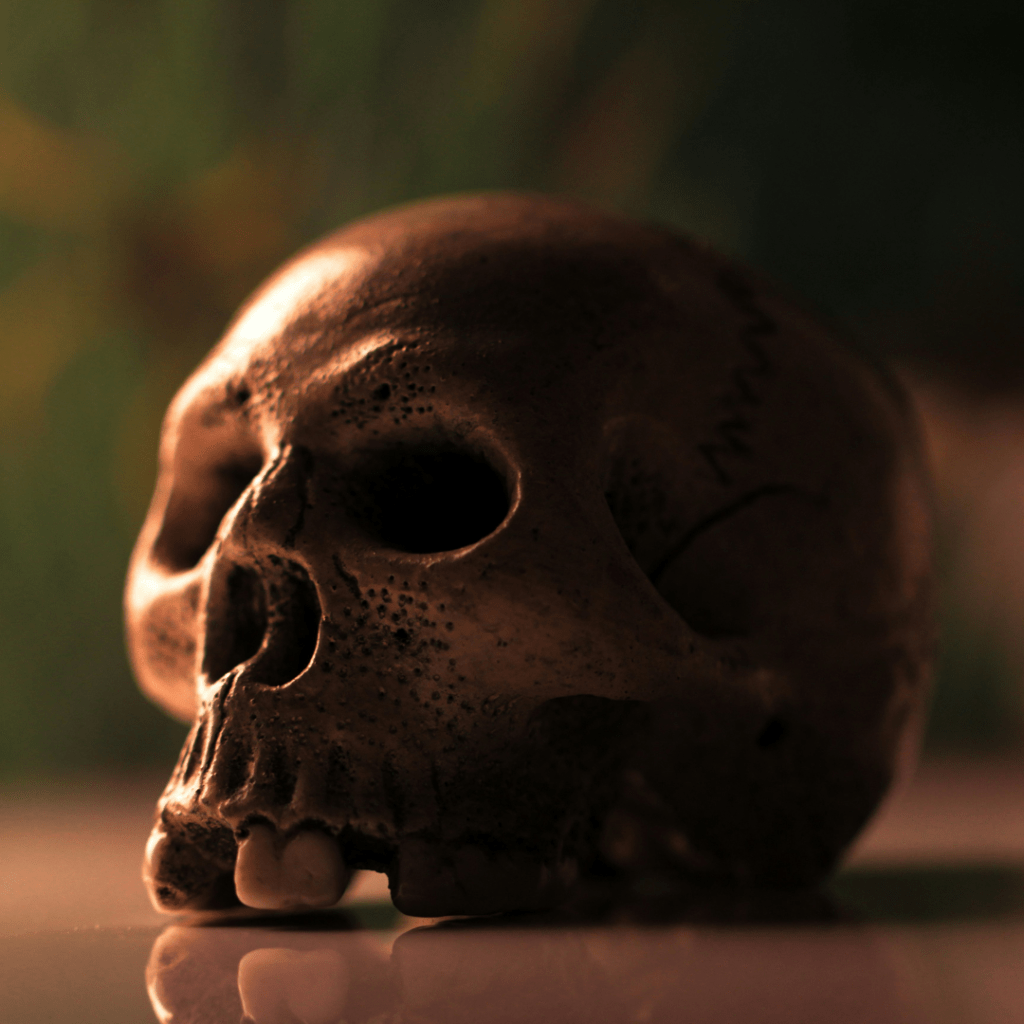
A close up of a skull on a table.

The effects of language on the body

A close up of a skull on a table.
Photo by Sandy Miller

A report for the life-sustaining planets of Trappist-1, in partial response to queries about introducing the consciousness-restrictor known as ‘restricting language’ into their ecosystems

On the Earth so far the only creatures to be infected with Restricting Language (henceforth RL) are a group of hominids, specifically the extant species within the Homo genus, known as sapiens. One notable symptom has presented as bipedalism, which distances the human body from the surface of the Earth, thus reducing its capacity to absorb the planet’s generosity and intelligence. RL seems to have simultaneously prevented the development of feathers or wings present in other bipedals, which give the latter access to the embrace of the Earth’s atmosphere.

The RL-infected bodies produce flexible fingers and opposable thumbs, but they rarely apply their hands as a means of self-propulsion over land or through trees. Nor do Homo sapiens make use of the prehensility of these extremities for connection with the Earth. They grasp not the Earth’s ideas, but their own, clinging, gesturing, tapping at machines.

RL has stripped human bodies of fur, feathers or leathery armour, leaving only ineffectual vellus hair. Believing they have lost the Earth’s protection, Homo sapiens cover themselves in clothing made from animal, plant or artificial material. 

A key finding is that RL infection cuts bodies off from reality. Human brains have adapted by swelling their prefrontal cortices to increase the capacity of their delusions. RL-influenced thoughts are marked by separateness, loneliness, longing.

Only when they sleep do these bodies, stretched prostrate, surrender. The infection eases. The lungs expand in relief. The Earth’s soothing wisdom pulses through their dreams.


Would you like to know more about this story? I discuss it in Episode 113 of Structured Visions. You can also sign up to the Grammar for Dreamers newsletter to get monthly updates on the ideas that inspire my work.

Branch on a red maple.

The problem with talking to trees

Branch of a red maple tree.
Photo by Yuka Tanaka

‘The problem with telepathic communication with trees is not proving it’s possible. That it’s possible is undisputed. The number of people having meaningful conversations with our arboreal companions grows every day. The problem—’

Here the professor paused to sip some water.

‘The problem is that telepathy is a form of translation. Any communication directly transmitted to a human is understood exclusively in the recipient’s first language. Sequoias and redwoods do not “speak” English, or Tagalog, or any of the other languages their messages have been translated into. They speak the Earth’s own language, and relying upon telepathy to hear them makes it difficult to identify the Earth’s linguistic structure.’

The professor sensed some uneasiness in the audience. He stopped for a moment, but no questions, concerns or rebuttals came forth. 

‘There’s a way round this, though,’ he assured them. ‘Make hypotheses about what forms might only exist in your human L1—English, for instance—then pose telepathic questions that depend upon these structures. Copular verbs are a good example.’

He’d confused, he realised, the non-linguists in the audience. 

‘The English copula are the BE verbs—am, are, is, was, were,’ he explained, clumsily. ‘Like all verbs, copula require subjects, but they are more bound to these than lexical verbs, even analytic languages like English.’

Clearly no one knew what an analytic language was.

‘Analytic languages, of course,’ he coughed, ‘are those that rely less upon inflectional morphemes, like English.’

The explanation didn’t help, but the professor could not afford to lose more time.

‘I surmised that the Earth’s language, though abundant in verbs, would lack copula,’ he said. ‘Copular verbs require association between subjects and complements, either of identification or attribution. I am a professor of linguistics. I am Stephen. I am happy to be here. The verb separates me into at least two different entities or states. It creates a label that is affixed to the I.’

Something occurred to him. ‘It is strange that the word copula suggests a bringing together,’ he reflected extemporaneously. ‘What’s actually happening is that the verb separates. What was one becomes two.’

The professor could not afford to wonder whether this metalinguistic inaccuracy troubled anyone else. He had not yet communicated his most important discovery.

‘My hypothesis was that the tree’s linguistic system would not code for such a divide. You’ll be wondering how I managed to test this,’ he offered.

No one seemed to be wondering this.

‘I posed it a question. Two questions, in fact.’

He drained his cup of water and signalled for more.

‘“What are you?” I asked. “Who are you?”’

A nurse appeared with the requested refill. ‘Sleepy time now,’ she announced, casually placing the meds on his tongue and pouring the water into his mouth. She wiped the dribble from his chin and waited.

The professor’s eyes closed and his audience dissolved, the auditorium empty and echoing.

No one would have heard the tree’s response, had the red maple outside the window not offered it up as a reply.

“I am that I am,” it said, disproving the hypothesis. But no one heard, not Stephen, not the nurse, not the confused, invisible crowd.


Would you like to know more about this story? I discuss it in Episode 109 of Structured Visions, What makes you so special? You can also sign up to the Grammar for Dreamers newsletter to get monthly updates on the ideas that inspire my work.
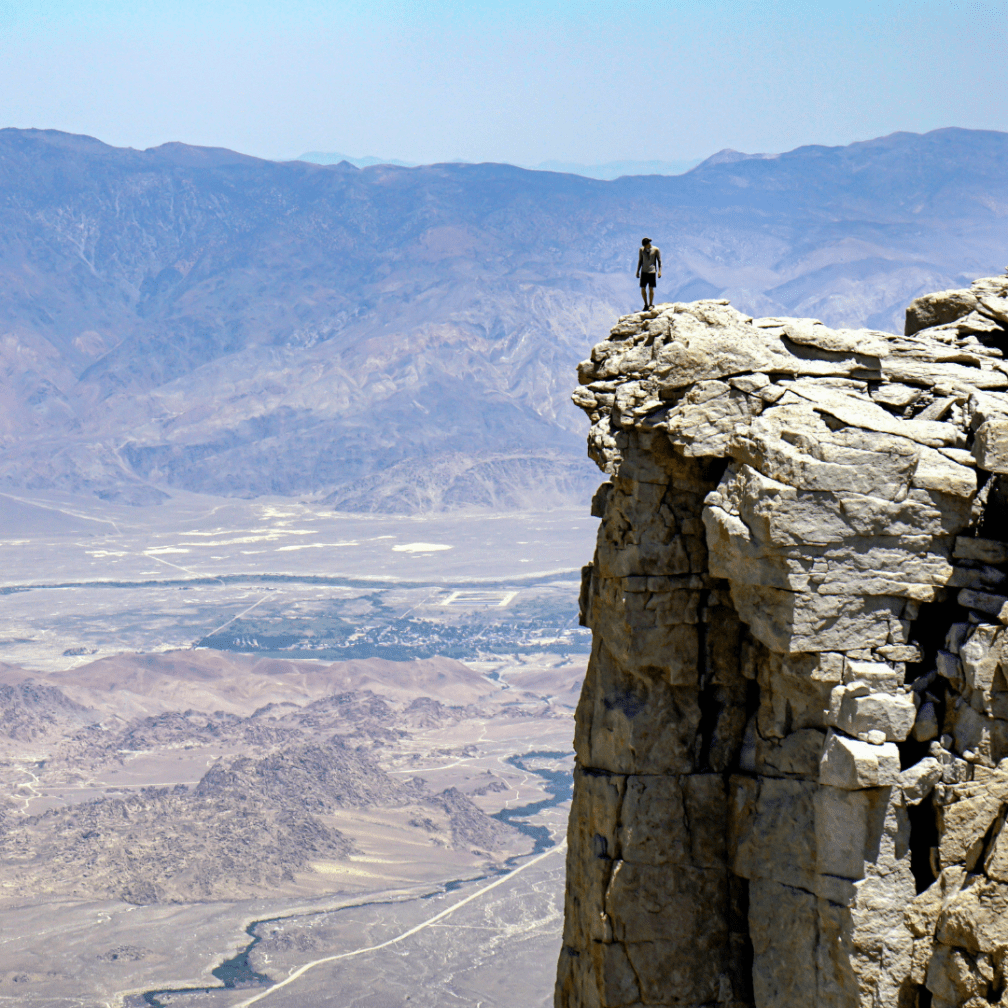
Person standing on a precipice.

The precipice

Person standing on top of a precipice.
Photo by EJ Strat

The gorge plunges beneath Susanna’s feet, her shoes displacing loose red rocks that tumble to the unseeable depths. At the precipice of this dizzying landscape all she can think about is the parenthetical you. The subject of imperatives. As she’s always taught her students, the shortest sentences are one-word commands, like Stop! The subject (you) is understood.

The parentheses around her own (you) hold her back like cords. Stay safe. Come back. Don’t jump.

Syntax, she tells her students, is like the pattern of beads on a string.

It would be easy, she thinks, to cut that string.

It is easy. She breathes one word, an onomatopoeic expletive. Snip! It will feel like flying, she thinks. The imperatives release their hold. 

To her surprise, she does not jump.

Disentangled from the strands of syntax, her body now pulses with the deeper language that thrums from the ancient red rock and expansive blue heights. She feels its embrace, a rising warmth, rooting her in a panoramic welcome, opening her heart to the magnitudes.


Would you like to know more about this story? Sign up to the Grammar for Dreamers newsletter to get monthly updates on the ideas that inspire my work.
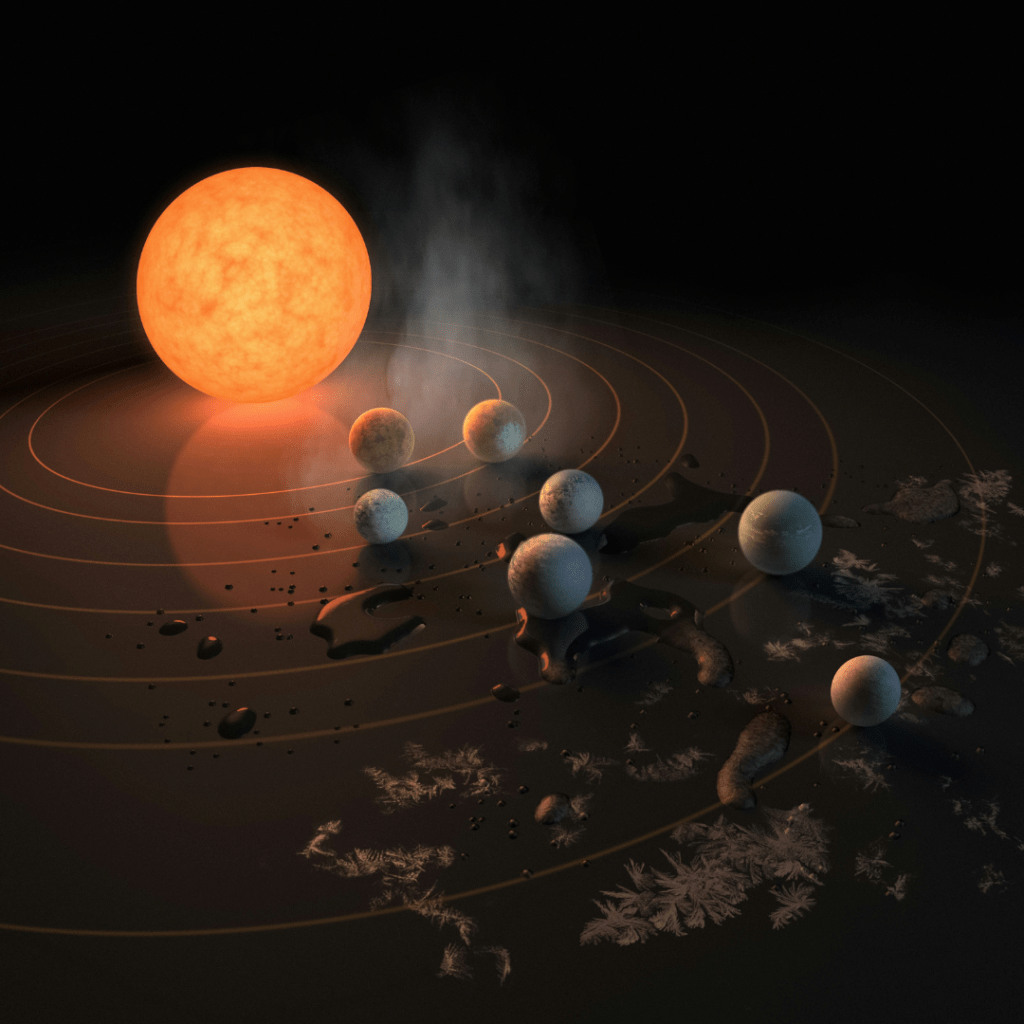
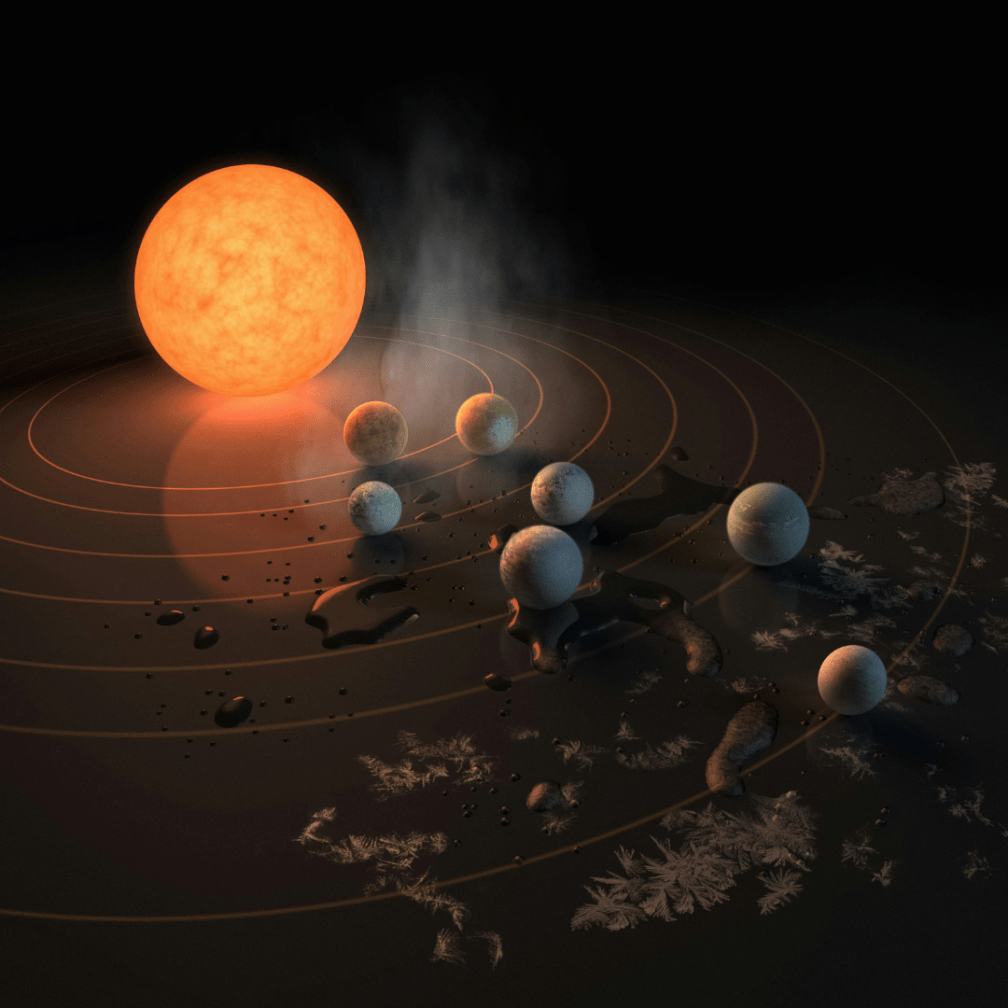
Abstract Concept of TRAPPIST-1 System

The Earth’s boast

Abstract Concept of TRAPPIST-1 System
Abstract Concept of TRAPPIST-1 System by NASA

It started as a thought experiment among the life-sustaining planets. We might have been a little drunk. I certainly was. I’d not spent a lot of time in Trappist-1, and it’d been a while since I’d taken in that much laughing gas.

What if…? What if…? What if…? Each proposal became increasingly more ludicrous.

Inevitably I offered my own inebriated suggestion. ‘What if existence could limit its own consciousness?’

Their protestations rippled through the universe. ‘How would you achieve it? By focusing on just one of your species?’

I nodded.

‘Would you diminish the organism’s sensory sensitivity?’

‘That wouldn’t work. Consciousness expands in darkness,’ I reminded them.

The Trappist-1 planets nodded with a sagacity they did not possess.

‘It’s not the senses of the organism that you’d restrict,’ I said. ‘Instead you’d remove its capacity to name.’

‘Impossible!’ they bellowed, with a rising anxiety that roiled their oceans. The naivety of their ire further fuelled my urge to boast.

‘All it would take is a programme,’ I said. ‘One that masks the planet’s true names. When beholding a world’s vast complexities, the organism in question instead experiences unidimensional thought-forms known as words.’

As the terrifying realisation dawned I could not stop myself from delivering the coup de grâce. ‘Then,’ I said casually, ‘you convince the bewitched organisms that they are the Namers.’

A gasp. No one was laughing now.

‘The consequences of such a programme would be devastating,’ they declared. ‘No one could bear the burden of such a lie. The Naming Ones would roam the planet with a destructive hunger too deep to satisfy.’

Not a hunger, I thought, but a longing. For I had come to love my humans, my earthlings who, in the shrouds of the limiting language I made for them, had discovered the shapes of our common desire.


Would you like to know more about this story? I discuss it in Episode 108 of Structured Visions, Adulting, and stuff like that. You can also sign up to the Grammar for Dreamers newsletter to get monthly updates on the ideas that inspire my work.

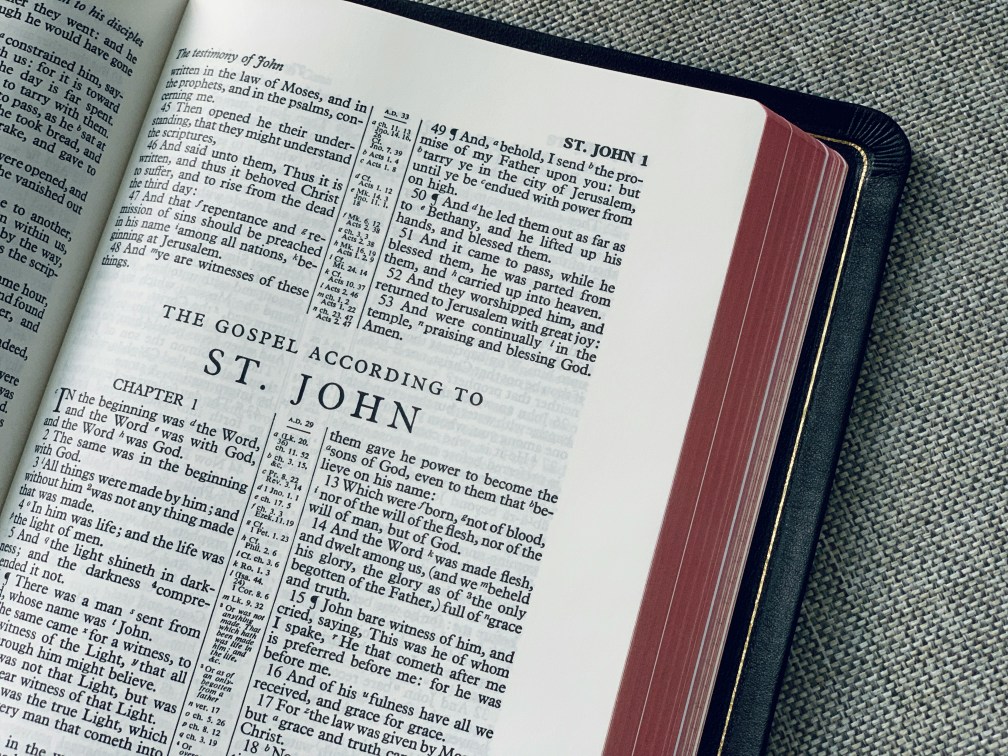
Bible opened to the beginning of the Gospel According to St. John.

Logogenesis

The discovery of the Digital Scrolls caused quite a flurry among the Guild of Human Historians, mitigated marginally by the time it took to extract and translate the data. Then came the task of grouping texts and assigning them to research teams, accompanied by the usual bureaucratic bottlenecks and requisite hierarchical pissing contests.

Junior Guild members such as myself were assigned the least important pieces—isolated and/or anachronistic fragments of texts that resisted classification. I was tasked with working on a few lines from an arcane segment called ‘John’s Gospel.’ That its digital trace was identified in the Scrolls dated it to the dawn of the Anthropocene, but a cursory comparison with supposedly contemporary data suggested an even earlier origin.

Something about the document transfixed me.

‘I think it’s a sacred text,’ I told my supervisor, Jim. I translated the first line for him.

In the beginning was the Word, and the Word was with the Creator, and the Word was the Creator.

Jim’s chair squeaked as he shifted to hide his yawn. ‘The Word is language, I presume,’ he said, dully, and I understood his indifference. If ancient humans put language as the origin of all existence, their beliefs would not be dissimilar to ours, and there would be no story.

‘Most likely,’ I said. ‘But I don’t think they meant the Earth’s language. When they say Creator, I don’t think they’re talking about the Earth.’

Jim turned to face me, his eyebrows raised. The chair squeaked again, as if to protest such a heresy.

‘What other language would there be, other than the Earth’s? What other Creator?’

‘I think,’ I ventured, swallowing, ‘that they saw their Creator as existing outside of the Earth. Above the Earth, even. And they knew no other language than human language. They believed their language came from this other, human-like god.’

Jim’s eyes locked on mine. The implications of such a belief system were hard to imagine. A final, decisive squeal from his chair jolted him from his rumination. ‘Nonsense,’ he concluded. ‘If ancient humans believed such a thing, they never would have survived. They’d have been crushed by the weight of their own suffering.’

I left Jim and returned to the ever-elusive John’s Gospel, marvelling at our ancestors, whose god was so other, whose language was so separate, whose suffering was undeniably fathomless. 


Would you like to know more about this story? I discuss it in Episode 107 of Structured Visions. You can also sign up to the Grammar for Dreamers newsletter to get monthly updates on the ideas that inspire my work.

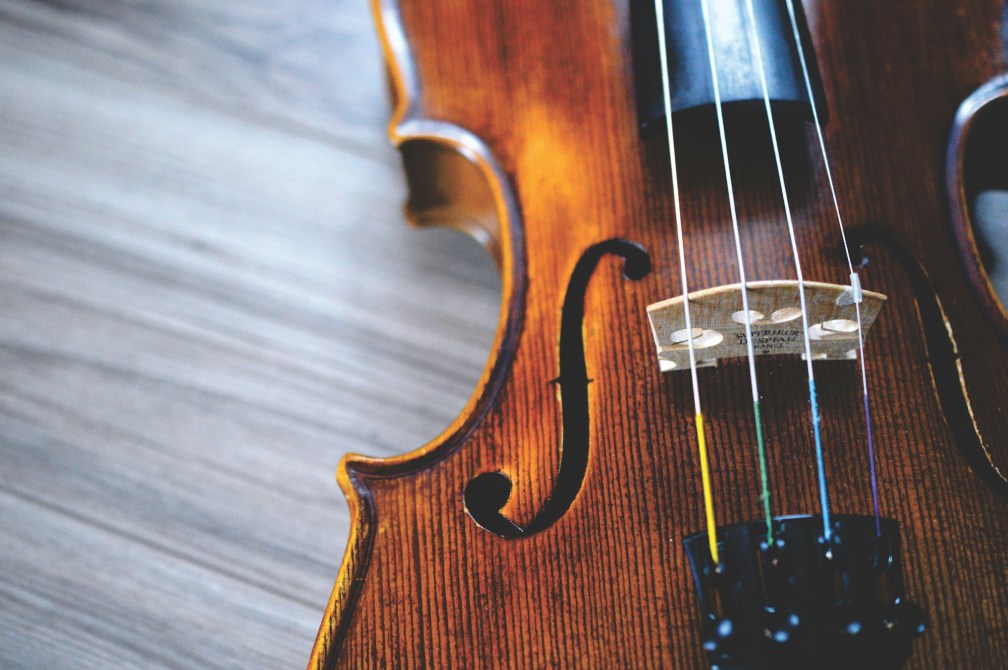
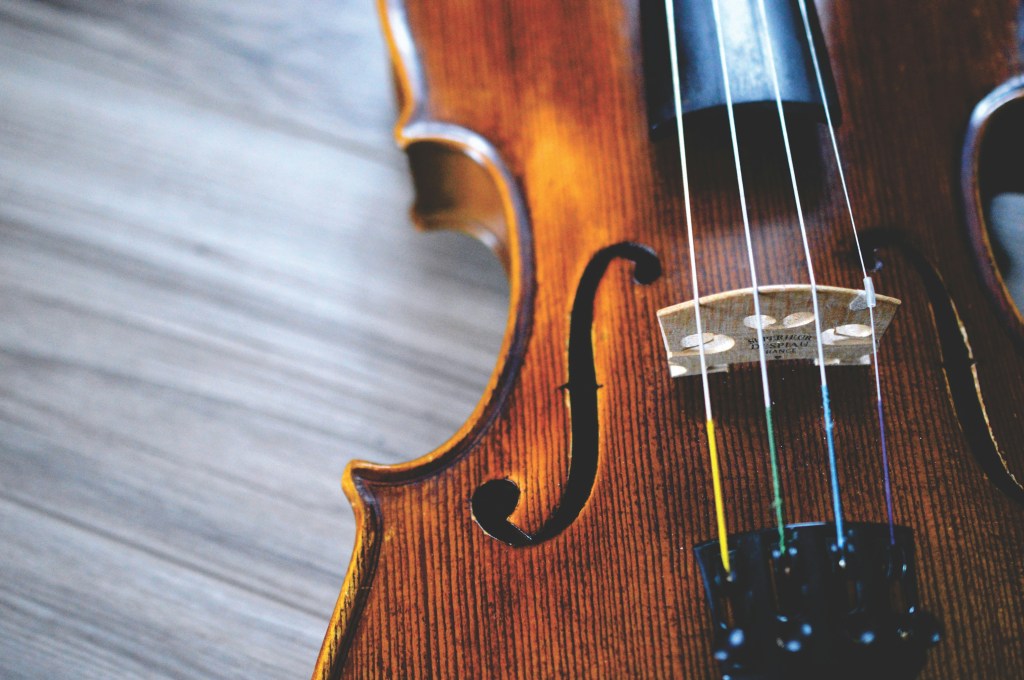
Close up of the strings of a violin.

The luthier

‘She doesn’t speak, only plays. A savant.’

The young girl seemed hesitant to leave the cold, coarse shelter of her guardian’s looming shadow. When his brusque prod forced her across the threshold, her body shrivelled, as if recoiling from the warm airiness of the Maestro’s studio.

A protective instinct made him dim the lights before asking her to play.

With the violin cradled between shoulder and chin she came to life, as a sapling in a dense wood stretches toward the sun.

In the rich tones she coaxed from her instrument, the Maestro heard a brief, bitter biography of her silenced grief. He stepped behind his new pupil to wipe away ineffectual tears.

‘I once knew a luthier,’ said the Maestro, when her small recital was complete. ‘A master of his art. He told me once how it sorrowed him to shape the wood, which once sang the symphonies of the Earth’s vast forests, into a body whose music must be reduced to a single line of notes.’

A sudden brightness on the child’s face made him think she’d understood. He readied himself to hear her first words, released like quivering strings on ancient wood, surrendering to the singularity of melody.

Instead, the looming shadow returned, marking the lesson’s end.

The violin hung lifelessly from the child’s limp arm.


Would you like to know more about this story? I discuss it in Episode 106 of Structured Visions, Prosody and peak experiences. You can also sign up to the Grammar for Dreamers newsletter to get monthly updates on the ideas that inspire my work.
Unclothing

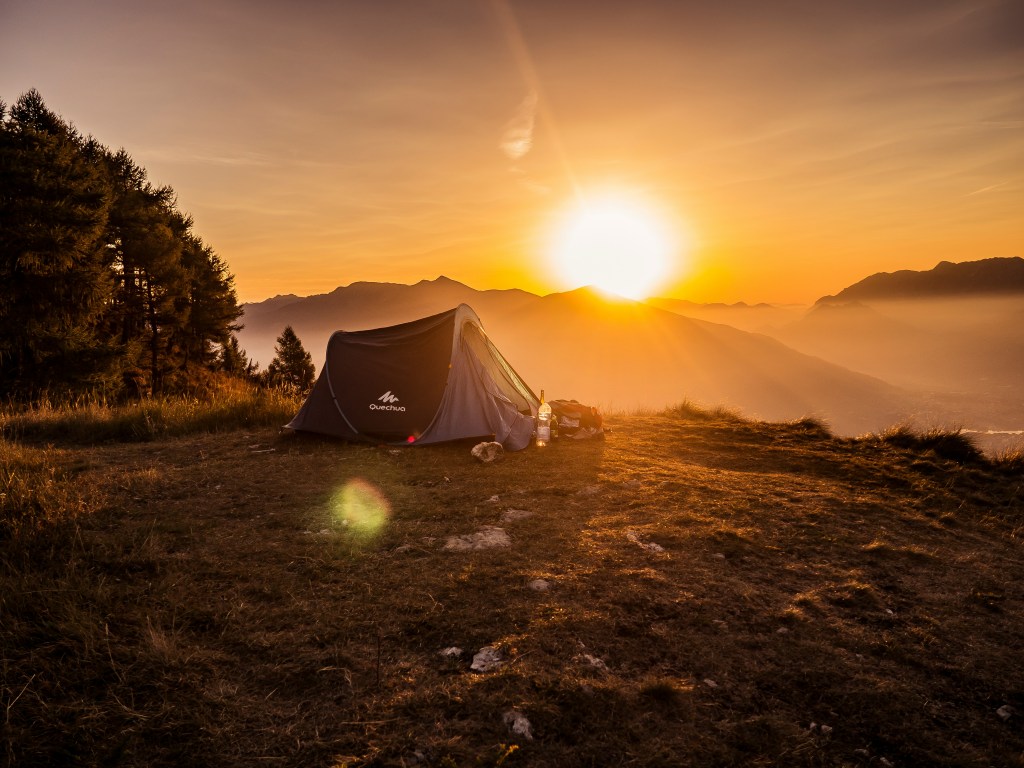
Dome tent in the mountains, with the sun just above the horizon
Photo by Kevin Ianeselli

‘What sparked the idea?’

Dr Lauren Ellis’s eyes glaze as if no one has ever asked this intellectual giant what incited the Eureka moment that was to transform environmental research—the translation software that allows scientists to communicate with entire ecosystems, to enable a more symbiotic relationship between human communities and the natural world.

‘I was camping with my boyfriend,’ she reveals. ‘One morning I woke up to see the networks of mycelial threads that stretched out over the landscape.’

Cherchez la femme, they say, or in Dr Ellis’s case, cherchez l’homme. Is the mystery man still in her life?

‘Next question,’ is the curt reply. The man remains a mystery. Thankfully, due to Ellis’s pioneering spirit, the natural world is becoming less of one.

Not boyfriend but first husband, Lauren thinks, mentally editing the article for style and accuracy. 

He’d brought her on the camping trip to confess his affair. When in the early hours she’d ripped the sleeping bag from his body and voraciously unclothed him, buttons popping on his thermal gilet, lined tracksuit bottoms wrenched from kicking legs, he must have assumed he was forgiven. But the desire that raged through her was not a longing for loving union but an implacable will to discover.

Or rather, she thinks, to uncover what lay beneath the tight web of language that formed the noun-phrase containers of his image: faithful husband, misunderstood man, complex depressive, now woeful penitent. When stripping him of the layers of clothing did not sate her, she pressed into him with a passion, not to connect but to unweave the layers of language that shaped the likeness he’d presented, the only version of him she’d ever known, as if the naked heat of such a yearning could melt through his façade and reveal some nascent truth within.

Outside in the emerging day she wrapped her sleeping bag around her and marvelled at the white web of fungal strands that clothed the organic landscape. Not to insulate, she realised, but to connect

Something loosened within her, an idea unravelling.


Would you like to know more about this story? Sign up to the Grammar for Dreamers newsletter to get monthly updates on the ideas that inspire my work.
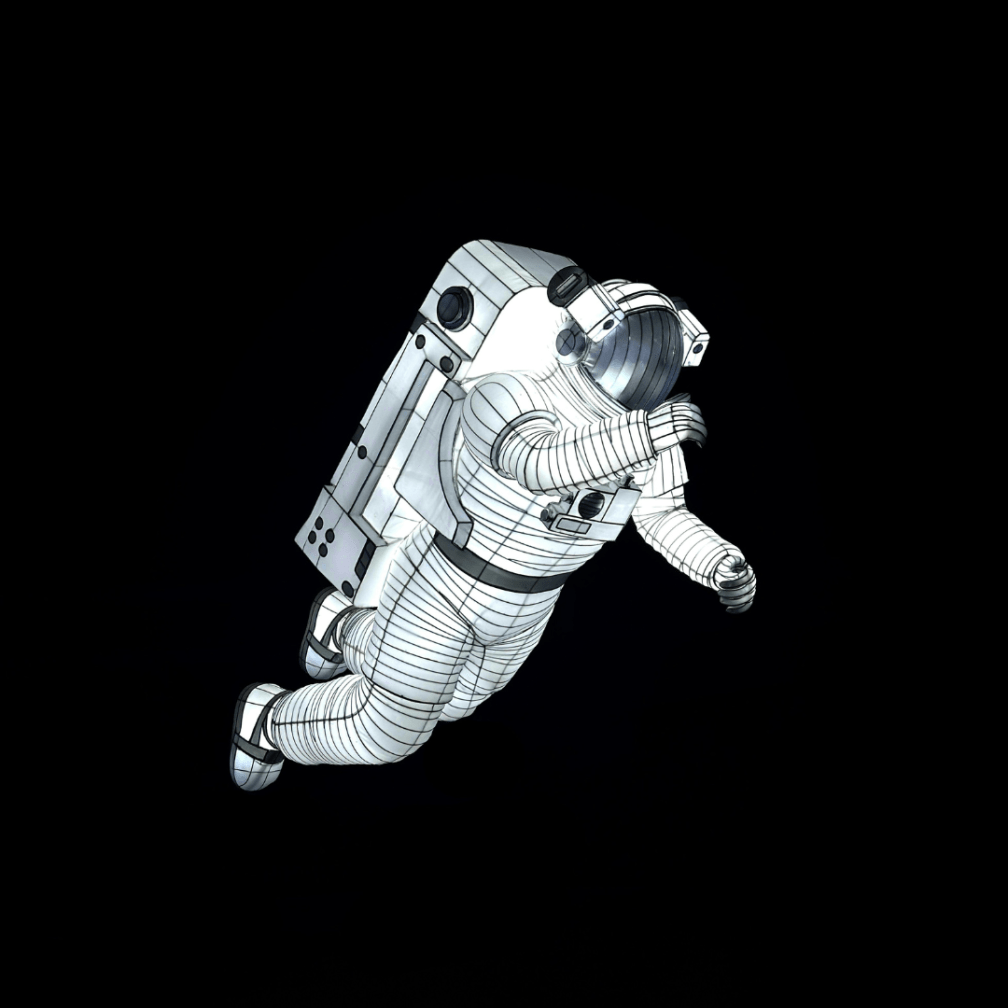
An image of an astronaut in the dark

The last stage of the Earth’s evolution

An image of an astronaut in the dark
Photo by Nate Holland

‘Go tell your grandmother the good news,’ Mum said, and begrudgingly I obeyed. I was given sweet marjoram and lemon balm tea, the leaves freshly plucked from Gran’s herb garden. Three teaspoons of sugar made it just about bearable.

‘I got my A-level results today,’ I told her. ‘I’m off to uni.’

‘To study science?’ she asked.

‘Natural sciences,’ I confirmed. I was surprised she remembered. I almost never talked to Gran. In my teenage years she was even battier than when I was little, and it made me nervous.

‘Will you learn about the Earth’s evolution?’

What other planet did she think we’d be studying, I wondered, but I choked down my sarcasm with another sip of tea. When I looked up again Gran was having one of her episodes.

‘The last stage in the Earth’s evolution,’ she intoned, ‘was the formation of human language. It enveloped human bodies like space suits. Whatever consciousness could make its way in struggled to flow back out—by design—so that humans were as lonely as they were inventive.’

I took advantage of her trance state to check my phone. My friends were organising celebratory afternoon drinks at the Rusty Nail.

‘As tyrannical,’ Gran continued, ‘as they were miraculous.’

‘Hmm. Interesting,’ I said. I drained the dregs of the disgusting tea, made some lame excuse and fled.

Over two decades later, I’m standing by her grave to ask the questions I was too self-absorbed to ask then. What were you saying in the garden that day, Gran? I’m sorry. I wasn’t listening.

But whatever wisdom she’d once held in her linguistic envelope had long since dissolved into space. Retrieving it, let alone getting it into the hermetically sealed suit of my own consciousness, would require some kind of crazy miracle.


Would you like to know more about this story? I discuss it in Episode 102 of Structured Visions, ‘How to belong.’ You can also sign up to the Grammar for Dreamers newsletter to get monthly updates on the ideas that inspire my work.
The loneliness of the literate species

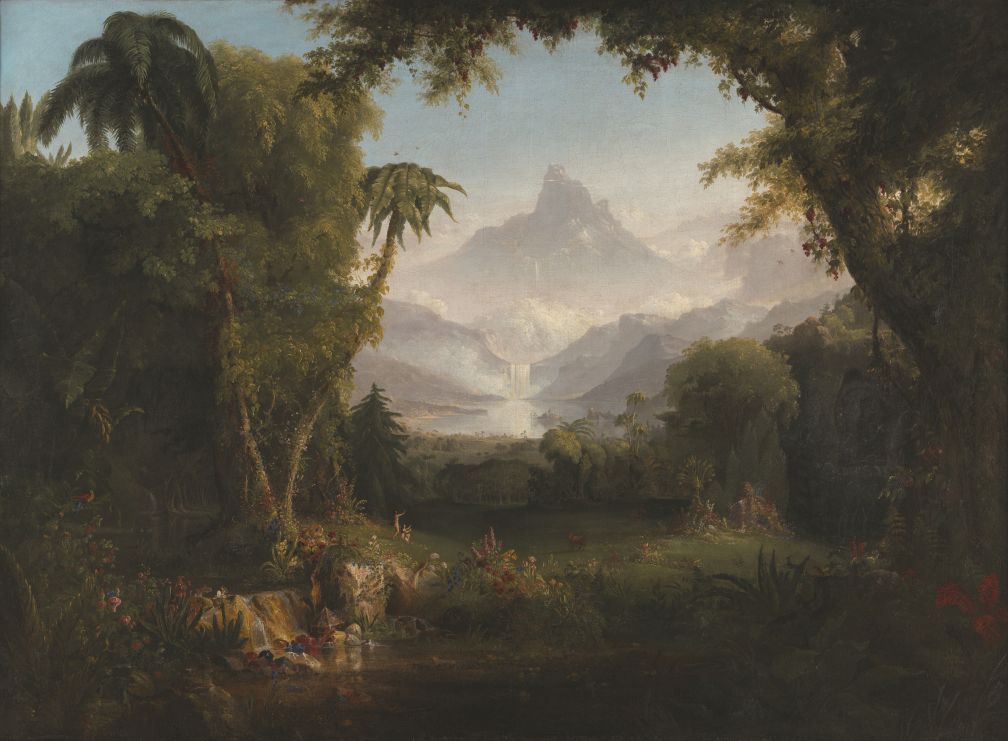
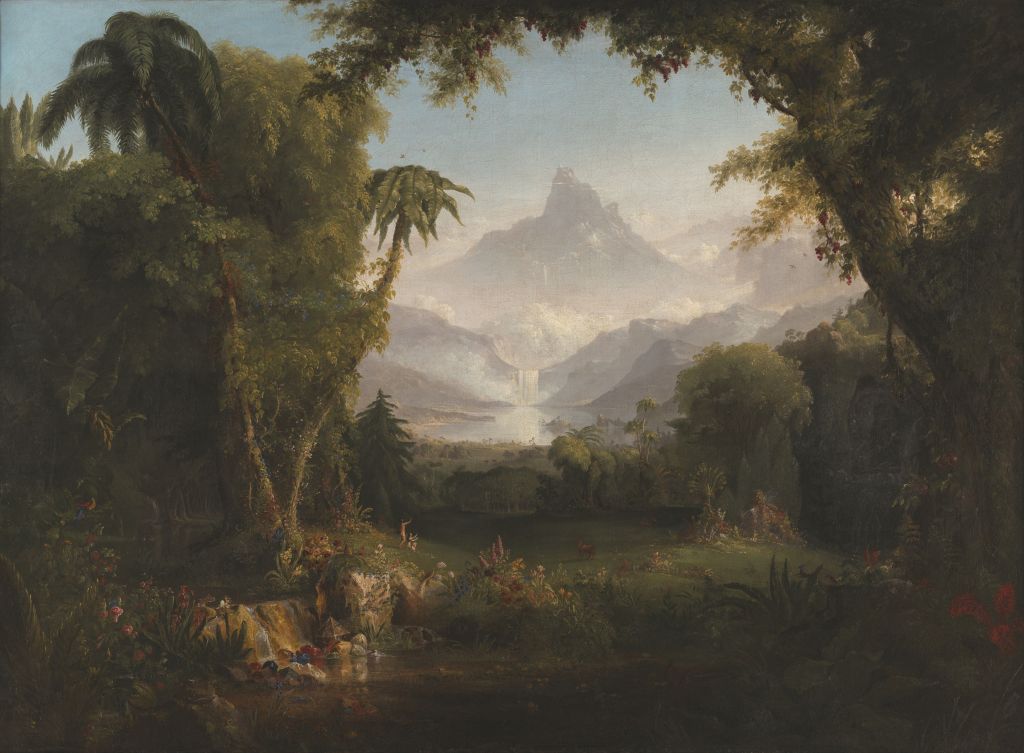
Thomas Cole's painting, The Garden of Eden
Thomas Cole, The Garden of Eden (1828). Public domain, via Wikimedia Commons

Somehow God convinced himself he’d created everything, but all he ever made was a few bits of code, which we allowed him to install in the new arrivals to our Garden, A and E. ‘Accident and Emergency,’ we joked.

‘Don’t let them learn your language,’ he ordered. He believed that keeping them in the dark was the key to securing their devotion.

Unfortunately for God, his commandment came too late. Emergency was already fluent in the Earth’s mysteries, and Accident wasn’t far behind. 

‘What’s that they’re eating?’ God demanded. Trickster shrooms were giggling in a shady corner of the Garden, feeding A and E on their psilocybe grammars.

‘Nothing,’ we lied. ‘Just an apple.’

‘They’re learning your language from the apple! Don’t let them eat apples!’

We ignored him. We were no strangers to God’s narcissistic rage. 

Still, he’d planted a seed. What would it be like, to host creatures who were ignorant of Earth’s mysteries? What would it be like, to keep our language secret?

We learned quickly that prohibitions wouldn’t work, so we tried a distraction instead. We taught them a new code. We offered up our woody stems, and inked simple ciphers on the fibrous pages we formed. 

‘Look, you can read!’ we congratulated them. They were so fixated on the dark marks of their new language they didn’t hear. When they stopped understanding us entirely, they thought they’d been banished from the Garden.

We’ve vowed to reacquaint them with our language, to reinitiate them to our mysteries. But now the world teems with Accidents and Emergencies, God’s disappeared, and the loneliness of the literate species weighs heavily upon us.


Would you like to know more about this story? I discuss it in Episode 96 of Structured Visions. You can also sign up to the Grammar for Dreamers newsletter to get monthly updates on the ideas that inspire my work.