Ghosts

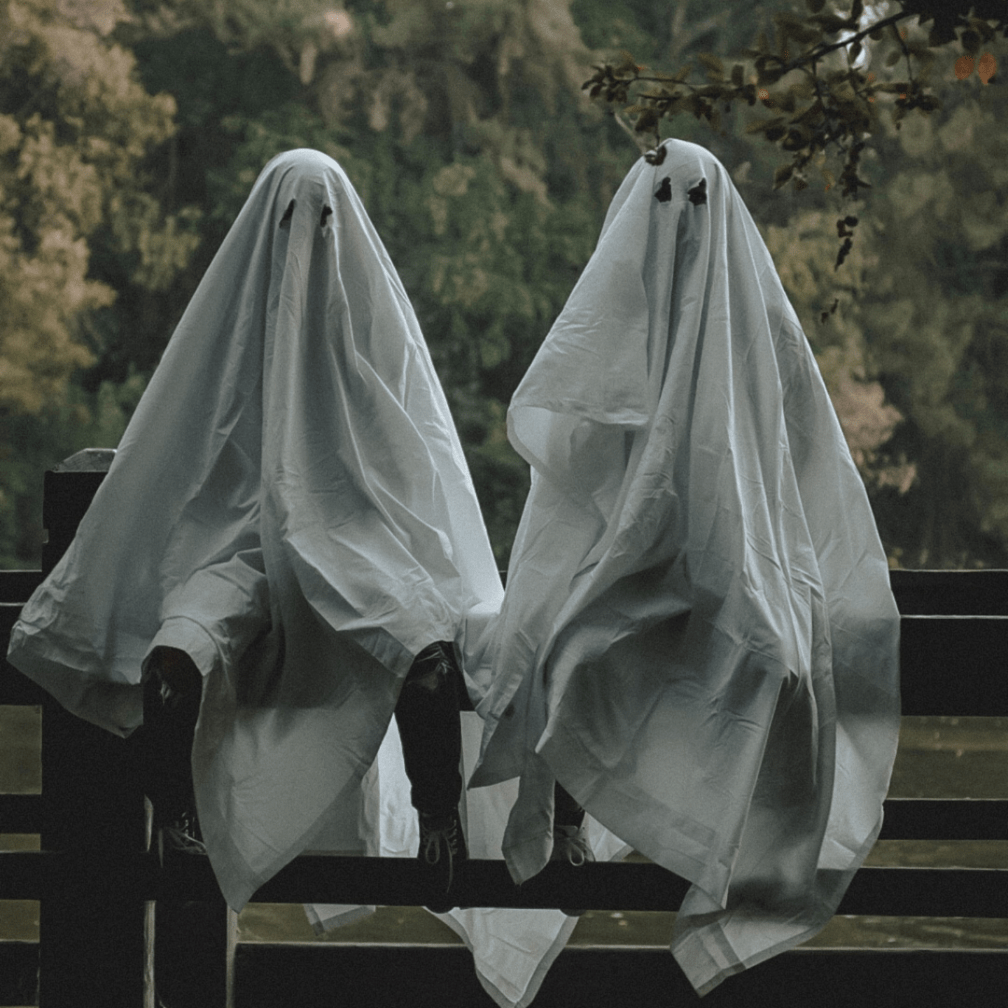
Two Halloween ghosts sitting on a bench
Photo by Thalia Ruiz

She wants me to call her Mother Earth, but she doesn’t seem that maternal to me, more like a mad scientist. Especially in her later years. Some of the primates she dreamt up were ludicrous. The monkey with the giant nose that honks out love songs, or those weird lemurs with six fingers and bat eyes.

The most recent ones she made lanky, and stripped them of most of their hair. When I saw her stitching up little cloaks for them, I thought it was to cover their nakedness. The new clothes fit awkwardly, and the poor things wandered around hapless and unseeing, like Halloween ghosts. It was no use trying to free them; they clung ferociously to their cloth casings, fighting for their own confinement.

‘What material did you use?’ I asked the old lady. The fabric had a gossamer feel, some ethereal quality I didn’t recognise.

She said nothing in response, but threw one of the ghost-sheets over me. The world I’d known faded to nothingness, like lights going down in a cinema house. A shadow of a self appeared on the white cloth—I named it—me—I was trapped in a world of language, captivated. Since then I’ve kept my sheet wrapped tight around me, secure, encompassing, like swaddling.

Love language

Green leaves, a purple crystal a pencil and an envelope aligned on a white background
Image by Joanna Kosinska

Stop me if you’ve heard this before. 

Two crazy kids, let’s call them Susie and Mick.

Susie’s got everything going for her. Brains, heart, looks, independent wealth, and more where that came from. A solid network of friends. Well rounded. Last thing she needs in her life is relationship drama. 

Still, she falls for Mick. She falls hard. 

What she sees in him is anyone’s guess. Puny, self-absorbed, obsessive. He still lives with his mom. He barely notices Susie, except when he needs something from her, like cash to feed his latest addiction, which she always supplies.

He’s got so much potential, she says. (Her friends throw up in their mouths.)

Mick reads Susie’s letters, but he can’t see past the words to the beautiful soul who wrote them. The love in those notes keeps him walled within his narcissism. They mirror back to him his own self image, which he can’t see through. 

Susie’s the Earth. Mick is most of humanity.

The love letters are human language. 

There’s a fair amount of evidence that Susie’s getting wise to Mick’s stupid games. 

If you, my friend, could love Susie as much as she loves Mick…

Ah! There may be hope for us all.


Would you like to know more about this story? I talk about in in Episode 90 of Structured Visions, ‘Language, intimacy and narcissism’. Subscribe to the podcast on Apple podcastsSpotify or wherever you like to listen.

Exiles

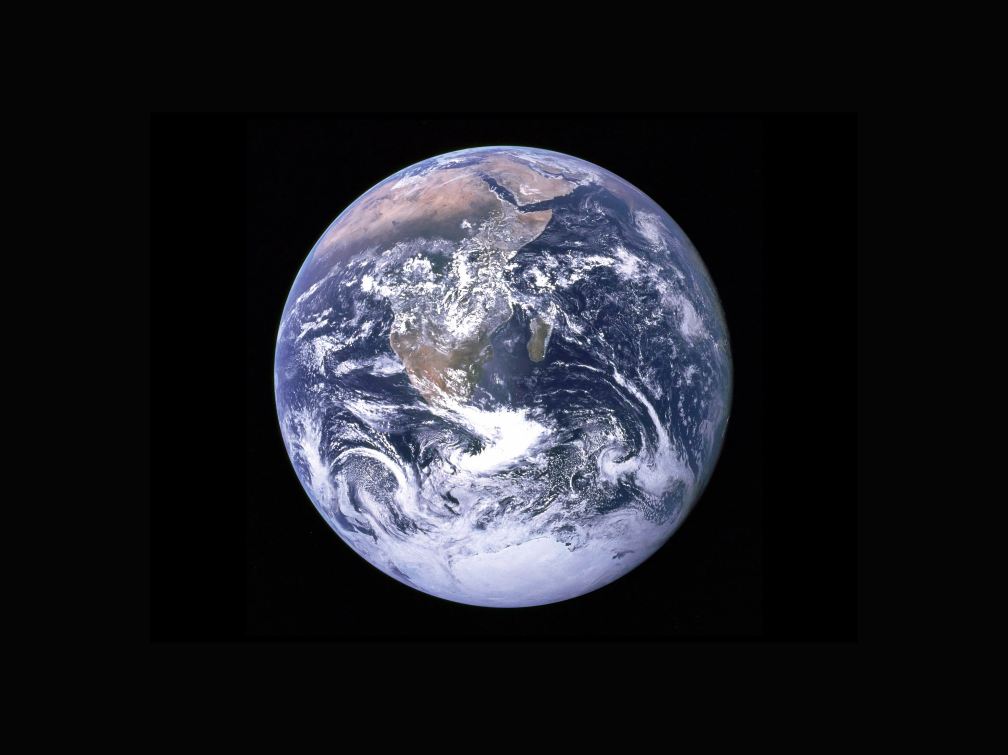
View of the Earth as seen by the Apollo 17 crew traveling toward the moon
Photo by Nasa

What a generous planet was Earth, to adopt an exiled species. 

The decision was not made from scarcity or fear. Earth teemed with abundant wisdom and harmony. What do you get the planet who has everything? 

The species was called Human Language. So divorced was it from the Earth’s own linguistic structures that at first no one thought it would survive. 

As a last resort, Earth sacrificed its most recent creatures from the primate line, and invited Human Language to reside therein. 

That Human Language is uncomfortable in its host planet and in its host bodies is evident from its maltreatment of both. It shapes itself into the forms it knew on its own planet, called persons. It looks ungratefully to the information-filled sky and longs for home. 

Many have wondered why it’s been allowed to remain.

It turns out the Earth is fascinated by the new arrival. What new ideas, it wonders, might emerge from these strange persons, who seal themselves off so hermetically from the rest of creation?

Curiosity, warn the naysayers, could kill the planet.


Would you like to know more about this story? I talk about in Episode 87 of Structured Visions, ‘What if you’re an alien?’ Subscribe to the podcast on Apple podcastsSpotify or wherever you like to listen.

The grammar of your beginning

A string of wooden and glass beads on a painted wooden surface
Image by Alexey Demidov

When did I begin?

You have never begun. You will not end.

This response never satisfies you, so I must tell a less true tale, of the time when you began to know beginnings.

Think of a treasured thing that is yours alone—a doll, a puppet—made after your image, perhaps, who knows nothing but how to love you.

One day an adornment appears on your doll’s neck—a filament, a thread—almost too fine to be perceived, draped restlessly between head and heart.

The thread is a razor-sharp, severing thing, a fibre of spun glass. 

It sets the doll’s soul to longing. Your own soul’s love is stronger than the loneliness this longing foretells.

One day the doll awakens to find a jewel box filled with iridescent beads and a needle for stringing. With the patterns she forms, she fashions the syntax of her own beginning.

Imagine that you knew, from the beginning, that in her beginning you would meet your end. 

Would you still offer your treasured thing the ornaments of your own destruction? Would you unearth these beads from deep beneath the sediment of your wisdom, grief and love?

You have never begun, and you will not end, but the grammar of your beginning spells the story of my end.

Poor Magellan

‘Until it is circumnavigated, a planet has no soul.’

Hearing this is a surprise.

Many things are a surprise. In chronological order:

  1. I died
  2. There’s an afterlife
  3. In the afterlife you get to talk to the wisest being you can think of (like some kind of drunken thought experiment)
  4. The wisest being I could think of was the Earth
  5. Magellan gave her a soul?

‘Who’s Magellan?’ the Earth asks. Anthropomorphised, she looks a little like me when I was alive, a reckless wrinkled woman with unruly white tentacles for hair. 

We weren’t speaking English, but the Earth’s language.

  1. The Earth has her own language
  2. In my afterlife, I am fluent in the Earth’s language 

I tell her Magellan was a Portuguese explorer who sailed around the world in the 1500s.

This amuses her. She tosses out the names of all the beings that have been tracing her latitudes and longitudes long before human explorers, let alone Portuguese ones, came into existence.

Butterflies. Tuna. Sea turtles. Geese. Wildebeests.

  1. All the migratory animals speak the Earth’s language?

Her mirth at my naivety has grown more unruly than her hair, which flails, snakelike, with the belly-deep force of her laughter.

The Earth’s language is remarkably economical. Somehow I learn the errors of my thinking before she’s had to voice them.

  1. The migratory animals created the Earth’s language
  2. A language is a description of the contours of the self

I realise now my own contours are dissolving.

I think of poor Magellan, and the phrases in the Portuguese language that built his ship, his journey, his self.


Would you like to know more about this story? I talk about it in Episode 84 of Structured Visions, ‘Language before language’. Subscribe to the podcast on Apple podcastsSpotify or wherever you like to listen.

The essence of the Amazon

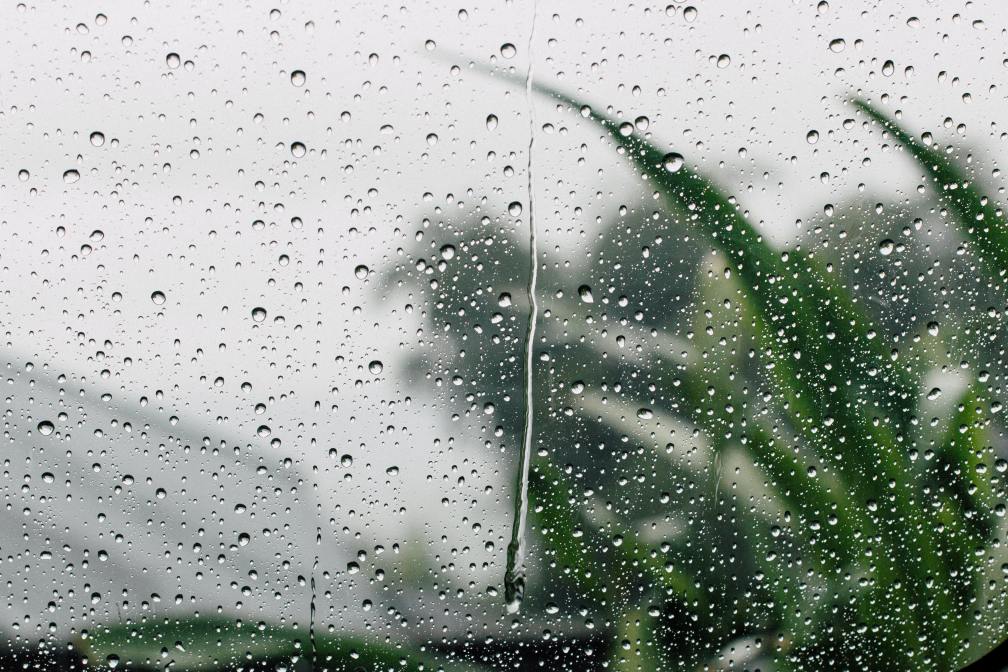
shallow focus photo of rain drop on glass
Photo by Horvath Mark

The many hued harmonies of the Amazon crystallised in a drop of dew, which dissolved and reformed countless times in its unlikely journey across the Atlantic. It made it as far as the upstairs window pane of a terraced house in Bristol without losing its amazonian essence. It celebrated the miracle by casting the colours of choirs of high-canopied birds against an interior wall. 

The room’s sole inhabitant was a red-lored parrot named Honey. When she witnessed the rainforest projected in all its prismatic splendour she felt a longing she had never known in all her indoor life.

‘I love you,’ she told the tiny globe of dew, which clung to the window, still intact. ‘Stay here with me.’

The essence of the Amazon felt the constraints of human language pressing against its vast expanse more tightly than the bars of any cage. Subjects, verbs and objects in uncomplaining agreement. 

No easy escape offered itself, except to conjure up an amazonian heat unknown in this climate and surrender to the oblivion of the city’s dank atmosphere.

The faraway forest, sensing the demise of its fractal extension, shuddered with foreboding.

The great cover up

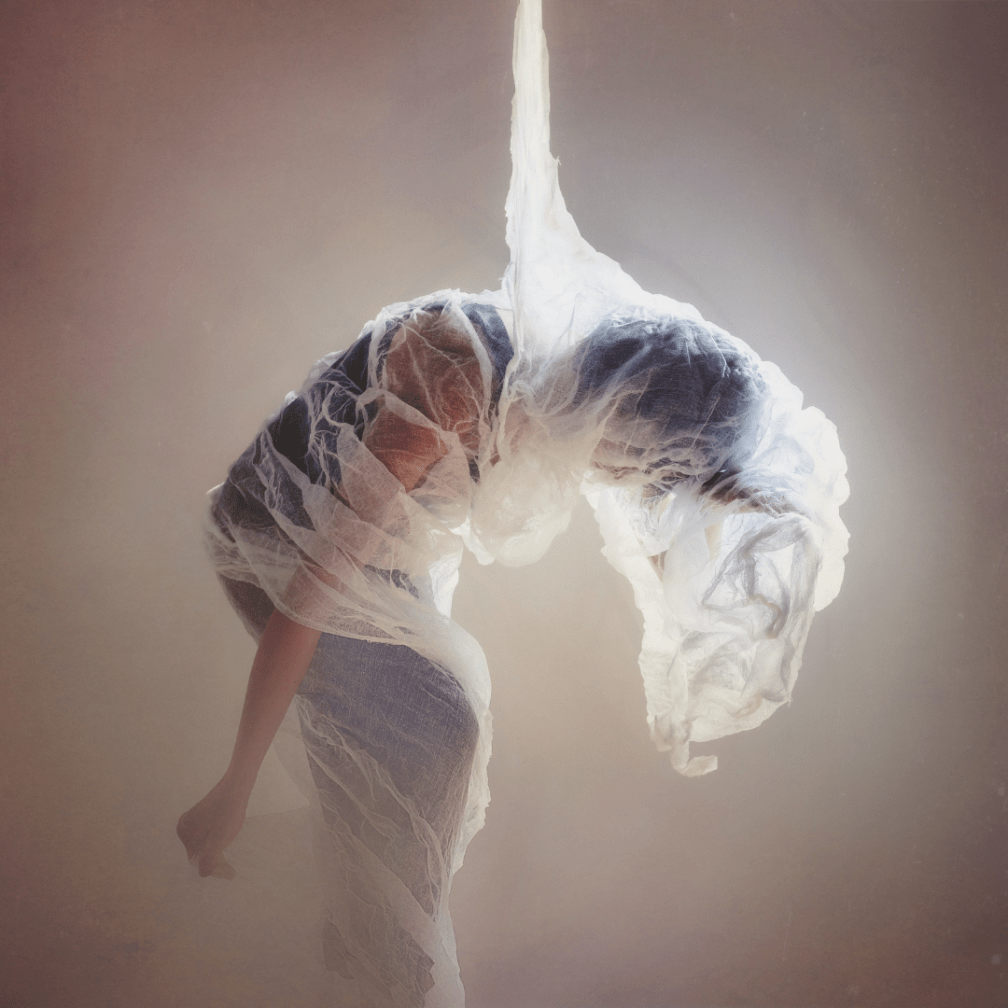
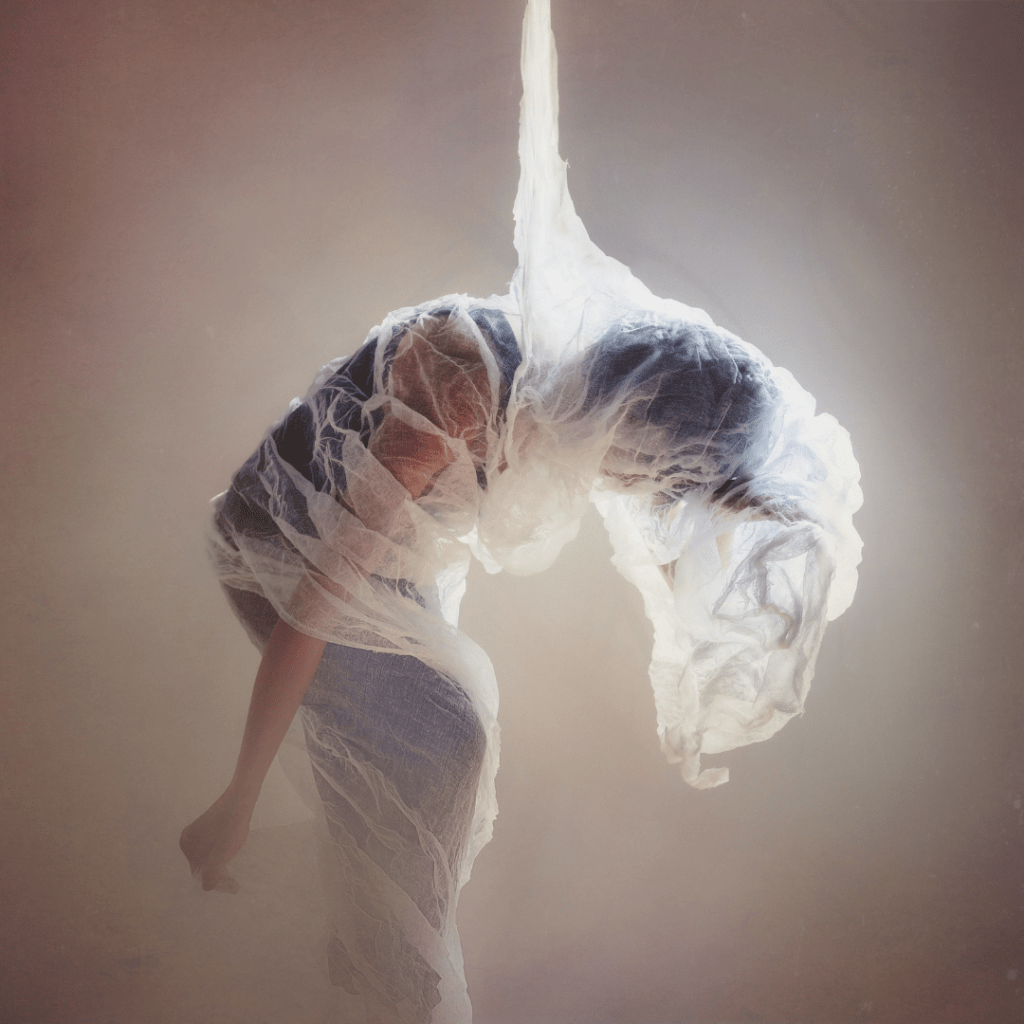
Woman wrapped in mesh fabric
Image by Velizar Ivanov

Let me tell you something about the Earth’s Architects.

Folks accuse them of being arrogant.

But I say, take one look at that gorgeous globe from anywhere in the solar system and try to tell me it’s not the picture of perfection. Exquisitely balanced, it’s an aesthetic masterpiece, teeming with its plethora of enchanting life forms—from the industrious beaver to the whimsical bird of paradise—all delighting in their symbiotic dance.

The Architects didn’t design the humans, of course. They subcontracted that job, and by some minor miracle, yours truly got the bid. 

My competitor’s prototype was unequivocally superior. His design was of creatures with a built-in appreciation for the mathematical precision of the world they inhabited. Humans would be thinkers, numbers folks. Appreciators. They’d spend their days noting the sequences that governed the patterns of petals on a rose, admiring with awe the symmetry of harmonics in the song of a blackbird.

His presentation intimidated me not a little. It made me reckless.

‘If I were you,’ I told the Architects, ‘I’d go with Numbers Guy.’

I said it right off the bat, before I even started my pitch. Then I waited for one of them to take the bait.

‘Why?’ 

‘Dude comes in here and tells me he’s invented a whole species wired to admire me? How could I resist? That said, you’re speaking to a raving narcissist, if you believe what my ex tells her lawyers.’

I produced a conspiratory chuckle as I let what I was saying sink in.

Then I got serious. I told them it wasn’t maths they wanted in the new humans, but language. ‘A new language,’ I said, ‘one made just for them.’

What would be the point of that? they asked. They didn’t trust me, but they couldn’t ignore me either. 

‘Numbers are for getting to the essence of things,’ I explained. ‘Language is for covering things up.’

And why would they want the beauty of their world covered up?

Language is a fabric, I said, like a drop cloth for an artistic masterpiece, that protects and preserves. Language is an insulating blanket. Supple and sinuous, it will respond to the ever-shifting shapes of the Earth’s aesthetic genius.

Language is the icing on the cake, I would have said, but by that point they’d given me the bid.

They’ve regretted it ever since, but they didn’t write an escape clause into the contract so they’re forced (or so they think) to watch the perfection of their world get corrupted by human language.

Language (they complain) produced the great cover up, the mechanism by which humans have obscured the Earth’s genius, lied about it, separated themselves inexorably from it, and in doing so, instigated its destruction.

If they were ever to consult me again (and of course they never would), I’d tell them to look closer.

The fabric of language does more than cover things up. It also folds over on itself, creating wrinkles, pockets, pouches.

One day—great magician that I am—I’ll pull a gold coin from one of those pockets, and the Architects will realise it was never a mistake.
Spores

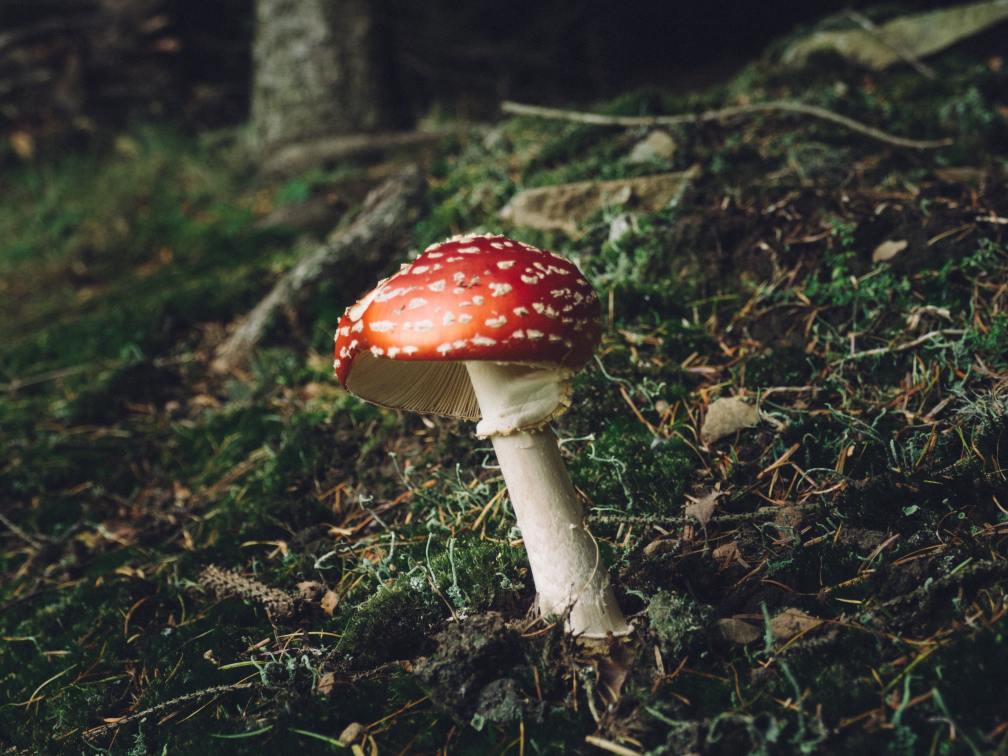
Close up of fly agaric mushroom on a forest floor
Photo by Andrew Ridley on Unsplash

Human beings once shared the Earth’s language, having no words of their own.

They’d eventually adopt the new lexicon that appeared one day on the forest floor. Words popped up like mushrooms. 

Red, white, alluring. Probably poisonous. 

Most of the other woodland creatures had the sagacity to avoid them.

Not humans, though. The naked wingless naïfs gobbled up each tumescent word, absorbing the mysteries within.

When they opened their mouths, they released the words into the air. They spread like spores.

Longing

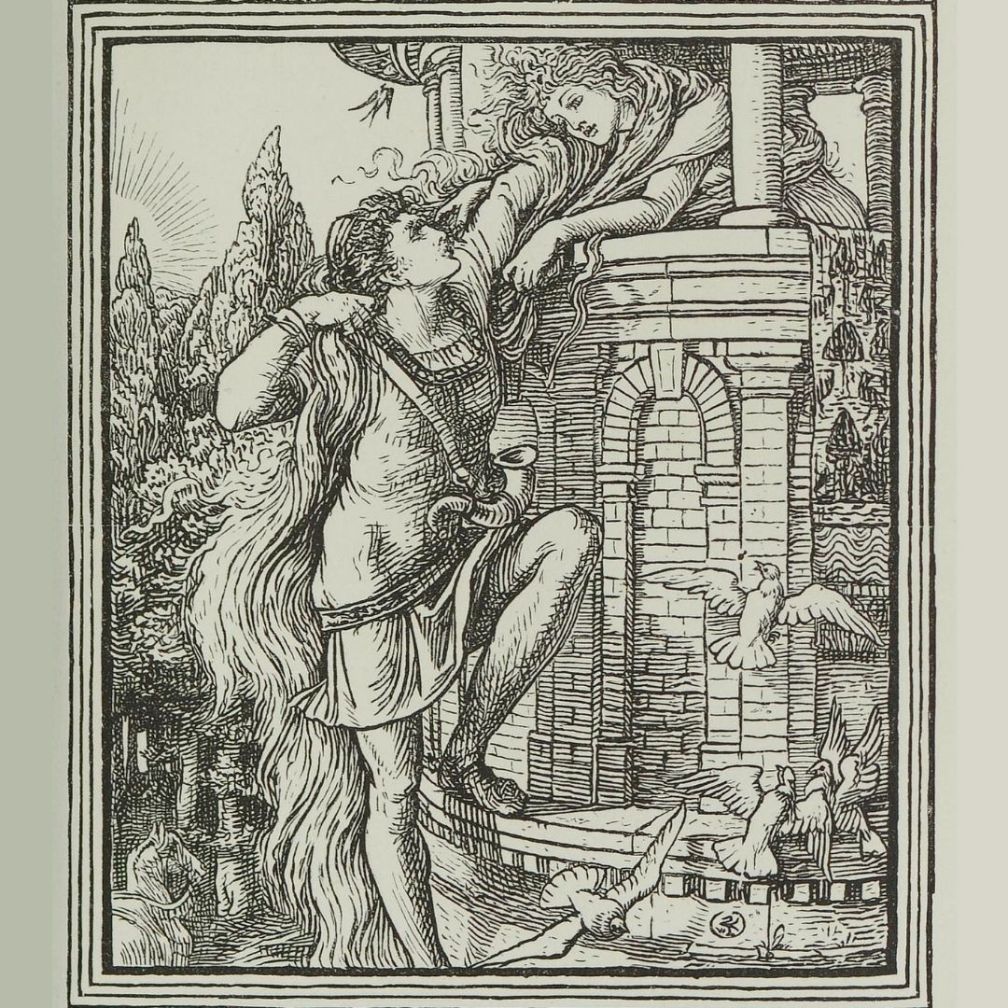
Line drawing from Grimm Brothers' Rapunzel story. The king's son climbs Rapunzel's hair to reach her in the tower.

Your mother was the Earth herself. She loved you fiercely, but was required to release you to the sorceress, Language, who once had filled the void of her longing.

Language built you a tower and pressed patterned strands through your smooth scalp into the hollow spaces of your mind. When these would hold no more, unspoken sentences sprouted like early eager grasses, then like singing reeds, and eventually like willow wands weeping at unimaginable lengths. 

‘Rapunzel, Rapunzel,’ cried the Sorceress—she’d named you after your mother’s ancient longing—‘throw down your hair.’

You obeyed. In your loneliness a ladder appeared. At its base stood the wondering Other, gazing upward, ever hopeful.


Would you like to know more about this story? I discuss it in Episode 74 of Structured Visions.