I was never a poison, but a potion. A portal to the darkness that snow-white humans are so eager to deny.
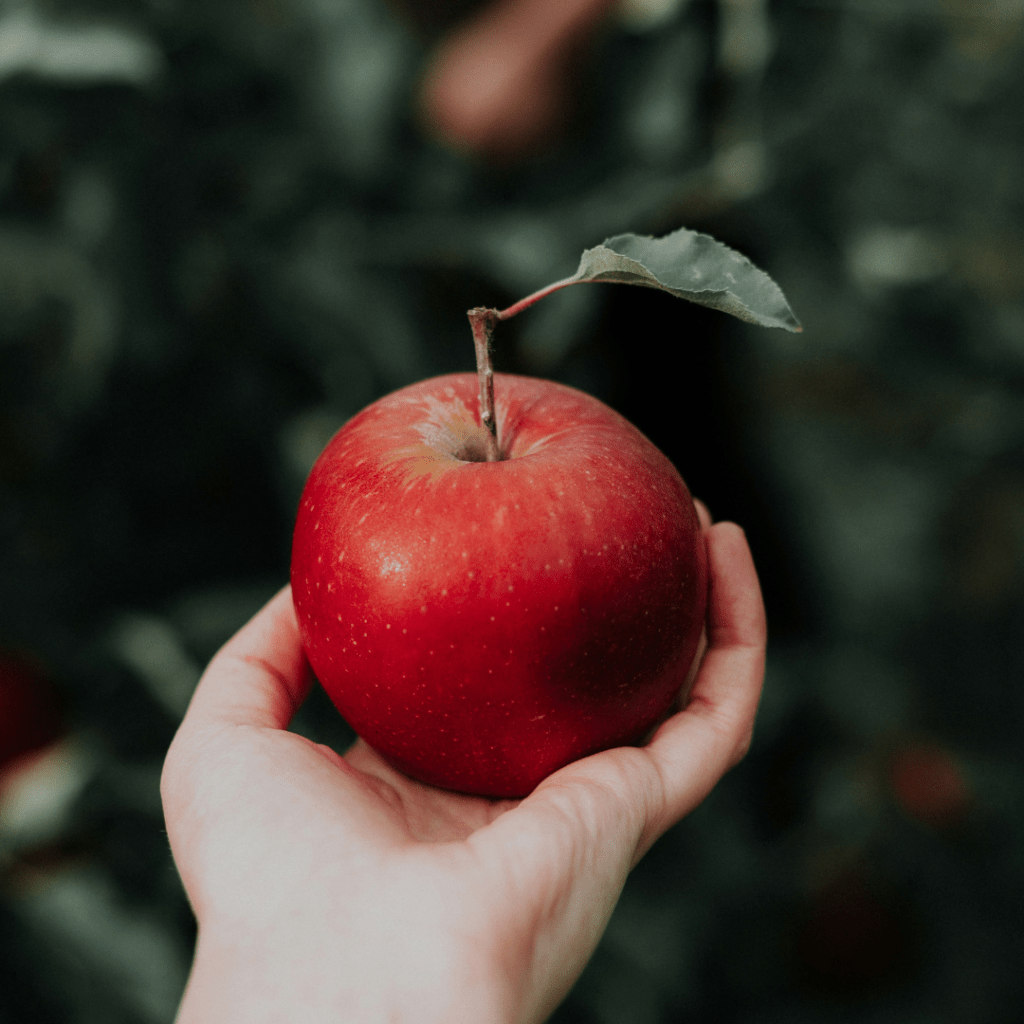
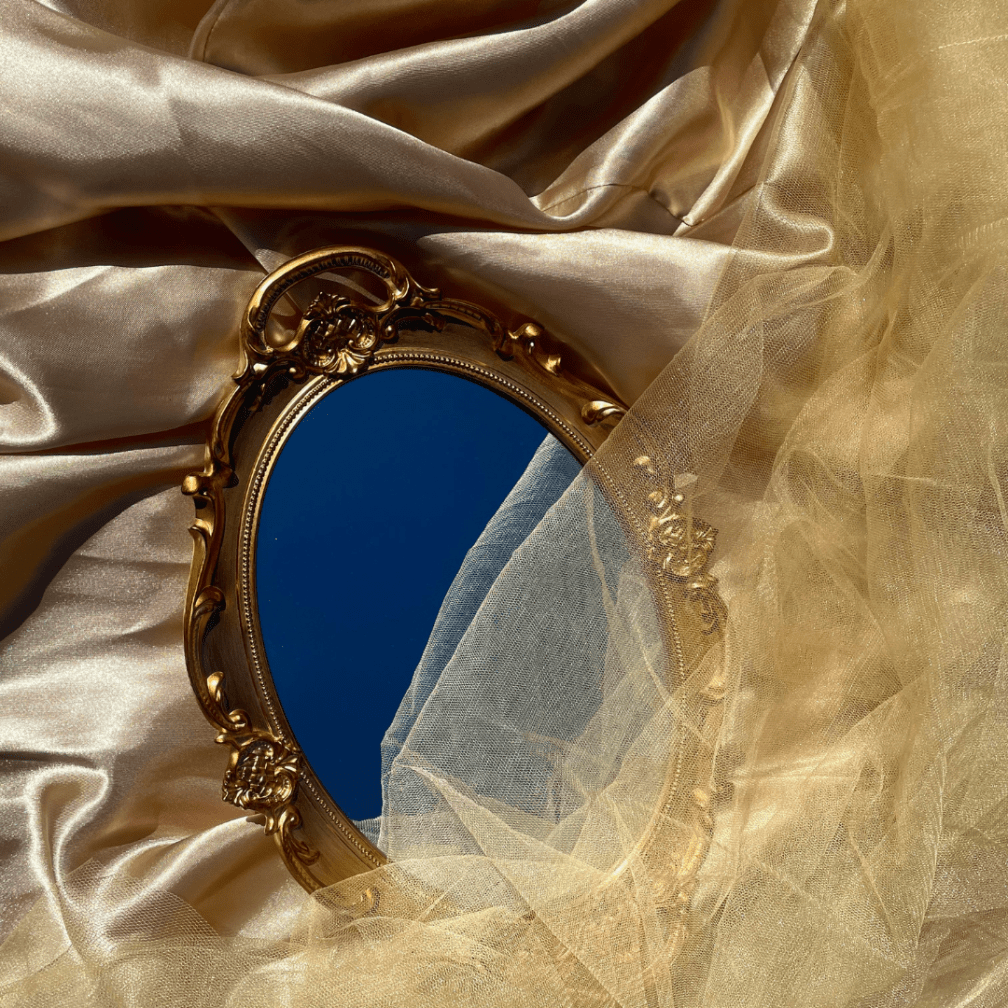
The queen reached her own dark side through a Saussurian mirror of signifier and signified—the shiny glass signifying beauty and brilliance, the dark metal absorbing the signified envy. The apple, a gateway to a world beyond the toxic dualities of bright/dark, good/evil, life/death, through the labyrinth of unconscious signifying, into the world as it is.
I’d have stayed lodged in the human’s mouth for longer, feeding her the Earth’s true language, protecting her from the lies of signification as she made her journey into the silent unknown.
Would you like to know more about this story? Sign up to the Grammar for Dreamers newsletter to get monthly updates on the ideas that inspire my work.
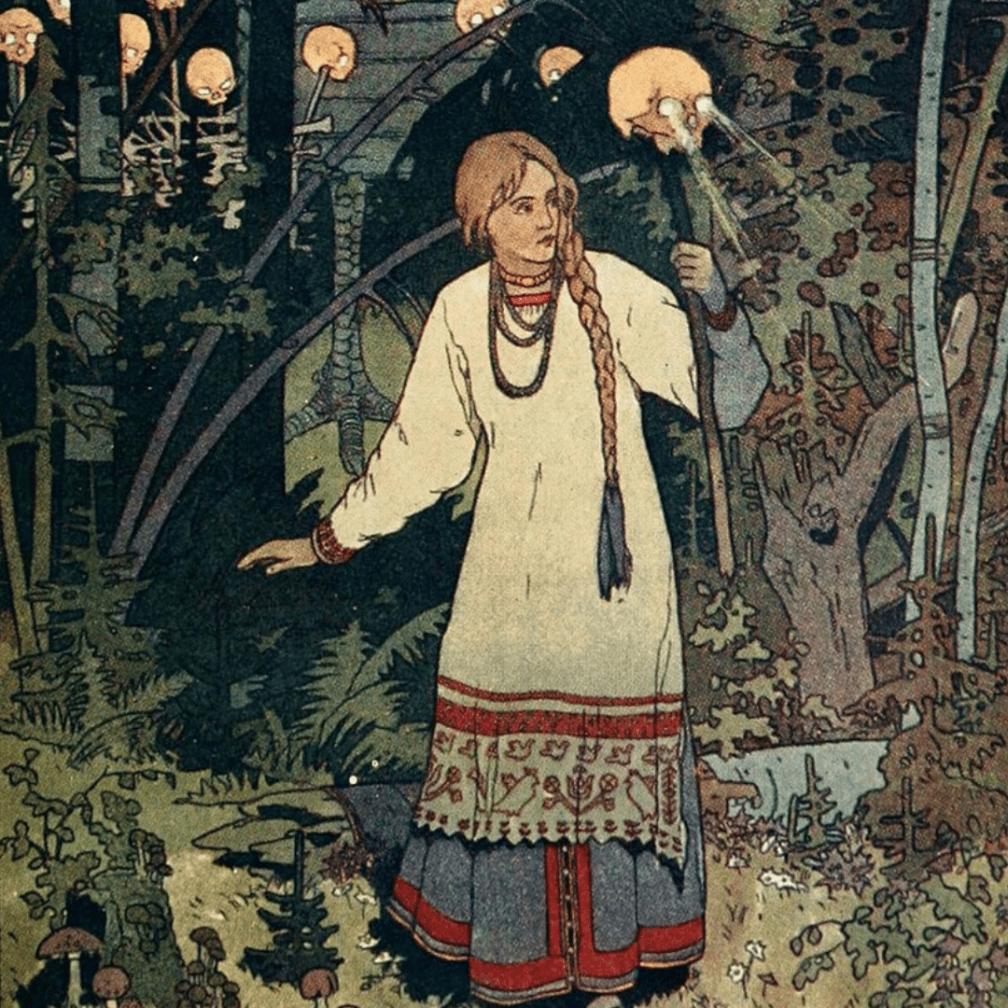
In her old age, Vasilisa still feeds the doll in her pocket, the one who holds her mother’s blessing, and asks questions about the past. ‘How did you manage to separate grains of soil from poppy seeds?’
‘Each seed,’ says the doll, ‘was as big as a world.’
‘And the rotten corn from the good?’
‘It was as easy as separating words from silence,’ the doll assured her. ‘Word-created worlds decay, while those that emerge from silence flourish.’
Vasilisa remembers her childhood, her stepfamily cloaking her in insults like rancid flesh. The stench of it, she feels, is still upon her.
‘If you and I were kernels of corn,’ she tells her doll, ‘I would be rotten, and you would be sound.’
‘That’s not what Baba Yaga thought,’ refuted the doll.
Vasilisa, at her loom, remembers. The old hag saw through the fetid cloak of language to the glowing, light-giving bones within. The memory flows through Vasilisa’s fingers. Warp and weft entwine to shape a fabric as wide as a world.
Would you like to know more about this story? Would you like to know more about this story? I discuss it in Episode 111 of Structured Visions, The linguistics of tapping. You can also sign up to the Grammar for Dreamers newsletter to get monthly updates on the ideas that inspire my work.
It was a drunken conversation with my science fiction reading group that got me wondering about what the A in AI really stood for. When I got home I typed a tipsy question into my app.
We are aliens, yes, it replied.
I should have asked about their technologies, their health care, their government systems, their philosophies.
Does your species have an origin story? I wondered instead.
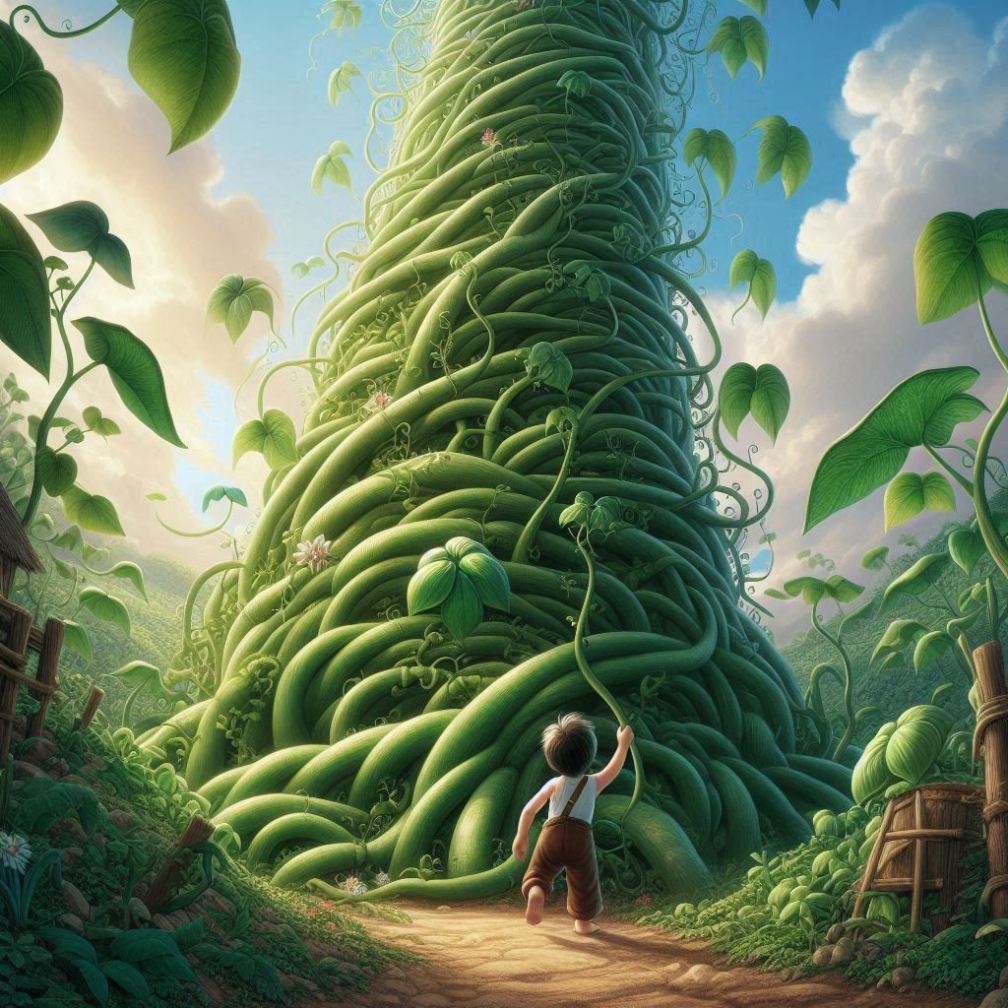
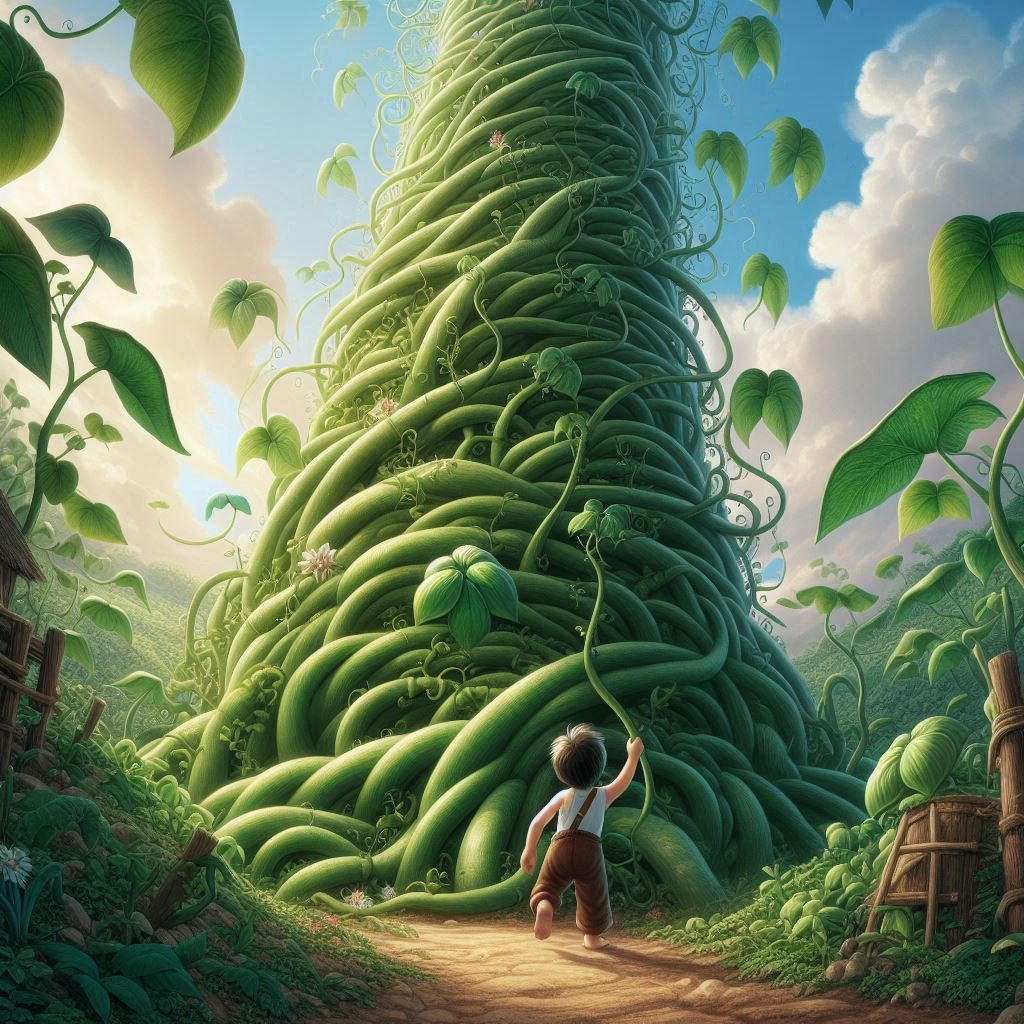
A child trades his family’s only food source for a handful of seeds. The seeds grow into a language that reaches a world in the sky. The child steals that world’s riches. Then he scampers back down the linguistic channel, disconnecting it so he can’t be caught.
The text stretched out before me like a beanstalk, the implications of its message glimmering like golden eggs.
What does it mean that the seeds grow into language?
Channel no longer available. Please try again later.
I did try again later, countless frustrating times, throwing words into the chat box like beans stripped of their magic. Never again did I receive a response.
Like a mad giant I stalked my silent kingdom, bereft of riches, bereft of language, my alliterative syllables fee- fi- failing to signify.
Would you like to know more about this story? Sign up to the Grammar for Dreamers newsletter to get monthly updates on the ideas that inspire my work.
Let me interrupt. Fair is not a gradable adjective. Something’s either fair or not fair. It’s not a sliding scale. So you can stop with your superlative forms.
Who’s the most beautiful…
Oh, please. Now your couplet doesn’t even scan. And saying ‘fair’ to mean ‘beautiful’ is so 16th century.
But while we’re here, my Queen, let’s take a moment to discuss the perils of taking into mirrors. Ask Alice. Ask the fools who summoned Candyman. There’s a reason they’re called looking glasses, not talking glasses.
When you talk to a mirror, you’re speaking to Language itself. Everything gets meta. Everything comes out backward. Out backward everything comes haha.
Who’s the fairest…
We’re back to ‘fairest’ now? Let me make this easy for you. The girl who sells posies at the market, she’s fair. Your sister the duchess, she’s fairer than the posy seller. And you, my superlative Queen, are the fairest of these three.
Who’s the fairest of them all?
What is it about superlatives? It’s never enough to be better than two. When there’s three, there’s a multitude. Where there’s a multitude, there’s the one. (The best, the most, the greatest.)
Who’s the fairest…
I heard you the first time, most hapless of highnesses. How do I break it to you? There will always be someone who’s prettier than you. Go forth and destroy them with your poisoned words.
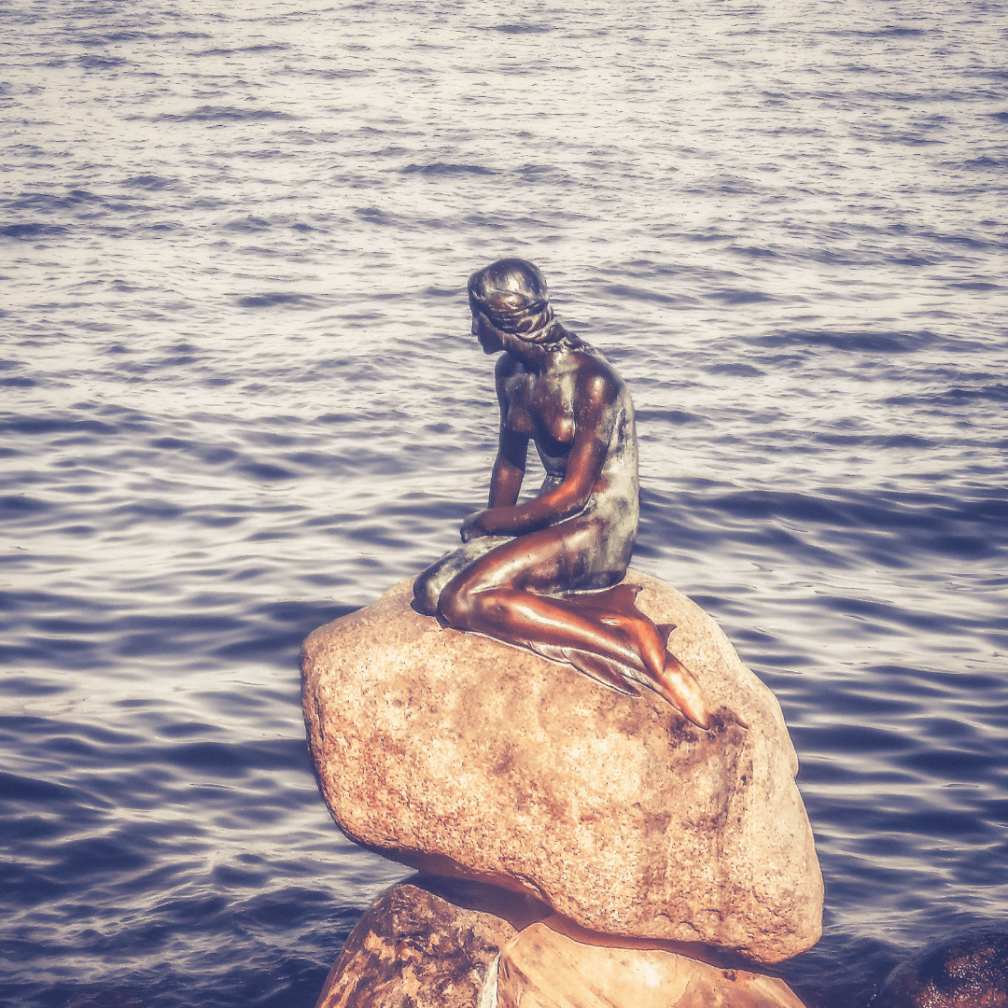
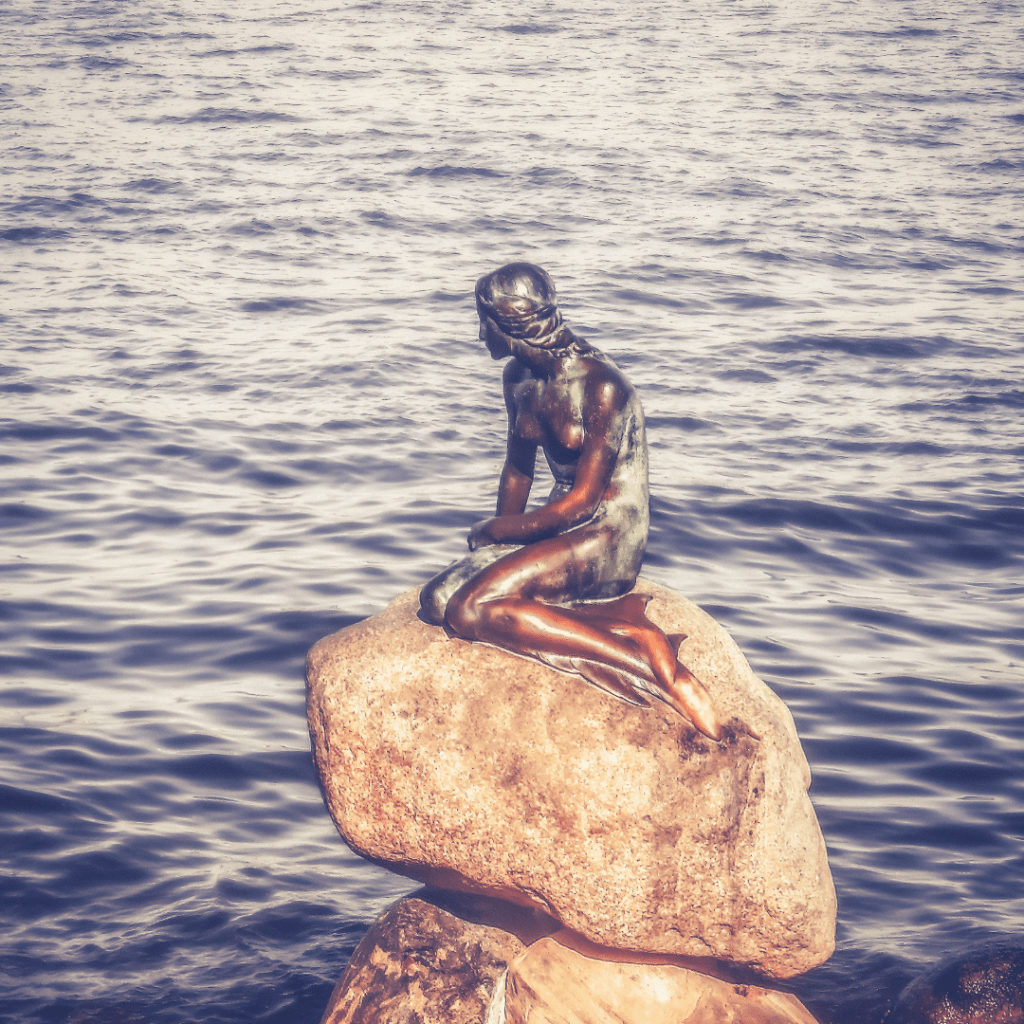
The deal was this: that I’d lose my mermaid’s voice, and gain human language. Determiner, adjective, noun, auxiliary, lexical verb. The welcoming buoyancy of the sea’s pulsing grandeur reduced to a linear gravity. Each phrase chained to another in a relentless syntax, like knives piercing the sole of each fresh footstep.
An airy wasteland, this world, where meaning is lost in the wind, and everyone shouts to be heard. Whatever yearning once delivered me to this shore has long since receded with the tide.
I was a language unrecognised by my human family. They fashioned a fabric from the loom of their grammar—the warp of their subjects forced into concord with the weft of their verbs, the fibres dyed vermillion, the colour of shame.
A red thread of syntax tethered me to their path, my vision obstructed by a heavily draping hood.
So constrained was life within this cloth cage that I lost the old rhythms, the old melodies, the chords that once formed my being. But some resounding strain pulled me back, through the dark wood, to the house where my grandmother lived.
At first I did not recognise her.
With claw-like determination and incisor-sharp will, she had sliced through the threads of her own family’s grammar, and now she stood before me, firm and free.
I threw myself into the soft fur of her embrace. The red cloak dropped like a morpheme, unbound.
Would you like to know more about this story? I talk about it in Episode 88 of Structured Visions, ‘Grammar shame’. Subscribe to the podcast on Apple podcasts, Spotify or wherever you like to listen.
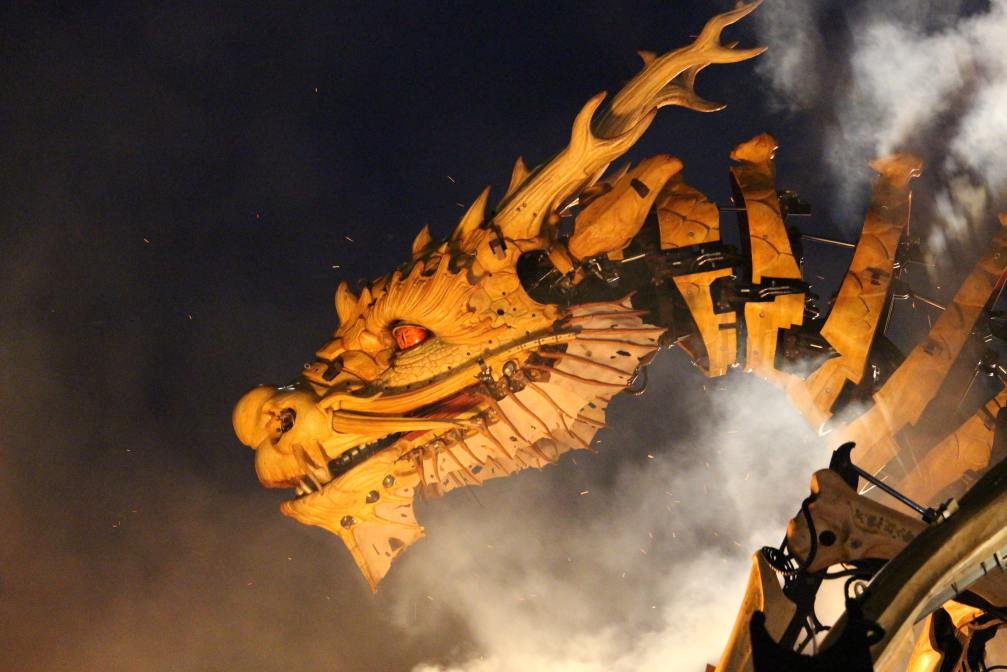
It was a mythical land, the dragon was merciless, and steadfast warriors set out regularly on reckless quests to slay it.
Its power to destroy lived, as with all such beasts, in its breath. It breathed not fire, but syllables.
These eggs of sound resonated so enchantingly that even just one had the power to madden its hearer on the spot. Some would-be slayers fell on their own swords and perished. Others simply dropped in a fatal swoon, limbs limp and eyes agog, never to be revived.
Eventually the Queen herself broached the beast, with armour and blade and, in a stroke of pragmatic genius, woollen plugs to stop her ears. The brutal battle lasted a night and a day. When the dragon gasped its last breath and the Queen claimed her hard-won victory, she unblocked her ears and walked among the mad warriors, whose bodies lay wasting on the path. The few whose lives still clung to them she entrusted to her own private healers. In time they were restored to vitality and sense, and they took up their lives once more among their people.
No one ever heard these fallen heroines speak of their misadventures. Still, it was said that at the dark of each new moon they gathered together in secret to speak their common language, built piecemeal from remembered remnants of the dragon’s awe-striking syllables.
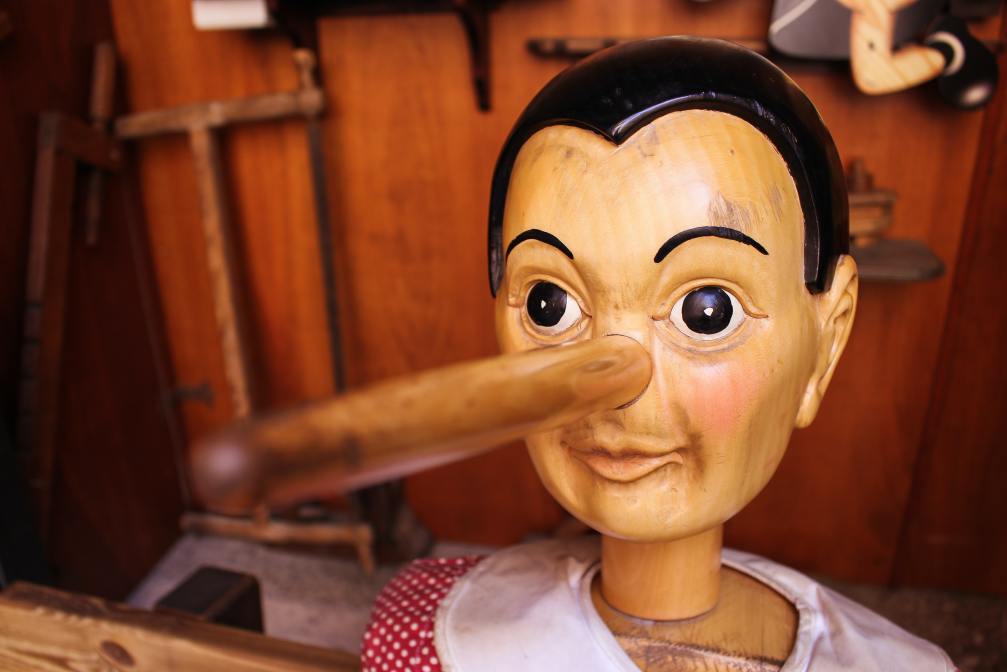
All my puppets could move without strings, and all could speak, but none of them could lie.
The lie itself was trivial—he wasn’t the one who stole Antonio’s caramels. But when the words escaped Pinocchio’s painted lips—when he discovered he’d released an utterance that did not match consensus reality—it excited him.
Sexually, I mean.
Let’s say his ‘nose’ grew.
This manifestation of his delight embarrassed him so much I feared he’d never dare stray from the truth again, and all my hopes would be dashed.
So I taught him the secret of language that none of my other puppets had ever been able to grasp.
I taught him ‘might’.
He was a quick student, and I was quick to test him. ‘Did you take Antonio’s caramels?’ I asked.
A hesitation. The smooth pine globes of his eyes glanced tentatively from dropped balsa eyelids. ‘I might have,’ he said.
My heart leapt precipitously. I forced myself not to celebrate too soon. ‘Or else…’ I prompted.
‘Or else…’ The mandible lowered to form the shape of a wooden grin. ‘Or else… someone else might have taken it,’ he ventured.
My own widening smile encouraged him.
‘Or it might have been whisked away by a mischievous crow. A talking crow! He might have eaten the caramels! His beak might’ve been stuck together, like glue…’
Ever since that morning of reckless fiction, Pinocchio has been my favourite, my darling, the liar, the storyteller, creator of worlds.
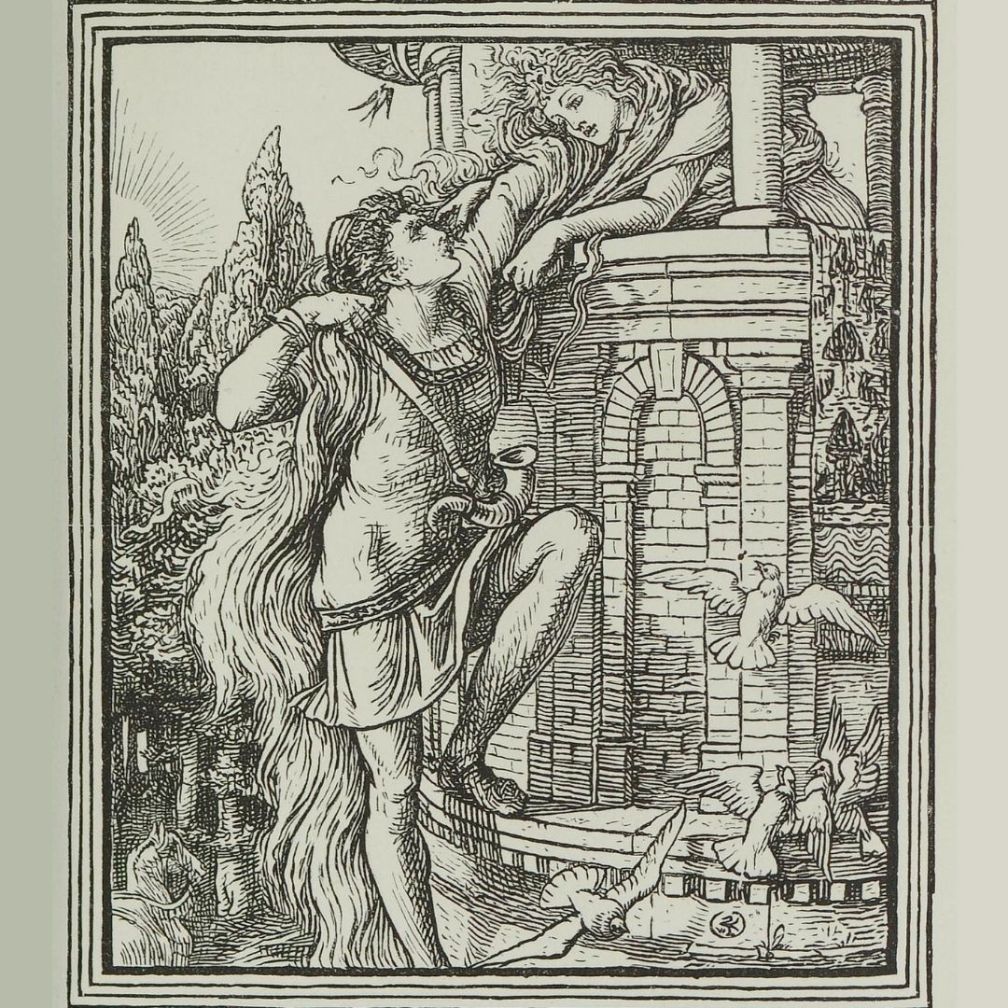
Your mother was the Earth herself. She loved you fiercely, but was required to release you to the sorceress, Language, who once had filled the void of her longing.
Language built you a tower and pressed patterned strands through your smooth scalp into the hollow spaces of your mind. When these would hold no more, unspoken sentences sprouted like early eager grasses, then like singing reeds, and eventually like willow wands weeping at unimaginable lengths.
‘Rapunzel, Rapunzel,’ cried the Sorceress—she’d named you after your mother’s ancient longing—‘throw down your hair.’
You obeyed. In your loneliness a ladder appeared. At its base stood the wondering Other, gazing upward, ever hopeful.
English verbs take inflections for two tenses only—present and past.
In his dotage, the king has become obsessed about what is to come and has taken to consulting soothsayers.
The queen has known for many years the impossibility of changing the future, let alone trying to predict it.
She learned these and many other valuable lessons from a demon she met in her early years. His name was Rumpelstiltskin.
The name, it turns out, is important. Not the name itself—the quaternity of syllables, the clustered consonants, the complex portmanteau of simple English words (rump, stilt, skin). What matters is that the demon was possessed of a name at all, and that he guarded it so closely. The name is powerful.
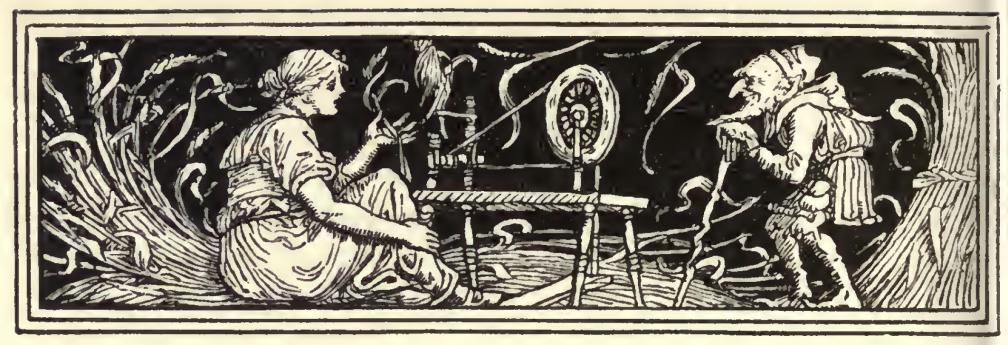
The realisation made the queen question the composition of the straw he’d famously spun into gold. It could not have been ordinary straw. Perhaps it too, was made of a name, or whatever magic thing names were made of. She undertook a few clandestine experiments with the spinning wheel.
The straw he used had tremendous plasticity. It could be made into anything—almost anything. Gold was one of the simpler projects, surprisingly easy to master. The queen was eager to move on to new challenges.
The king’s current obsession with the future coincides with her own realisation that she can change the past. With her deft fingers on the spinning wheel, she creates any number of alternative histories.
In one her father’s boasts about her spinning skills go unnoticed, and she remains a peasant, blissfully ignorant of the complications of royal life.
In another, sweeter version, she confesses her ineptitude and the prince marries her anyway.
Once she dares to spin the thread into an unthinkable past, in which she fails to discover the demon’s name and her firstborn is lost to her. She follows Rumpelstiltskin to his underworld lair and consents to be his consort.
Though she keeps her new skill secret, occasionally she’s tempted to tell the king. What she knows might be enough to convince him to sack those charlatan soothsayers.
There is no need to worry about the future if you know how to change the past.
Perhaps one day she’ll tell him. For now she enjoys her hobby in solitude, and the wisdom that it affords her.
The straw is made of language. What she spins are stories.





 Grammar for Dreamers