In plain sight

Photo by Aaron Burden

It’s one thing to design the mysteries. It’s quite another to keep them hidden. 

Guarding their secrecy was my task, and for a while I took it very seriously. 

I’ve experimented with all sorts of methods over the millennia. Forbidden fruit trees with heavily guarded walled gardens, underwater cities, islands veiled by ethereal mists. I particularly enjoyed the secret societies with their hierarchies of esoterica, the self-important initiates, the chanting, the rituals. 

I got bored with it all in the later years. I knew my complacency had gotten the better of me when I spotted an unsecured grimoire on an open shelf of a public school library. A frenzied scan of its contents revealed that the great human mysteries had been mass produced, unapologetically available to all. 

The sacred voice. The holy trinity of personhood. The unmoved mover. The one in the many, the many in the one. The great wheel of time, the secrets to its turning.

In my panic I cast a spell on this and all grimoires of its kind. Let all who approach the contents be made to feel stupid or ashamed. Let all who already grasp this wisdom suffer vanity, smugness, self righteousness. Let it be excruciatingly boring.

Henceforth the grimoires became grammars.

Produced in haste and out of necessity, the strategy has proven my most effective yet. The great human mysteries remain hidden in plain sight.


Would you like to know more about this story? I talk about in in Episode 89 of Structured Visions, ‘Grammar as a gateway to mystery’. Subscribe to the podcast on Apple podcasts, Spotify or wherever you like to listen.
The treacherous labyrinth of grammar

The turning world is the verb. Its subject, the still point, the dancer.

The path to the heart of this mystery is an inner one, a treacherous labyrinth of grammar, overgrown with a thousand rose-red thorn pricks. Corrections. Inadequacies. Doubts. It’s hard to breathe. Something pungent—a smugness, a cloying righteousness—chokes the air.

At the centre, there you are. I am. We have been: the selves at the still point, the dancing.

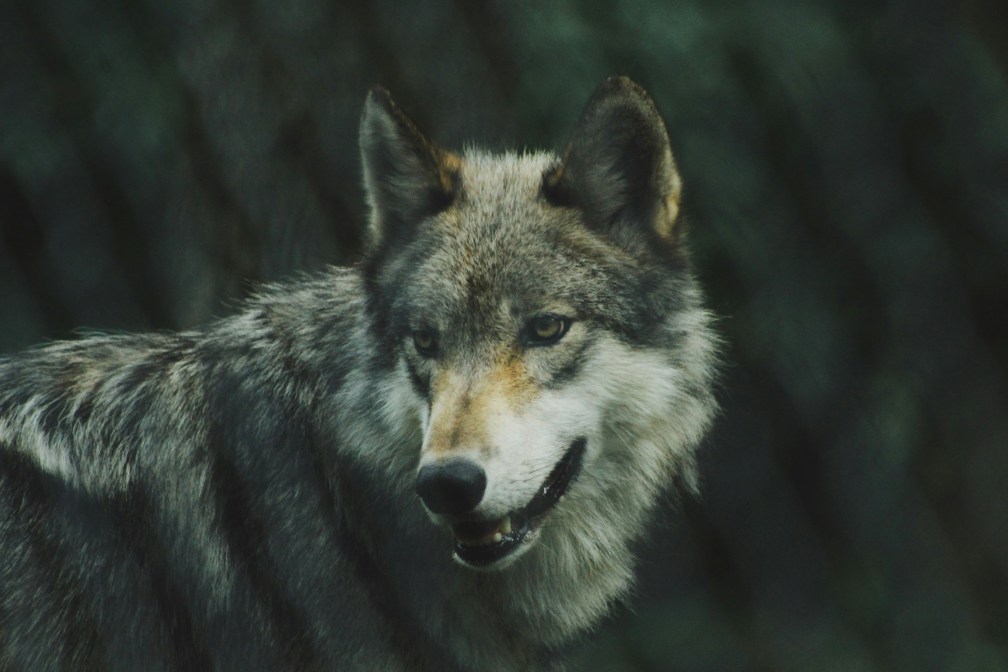
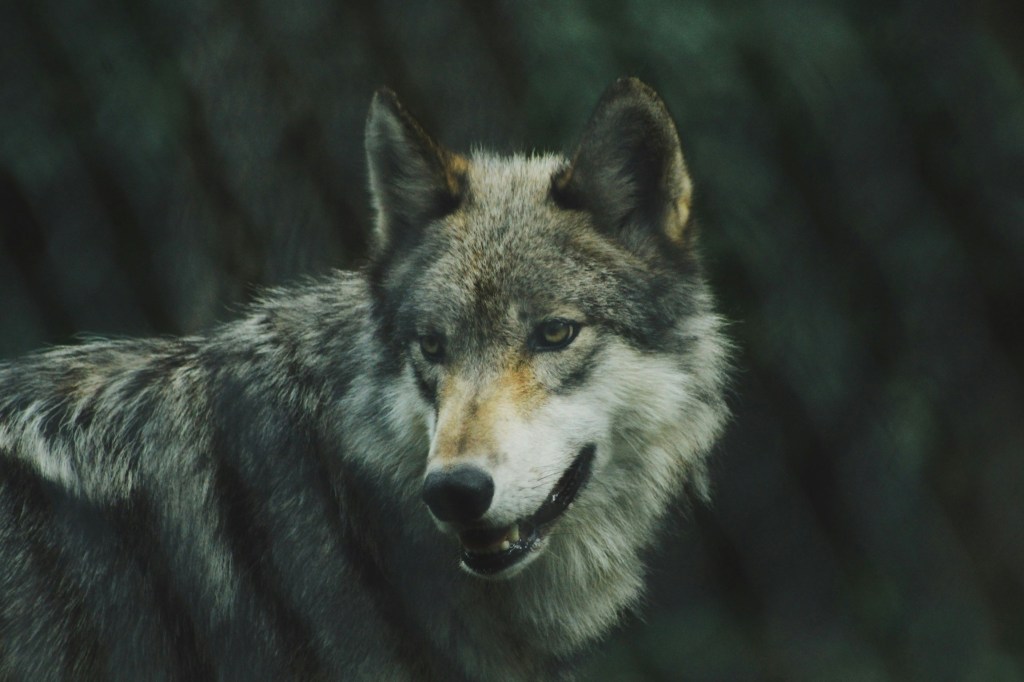
Close up of a gray wolf

Little red grammar hood

Close up of a gray wolf
Photo by Michael LaRosa

I was a language unrecognised by my human family. They fashioned a fabric from the loom of their grammar—the warp of their subjects forced into concord with the weft of their verbs, the fibres dyed vermillion, the colour of shame.

A red thread of syntax tethered me to their path, my vision obstructed by a heavily draping hood.

So constrained was life within this cloth cage that I lost the old rhythms, the old melodies, the chords that once formed my being. But some resounding strain pulled me back, through the dark wood, to the house where my grandmother lived. 

At first I did not recognise her.

With claw-like determination and incisor-sharp will, she had sliced through the threads of her own family’s grammar, and now she stood before me, firm and free.

I threw myself into the soft fur of her embrace. The red cloak dropped like a morpheme, unbound.


Would you like to know more about this story? I talk about it in Episode 88 of Structured Visions, ‘Grammar shame’. Subscribe to the podcast on Apple podcastsSpotify or wherever you like to listen.
Beginning

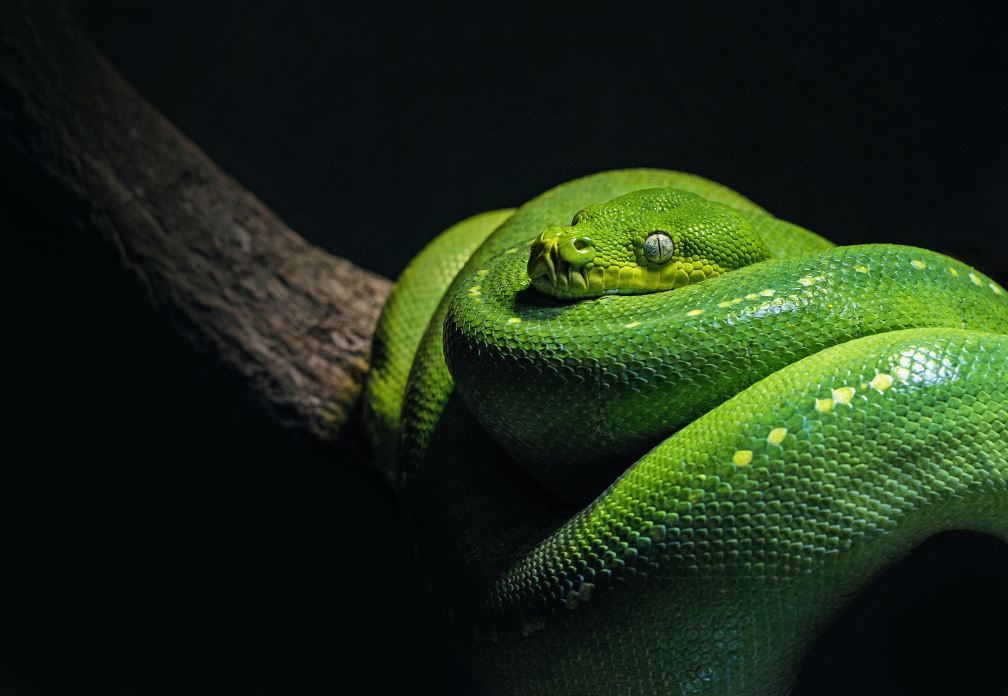
Green snake coiled around a tree branch
Photo by David Clode

In the beginning language was a garden.

Adverbial seedlings pressed to skywardly split the rocky infinitives. It was a cleft construction, that ravine, which brought forth the progressive aspect of waterfall, which was flowing, which was churning, which was bursting with verbal enthusiasm.

Its mist kissed the brave budding morphemes, fixed on stems and roots of meaning, deriving new ideas from the loamy depths of a forgotten protolanguage.

A snakelike syntax stretched around human bodies to make membranes of personhood. Possessive determination shaped our infamous expulsion. What was never our garden before was even less our garden now, so we left to shape a new language, a new beginning.

Exiles

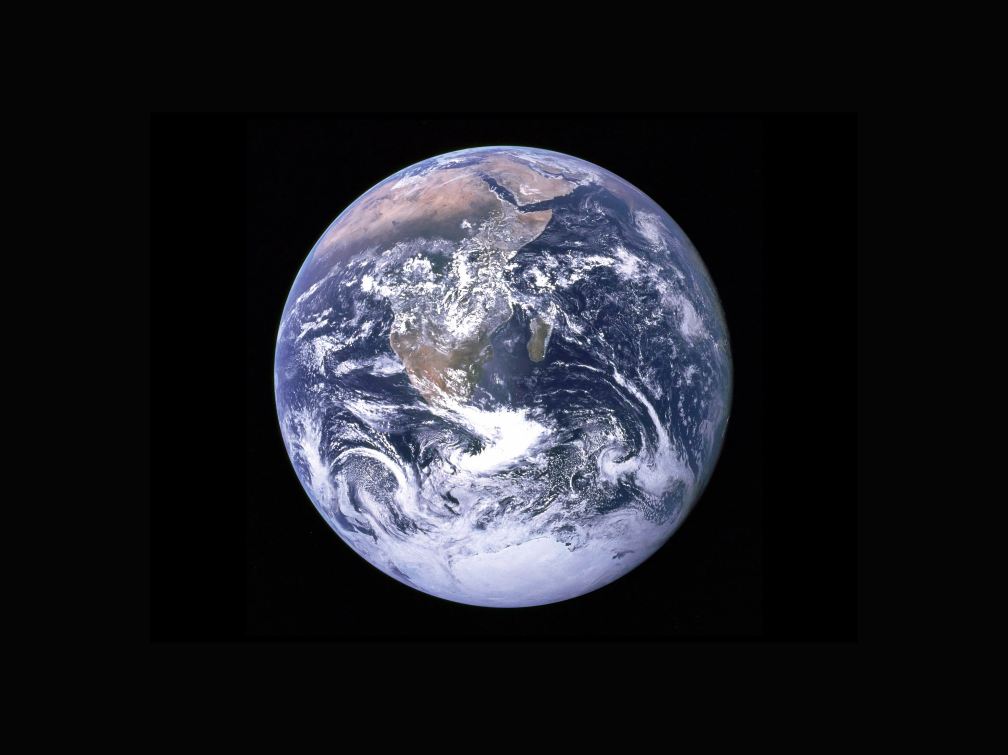
View of the Earth as seen by the Apollo 17 crew traveling toward the moon
Photo by Nasa

What a generous planet was Earth, to adopt an exiled species. 

The decision was not made from scarcity or fear. Earth teemed with abundant wisdom and harmony. What do you get the planet who has everything? 

The species was called Human Language. So divorced was it from the Earth’s own linguistic structures that at first no one thought it would survive. 

As a last resort, Earth sacrificed its most recent creatures from the primate line, and invited Human Language to reside therein. 

That Human Language is uncomfortable in its host planet and in its host bodies is evident from its maltreatment of both. It shapes itself into the forms it knew on its own planet, called persons. It looks ungratefully to the information-filled sky and longs for home. 

Many have wondered why it’s been allowed to remain.

It turns out the Earth is fascinated by the new arrival. What new ideas, it wonders, might emerge from these strange persons, who seal themselves off so hermetically from the rest of creation?

Curiosity, warn the naysayers, could kill the planet.


Would you like to know more about this story? I talk about in Episode 87 of Structured Visions, ‘What if you’re an alien?’ Subscribe to the podcast on Apple podcastsSpotify or wherever you like to listen.
The dancing

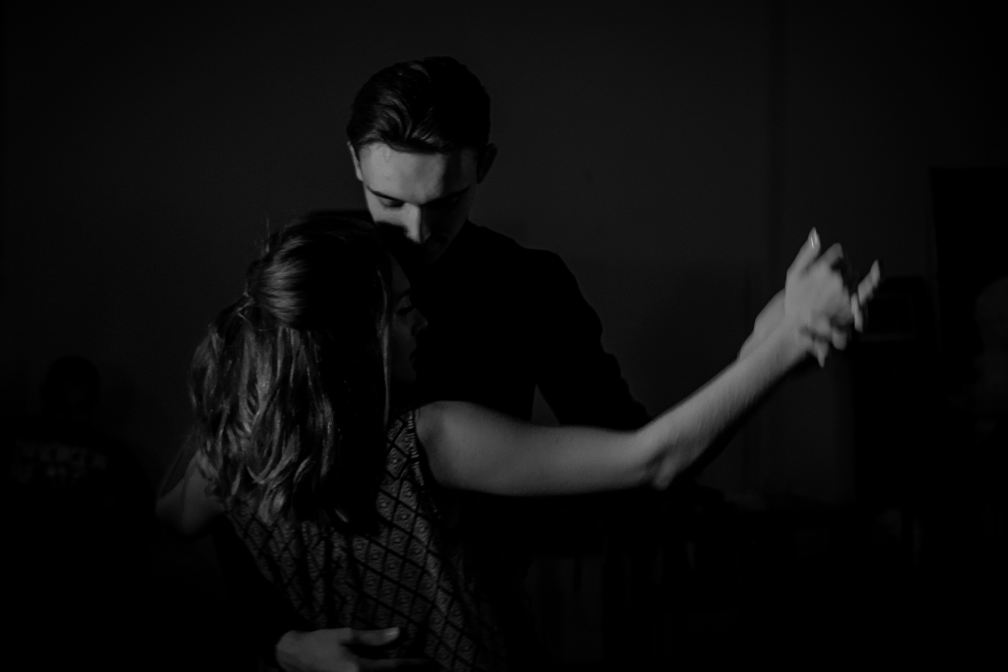
Grey scale photo of a couple dancing
Photo by Serhii Kindrat

The heady talk of Freshman pretension swirls amidst the stench of pot smoke and beer in the crowded basement common room. Event horizons, postmodernism, chaos theory, minds blown. The only thing blowing Joel’s mind is the vortex of galactic tuition fees that admission to this selective, flaky college has thrust him into—a singularity of devouring debt. 

Even Freshman Writing offered no relief. What should have been a refuge of reassuring practicality on how to avoid a sentence splice and ensure tense consistency descended into a pseudo-philosophical discussion on the instability of metalanguage.

‘Any idiot can verb a noun,’ Joel had muttered in an unusual display of petulance, mortifyingly witnessed by the one classmate he would have preferred to impress, whose name (and everything else about her) remained a mystery. Chastened for his churlishness by a pitying glance from her dramatically lined eyes, he was smitten with a sudden certainty that she could see straight through his pathetic armor of contempt. 

‘Let me guess,’ he hears her say now, her breath a warm whisper on his defenseless neck. ‘You’re the kind of guy whose world is made of nouns.’

Whatever this means, it might once have been true. But now only the solidity of her palms on his shoulders keeps him on the ground, and her thumb on the base of his newly soft skull tethers him upward like a balloon in the moment before its release.

She does not say ‘Let’s dance,’ but ‘Let’s do the dancing,’ in honor of his former dependence on nouns. But now it’s the verb that brings him the stability he once yearned for. They dance, they’re dancing, they’ve never stopped dancing, nor will they ever, he hopes. May we dance forever is his silent prayer, or at least, he pleads, until the singular moment when the matter of his being is formed in the flux of their spiraling embrace.

The multidimensional language learners

Four glass vases, three green and one blue, each holding a different flower
Image by James Cousins

The multidimensional planets struggle with your concepts of space, particularly inside and outside. Space for them is fullness, not distance, and to move from one place to another place seems an utter impossibility, let alone going in or sending out. To achieve what you would call movement, they increase their stillness, and every attempt to go inside turns the inside out in a resplendent kaleidoscopic dance.

This is why it’s so hard to teach them your three-dimensional languages.

We start with an utterance which to you would seem a straightforward description, simplicity itself. 

This is a flower.

We hold the object before them and witness their blossoming wonder.

This creates a division, as real as melting glass, forming itself into a vase-like shape that distinguishes this from not this. Once there was no vase, now, there it is! And the flower, pressing its radiant face outward, bravely, breaching the invisible, newly formed barrier between inside and outside—a miracle!

The multidimensional language learners yearn to meet you, the native speakers of these wild mysteries, to discover the secrets of your enlightenment.


Would you like to know more about this story? I talk about it in Episode 86 of Structured Visions, ‘Feelings are, like, inside things’. Subscribe to the podcast on Apple podcastsSpotify or wherever you like to listen.
Seeds of language

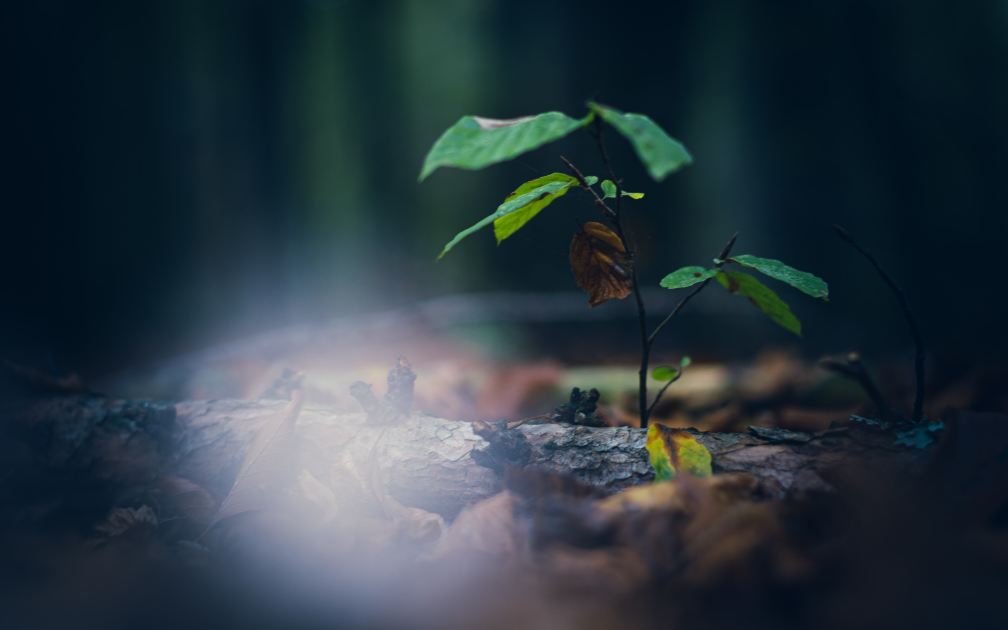
Image by Jannik Selz

I forgot Language.

Still, there it stands, against the decimated remains of a land ravaged by wildfire and warfare, on the site where we once lived as a young family, full of hope. It is all that remains alive.

I remember now.

We grew it from seeds we bought on eBay, back when eBay was still legal and the internet was open to all. ‘Seeds of language’, they were called, enticingly, but the scant product description offered no further clarification.

At the time we were teaching at the local university, before they closed down our department, then the whole university, then all the universities. 

We were both linguistics professors, so ‘Seeds of language’ intrigued us. We paid extra for expedited delivery.

‘Maybe they’ll grow into syntax trees,’ said my husband Jim, a generativist.

‘What does Noam Chomsky know about botany?’ I countered. ‘His trees grow upside down.’ I proposed instead a Saussurian species, which would wave coin-shaped signifier leaves, their signified undersides flashing suggestively in stormy breezes.

We sowed the seeds in pots in the greenhouse. We took a photo of the one that germinated and did a reverse image search to identify it.

‘Sapling,’ was all that Google could tell us. (This was when we still had Google). We named it ‘Language’ and planted it near the weeping willow behind our house. 

Soon after, we fled the country to protect our son Devon, whose gender made him an outlaw, just in time to squeeze through the nation’s tightening borders.

In the ensuing decades, I have forgotten many things. 

I am only now remembering Language.

A verdant desire sprouts from within my decomposing weariness: I want to dwell in the warm embrace of Language. I climb up to nestle in its welcoming limbs. 

Language envelops me. It roots me in its thrumming pulse. It evaporates the accumulated shame of my culture’s demise and the decimation of my own exhausted history.

‘Where have you been?’ Language wonders.

A bright new thought blossoms—that I’ve never, until now, inhabited Language—that it is only from within this sheltering space that self and culture will heal.

‘I have always been here for you,’ says Language, and tears form, flowing like sap.

My late grandmother

Greyscale photo of a Ouija board
Photo by James Frid

Our daughter found the Ouija board when we were clearing out my late grandmother’s waterfront house. 

Rick gave me a meaningful look. You never told me your grandmother was into that sort of thing. 

She wasn’t. Or at least I didn’t think she was. 

‘What’s it for?’ Becca pressed. ‘Is it a game?’

‘It’s a game for teaching children their letters,’ I lied. Becca discarded it disdainfully and Rick breathed a sigh of relief. 

Later we sat on Gran’s dock to watch the sunset and share memories about her. I told Becca and Rick that she taught me how to catch blue crabs by dangling chicken necks off this very pier.

‘Gross,’ Becca said, but the memory soothed me, restoring to me the Gran I thought I knew, who’d never dream of dabbling in the occult.

But that night my own dreams were haunted by a fiendish alphabet that swam bewitchingly around the shadowy underworld of my unexplored ancestry. The chickens were ritual sacrifices, the crabs charmed toward the spell they cast. 

The letters formed strings of words that tugged me to the surface. 

‘The point of a fish trap is the fish,’ they spelled. ‘The point of the word is the idea.’

I, too, was netted, and my grandmother was pulling me in. 

‘Once you’ve got the idea, you can forget the word,’ she said.* 

I emerged from the depths to the light of day, gasping for air as the Ouija letters tumbled into disarray.


*Gran is quoting Chuang Tzu, from David Hinton’s translation of The Inner Chapters.

Would you like to know more about this story? I talk about it in Episode 85 of Structured Visions, ‘How spooky is language?’ Subscribe to the podcast on Apple podcasts, Spotify or wherever you like to listen.

The grammar of your beginning

A string of wooden and glass beads on a painted wooden surface
Image by Alexey Demidov

When did I begin?

You have never begun. You will not end.

This response never satisfies you, so I must tell a less true tale, of the time when you began to know beginnings.

Think of a treasured thing that is yours alone—a doll, a puppet—made after your image, perhaps, who knows nothing but how to love you.

One day an adornment appears on your doll’s neck—a filament, a thread—almost too fine to be perceived, draped restlessly between head and heart.

The thread is a razor-sharp, severing thing, a fibre of spun glass. 

It sets the doll’s soul to longing. Your own soul’s love is stronger than the loneliness this longing foretells.

One day the doll awakens to find a jewel box filled with iridescent beads and a needle for stringing. With the patterns she forms, she fashions the syntax of her own beginning.

Imagine that you knew, from the beginning, that in her beginning you would meet your end. 

Would you still offer your treasured thing the ornaments of your own destruction? Would you unearth these beads from deep beneath the sediment of your wisdom, grief and love?

You have never begun, and you will not end, but the grammar of your beginning spells the story of my end.