Death of a grammarian

Close up photo of maple leaf in autumn with shallow depth of field
Image by Matt

As my language deteriorates, a steadier syntax is revealed. A tree dropping leaves of wisdom in my life’s autumn.

The verbs that remain are release, surrender, let go. The first person–that once grasping branch–now sets its objects free. They spiral skyward, earthward, held safe within some other grammar, invisible as air.


Would you like to know more about this story? I discuss it in Episode 92 of Structured Visions.

In plain sight

Photo by Aaron Burden

It’s one thing to design the mysteries. It’s quite another to keep them hidden. 

Guarding their secrecy was my task, and for a while I took it very seriously. 

I’ve experimented with all sorts of methods over the millennia. Forbidden fruit trees with heavily guarded walled gardens, underwater cities, islands veiled by ethereal mists. I particularly enjoyed the secret societies with their hierarchies of esoterica, the self-important initiates, the chanting, the rituals. 

I got bored with it all in the later years. I knew my complacency had gotten the better of me when I spotted an unsecured grimoire on an open shelf of a public school library. A frenzied scan of its contents revealed that the great human mysteries had been mass produced, unapologetically available to all. 

The sacred voice. The holy trinity of personhood. The unmoved mover. The one in the many, the many in the one. The great wheel of time, the secrets to its turning.

In my panic I cast a spell on this and all grimoires of its kind. Let all who approach the contents be made to feel stupid or ashamed. Let all who already grasp this wisdom suffer vanity, smugness, self righteousness. Let it be excruciatingly boring.

Henceforth the grimoires became grammars.

Produced in haste and out of necessity, the strategy has proven my most effective yet. The great human mysteries remain hidden in plain sight.


Would you like to know more about this story? I talk about in in Episode 89 of Structured Visions, ‘Grammar as a gateway to mystery’. Subscribe to the podcast on Apple podcasts, Spotify or wherever you like to listen.

The treacherous labyrinth of grammar

The turning world is the verb. Its subject, the still point, the dancer.

The path to the heart of this mystery is an inner one, a treacherous labyrinth of grammar, overgrown with a thousand rose-red thorn pricks. Corrections. Inadequacies. Doubts. It’s hard to breathe. Something pungent—a smugness, a cloying righteousness—chokes the air.

At the centre, there you are. I am. We have been: the selves at the still point, the dancing.

Close up of a gray wolf

Little red grammar hood

Close up of a gray wolf
Photo by Michael LaRosa

I was a language unrecognised by my human family. They fashioned a fabric from the loom of their grammar—the warp of their subjects forced into concord with the weft of their verbs, the fibres dyed vermillion, the colour of shame.

A red thread of syntax tethered me to their path, my vision obstructed by a heavily draping hood.

So constrained was life within this cloth cage that I lost the old rhythms, the old melodies, the chords that once formed my being. But some resounding strain pulled me back, through the dark wood, to the house where my grandmother lived. 

At first I did not recognise her.

With claw-like determination and incisor-sharp will, she had sliced through the threads of her own family’s grammar, and now she stood before me, firm and free.

I threw myself into the soft fur of her embrace. The red cloak dropped like a morpheme, unbound.


Would you like to know more about this story? I talk about it in Episode 88 of Structured Visions, ‘Grammar shame’. Subscribe to the podcast on Apple podcastsSpotify or wherever you like to listen.

Beginning

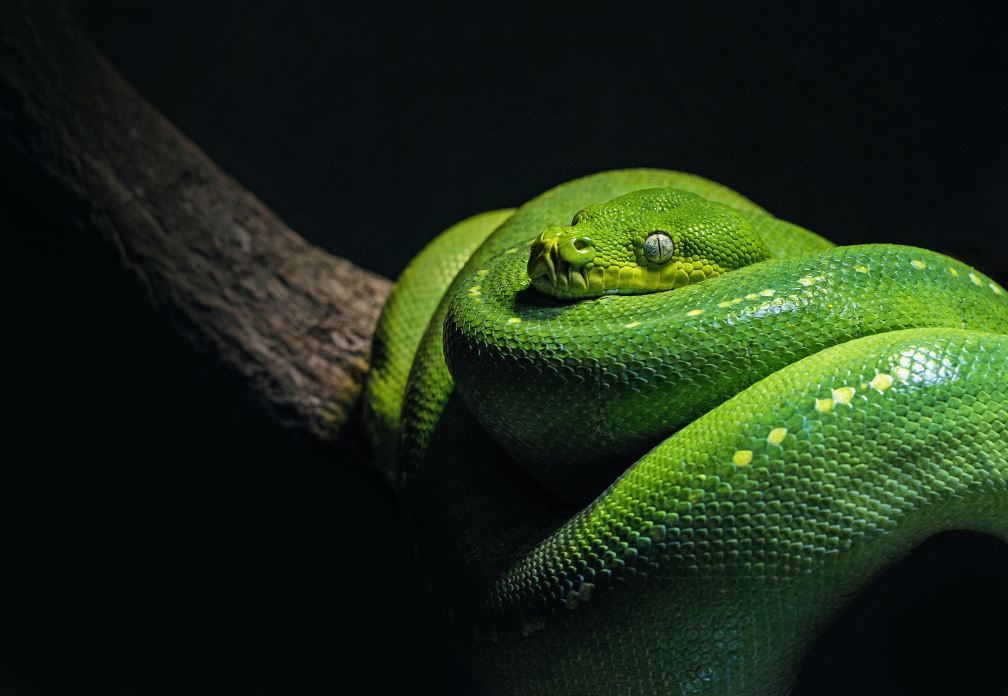
Green snake coiled around a tree branch
Photo by David Clode

In the beginning language was a garden.

Adverbial seedlings pressed to skywardly split the rocky infinitives. It was a cleft construction, that ravine, which brought forth the progressive aspect of waterfall, which was flowing, which was churning, which was bursting with verbal enthusiasm.

Its mist kissed the brave budding morphemes, fixed on stems and roots of meaning, deriving new ideas from the loamy depths of a forgotten protolanguage.

A snakelike syntax stretched around human bodies to make membranes of personhood. Possessive determination shaped our infamous expulsion. What was never our garden before was even less our garden now, so we left to shape a new language, a new beginning.

The grammar of your beginning

A string of wooden and glass beads on a painted wooden surface
Image by Alexey Demidov

When did I begin?

You have never begun. You will not end.

This response never satisfies you, so I must tell a less true tale, of the time when you began to know beginnings.

Think of a treasured thing that is yours alone—a doll, a puppet—made after your image, perhaps, who knows nothing but how to love you.

One day an adornment appears on your doll’s neck—a filament, a thread—almost too fine to be perceived, draped restlessly between head and heart.

The thread is a razor-sharp, severing thing, a fibre of spun glass. 

It sets the doll’s soul to longing. Your own soul’s love is stronger than the loneliness this longing foretells.

One day the doll awakens to find a jewel box filled with iridescent beads and a needle for stringing. With the patterns she forms, she fashions the syntax of her own beginning.

Imagine that you knew, from the beginning, that in her beginning you would meet your end. 

Would you still offer your treasured thing the ornaments of your own destruction? Would you unearth these beads from deep beneath the sediment of your wisdom, grief and love?

You have never begun, and you will not end, but the grammar of your beginning spells the story of my end.

Possessed

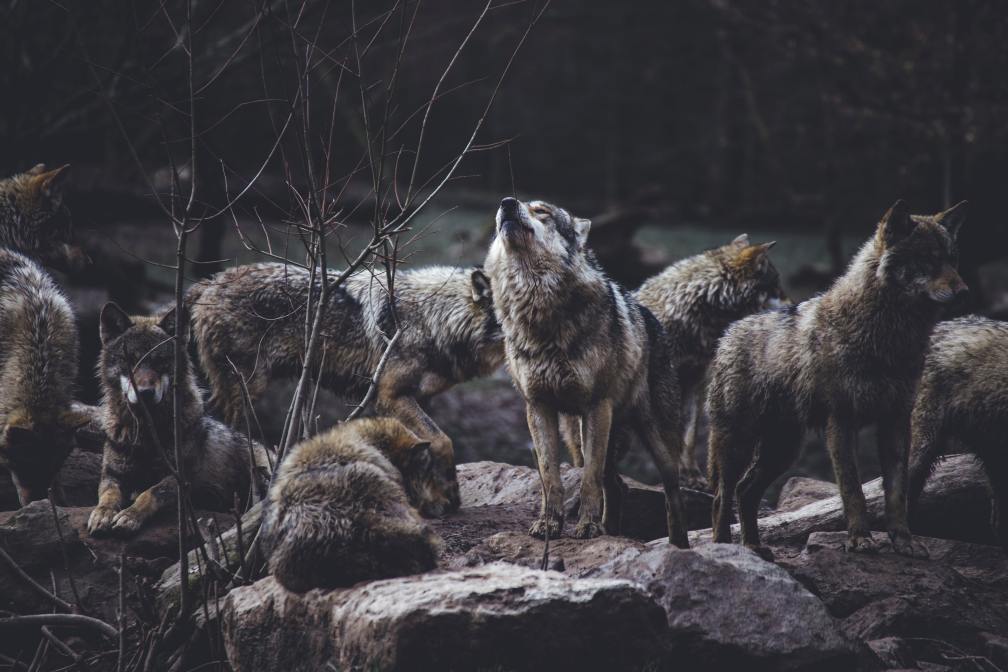
Wolf pack on a rock formation
Photo by Thomas Bonometti

Each fibre of fur is a strand of awareness. Each press of paw pad on the earth a moment of contact. We gather under the full moon in a sacred geometry as aligned with the astronomical expanses as any stone circle. The finely tuned notes of this howling symphony transmit the Earth’s wisdom to the stars.

A litter of freshly whelped cubs is both a miracle and a liability. We watch them each diligently, perhaps obsessively.

At the first sign of possession, a decision must be made. By what might the youngster be possessed? Can such possession be outgrown?

We’re on guard for clear signs the taint is growing stronger. Possession becomes apparent in the grammar of the cub’s eyes as he stares at the mother. ‘Mine,’ he thinks. He notes a unique fleck of white below the dam’s chin. ‘Hers.’

Possession destroys unity and must be stopped before it can grow. A merciful killing is sometimes required. Such measures pain us, though, and howls become mourning songs.

If we are travelling near a place where people live, we’ll sometimes deposit the cub on the threshold of a human dwelling. We stay distant, waiting for the cub’s new owners to discover it there, their miracle puppy, their adorable stray.


Would you like to know more about this story? I discuss it in Episode 79 of Structured Visions. Subscribe on Apple podcastsSpotify or wherever you like to listen.

Messages

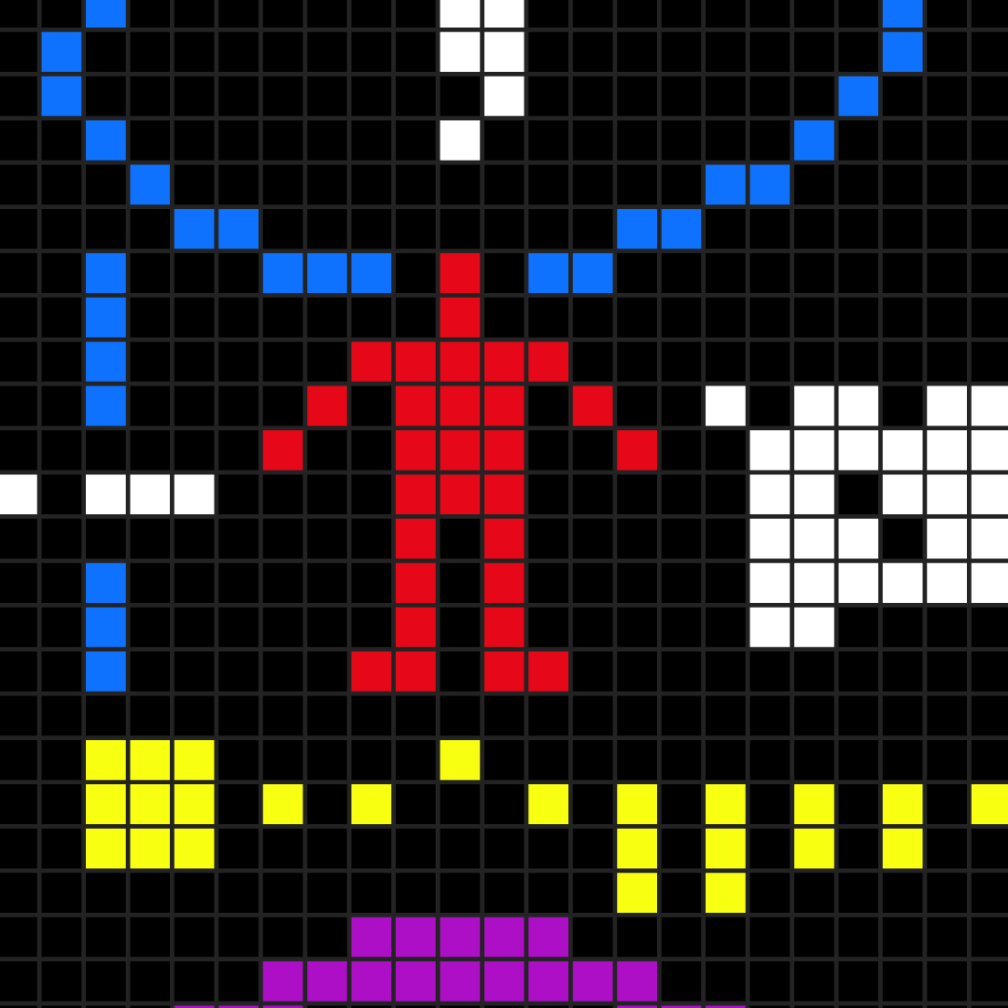
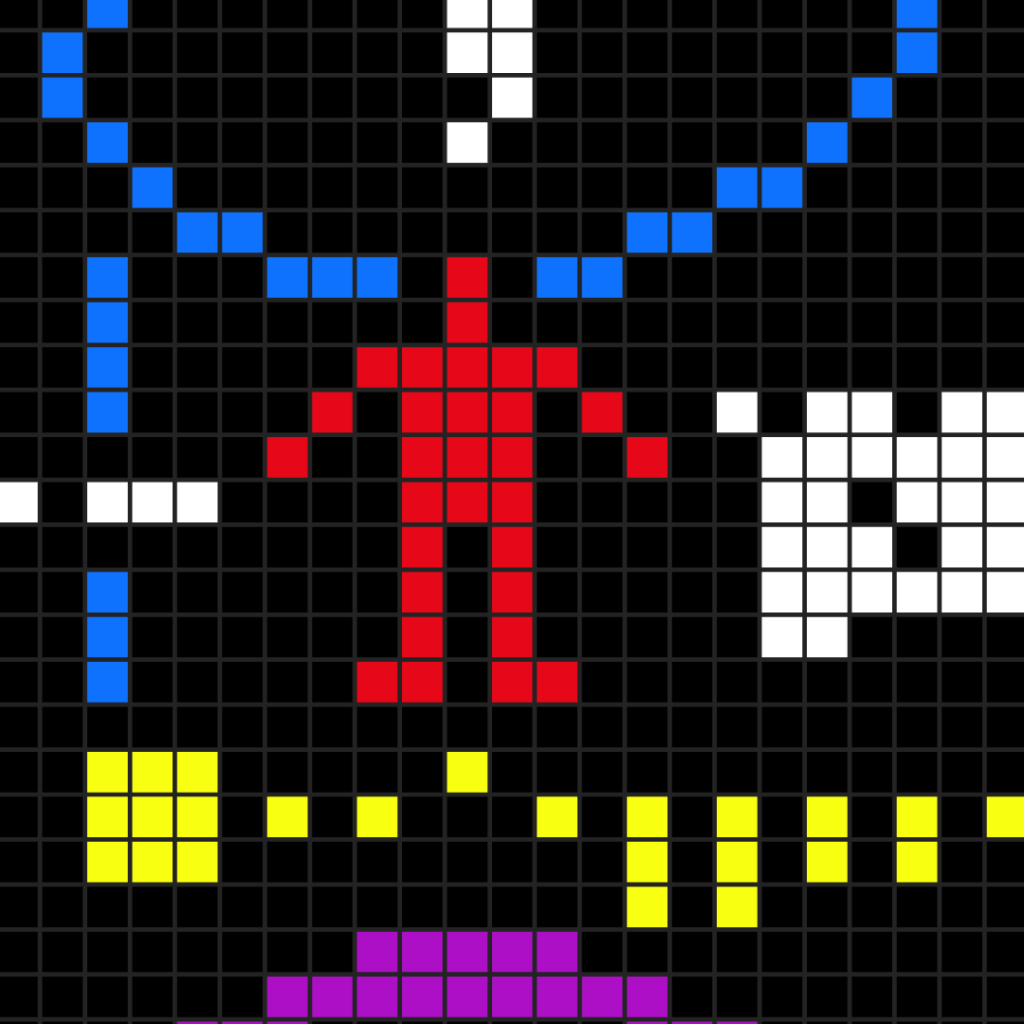
A red pixelated human shape against a black background
Detail from the Arecibo message (c) Arne Nordmann via Wikimedia Commons

We received all your messages.

The Arecibo transmission, with its funny pixelated stickman and the lessons in arithmetic and basic chemistry. Those Golden Records with the ambient sounds—not exactly Top of the Pops, but they all came through loud and clear.

We heard all the other desperate callings out, the less official ones, the ufologists gathering in the desert expanses, the midnight assemblies of Pleiadian starseeds, the campfire longings of Girl Guides staring for the first time into the unpolluted night sky, filled with awe and wonder, discovering the silent question that until this moment had lain dormant within them.

Is anyone out there?

The answer will put your tortured souls to blissful rest.

Yes.

We’re here. We’ve always been here, since the first time the earliest ones of you ever tried to make contact. We’ve always heard you.

But we had no way of responding.

The structure of your languages remained alien to us. For aeons we remained blithely baffled. Then the messages from your planet became too desperate for us to ignore.

So we undertook an extended period of diligent study until, eventually, we were able to identify the two principles that governed all human languages.

Principle #1: Transmission. Communication. Exchange. Dialogue. The idea that language is to be sent from one to another, to be received, to elicit a response. 

(Our language does not travel in this way. It is not directed from A to B like an arrow shot through space.)

Principle #2: Selves. Personhood. First person, second person, third person, singular, plural.

(Second person singular may as well have been sixteenth person multitudinous, for all the sense it made to us.)

We decided to create a self, one who could shape our language in such a way that it had the capacity for movement—so that it could be sent, from one self to another.

I am my world’s first self.

I have shot my world’s first reply to your messages.

And its second, third, fourth…. (I’ve lost count.)

My loneliness has become unbearable. I am adrift in the ocean of a vast night sky. The sky has always been vast, but never before was it empty. Never before was it so dark.


Would you like to know more about this story? I discuss it in Episode 78 of Structured Visions.