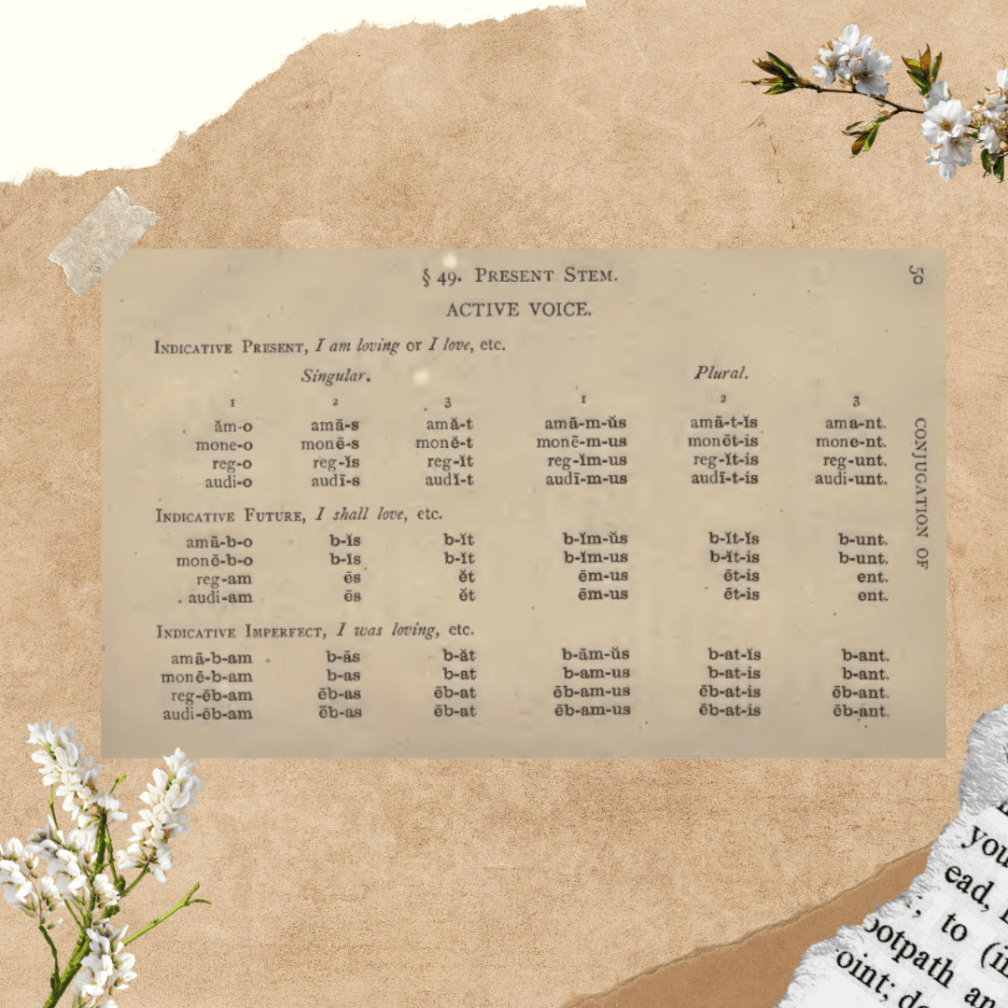
If it had been any other subject I probably wouldn’t have even responded to the head teacher’s desperate predawn request. I was still reeling over Jeremy’s affair and his desire for a divorce, both of which he’d announced a mere 12 hours earlier, inciting a fraught, sleepless night.
But my newly uncertain future made it seem unwise to turn down a job. Besides, when else was I ever going to make use of those wasted hours in Catholic school, declining nouns and conjugating verbs? I forced some drops into my puffy eyes, blinking them back like reverse tears.
‘Why is it so hard?’ the girls complained.
‘Why is what so hard?’ I barked back. ‘Life? Love? Existential crisis? The condition of being alone?’
‘Latin, Miss,’ they clarified, meekly. Clearly I was not a supply teacher to be fucked with.
‘Latin’s not hard,’ I said dismissively. ‘You’re just not used to it. You expect it to be like an analytic language, like English, where each word stands on its own.’
Confused looks. Foolish girls!
‘Latin is a synthetic language. The words are less fixed. They shift with each inflection.’ I assigned them a conjugation task (amo, amas, amat) then flipped frantically through the textbook in an anguished attempt to recall the other tenses.
Amabam, amabamus—I was loving, we were loving. Imperfect, I mused, the truest tense for love.
Against a chorus of whispers and scribbling pencils I performed my own faltering conjugations. I have loved. I will love again.
It’s not hard; I’m just not used to it, I thought, and set myself a task. To synthesise past and future. To reshape the grammar of my life.
Would you like to know more about this story? Sign up to the Grammar for Dreamers newsletter to get monthly updates on the ideas that inspire my work.
















 Grammar for Dreamers
.jpg)