Beginning

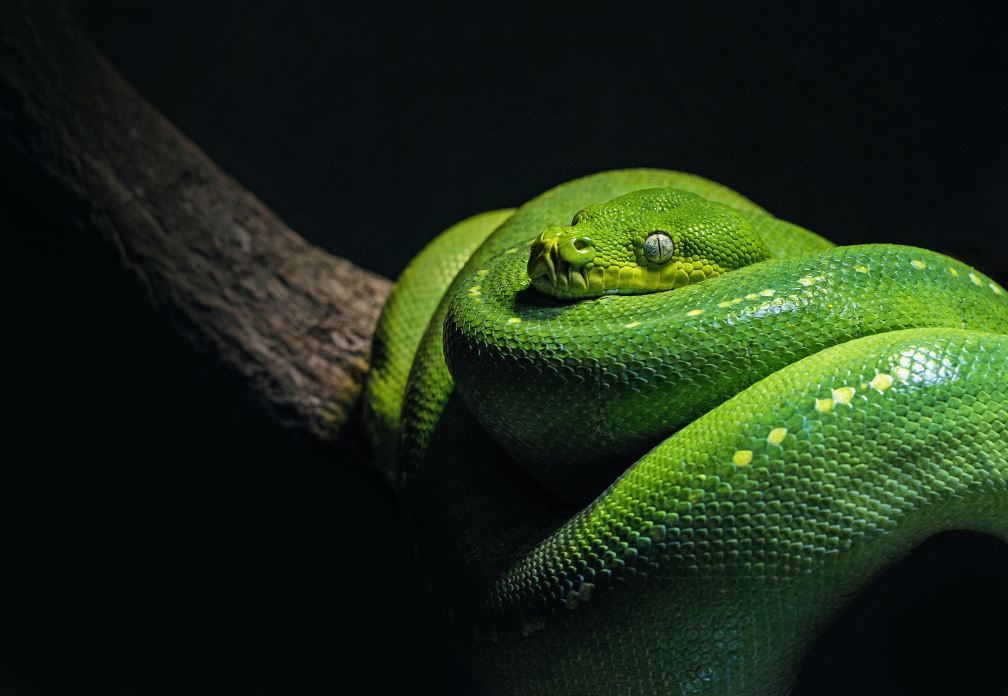
Green snake coiled around a tree branch
Photo by David Clode

In the beginning language was a garden.

Adverbial seedlings pressed to skywardly split the rocky infinitives. It was a cleft construction, that ravine, which brought forth the progressive aspect of waterfall, which was flowing, which was churning, which was bursting with verbal enthusiasm.

Its mist kissed the brave budding morphemes, fixed on stems and roots of meaning, deriving new ideas from the loamy depths of a forgotten protolanguage.

A snakelike syntax stretched around human bodies to make membranes of personhood. Possessive determination shaped our infamous expulsion. What was never our garden before was even less our garden now, so we left to shape a new language, a new beginning.

Exiles

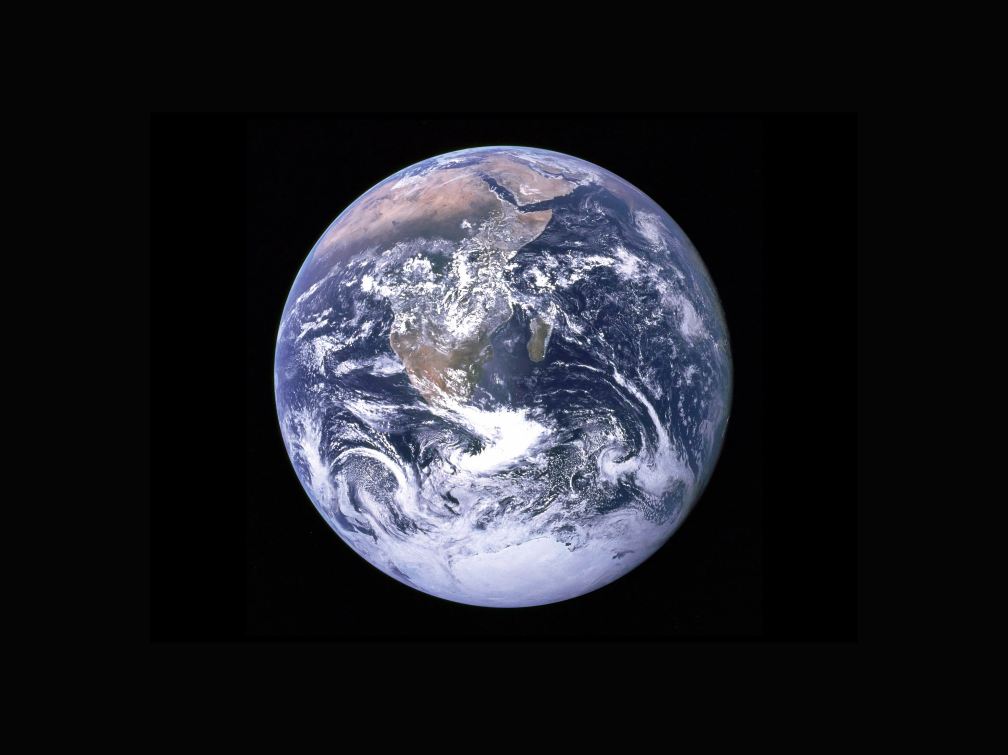
View of the Earth as seen by the Apollo 17 crew traveling toward the moon
Photo by Nasa

What a generous planet was Earth, to adopt an exiled species. 

The decision was not made from scarcity or fear. Earth teemed with abundant wisdom and harmony. What do you get the planet who has everything? 

The species was called Human Language. So divorced was it from the Earth’s own linguistic structures that at first no one thought it would survive. 

As a last resort, Earth sacrificed its most recent creatures from the primate line, and invited Human Language to reside therein. 

That Human Language is uncomfortable in its host planet and in its host bodies is evident from its maltreatment of both. It shapes itself into the forms it knew on its own planet, called persons. It looks ungratefully to the information-filled sky and longs for home. 

Many have wondered why it’s been allowed to remain.

It turns out the Earth is fascinated by the new arrival. What new ideas, it wonders, might emerge from these strange persons, who seal themselves off so hermetically from the rest of creation?

Curiosity, warn the naysayers, could kill the planet.


Would you like to know more about this story? I talk about in Episode 87 of Structured Visions, ‘What if you’re an alien?’ Subscribe to the podcast on Apple podcastsSpotify or wherever you like to listen.

The multidimensional language learners

Four glass vases, three green and one blue, each holding a different flower
Image by James Cousins

The multidimensional planets struggle with your concepts of space, particularly inside and outside. Space for them is fullness, not distance, and to move from one place to another place seems an utter impossibility, let alone going in or sending out. To achieve what you would call movement, they increase their stillness, and every attempt to go inside turns the inside out in a resplendent kaleidoscopic dance.

This is why it’s so hard to teach them your three-dimensional languages.

We start with an utterance which to you would seem a straightforward description, simplicity itself. 

This is a flower.

We hold the object before them and witness their blossoming wonder.

This creates a division, as real as melting glass, forming itself into a vase-like shape that distinguishes this from not this. Once there was no vase, now, there it is! And the flower, pressing its radiant face outward, bravely, breaching the invisible, newly formed barrier between inside and outside—a miracle!

The multidimensional language learners yearn to meet you, the native speakers of these wild mysteries, to discover the secrets of your enlightenment.


Would you like to know more about this story? I talk about it in Episode 86 of Structured Visions, ‘Feelings are, like, inside things’. Subscribe to the podcast on Apple podcastsSpotify or wherever you like to listen.

Seeds of language

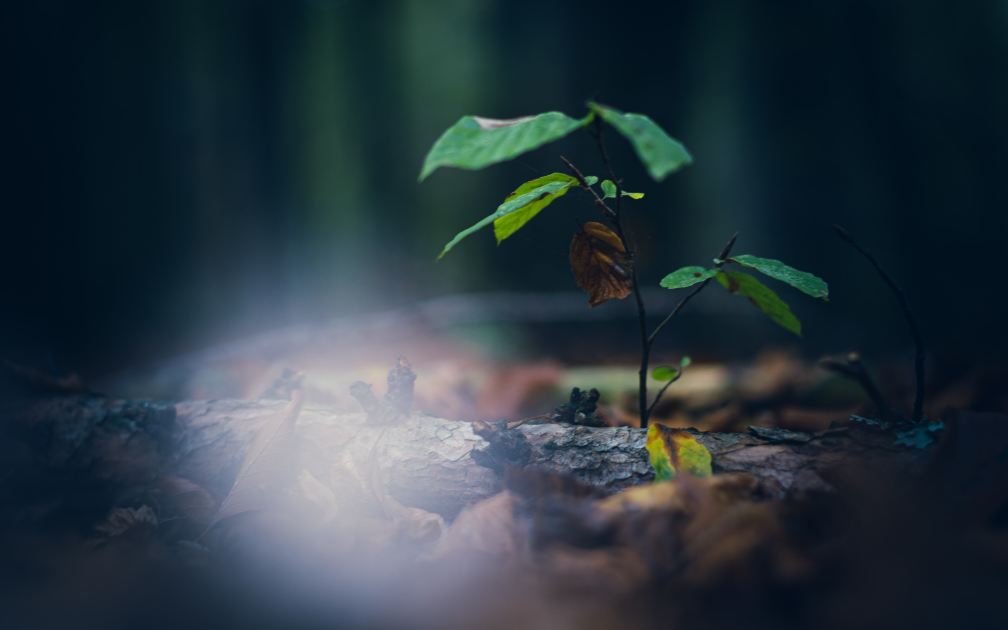
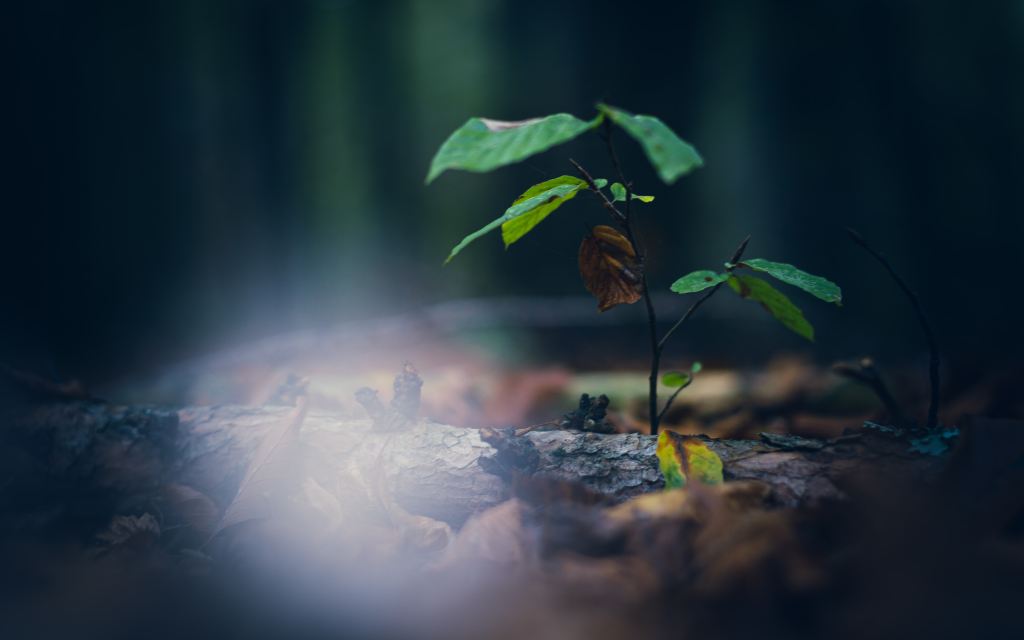
Image by Jannik Selz

I forgot Language.

Still, there it stands, against the decimated remains of a land ravaged by wildfire and warfare, on the site where we once lived as a young family, full of hope. It is all that remains alive.

I remember now.

We grew it from seeds we bought on eBay, back when eBay was still legal and the internet was open to all. ‘Seeds of language’, they were called, enticingly, but the scant product description offered no further clarification.

At the time we were teaching at the local university, before they closed down our department, then the whole university, then all the universities. 

We were both linguistics professors, so ‘Seeds of language’ intrigued us. We paid extra for expedited delivery.

‘Maybe they’ll grow into syntax trees,’ said my husband Jim, a generativist.

‘What does Noam Chomsky know about botany?’ I countered. ‘His trees grow upside down.’ I proposed instead a Saussurian species, which would wave coin-shaped signifier leaves, their signified undersides flashing suggestively in stormy breezes.

We sowed the seeds in pots in the greenhouse. We took a photo of the one that germinated and did a reverse image search to identify it.

‘Sapling,’ was all that Google could tell us. (This was when we still had Google). We named it ‘Language’ and planted it near the weeping willow behind our house. 

Soon after, we fled the country to protect our son Devon, whose gender made him an outlaw, just in time to squeeze through the nation’s tightening borders.

In the ensuing decades, I have forgotten many things. 

I am only now remembering Language.

A verdant desire sprouts from within my decomposing weariness: I want to dwell in the warm embrace of Language. I climb up to nestle in its welcoming limbs. 

Language envelops me. It roots me in its thrumming pulse. It evaporates the accumulated shame of my culture’s demise and the decimation of my own exhausted history.

‘Where have you been?’ Language wonders.

A bright new thought blossoms—that I’ve never, until now, inhabited Language—that it is only from within this sheltering space that self and culture will heal.

‘I have always been here for you,’ says Language, and tears form, flowing like sap.
My late grandmother

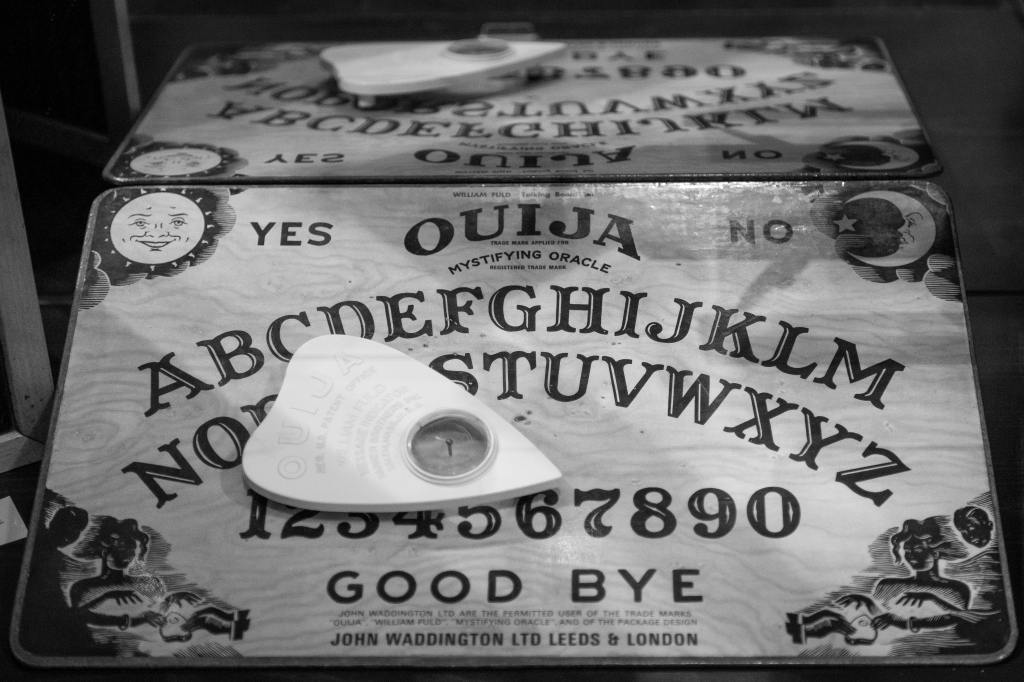
Greyscale photo of a Ouija board
Photo by James Frid

Our daughter found the Ouija board when we were clearing out my late grandmother’s waterfront house. 

Rick gave me a meaningful look. You never told me your grandmother was into that sort of thing. 

She wasn’t. Or at least I didn’t think she was. 

‘What’s it for?’ Becca pressed. ‘Is it a game?’

‘It’s a game for teaching children their letters,’ I lied. Becca discarded it disdainfully and Rick breathed a sigh of relief. 

Later we sat on Gran’s dock to watch the sunset and share memories about her. I told Becca and Rick that she taught me how to catch blue crabs by dangling chicken necks off this very pier.

‘Gross,’ Becca said, but the memory soothed me, restoring to me the Gran I thought I knew, who’d never dream of dabbling in the occult.

But that night my own dreams were haunted by a fiendish alphabet that swam bewitchingly around the shadowy underworld of my unexplored ancestry. The chickens were ritual sacrifices, the crabs charmed toward the spell they cast. 

The letters formed strings of words that tugged me to the surface. 

‘The point of a fish trap is the fish,’ they spelled. ‘The point of the word is the idea.’

I, too, was netted, and my grandmother was pulling me in. 

‘Once you’ve got the idea, you can forget the word,’ she said.* 

I emerged from the depths to the light of day, gasping for air as the Ouija letters tumbled into disarray.


*Gran is quoting Chuang Tzu, from David Hinton’s translation of The Inner Chapters.

Would you like to know more about this story? I talk about it in Episode 85 of Structured Visions, ‘How spooky is language?’ Subscribe to the podcast on Apple podcasts, Spotify or wherever you like to listen.

The grammar of your beginning

A string of wooden and glass beads on a painted wooden surface
Image by Alexey Demidov

When did I begin?

You have never begun. You will not end.

This response never satisfies you, so I must tell a less true tale, of the time when you began to know beginnings.

Think of a treasured thing that is yours alone—a doll, a puppet—made after your image, perhaps, who knows nothing but how to love you.

One day an adornment appears on your doll’s neck—a filament, a thread—almost too fine to be perceived, draped restlessly between head and heart.

The thread is a razor-sharp, severing thing, a fibre of spun glass. 

It sets the doll’s soul to longing. Your own soul’s love is stronger than the loneliness this longing foretells.

One day the doll awakens to find a jewel box filled with iridescent beads and a needle for stringing. With the patterns she forms, she fashions the syntax of her own beginning.

Imagine that you knew, from the beginning, that in her beginning you would meet your end. 

Would you still offer your treasured thing the ornaments of your own destruction? Would you unearth these beads from deep beneath the sediment of your wisdom, grief and love?

You have never begun, and you will not end, but the grammar of your beginning spells the story of my end.

Birdsong

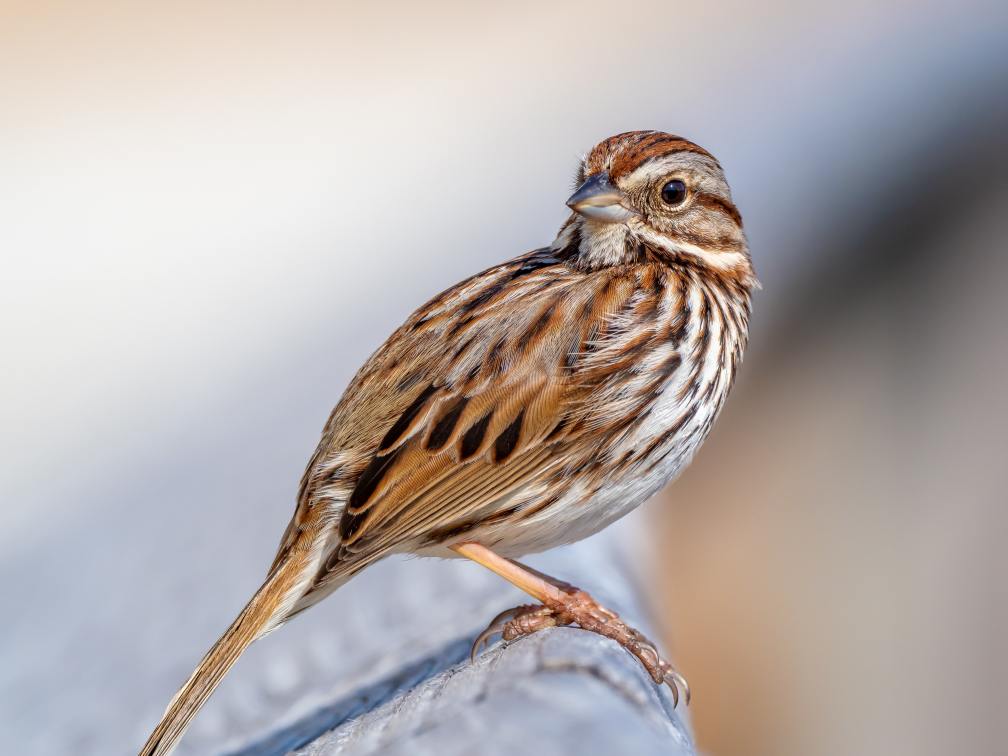
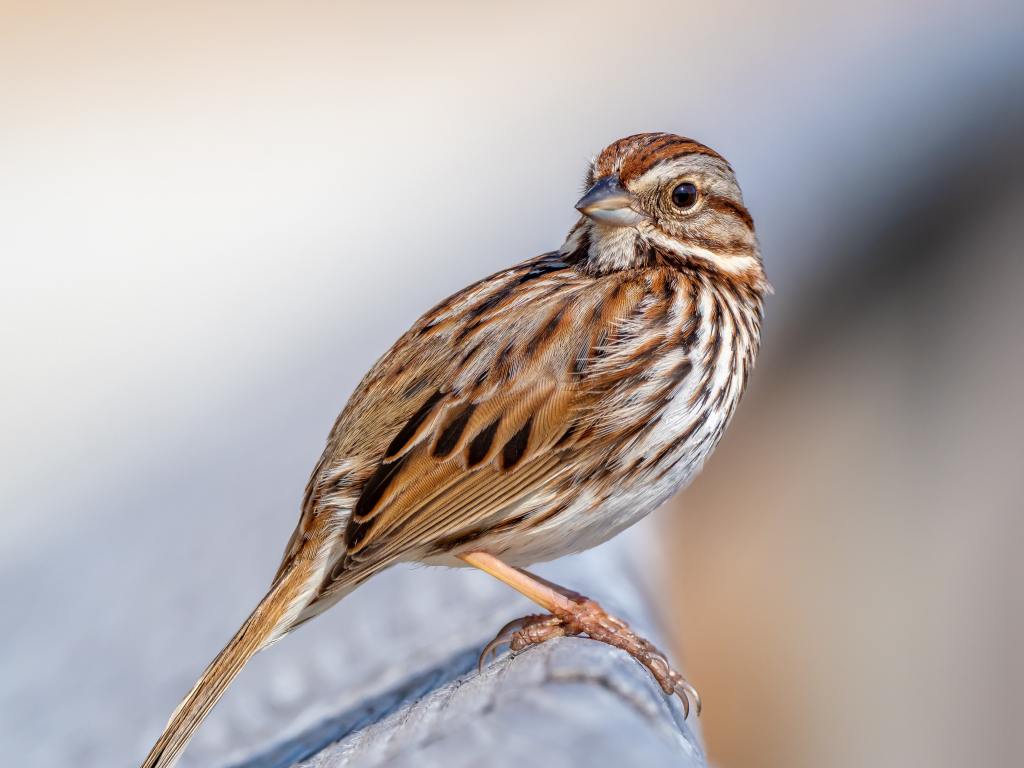
Photo of a song sparrow
Photo by Patrice Bouchard

Xuan reached enlightenment in his last monastic lifetime, but he seems to have reincarnated anyway.

Despite all the doctrine repudiating such a possibility, he’s come back as a sparrow.

Focusing his thoughts—GLINT! WAFT!—is more than difficult. FLICKER! WISP! It is excruciating.

To battle distractions—LIFT! SWOOP! LAND!—Xuan sets his bird brain the task of reciting sutras—

REACH! FLUTTER!

—that he cannot for the life of him recall. Instead the seed—SEED! TASTE!—of some primordial chant fills his hollow bones and Xuan dissolves into…

SONG!

Poor Magellan

‘Until it is circumnavigated, a planet has no soul.’

Hearing this is a surprise.

Many things are a surprise. In chronological order:

  1. I died
  2. There’s an afterlife
  3. In the afterlife you get to talk to the wisest being you can think of (like some kind of drunken thought experiment)
  4. The wisest being I could think of was the Earth
  5. Magellan gave her a soul?

‘Who’s Magellan?’ the Earth asks. Anthropomorphised, she looks a little like me when I was alive, a reckless wrinkled woman with unruly white tentacles for hair. 

We weren’t speaking English, but the Earth’s language.

  1. The Earth has her own language
  2. In my afterlife, I am fluent in the Earth’s language 

I tell her Magellan was a Portuguese explorer who sailed around the world in the 1500s.

This amuses her. She tosses out the names of all the beings that have been tracing her latitudes and longitudes long before human explorers, let alone Portuguese ones, came into existence.

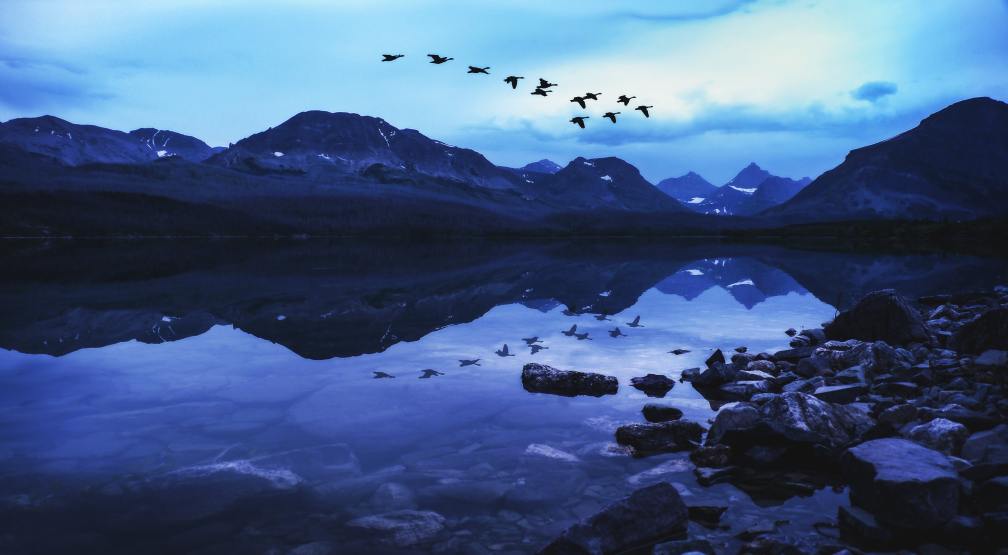
Butterflies. Tuna. Sea turtles. Geese. Wildebeests.

  1. All the migratory animals speak the Earth’s language?

Her mirth at my naivety has grown more unruly than her hair, which flails, snakelike, with the belly-deep force of her laughter.

The Earth’s language is remarkably economical. Somehow I learn the errors of my thinking before she’s had to voice them.

  1. The migratory animals created the Earth’s language
  2. A language is a description of the contours of the self

I realise now my own contours are dissolving.

I think of poor Magellan, and the phrases in the Portuguese language that built his ship, his journey, his self.


Would you like to know more about this story? I talk about it in Episode 84 of Structured Visions, ‘Language before language’. Subscribe to the podcast on Apple podcastsSpotify or wherever you like to listen.

The essence of the Amazon

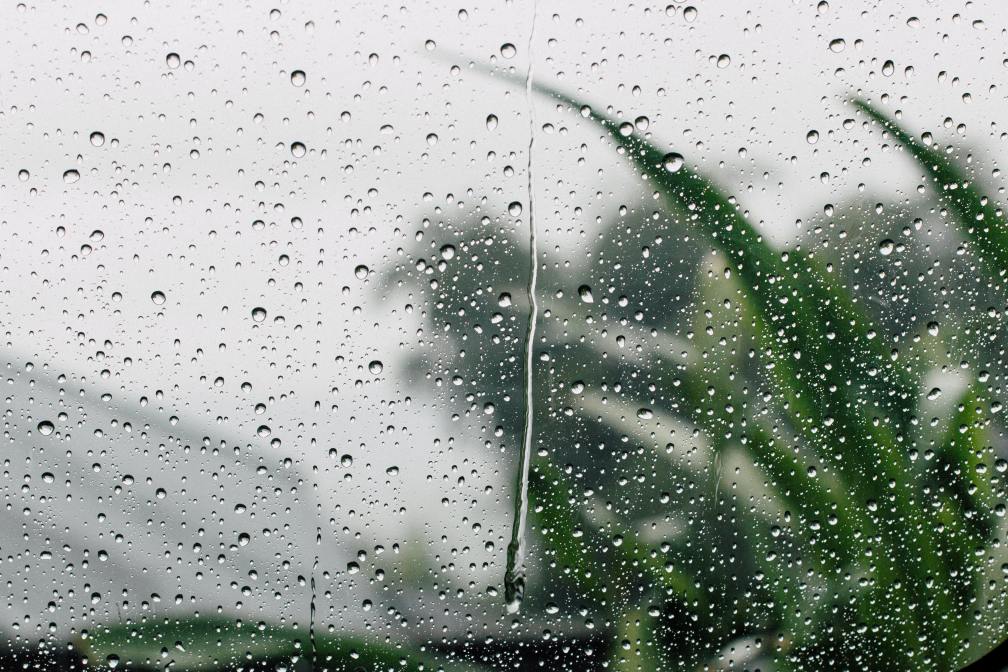
shallow focus photo of rain drop on glass
Photo by Horvath Mark

The many hued harmonies of the Amazon crystallised in a drop of dew, which dissolved and reformed countless times in its unlikely journey across the Atlantic. It made it as far as the upstairs window pane of a terraced house in Bristol without losing its amazonian essence. It celebrated the miracle by casting the colours of choirs of high-canopied birds against an interior wall. 

The room’s sole inhabitant was a red-lored parrot named Honey. When she witnessed the rainforest projected in all its prismatic splendour she felt a longing she had never known in all her indoor life.

‘I love you,’ she told the tiny globe of dew, which clung to the window, still intact. ‘Stay here with me.’

The essence of the Amazon felt the constraints of human language pressing against its vast expanse more tightly than the bars of any cage. Subjects, verbs and objects in uncomplaining agreement. 

No easy escape offered itself, except to conjure up an amazonian heat unknown in this climate and surrender to the oblivion of the city’s dank atmosphere.

The faraway forest, sensing the demise of its fractal extension, shuddered with foreboding.

Coming true

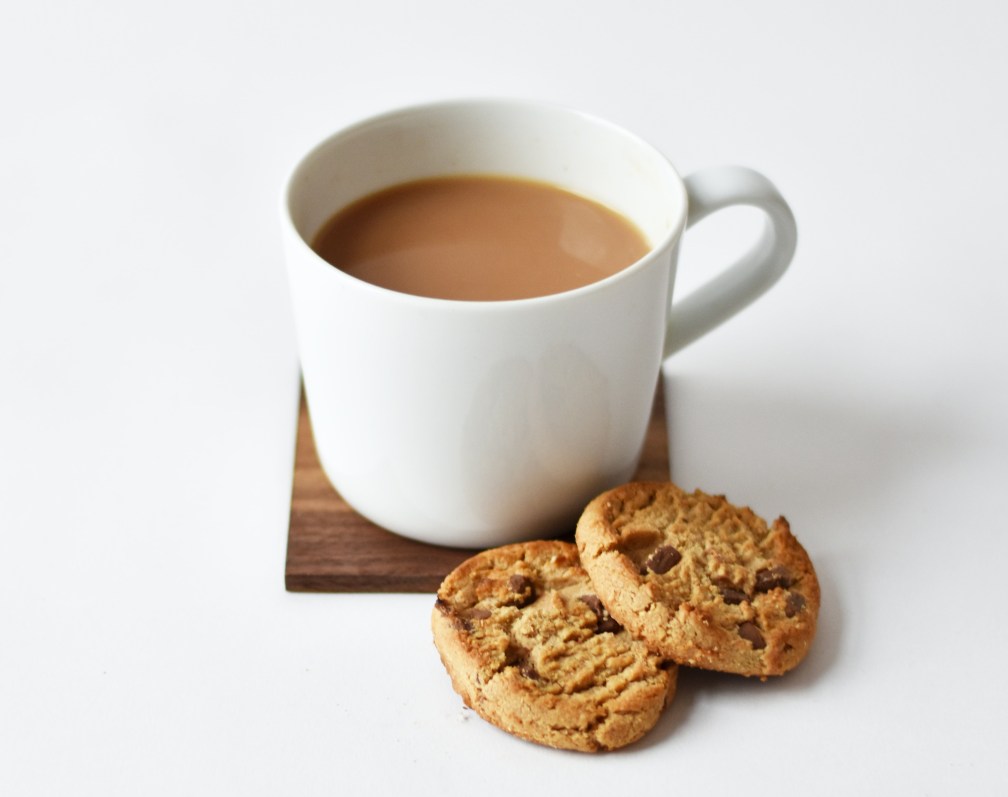
Cup of milky tea with two chocolate chip biscuits
Photo by Rumman Amin

Simon’s favourite types of stories were the ones where books or drawings or things imagined became real. In his notebook he sketched himself a fairy godmother and, sure enough, she emerged from the page and sat with him over cups of tea and biscuits.

She was as kind as Simon had imagined, but she didn’t suffer fools, and she was quick to put him straight on some things.

Like the idea that the things he drew came true.

‘Drawings aren’t like wishes,’ she said. ‘They don’t come true. It’s impossible to imagine something that doesn’t already exist.’

‘But what about you?’ Simon protested. He refused to look at his new companion, concentrating instead on fishing out clumps of soggy biscuit from his tea—the result of overly enthusiastic dunking. 

‘What about me?’ echoed the godmother. ‘And more importantly, what about you?’

Simon’s efforts eventually caused the biscuit to disintegrate entirely, giving his tea an unpleasant grainy quality. The idea that he hadn’t existed until his imaginary godmother imagined him was too much to fathom.

When finally he’d summoned the courage to look into the welcome of her eyes, she’d disappeared. The page in his sketchbook was as blank as his thoughts.


Would you like to know more about this story? I discuss it in Episode 82 of Structured Visions. Subscribe to the podcast on Apple podcastsSpotify or wherever you like to listen.