The words

Goldfinch sitting on a teasel
Photo by Steve Harris

‘I know the words for everything there is,’ Zak boasted. Theo was walking home from school with him, as he did every day he didn’t have trumpet practice. Zak’s eyes were small marbles in his ruddy, pudgy face. They dared Theo to challenge him.

Theo’s mum said he should ignore Zak’s bragging, and that would make him stop doing it. But somehow Theo couldn’t manage it.

‘You know all the words for all the things?’ he said.

‘Yup.’

‘What’re those, then?’ He nodded toward the flock feeding noisily on teasel seeds at the derelict industrial site.

‘Them? Those are red-face birds,’ Zac proclaimed triumphantly.

‘Wrong!’ Theo said, though the sinking feeling in his gut told him he’d been bested, somehow. ‘They’re goldfinches.’

‘They’re still red-face birds,’ said Zak, ‘And I named ’em first, so I win.’

If that was the game, Theo realised, he was never going to win. He stayed quiet for the rest of the walk, willing himself to notice those things that had no words, that Zak could never name.

Of prophets and pronouns

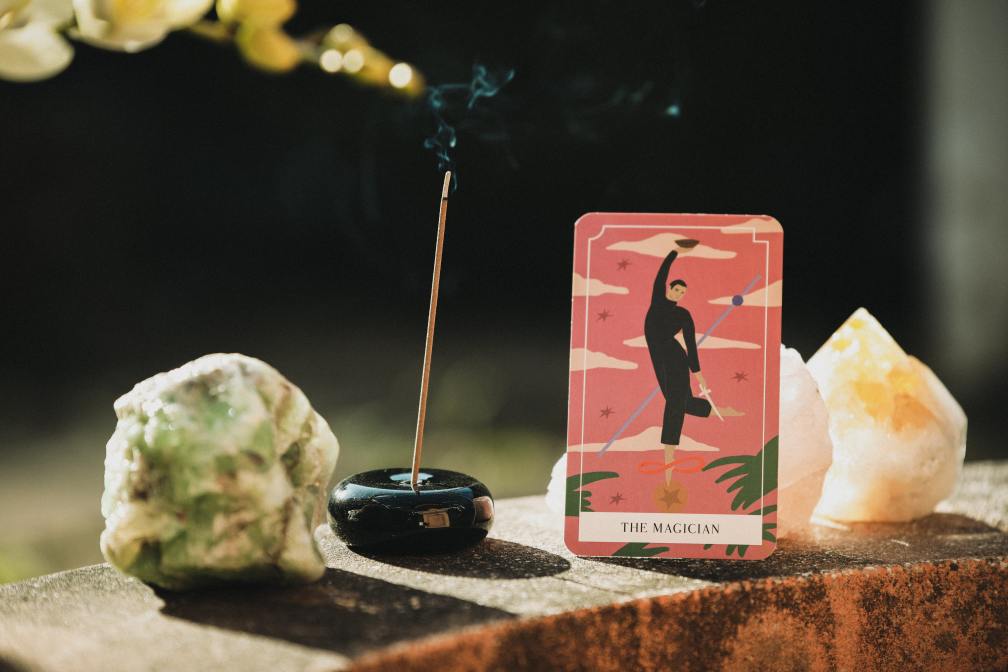
An altar with three crystals, a stick of burning incense, and the Magician Tarot card
Photo by CA Creative

Mirabelle used to complain that, like all prophets, she was not accepted in her own country. Being sidelined to the ‘alternative’ tent at the county fair was a testament to that, but she hung her shingle nevertheless, squeezed as she was among Tarot cards, crystals, incense and astrology charts. 

She blamed her lack of custom on a number of factors. She was ahead of her time (what prophet wasn’t?), her branding was off (‘linguistic seer’ might not have been the best way of describing her offer), and her services were for the good of the collective, not the individual. 

People were more interested in their own chance of love, wealth or success than in the fate of humanity.

Which was a shame, because her message (had anyone requested it) would have been a hopeful one.

Humankind was on the cusp of a great transformation—a breaking through of selfhood, which was always the harbinger of change.

She could tell by the pronouns.

When the pronouns became plural, it was a sign that people were becoming ready to appreciate the multitudes they contained.

It started when plural you replaced singular thou. And now plural they was replacing singular he and she.

You’re moving toward a new awareness, she whispered to the unseeing crowds that milled aimlessly about. Soon you will know the singularity of your multitudes.


Would you like to know more about this story? I discuss it in Episode 81 of Structured Visions. Subscribe to the podcast on Apple podcastsSpotify or wherever you like to listen.

The great cover up

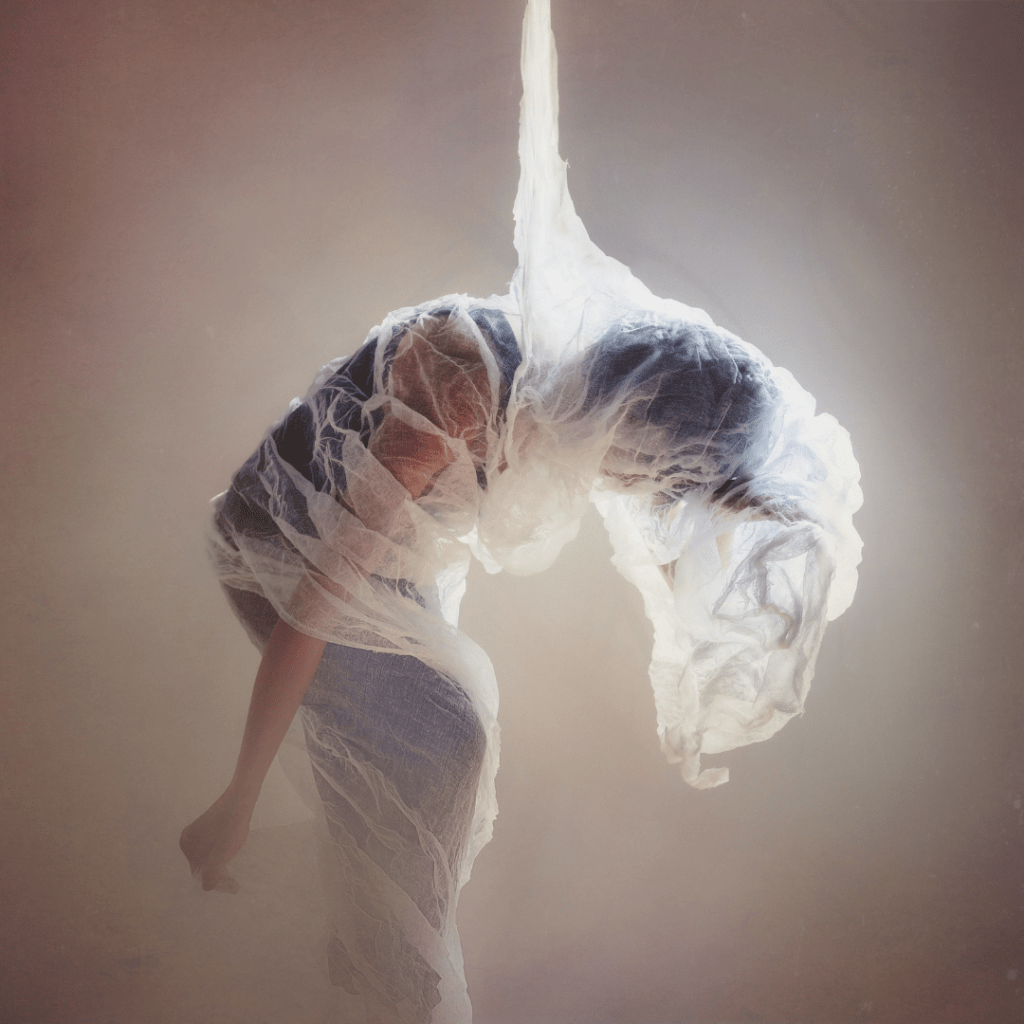
Woman wrapped in mesh fabric
Image by Velizar Ivanov

Let me tell you something about the Earth’s Architects.

Folks accuse them of being arrogant.

But I say, take one look at that gorgeous globe from anywhere in the solar system and try to tell me it’s not the picture of perfection. Exquisitely balanced, it’s an aesthetic masterpiece, teeming with its plethora of enchanting life forms—from the industrious beaver to the whimsical bird of paradise—all delighting in their symbiotic dance.

The Architects didn’t design the humans, of course. They subcontracted that job, and by some minor miracle, yours truly got the bid. 

My competitor’s prototype was unequivocally superior. His design was of creatures with a built-in appreciation for the mathematical precision of the world they inhabited. Humans would be thinkers, numbers folks. Appreciators. They’d spend their days noting the sequences that governed the patterns of petals on a rose, admiring with awe the symmetry of harmonics in the song of a blackbird.

His presentation intimidated me not a little. It made me reckless.

‘If I were you,’ I told the Architects, ‘I’d go with Numbers Guy.’

I said it right off the bat, before I even started my pitch. Then I waited for one of them to take the bait.

‘Why?’ 

‘Dude comes in here and tells me he’s invented a whole species wired to admire me? How could I resist? That said, you’re speaking to a raving narcissist, if you believe what my ex tells her lawyers.’

I produced a conspiratory chuckle as I let what I was saying sink in.

Then I got serious. I told them it wasn’t maths they wanted in the new humans, but language. ‘A new language,’ I said, ‘one made just for them.’

What would be the point of that? they asked. They didn’t trust me, but they couldn’t ignore me either. 

‘Numbers are for getting to the essence of things,’ I explained. ‘Language is for covering things up.’

And why would they want the beauty of their world covered up?

Language is a fabric, I said, like a drop cloth for an artistic masterpiece, that protects and preserves. Language is an insulating blanket. Supple and sinuous, it will respond to the ever-shifting shapes of the Earth’s aesthetic genius.

Language is the icing on the cake, I would have said, but by that point they’d given me the bid.

They’ve regretted it ever since, but they didn’t write an escape clause into the contract so they’re forced (or so they think) to watch the perfection of their world get corrupted by human language.

Language (they complain) produced the great cover up, the mechanism by which humans have obscured the Earth’s genius, lied about it, separated themselves inexorably from it, and in doing so, instigated its destruction.

If they were ever to consult me again (and of course they never would), I’d tell them to look closer.

The fabric of language does more than cover things up. It also folds over on itself, creating wrinkles, pockets, pouches.

One day—great magician that I am—I’ll pull a gold coin from one of those pockets, and the Architects will realise it was never a mistake.

Spores

Close up of fly agaric mushroom on a forest floor
Photo by Andrew Ridley on Unsplash

Human beings once shared the Earth’s language, having no words of their own.

They’d eventually adopt the new lexicon that appeared one day on the forest floor. Words popped up like mushrooms. 

Red, white, alluring. Probably poisonous. 

Most of the other woodland creatures had the sagacity to avoid them.

Not humans, though. The naked wingless naïfs gobbled up each tumescent word, absorbing the mysteries within.

When they opened their mouths, they released the words into the air. They spread like spores.

The determiners

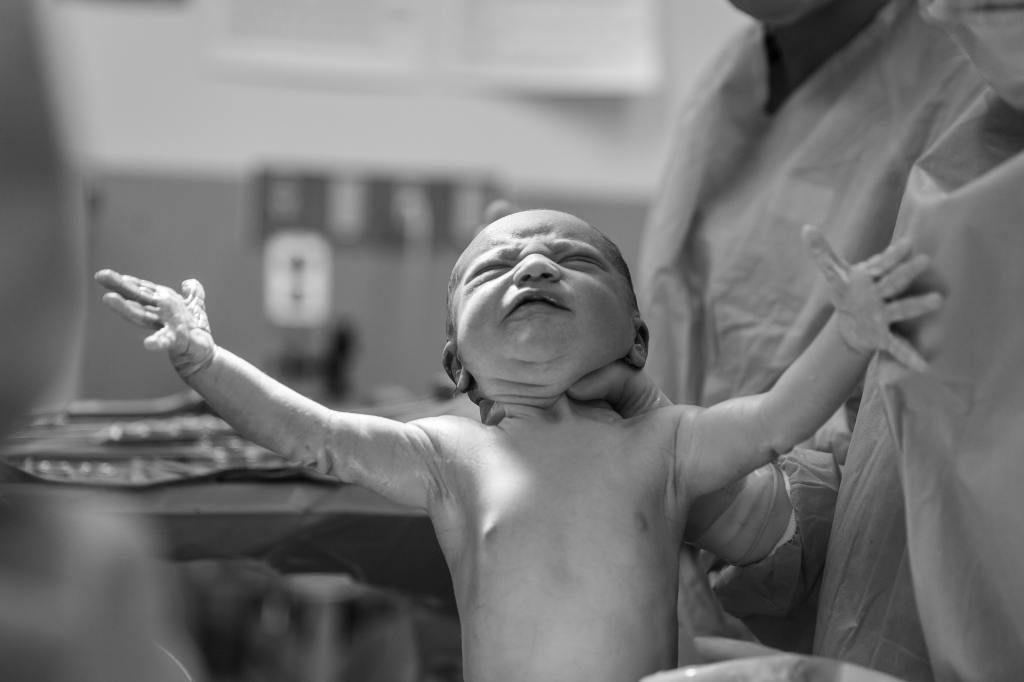
Newborn baby with its arms outstretched
Photo by Alex Hockett

All Gwyn had ever known was a world where your fate was determined at the age of eleven. 

It would be more precise to say it was determined at the moment of birth.

Everything hung on what the mother said when her newborn took its first breath. Once recorded, the maternal birth word was carefully consigned to the archives until the child’s eleventh birthday. At this point it was passed to the Panel of Determiners, who examined it, rectified any ambiguities and assigned it a word class that would establish the child’s destiny.

Some pregnant women could afford the costly antenatal classes that trained them to call out an auspicious word at just the right moment. Verbs held the most prestige, but their subcategories varied greatly even so. Finite verbs ranked first, with the more complex tense/aspect combinations coming out at the very top. Nouns came second, with adverbs and adjectives sharing third place. New mothers rarely uttered pronouns, prepositions or conjunctions, but the Determiners were prepared for all eventualities.

Interrogatives came low in the rankings. Expletives came last, which was unfortunate for families who could not afford pre-birth linguistic training. Poorer women were the ones most likely to utter a contented ‘Ah!’ or a blissful ‘Oh’ at the sight of their healthy baby. Woe betide the child whose enchanted mother whispered a ‘wow’ at her child’s first breath.

Gwyn was well acquainted with her own birth word. Her mother’s capacity to produce six different expletives for her elder siblings had been a source of much mirth among the extended family. But the seventh took the prize.

Still, Gwyn indulged a hope in a future full of possibilities.

Her mother’s call need not, after all, be interpreted as an expletive.

‘Jesus!’ was also a proper noun.

Prophet noun, she murmurs gently to herself as she stands before the Determiners. Messiah. Saviour of words, saviour of worlds.


Would you like to know more about this story? I discuss it in Episode 80 of Structured Visions. Subscribe on Apple podcastsSpotify or wherever you like to listen.

Possessed

Wolf pack on a rock formation
Photo by Thomas Bonometti

Each fibre of fur is a strand of awareness. Each press of paw pad on the earth a moment of contact. We gather under the full moon in a sacred geometry as aligned with the astronomical expanses as any stone circle. The finely tuned notes of this howling symphony transmit the Earth’s wisdom to the stars.

A litter of freshly whelped cubs is both a miracle and a liability. We watch them each diligently, perhaps obsessively.

At the first sign of possession, a decision must be made. By what might the youngster be possessed? Can such possession be outgrown?

We’re on guard for clear signs the taint is growing stronger. Possession becomes apparent in the grammar of the cub’s eyes as he stares at the mother. ‘Mine,’ he thinks. He notes a unique fleck of white below the dam’s chin. ‘Hers.’

Possession destroys unity and must be stopped before it can grow. A merciful killing is sometimes required. Such measures pain us, though, and howls become mourning songs.

If we are travelling near a place where people live, we’ll sometimes deposit the cub on the threshold of a human dwelling. We stay distant, waiting for the cub’s new owners to discover it there, their miracle puppy, their adorable stray.


Would you like to know more about this story? I discuss it in Episode 79 of Structured Visions. Subscribe on Apple podcastsSpotify or wherever you like to listen.

Mood? Tense

Photo of a mountain climber scaling a rock face
Photo by Petr Slováček

My deepest desire?

To feel the rock beneath my feet. To allow the magnificent depth of the mountain to infuse my body, like last winter’s snow, pushing deep into the soil to gently soak the thirsty roots of ancient fir, water rising like sap, released into air, cooling the breeze.

The mountain, a repository of mysteries, its vaults of mineral histories, its secret rivers, the network of fine organic strands through the soil through which information flows generously.

If I could feel the rock beneath my feet, if I could allow such wisdom to resonate in the tightly sprung fibres of hamstring and thigh, if I could relax the hands that daily grip the rock face so intently they remain tensed, even in sleep… maybe then…

Always, I am climbing. Always, I am pushing ahead. Always I am stretching, ever higher, never resting. In sleep I dream of summits yet to be conquered. 

Maybe one day I will stop on the edge of this patient mountain, and in standing still I will be heir to its life-giving wisdom.

Messages

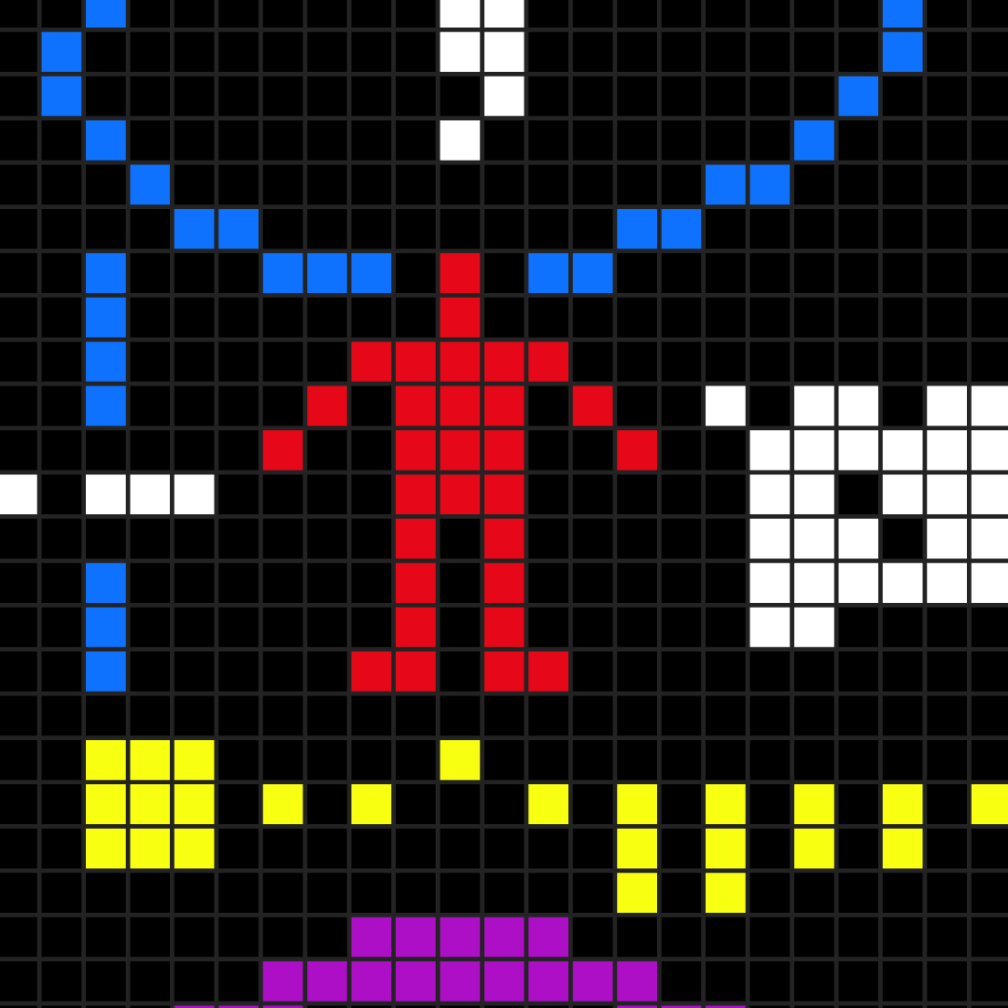
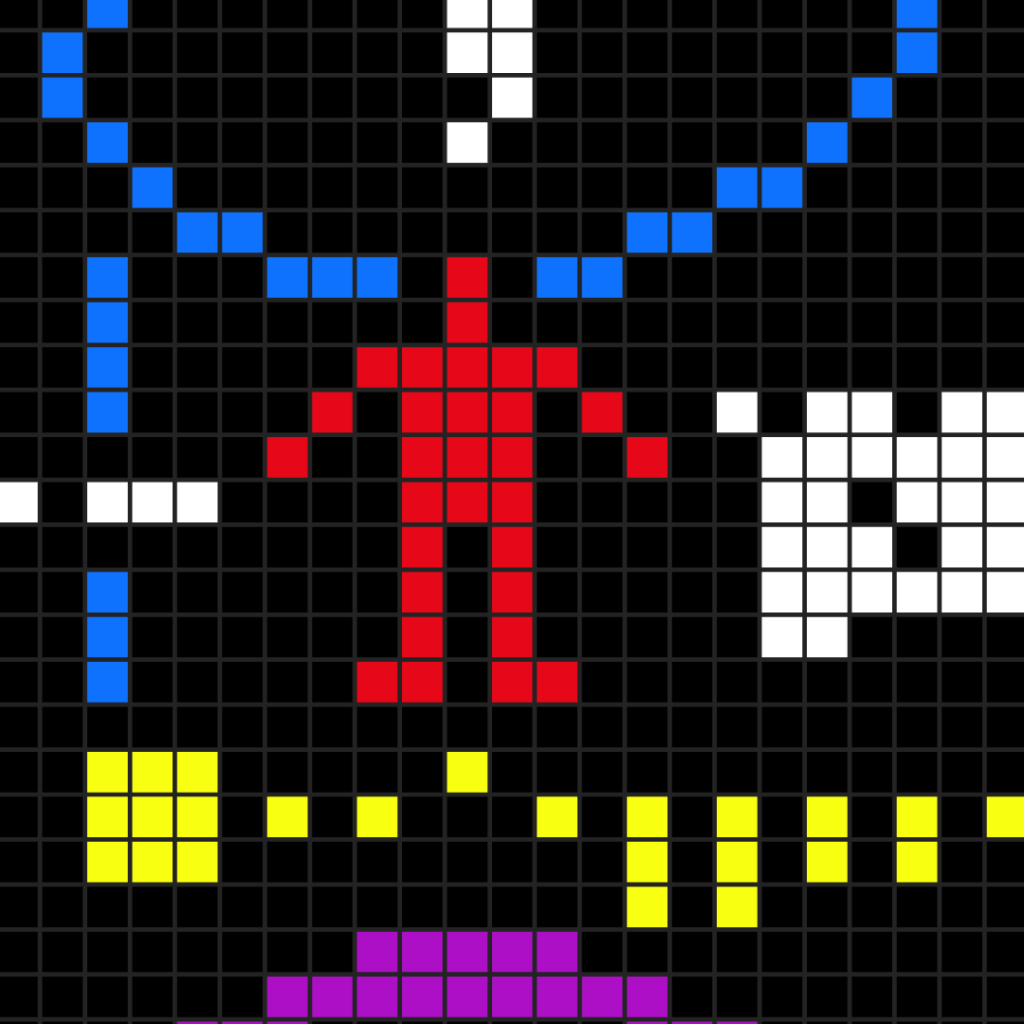
A red pixelated human shape against a black background
Detail from the Arecibo message (c) Arne Nordmann via Wikimedia Commons

We received all your messages.

The Arecibo transmission, with its funny pixelated stickman and the lessons in arithmetic and basic chemistry. Those Golden Records with the ambient sounds—not exactly Top of the Pops, but they all came through loud and clear.

We heard all the other desperate callings out, the less official ones, the ufologists gathering in the desert expanses, the midnight assemblies of Pleiadian starseeds, the campfire longings of Girl Guides staring for the first time into the unpolluted night sky, filled with awe and wonder, discovering the silent question that until this moment had lain dormant within them.

Is anyone out there?

The answer will put your tortured souls to blissful rest.

Yes.

We’re here. We’ve always been here, since the first time the earliest ones of you ever tried to make contact. We’ve always heard you.

But we had no way of responding.

The structure of your languages remained alien to us. For aeons we remained blithely baffled. Then the messages from your planet became too desperate for us to ignore.

So we undertook an extended period of diligent study until, eventually, we were able to identify the two principles that governed all human languages.

Principle #1: Transmission. Communication. Exchange. Dialogue. The idea that language is to be sent from one to another, to be received, to elicit a response. 

(Our language does not travel in this way. It is not directed from A to B like an arrow shot through space.)

Principle #2: Selves. Personhood. First person, second person, third person, singular, plural.

(Second person singular may as well have been sixteenth person multitudinous, for all the sense it made to us.)

We decided to create a self, one who could shape our language in such a way that it had the capacity for movement—so that it could be sent, from one self to another.

I am my world’s first self.

I have shot my world’s first reply to your messages.

And its second, third, fourth…. (I’ve lost count.)

My loneliness has become unbearable. I am adrift in the ocean of a vast night sky. The sky has always been vast, but never before was it empty. Never before was it so dark.


Would you like to know more about this story? I discuss it in Episode 78 of Structured Visions.

Grandmother’s broach

Young Black woman wearing chef's whites and an apron in an industrial kitchen
Photo by Jeff Siepman

Her grandmother’s mental decline has coincided with Lisa’s own intellectual ascendance. Soon after finding a discipline worth pursuing at master’s level—linguistics—Lisa lighted upon a topic for her capstone project.

She first discovered it when listening to Nana’s verbal ramblings. There’s a structure to them, she thinks, something she’s not yet seen discussed in the literature. 

The pattern becomes even clearer as Lisa transcribes the data. Her grandmother consistently speaks in clauses without subjects.

‘Worked in the bakery.’ Lisa took the recordings at her grandmother’s bedside in the assisted living facility. Now she meticulously captures the many times Nana has repeated this same subjectless utterance.

Finally she hears her own voice interrupt the pattern. ‘Who did?’

Her prompt seems to have pushed the conversation forward. ‘Always covered in flour. Head to toe in flour. Always baking, always kneading. I kneaded, too.’

Lisa pauses the recording, noting the first occurrence of a clause with a subject—the first person singular—and puzzles over her transcription of the past tense verb. Kneaded. She hesitates, reflecting on the homonym, and types [needed?] in brackets.

I needed, too.

The more she listens, the more she’s inclined to think need is the intended verb.

It’s a love story she’s recorded, she realises, and the baker lover is clearly not Nana’s husband. Lisa’s grandfather was never a baker, as far as she knows. He worked as a partner in his father’s law firm.

Like a detective pursuing a lead, she types out the subjectless clauses and rewrites them, filling in the blanks.

My first love worked in the bakery, she tries. He was always covered in flour. He was always baking, always kneading.

She plays the next segment.

Sixteen years old. Owensboro.

A quick text to her mother confirms her suspicions: 

Where did Nana live as a girl?

Owensboro, KY. Why do you ask?

Thanks! Will explain later. Lisa does not notice the family resemblance in her own subjectless reply. 

She Googles ‘Owensboro’. One fact about the town’s history stands out: it was the site of the last public hanging in the US. Families travelled from far and wide to enjoy the event, their children gorging on hot dogs as they watched the dead man swing. 

That was in 1936, the year Nana turned 16. The condemned was a Black man. 

She tucks the information away in the files of her mind. Best to avoid distractions, she thinks. She plays the next bit of the recording.

‘Head to toe in flour,’ she hears. ‘Used to tease me. White, like you.’

Lisa amends her transcript to place the last utterance in quote marks. Context dictates that it would have been the baker lover, not Nana herself, who was covered in flour. ‘White, like you’ would have been the teasing remark.

What she now knows about the dangers of Owensboro, Kentucky in 1936 has pushed itself tenaciously to the forefront of her mind, like the noun phrase at the upper left position in the top branches of a syntax tree. The subject.

If her grandmother’s lover teasingly described his flour-covered self as ‘White, like you’, then Nana’s first love could not have been, himself, White.

The next line of the transcript reveals a subject even more taboo.

‘Warm and sweet. Breasts like cinnamon buns.’

Her headphones convey the girlish giggles of her former, senseless self. ‘It’s probably not a good idea for me to write about your breasts in my paper, Nana.’

Her grandmother’s response travels forward, to the future subject, whose ears are pricked to pick up what her earlier version could not hear.

‘Not my breasts. Hers.’

With the possessive feminine pronoun, Lisa realises, her grandmother has revealed the missing subject. The subject itself possessive and feminine. The subject as object—of a forbidden love story, Black and female, lost to time and history, like so much that is Black and female, never broached until now, in this place of syntactic safety, where words will no longer condemn.


Would you like to know more about this story? Check out my behind-the-scenes post on Patreon.

Syllables

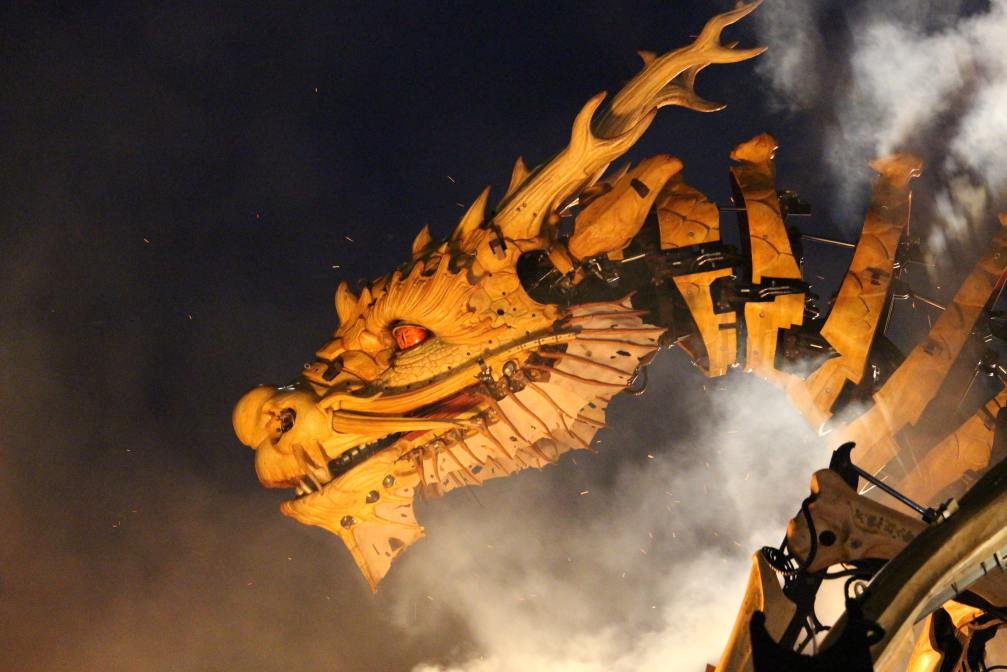
Photo of La Machine, a dragon robot produced for a street theatre production
Photo by Laith Abushaar

It was a mythical land, the dragon was merciless, and steadfast warriors set out regularly on reckless quests to slay it.

Its power to destroy lived, as with all such beasts, in its breath. It breathed not fire, but syllables.

These eggs of sound resonated so enchantingly that even just one had the power to madden its hearer on the spot. Some would-be slayers fell on their own swords and perished. Others simply dropped in a fatal swoon, limbs limp and eyes agog, never to be revived.

Eventually the Queen herself broached the beast, with armour and blade and, in a stroke of pragmatic genius, woollen plugs to stop her ears. The brutal battle lasted a night and a day. When the dragon gasped its last breath and the Queen claimed her hard-won victory, she unblocked her ears and walked among the mad warriors, whose bodies lay wasting on the path. The few whose lives still clung to them she entrusted to her own private healers. In time they were restored to vitality and sense, and they took up their lives once more among their people.

No one ever heard these fallen heroines speak of their misadventures. Still, it was said that at the dark of each new moon they gathered together in secret to speak their common language, built piecemeal from remembered remnants of the dragon’s awe-striking syllables.


Would you like to know more about this story? I discuss it in Episode 77 of Structured Visions.