The brutal linearity of language

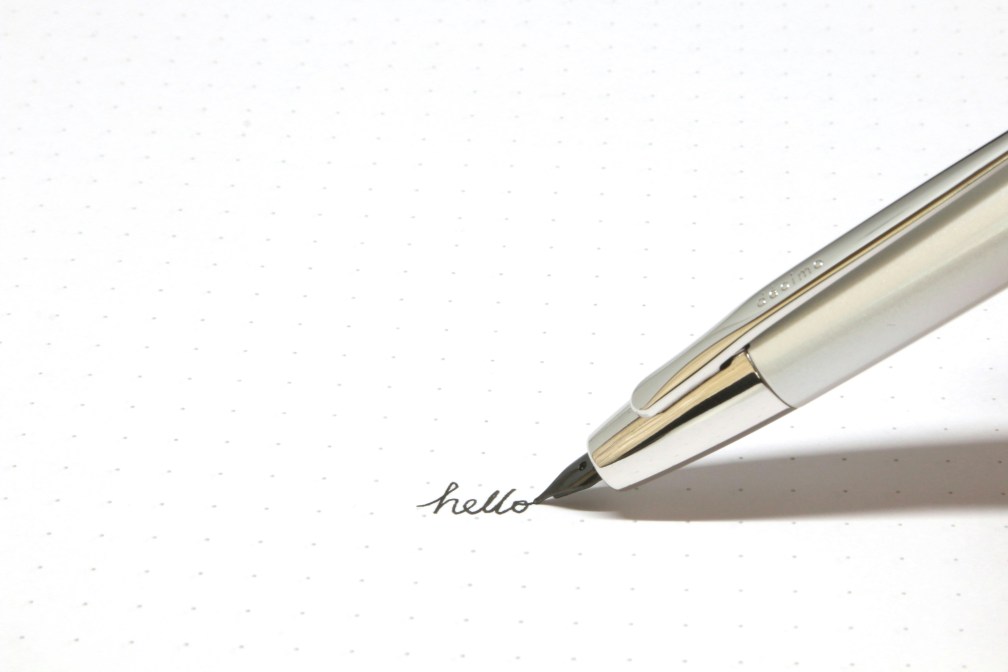
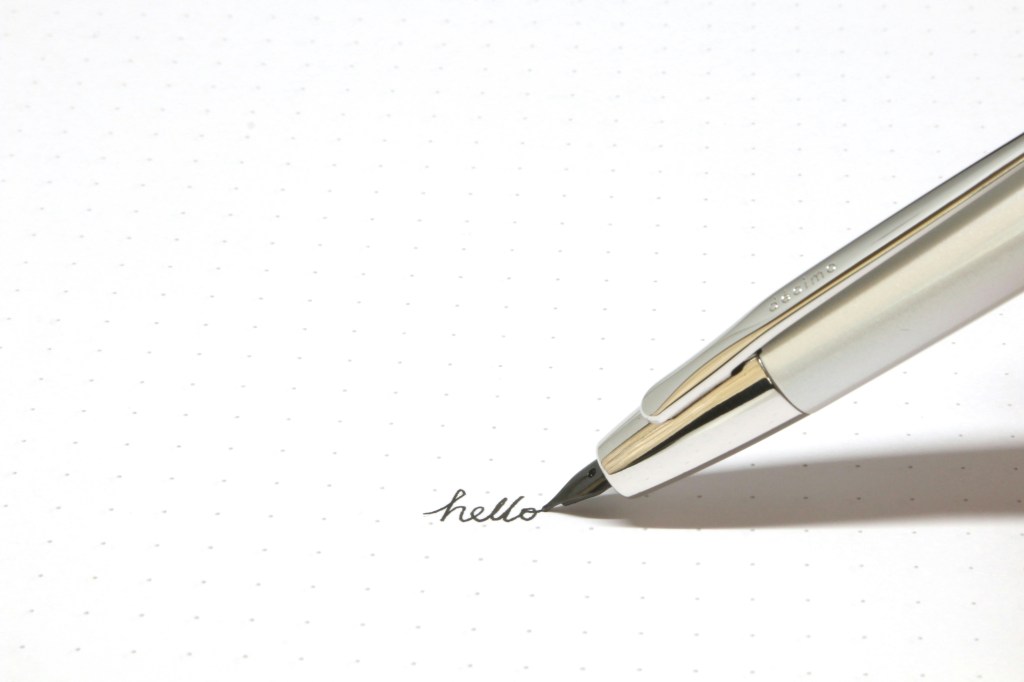
Fountain pen writing the word 'hello' on white paper
Photo by R Mo

It’s common to explore the lower realms, but no one in the team has ever, until now, been sent to a one-dimensional reality. To be trusted with such a mission is a great honour.

The training is intensive. It takes the form of repeated confrontations with the brutal linearity of language.  

Hello, my name is Jim. 

The assignment is to align the self with the excruciatingly constrictive quality of linguistic personhood. 

Hello… my… name… is…

There’s guidance in the training, a meditative exercise: Imagine a fountain pen. Its reservoir is filled with the infinite ink of the uncontainable multiverse. Focus with singular attention on the nib as it traces its unidirectional line across an empty page. 

The strategy works. Soon frustration gives way to curiosity, rousing an impulse to experiment. 

Hello, my name was Jim. 

The past tense suggests a nostalgia. A longing to move backward along this narrow line, even as the syntax presses inexorably ahead.

My name is not Jim. 

Negative polarity produces erasure, annihilation. Ideas unknown in an eternally creative cosmos—the infinite ink churns and roils.

My name will never be Jim.

The line of language, freed from its singular dimension, emerges as a spiral, a fractal, a new world waiting to be found. 


Would you like to know more about this story? I discuss it in Episode 95 of Structured Visions, ‘Your name without language’. You can also sign up to the Grammar for Dreamers newsletter to get monthly updates on the ideas that inspire my work.


The multidimensional language learners

Four glass vases, three green and one blue, each holding a different flower
Image by James Cousins

The multidimensional planets struggle with your concepts of space, particularly inside and outside. Space for them is fullness, not distance, and to move from one place to another place seems an utter impossibility, let alone going in or sending out. To achieve what you would call movement, they increase their stillness, and every attempt to go inside turns the inside out in a resplendent kaleidoscopic dance.

This is why it’s so hard to teach them your three-dimensional languages.

We start with an utterance which to you would seem a straightforward description, simplicity itself. 

This is a flower.

We hold the object before them and witness their blossoming wonder.

This creates a division, as real as melting glass, forming itself into a vase-like shape that distinguishes this from not this. Once there was no vase, now, there it is! And the flower, pressing its radiant face outward, bravely, breaching the invisible, newly formed barrier between inside and outside—a miracle!

The multidimensional language learners yearn to meet you, the native speakers of these wild mysteries, to discover the secrets of your enlightenment.


Would you like to know more about this story? I talk about it in Episode 86 of Structured Visions, ‘Feelings are, like, inside things’. Subscribe to the podcast on Apple podcastsSpotify or wherever you like to listen.