Unclothing

Dome tent in the mountains, with the sun just above the horizon
Photo by Kevin Ianeselli

‘What sparked the idea?’

Dr Lauren Ellis’s eyes glaze as if no one has ever asked this intellectual giant what incited the Eureka moment that was to transform environmental research—the translation software that allows scientists to communicate with entire ecosystems, to enable a more symbiotic relationship between human communities and the natural world.

‘I was camping with my boyfriend,’ she reveals. ‘One morning I woke up to see the networks of mycelial threads that stretched out over the landscape.’

Cherchez la femme, they say, or in Dr Ellis’s case, cherchez l’homme. Is the mystery man still in her life?

‘Next question,’ is the curt reply. The man remains a mystery. Thankfully, due to Ellis’s pioneering spirit, the natural world is becoming less of one.

Not boyfriend but first husband, Lauren thinks, mentally editing the article for style and accuracy. 

He’d brought her on the camping trip to confess his affair. When in the early hours she’d ripped the sleeping bag from his body and voraciously unclothed him, buttons popping on his thermal gilet, lined tracksuit bottoms wrenched from kicking legs, he must have assumed he was forgiven. But the desire that raged through her was not a longing for loving union but an implacable will to discover.

Or rather, she thinks, to uncover what lay beneath the tight web of language that formed the noun-phrase containers of his image: faithful husband, misunderstood man, complex depressive, now woeful penitent. When stripping him of the layers of clothing did not sate her, she pressed into him with a passion, not to connect but to unweave the layers of language that shaped the likeness he’d presented, the only version of him she’d ever known, as if the naked heat of such a yearning could melt through his façade and reveal some nascent truth within.

Outside in the emerging day she wrapped her sleeping bag around her and marvelled at the white web of fungal strands that clothed the organic landscape. Not to insulate, she realised, but to connect

Something loosened within her, an idea unravelling.


Would you like to know more about this story? Sign up to the Grammar for Dreamers newsletter to get monthly updates on the ideas that inspire my work.

The lexicographer

Greyscale photo of a stack of old books and papers in a room
Photo by Felipe Furtado

The bookshelf falls with a conclusive thud. Volumes of dictionaries flap to the floor, their spines irreparably dislocated, their yellow pages exposed to greedy, scurrying mice. Billy the lexicographer realises with a tremor of despair that he is trapped. A lifetime acquiring language will end with him suffocating under the weight of words. 

He’ll spend his final moments naming things: the marble table, the antique wardrobe, the upholstered dining room chairs. Bodies of plastic baby dolls, a bag of mouldy limbs and hairless, eyeless heads. Mountains of newspaper, rodent insulation. Grandmother’s tarnished silverware. A treasure box of costume jewellery. 

An unfamiliar longing: to be free of noun phrases. To unacquire language. Billy’s gaze scurries frantically around the room, replacing objects with object pronouns. This. That. Those. Them. Him. Me. 

They. He. I. The objects become subjects. The subjects invite agreeable verbs. The verbs are finite: This too shall pass. 

I, too, shall pass, decides Billy. He raises himself up upon mouldy legs, passes a trembling hand over a hairless head and clears a path through his storeroom of hoarded language. 


Would you like to know more about this story? Sign up to the Grammar for Dreamers newsletter to get monthly updates on the ideas that inspire my work.


Whale song

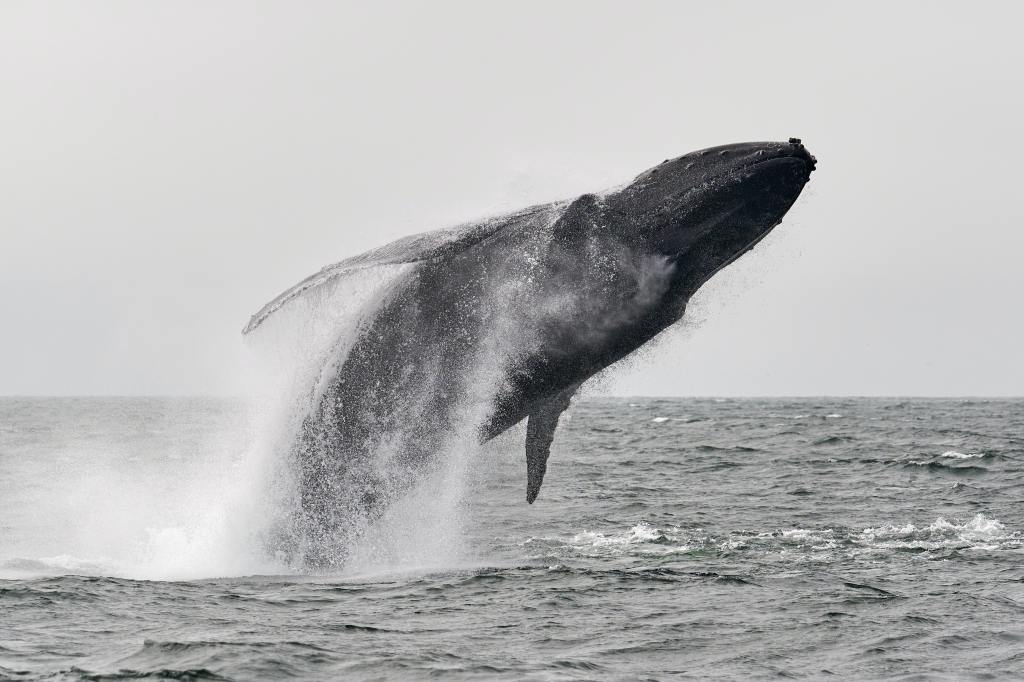
Greyscale photo of a humpback whale leaping from the ocean
Photo by Mike Doherty

‘You’re frigid, you’re rigid and you have no soul.’

Jack’s break up words played in Evie’s head like a haunting melody on repeat. 

These were not his exact words. What he’d actually said was something like, ‘I dunno, babe. I can’t put my finger on it. It’s like it’s impossible to loosen you up. Sometimes I look at you and it’s like, you’re not even there. Nobody home.’

He was a little stoned when he said all this, but she knew he didn’t regret it, because he got together with Cassandra Carrington the next day. They were relentless in their mutual affection. They both signed up to do a summer semester at sea so they wouldn’t have to spend their vacation apart.

Against her better judgment, Evie signed up to the same program. She’d imprinted on Jack like a duckling on a pitbull. She couldn’t keep herself away from him, no matter how cruel he was to her.

They were learning about marine mammals. Evie couldn’t concentrate. She wasn’t good at environmental science or biology. These subjects were too messy, fraught with error and doubt. She preferred math. Computer science. Linguistics.

A specialist on whale songs joined their boat when they reached Maui. She taught them that male humpbacks sing to each other in low frequencies that can span up to 10,000 miles of ocean. She played them some of their melodic sequences, and pointed out how the whales changed them slightly over time. The students listened to her recordings with appropriate awe.

‘That’s a beautiful song,’ Jack crooned, his hand stroking the back of Cassandra’s neck.

A beautiful song.

The phrase jolted through Evie like an electric current. It was decidedly not a beautiful song. It was absurd to say such a thing. It was—what was the term?

Ill formed. 

The term they used in linguistics to label an expression that a native speaker would never utter.

The whales would never say it was a beautiful song

They’d say—they were saying—singing—that it was a gathering song.

The humpback songs were not just melodies, they were strings of syntax—a series of noun phrases, with the noun and indefinite article remaining ever constant: a song, a song, a song. What varied was the adjective that preceded the noun. It never-failingly referred to the song’s purpose.

A gathering song.

A loving song.

A healing song.

A journeying song.

Sometimes, in the response times, the whales would insert an evaluative adjective, but this new addition never occurred alone in the phrase. It always accompanied, and preceded the purpose adjective.

A beautiful gathering song.

A raucous loving song.

A helpful healing song.

A circuitous journeying song.

The whales would never utter ‘a beautiful song’. A phrase without a purpose adjective would always be ill formed.

Evie listened to recording after recording to validate her findings. A new tune formed in her own mind, a response to the whale melodies. A discovery song.


Would you like to know more about this story? Check out my behind-the-scenes post on Patreon.