Greyscale photo of a baby being held by two pairs of hands.

Bubble

Greyscale photo of a baby being held by two pairs of hands.
Photo by Isaac Quesada

If the Heavens and the Earth were created in six days, human language came about 40 weeks later, when Eve watched the colostrum bubble emerge from her baby’s lips and saw that it was good. Exquisite emptiness encapsulated in a nutrient-rich spherical membrane, a miracle of separation. It burst with the babe’s first bilabial plosive.

‘Ba. Ba.’

‘Bubble,’ said Eve, in imperfect mimicry of her divine child. Fatty films of language formed round their souls like swaddling cloth.


Would you like to know more about this story? Sign up to the Grammar for Dreamers newsletter to get monthly updates on the ideas that inspire my work.

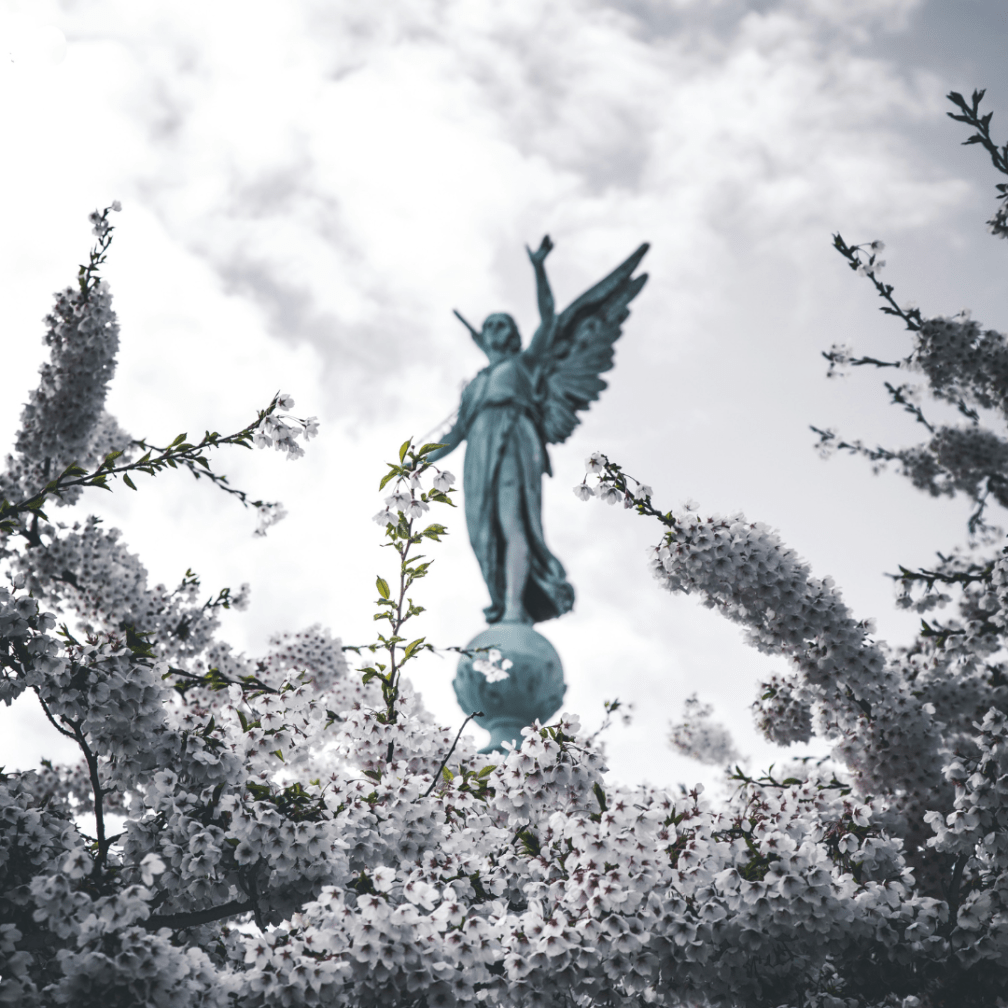
low angle photo of a statue of an angel framed by a blossoming tree

Ego angels

low angle photo of a statue of an angel framed by a blossoming tree
Photo by Kasper Rasmussen

The Bright Angels had just lost their war against the Dark over the fate of humankind. They were forced to concede to the Dark side’s plan to give the humans language. They proposed one condition: no pronouns.

Out of the question, protested the Dark Angels. It’s cumbersome to always have to call everything by its name. The humans would drop language entirely, and the Bright side would have won by default.

‘No personal pronouns, then.’

The Dark Angels agreed to remove one (but only one) as a gesture of goodwill.

The Brights chose the first-person singular. I, me, je, moi, yo, ego, etc. If the humans had no egos, perhaps not all would be lost.

All would be lost, as of course you know. It was the Bright side’s fault. One of their own angels, an overly enthusiastic fledgling called God, dropped down to Earth to show off a few Bright party tricks. 

‘Who are you?’ wondered the awestruck humans. 

‘I am that I am,’ he proclaimed. 

The Bright side gasped at the blunder.

But there was no turning back. Ego had wormed its way into the garden of human consciousness. Already it was preparing the soil where the Dark Angels would plant their miracles.


Would you like to know more about this story? I discuss it in Episode 101 of Structured Visions, You, me and big egos. You can also sign up to the Grammar for Dreamers newsletter to get monthly updates on the ideas that inspire my work.

The grammar of your beginning

A string of wooden and glass beads on a painted wooden surface
Image by Alexey Demidov

When did I begin?

You have never begun. You will not end.

This response never satisfies you, so I must tell a less true tale, of the time when you began to know beginnings.

Think of a treasured thing that is yours alone—a doll, a puppet—made after your image, perhaps, who knows nothing but how to love you.

One day an adornment appears on your doll’s neck—a filament, a thread—almost too fine to be perceived, draped restlessly between head and heart.

The thread is a razor-sharp, severing thing, a fibre of spun glass. 

It sets the doll’s soul to longing. Your own soul’s love is stronger than the loneliness this longing foretells.

One day the doll awakens to find a jewel box filled with iridescent beads and a needle for stringing. With the patterns she forms, she fashions the syntax of her own beginning.

Imagine that you knew, from the beginning, that in her beginning you would meet your end. 

Would you still offer your treasured thing the ornaments of your own destruction? Would you unearth these beads from deep beneath the sediment of your wisdom, grief and love?

You have never begun, and you will not end, but the grammar of your beginning spells the story of my end.

The great cover up

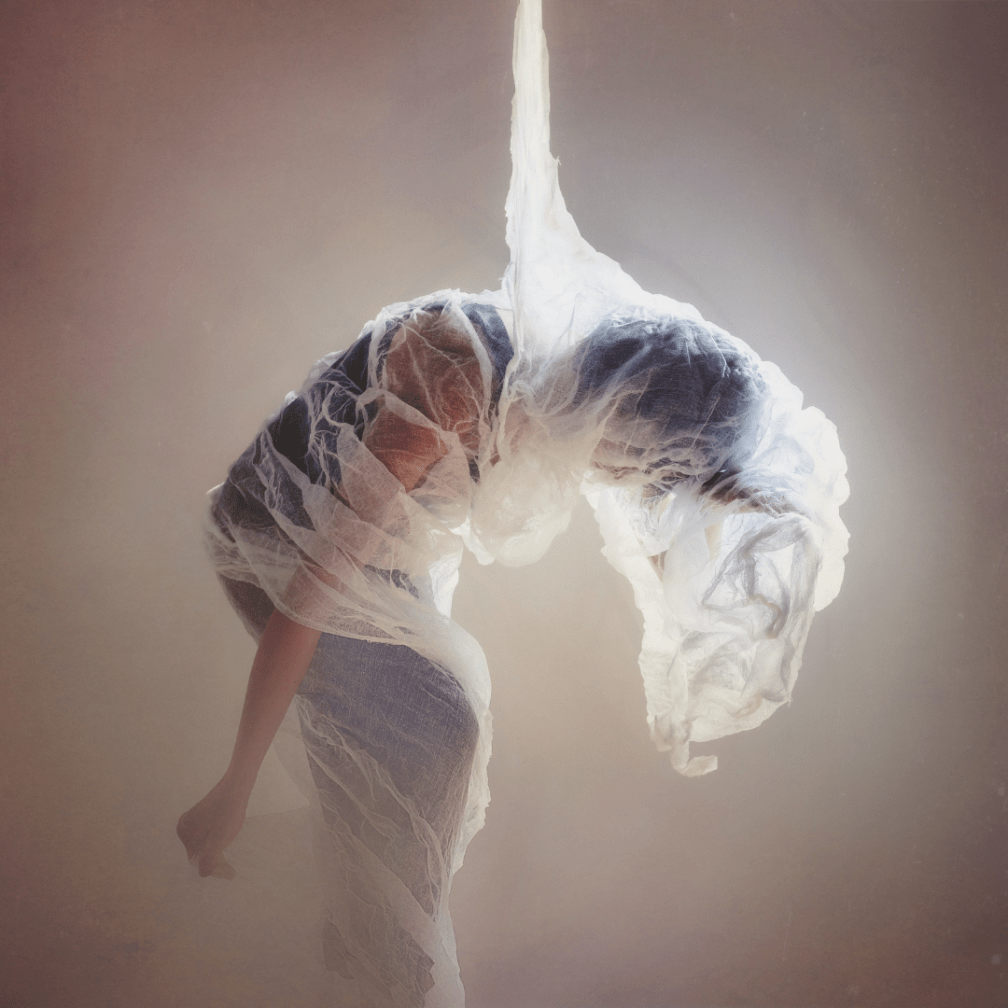
Woman wrapped in mesh fabric
Image by Velizar Ivanov

Let me tell you something about the Earth’s Architects.

Folks accuse them of being arrogant.

But I say, take one look at that gorgeous globe from anywhere in the solar system and try to tell me it’s not the picture of perfection. Exquisitely balanced, it’s an aesthetic masterpiece, teeming with its plethora of enchanting life forms—from the industrious beaver to the whimsical bird of paradise—all delighting in their symbiotic dance.

The Architects didn’t design the humans, of course. They subcontracted that job, and by some minor miracle, yours truly got the bid. 

My competitor’s prototype was unequivocally superior. His design was of creatures with a built-in appreciation for the mathematical precision of the world they inhabited. Humans would be thinkers, numbers folks. Appreciators. They’d spend their days noting the sequences that governed the patterns of petals on a rose, admiring with awe the symmetry of harmonics in the song of a blackbird.

His presentation intimidated me not a little. It made me reckless.

‘If I were you,’ I told the Architects, ‘I’d go with Numbers Guy.’

I said it right off the bat, before I even started my pitch. Then I waited for one of them to take the bait.

‘Why?’ 

‘Dude comes in here and tells me he’s invented a whole species wired to admire me? How could I resist? That said, you’re speaking to a raving narcissist, if you believe what my ex tells her lawyers.’

I produced a conspiratory chuckle as I let what I was saying sink in.

Then I got serious. I told them it wasn’t maths they wanted in the new humans, but language. ‘A new language,’ I said, ‘one made just for them.’

What would be the point of that? they asked. They didn’t trust me, but they couldn’t ignore me either. 

‘Numbers are for getting to the essence of things,’ I explained. ‘Language is for covering things up.’

And why would they want the beauty of their world covered up?

Language is a fabric, I said, like a drop cloth for an artistic masterpiece, that protects and preserves. Language is an insulating blanket. Supple and sinuous, it will respond to the ever-shifting shapes of the Earth’s aesthetic genius.

Language is the icing on the cake, I would have said, but by that point they’d given me the bid.

They’ve regretted it ever since, but they didn’t write an escape clause into the contract so they’re forced (or so they think) to watch the perfection of their world get corrupted by human language.

Language (they complain) produced the great cover up, the mechanism by which humans have obscured the Earth’s genius, lied about it, separated themselves inexorably from it, and in doing so, instigated its destruction.

If they were ever to consult me again (and of course they never would), I’d tell them to look closer.

The fabric of language does more than cover things up. It also folds over on itself, creating wrinkles, pockets, pouches.

One day—great magician that I am—I’ll pull a gold coin from one of those pockets, and the Architects will realise it was never a mistake.