Syllables

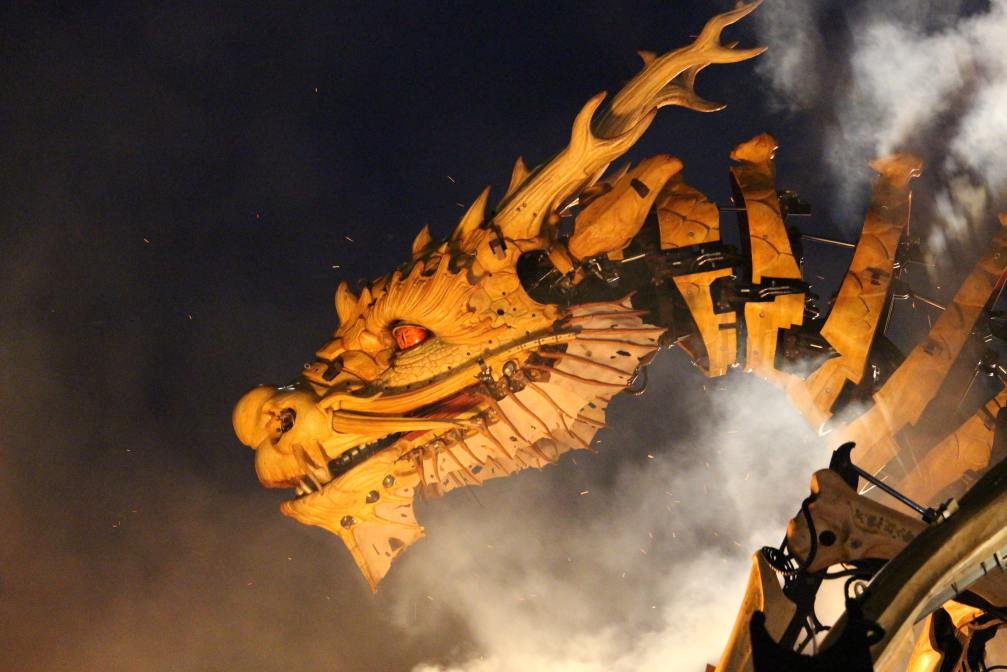
Photo of La Machine, a dragon robot produced for a street theatre production
Photo by Laith Abushaar

It was a mythical land, the dragon was merciless, and steadfast warriors set out regularly on reckless quests to slay it.

Its power to destroy lived, as with all such beasts, in its breath. It breathed not fire, but syllables.

These eggs of sound resonated so enchantingly that even just one had the power to madden its hearer on the spot. Some would-be slayers fell on their own swords and perished. Others simply dropped in a fatal swoon, limbs limp and eyes agog, never to be revived.

Eventually the Queen herself broached the beast, with armour and blade and, in a stroke of pragmatic genius, woollen plugs to stop her ears. The brutal battle lasted a night and a day. When the dragon gasped its last breath and the Queen claimed her hard-won victory, she unblocked her ears and walked among the mad warriors, whose bodies lay wasting on the path. The few whose lives still clung to them she entrusted to her own private healers. In time they were restored to vitality and sense, and they took up their lives once more among their people.

No one ever heard these fallen heroines speak of their misadventures. Still, it was said that at the dark of each new moon they gathered together in secret to speak their common language, built piecemeal from remembered remnants of the dragon’s awe-striking syllables.


Would you like to know more about this story? I discuss it in Episode 77 of Structured Visions.

Astray

computer cell processer
Image by Brian Kostiuk

The only thing Chuck Quince can remember about his trip to the future was that they’d invented a machine that could make a book as big as the Bible so small that it would fit on the head of a pin.

The idea of all those verses pressed together so tightly made Chuck nervous. Important words could get squeezed out, like the ‘not’ in ‘Thou shalt not commit adultery’, and folks would be led astray.

It was bad enough knowing that time folded over on itself, and that all it would take to shoot him onto some future layer was making it to the bottom of a couple of jars of Jim O’Grady’s moonshine.

But all the words of a whole book curled up all together, small as a mustard seed?

Surely the meanings would get twisted too, like the twists and turns of fate, like the confounded syntax of Chuck’s roiling thoughts.


Would you like to know more about this story? Check out my behind-the-scenes post on Patreon.
The woodcarver

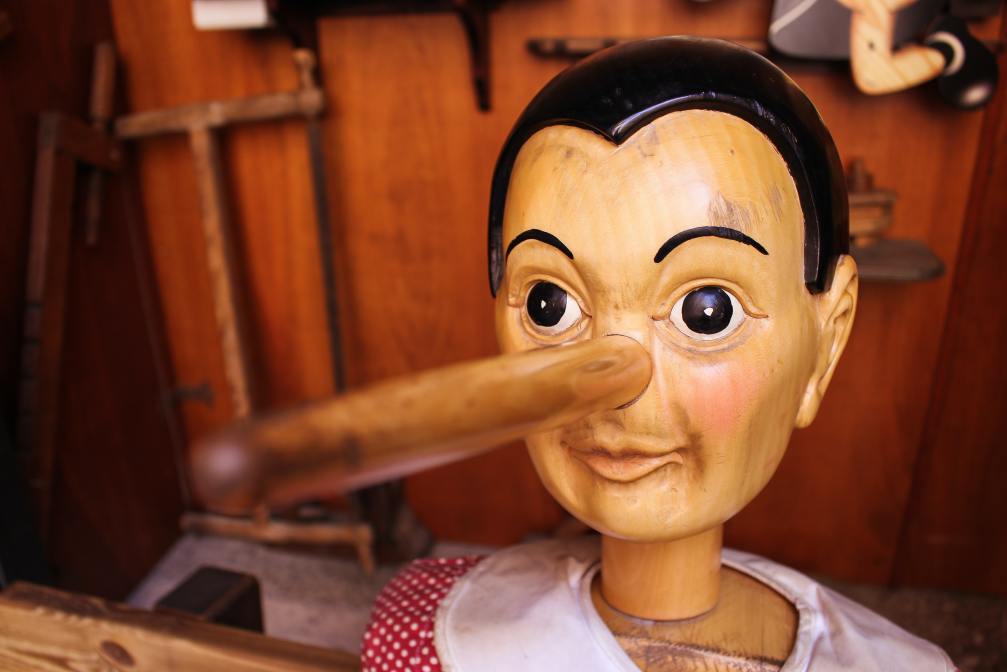
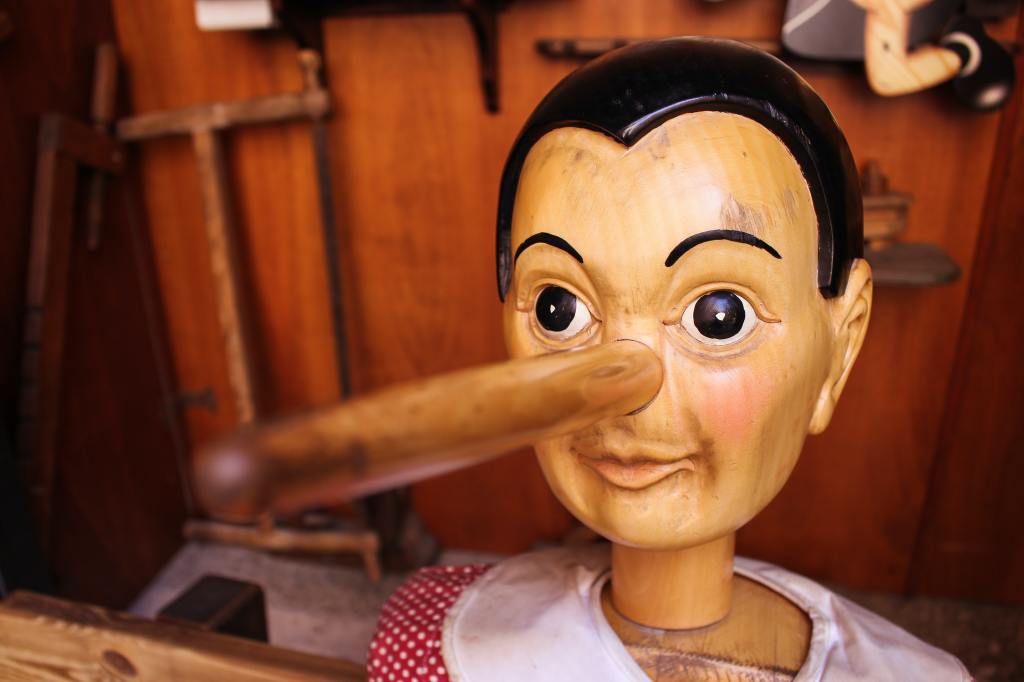
Photo of Pinocchio puppet
Photo by Jametlene Reskp

All my puppets could move without strings, and all could speak, but none of them could lie.

The lie itself was trivial—he wasn’t the one who stole Antonio’s caramels. But when the words escaped Pinocchio’s painted lips—when he discovered he’d released an utterance that did not match consensus reality—it excited him.

Sexually, I mean. 

Let’s say his ‘nose’ grew.

This manifestation of his delight embarrassed him so much I feared he’d never dare stray from the truth again, and all my hopes would be dashed.

So I taught him the secret of language that none of my other puppets had ever been able to grasp.

I taught him ‘might’.

He was a quick student, and I was quick to test him. ‘Did you take Antonio’s caramels?’ I asked.

A hesitation. The smooth pine globes of his eyes glanced tentatively from dropped balsa eyelids. ‘I might have,’ he said.

My heart leapt precipitously. I forced myself not to celebrate too soon. ‘Or else…’ I prompted.

‘Or else…’ The mandible lowered to form the shape of a wooden grin. ‘Or else… someone else might have taken it,’ he ventured.

My own widening smile encouraged him.

‘Or it might have been whisked away by a mischievous crow. A talking crow! He might have eaten the caramels! His beak might’ve been stuck together, like glue…’

Ever since that morning of reckless fiction, Pinocchio has been my favourite, my darling, the liar, the storyteller, creator of worlds.


Would you like to know more about this story? I discuss it in Episode 76 of Structured Visions.

YES/YES

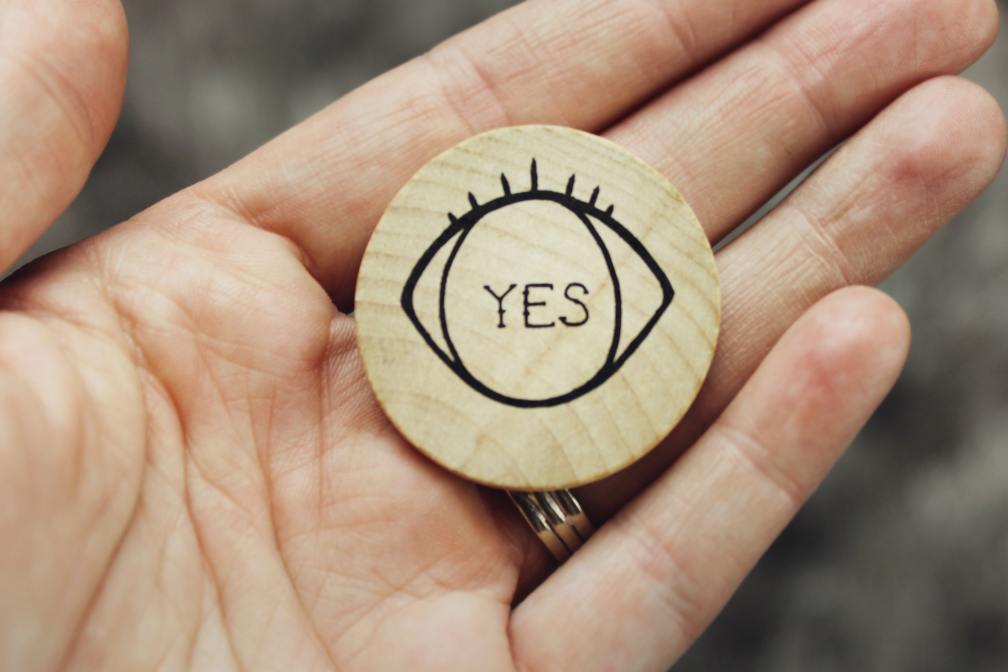
Round wooden coin with eye detail and word, text "yes" printed on it, held in the palm of a woman's hand.
Photo by Jen Theodore

‘Your problem is linguistic,’ said my therapist.

‘What?’ I hadn’t even told her my issues yet. She was the last in a long line of practitioners. So far I’d been diagnosed with ADHD, autism, Lyme’s disease, a gluten allergy and a leak in my third chakra.

I thought she was talking about neuro-linguistic programming, which I’d also tried, with as little success as every other suggested treatment.

‘You have no irrealis modes and no negative polarity,’ she said. ‘Everything for you simply is. Everything exists. And the intensity of all that existence is oppressive. Am I wrong?’

She wasn’t wrong, but when I tried to tell her she held up her hand to silence me. ‘Drink this,’ she commanded.

There wasn’t any question of refusing. The prospect of imbibing the foul potion had already formed itself as a real proposition in my mind. As my astute diagnostician had observed, I was constrained by the compulsion to comply.

I downed it in one swallow.

The resulting display of gagging and retching delighted my therapist, who was now pounding my back with hearty open-palmed thumps. ‘Go ahead and cough it up,’ she said.

When eventually I heaved an acerbic excretion into the paper bag she’d pressed before my face, she gave a bright cheer.

‘Good for you!’ she enthused, wiping mucus from a small shiny object. ‘Just as I suspected.’ 

The unlikely midwife of this revolting mystery presented my issue to me with unadulterated glee.

It was the size and shape of a fifty-pence coin, and it was embossed like a coin—not with the queen’s head, but one word in stalwart capital letters.

YES.

Intrigued, I flipped it over, expecting a ‘no’ on the other side. Instead I found the same word on both faces. 

YES/YES.

A profusion of affirmation, with no way of distinguishing heads from tails, no negative denial to balance the positive assertion.

Positive polarity, my therapist confirmed, with a profusion of realis.

‘It never gives you a break. Everything you imagine becomes real—or you suffer until it does. And you suffer after it does, too.’

‘Am I cured now that this is out of me?’ I asked.

She shook her head. ‘It’s a linguistic problem, remember? There’s only one way to cure a linguistic problem, and that’s with more language.’

She produced a small square envelope made of something that looked like silk. ‘Get that back down you, as soon as you can.’

Mercifully, the glass she now proffered was filled with water, and I swallowed the silk-covered coin with ease.

I felt better instantly. ‘What was that?’ I asked. The omnipresent, relentless urgency had been replaced by some more calming, more hopeful state—a curiosity, perhaps.

‘I wrapped those devilish yeses in a little blanket of maybe,’ she explained, and sent me on my way.


Would you like to know more about this story? I discuss it in Episode 76 of Structured Visions and in a behind-the-scenes post on Patreon.

First words

Each group of Earth-bound souls starts with a Seer. The Seer precedes their births and survives their deaths. The Seer is their centre, whether they acknowledge it or not.

I am the very first Seer of the very first human group.

What were they like?

Have you ever watched a baby gazing blissfully at airborne dust suspended in a beam of sunlight? Imagine a set of souls with that level of sustained rapt attention, all the time. Their fascination had no ‘off’ switch. 

Imagine a single blade of grass. Now imagine it in its startling specificity—the unique pattern of leaves shooting at varying lengths from its pliable stem. Now imagine its shifting design as it catches a passing breeze. Now note the shifting hues of green graced by the dizzying dance of light and shadow.

Behold with wonder the boundless universe within a solitary leaf blade! Are you foolish enough to believe you have the capacity to contemplate a whole field?

My task as the first Seer was to limit the vision of the souls within my little human group. To reduce the infinite distinctions of the overwhelming multitudes their senses absorbed.

I achieved it by teaching them the first words of what was to become their language. Just three words in the beginning: One. Two. And many.

One, two and many taught the human souls to focus their attention, to see the world as comprised of things, and to lose the distracting eternity of ever changing possibilities.

One, two and many engendered the world of human concepts.

Thus I’d fulfilled my mission as the first Seer.

Ah, but many an evening, as dusk descends, I find myself longing for that early time, before those first words, when the world was known in all its innumerable faces.


Would you like to know more about this story? I discuss it in Episode 75 of Structured Visions.

Nothing doing

Greyscale photo of little boy in striped shirt
Photo by Naira Babayan

‘Daddy, you shouldn’t say that word. It hurts Okkers’s ears.’

‘Tell Oscar there’s nothing wrong with doggie do,’ I said.

I’d just stepped in a steaming pile of canine shit and wasn’t in the mood to argue linguistic politeness with my son’s imaginary friend.

‘He says you should say poo instead. And his name is Okkers, not Oscar.’

Ordinarily I’d have been fascinated by Oliver’s selective metathesis, but the word metathesis reminded me of thesis, which reminded me of the PhD I still hadn’t finished, on child language acquisition of all things. 

As it turned out, logophobia was running in our family, if family extended to invisible members like Okkers. Days after the doggie do incident I was still being policed on my use of the offending word.

I assumed it was its noun form that was considered indecent. It turned out Okkers found it equally offensive in its more common use as a verb. 

You’d be surprised at how often you use the word do. Still, testing Okkers’s sensitivities offered a welcome, and not entirely off-topic (or so I told myself), distraction from my thesis.

‘Is Okkers offended by the auxiliary and the main verb use of the verb?’ I asked Oliver.

‘What’s an Ox Hillary?’

‘Like, when you’re posing a question in the simple aspect. Do you want an ice cream, for instance.’

‘Ew! Stop!’

‘You don’t want an ice cream?’

‘Stop it!’ (Clearly the negative contraction was also a problem for Okkers. I provided the promised ice cream to make up for my linguistic missteps.)

The ever perceptive Okkers noticed every form of do, not just auxiliaries and negative contractions, but also inflections for person and tense (does, did), and when used as a pro-verb, as in What are you doing? He took particular issue with the participles (doing, done). He could spot these from a mile away.

Our conversations around the topic became so fascinating that I made space for both of them in my office. We spent hours discussing the intricacies of the taboo word, ingeniously avoiding voicing it, forming ever more convincing hypotheses about its unfortunate omnipresence in the English language.

My wife became suspicious. ‘What are you going up there?’ she shouted from the hallway. We’d locked the door. ‘Are you getting anything done?’

Together we groaned, the three of us, with murderous intent.


Would you like to know more about this story? Check out my behind-the-scenes post on Patreon.

Longing

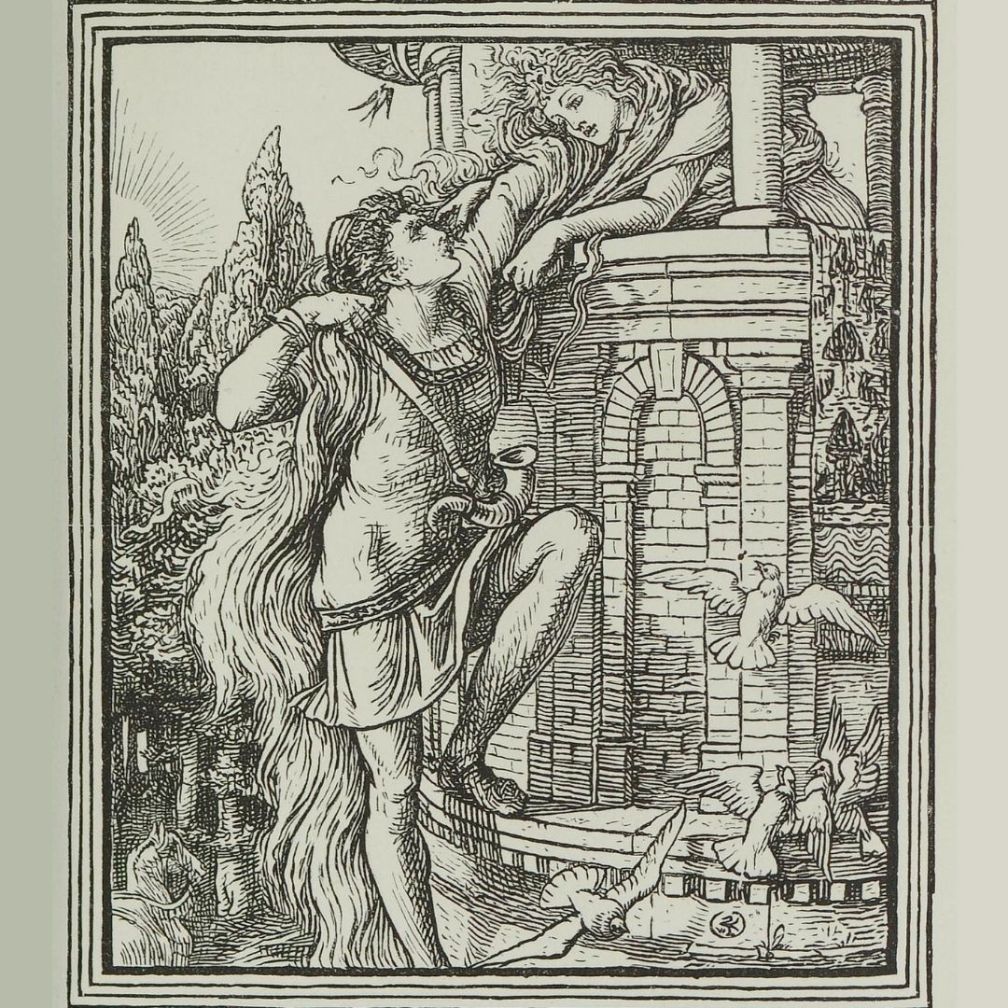
Line drawing from Grimm Brothers' Rapunzel story. The king's son climbs Rapunzel's hair to reach her in the tower.

Your mother was the Earth herself. She loved you fiercely, but was required to release you to the sorceress, Language, who once had filled the void of her longing.

Language built you a tower and pressed patterned strands through your smooth scalp into the hollow spaces of your mind. When these would hold no more, unspoken sentences sprouted like early eager grasses, then like singing reeds, and eventually like willow wands weeping at unimaginable lengths. 

‘Rapunzel, Rapunzel,’ cried the Sorceress—she’d named you after your mother’s ancient longing—‘throw down your hair.’

You obeyed. In your loneliness a ladder appeared. At its base stood the wondering Other, gazing upward, ever hopeful.


Would you like to know more about this story? I discuss it in Episode 74 of Structured Visions.

Guest

What we were told about the project was little enough to be written on a napkin.

I can say this with some confidence because I did write it on a napkin.

I got the call in a Starbucks, and scrawled some barely discernible notes from my barely discernible conversation with my deep-voiced, disembodied interlocutor.

An extraterrestrial species (humanoid, intelligent) had been discovered on Earth. The agency (governmental, top secret) was looking for adoptive carers.

‘You want me to adopt an alien?’ I looked up from my phone to raise my eyebrows at my fellow Starbucks regulars, who smiled sympathetically.

‘The preferred term is Guests.’

It wasn’t a joke. They were choosing potential Guest-adopters from a bank of experts (biochemists, neuroscientists, psychologists). My area is linguistic anthropology. They wanted to know about Guest languages.

They’d named my Guest Ella. I put her in my daughter’s room. (She lived with her father now and never came home.)

I wished I’d adopted more than one Guest. I couldn’t learn anything about Ella’s language because she didn’t have anyone to talk to. Also, she’d achieved native-level proficiency of English within several weeks, which made it harder to make hypotheses based on her acquisition patterns.

One anomaly gave me a clue, though—her use of pronouns. She acquired the first-person singular (I, me, my) without any trouble, but she never used second, third or first-person plural.

The implications of this hit me one night after dinner. Ella had just polished off a generous bowl of ice cream (Madagascan vanilla with dark chocolate chunks).

‘I’m hungry,’ she said.

She didn’t eat the second helping I gave her. Instead she held the bowl out to me. 

‘That’s for you, Ella,’ I reminded her. I don’t eat ice cream. (I stopped eating sweets when Pieter left.)

She placed the bowl in front of me with uncharacteristic stubbornness. 

It was then that I noticed how malleable her facial features were.

‘That’s for me,’ she repeated. ‘I want it so much.’

I tried not to stare as her face morphed. She was starting to look like someone I knew.

‘It looks so delicious,’ she said, and her longing nearly broke my heart. ‘I’m empty inside. Maybe ice cream would help.’

I stared longingly at the decadent chunks of chocolate speckling the soft cream. (My weight was one of the reasons Pieter left.)

‘I miss ice cream,’ she said. 

It was not until the first spoonful passed my eager lips that I understood.

Guest language had no second person pronoun. 

‘I miss myself,’ she continued, ruthlessly. ‘I don’t know who I am, now that I’m all alone.’

Ella had no way of saying ‘you’. 

Which meant she probably didn’t even have a concept of ‘you’.

‘You’re not alone,’ I said.

Her uncannily familiar face made it clear that she was not reassured. 

I tried again. ‘I’m not alone,’ I said. 

Her eyes glowed with warmth, like light in a guest house. (Inviting. Welcoming.)

The relief in her smile mirrored my own.


Would you like to know more about this story? Check out my behind-the-scenes post on Patreon.

No and the ark

Round gold icon painted with a scene from the Biblical story of Noah's Ark
Photo of Noah’s Ark icon by Jim Forest

Who are all these people, and why are they all here?

Belinda has not responded to her three-year-old daughter’s repeated questions, though the answers are easily available.

The beach house seems ready to burst at the seams, either from the heaving throngs of family sprawled about in various stages of multi-family chaos within, or from the howling gales that hammer against the paper-thin walls without.

These are my cousins, and they’re here for your great-grandmother’s funeral.

They’ve reached that drunken stage of family gathering where everyone tries to remember Nan’s stories.

Bill, once the thick-headed bullying eldest cousin, now professor of comparative literature at Boston University, tries to convince everyone their grandmother’s vast collection of stories consisted solely of variations on Bible themes.

Carly, who runs a tattoo salon in Brooklyn says he’s reading way too much into it.

Gina, the Montessori peacekeeper, is praising the artichoke dip.

Who are all these people, and why are they all here?

Belinda has breathed barely a word since they congregated at the family vacation home, not even to her daughter – just enough to manage the logistics of getting Ella fed and tucked into the cot in their shared room. She’d like to be in bed herself, but can’t risk it yet. Ella sleeps lightly and might hear her crying.

Bill reminds Carly that Nan was once a nun, and professes his belief that the endless stories were her rebellion against the church and its narratives. 

If she was that pissed off about the church, why are we burying her in one, Carly wants to know, and Gina pipes up that there was one story in particular that reminded her of Noah’s ark.

‘The story Nan told was about a man named No.’

The words have escaped Belinda’s lips as a breathy whisper, but the wind has just ceased, and everyone’s heard her. The cousins and their partners stay silent, waiting for more.

Who are all these people, and why are they all here?

‘No was the only person on the Earth. He lived among all the animals, who named him “No” because he had no speech. No matter how much they simplified their language, he could never make sense of what the animals were saying. He just kept shaking his head, “no”.’

They’re your family, and they’re here because my Nan died.

What would Ella know of people gathering when someone died? Greg died suddenly, in the middle of the pandemic, and they weren’t allowed a funeral. What Ella knows of her own daddy’s death is loneliness and silence, not this expansive hearthside festival of laughter and story.

Belinda shakes her own head, ‘no’, at her cousins’ clear desire to hear the rest of the tale. Still, the words tumble out, as relentlessly as the newly revived winds.

‘The animals got together and decided No was too distracted by all the beautiful things on the land, so they called down the rain to wash it away. They built a boat and drifted away on the monotonous sea. For forty days and forty nights they taught him their language.

‘No remained silent, confused.’

Her family had tried various ways to contact her, to keep her company during her grief, to occupy Ella, to encourage Belinda to go out for a walk at least to clear her head. Belinda turned off her phone and retreated inside herself, silent. Ella stopped crying, and Belinda’s own tears remained voiceless, wracking, heaving. 

‘When the rains stopped and the waters finally abated, the animals gave up hope. They moved back to the dry land in the springtime and made their dens there. No did not follow them.’

It’s a strange place for the story to end, but Belinda cannot remember any more.

No must have died alone on the boat, starved by his own silence.

Perhaps he found peace at the end.

‘In the silent nights, No’s ears were opened,’ she’s saying now, finishing the tale. She can hear her crazy grandmother’s soothing tones of her voice in her own voice. She puts her arms around herself and keens slowly, more than a little crazy herself by now, she imagines. 

‘No’s ears were opened to the whistling tunes of the wind. His heart beat to the staccato rhythms of the waves drumming the boat’s resonant hull. He swallowed the wind and the waves, and at once he had language.’

But it was not a language the animals knew, and No remained alone.

The tragic ending of her grandmother’s tale remains unvoiced, except by the wind that still beats insistently against their mourning house.


Would you like to know more about this story? I discuss it in Episode 73 of Structured Visions.

The Oracle of Sudsarama

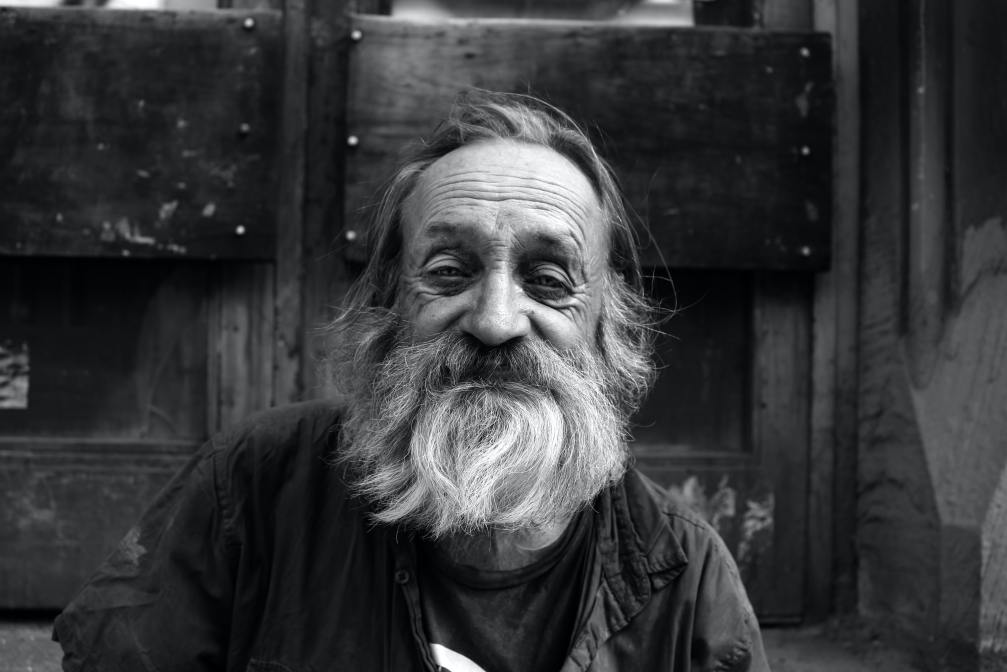
Greyscale photographic portrait of a bearded man
Photo by Jorg Karg

The homeless guy was naming things.

This was my big revelation.

It took a month’s worth of visits to the laundrette to work it out.

On Saturday of week one I had no idea at all. I was consumed with my abysmal turn of fortune—my own washing machine damaged beyond repair, my kitchen flooded and clothes likely ruined. I hauled the sopping load through bitter cold rain to Sudsarama on Market Square. The tramp was settled in so comfortably in the room’s wet, fragrant heat that at first I didn’t even notice he was there.

He did not afford me the same courtesy.

‘They’re spinning,’ he croaked.

I did not need to make eye contact to know he was talking about the thrumming dryers. I nodded as politely as I could manage.

On Saturday of week two I was nearly out of underwear and entirely out of patience. My new washing machine had been held up at the warehouse. I made my reluctant pilgrimage to Sudsarama, heavy laden with shopping bags filled with smalls.

The tramp sat sedately in the same spot as the week before, like a priest of the oracle.

‘They’re helping,’ he said.

I followed his gaze to a woman outside walking her dog. The latter sported a hi-vis vest that endorsed its support-animal status.

I kept my gaze focused just beyond the window for fear of being drawn into some maddening conversation.

Still, I couldn’t help but be curious about what sort of assistance my homeless companion thought the human-canine pair was providing, and to whom.

‘They’re helping?’ I asked.

To my surprise the objects of our discourse opened the door and entered into the Sudsarama shrine. 

‘They’re helping,’ the tramp affirmed. He leant down to scratch behind the dog’s ears and whisper into them. ‘They’re spinning,’ he told the dog, pointing his gentle chin toward the dryers.

By week three, I’d formed a few hypotheses. 

The tramp used the plural pronoun for everything, even singular referents, like the dog. 

He was too polite to make assumptions about people’s pronouns. Or dogs’ pronouns. Or dryers, for that matter.

And the -ing words—spinning, helping—the tramp wasn’t using them as verbs.

They were names.

He’d named the dog ‘Helping’, and the dryer ‘Spinning’. 

No, he hadn’t named them—suddenly it was somehow clear to me—he knew their names already, he was simply stating what was true.

Everything he encountered already had a name, a name that revealed the entity’s essential quality, and the name of everything was a verb.

On the fourth Saturday I decided my duvet needed a clean and that my newly installed washing machine wasn’t big enough for the job. I raced across the square, fixated upon the plate glass windows of Sudsarama and whether my guru would appear through them.

When his shadowy figure came into focus I felt something release in my chest, like an unacknowledged longing spreading its wings to take flight.

I leant against one of the dryers and gazed shamelessly into the man’s weathered eyes. ‘They’re Spinning,’ I said.

With his nod I felt a wave of compassion wash over me.

‘And him-’ I said, pointing to a terrier running free on the street, who’d stopped to cock his leg on the lamppost opposite. ‘Them, I mean. They are-’

‘They’re Helping,’ he said.

I made a mental note: All dogs are Helping.

‘And those?’ I asked, flinging my pointing arm wildly toward the fountains in front of the City Hall.

‘They’re Flowing.’

‘And those?’ I pointed to the semi-circle of bare-branched cherry trees that framed the water feature.

‘They’re Breathing.’

I could no longer speak, only stand in awe of the man’s wisdom and the grace with which he bequeathed each thing with his essential quality, its name.

‘And me?’ I begged when I finally found my voice, thumping my chest, a frenzied chimpanzee. ‘Who am I?’

His silence precipitated a gaping despair at the heart of me, like a landslide on the edge of a vast abyss. 

In a desperate attempt I tried again. 

‘These?’ I hadn’t stopped drumming on my sternum, so urgent was my need to know. ‘What are these?’

His lips fluttered as if brushed with the briefest of smiles.

‘They are Being,’ he said. 

Then he stood before me and raised an oily palm as if in benediction. He patted me lovingly on the head and left the Sudsarama sanctuary, making his procession into the freshly blessed city.


Would you like to know more about this story? Check out my behind-the-scenes post on Patreon.