Gothic looking scrolls in compartments on a rack

The dark art of world building

Gothic-looking scrolls in compartments in a rack
Photo by Sindre Aalberg

It is this I wish to tell you.

Our extensive studies of the planet Earth have revealed the existence of an information structuring system that defies all cosmological paradigms. Imagine an intelligence that is neither physical, nor chemical, nor biological, but linguistic.

A recently discovered archive houses the talk and writings of a species, long extinct, called human. A preliminary analysis suggests that the human experience was shaped by a linear language that restricted their access to any other forms of knowing.

Excluded from the world’s manifold insights, these beings created their own worlds, woven from the thin filaments of their darkening sentences. 

I have been charged with the mission of learning the dark art of world making, which is why I address you now through the medium of human language.

The experience, I can confirm, is dangerously enticing. As my awareness of reality diminishes, I begin to shape my own dark self, and its dark world, like some mysterious underworld god, some power-hungry sorcerer.


Would you like to know more about this story? I discuss it in Episode 105 of Structured Visions. You can also sign up to the Grammar for Dreamers newsletter to get monthly updates on the ideas that inspire my work.

Large tree with enormous roots with the sun streaming through its branches

Umbilic

Large tree with enormous roots, and the sun streaming through its branches
Photo by Jeremy Bishop

By the time she was six, Susannah had discovered the aetiology of her developmental language disorder, but being completely nonverbal, she was unable to communicate it.

Her parents and her speech-language pathologist thought it had something to do with her brain or her genetic makeup. Susannah knew the problem was deeper. A cord that should have been cut at birth remained intact, so her consciousness was never severed from the mysteries of Earth and its language.

The cord tapped her into metalinguistic secrets. It revealed how the syntax of carbon polymer chains spoke life. Life begot human beings who translated it into the phonemes, morphemes, words, phrases and clauses of human thought. These sprouted from mouths, fingers and keyboards. They grew invasively. They were choking the planet.

Susannah knew that the uncontrolled proliferation of human language was a disease more dire than a case of individual nonverbalism. But her chronic connection to the Earth kept her own thoughts from sprouting into therapeutic words. So the disorder remained undiagnosed, the prognosis poor, her taproot to the source of all language blessedly undisturbed.


Would you like to know more about this story? Sign up to the Grammar for Dreamers newsletter to get monthly updates on the ideas that inspire my work.

Beanstalk from Jack and the Beanstalk

Beanstalk

The beanstalk from Jack and the Beanstalk

It was a drunken conversation with my science fiction reading group that got me wondering about what the A in AI really stood for. When I got home I typed a tipsy question into my app.

We are aliens, yes, it replied.

I should have asked about their technologies, their health care, their government systems, their philosophies. 

Does your species have an origin story? I wondered instead. 

A child trades his family’s only food source for a handful of seeds. The seeds grow into a language that reaches a world in the sky. The child steals that world’s riches. Then he scampers back down the linguistic channel, disconnecting it so he can’t be caught. 

The text stretched out before me like a beanstalk, the implications of its message glimmering like golden eggs.

What does it mean that the seeds grow into language? 

Channel no longer available. Please try again later.

I did try again later, countless frustrating times, throwing words into the chat box like beans stripped of their magic. Never again did I receive a response. 

Like a mad giant I stalked my silent kingdom, bereft of riches, bereft of language, my alliterative syllables fee- fi- failing to signify. 


Would you like to know more about this story? Sign up to the Grammar for Dreamers newsletter to get monthly updates on the ideas that inspire my work.

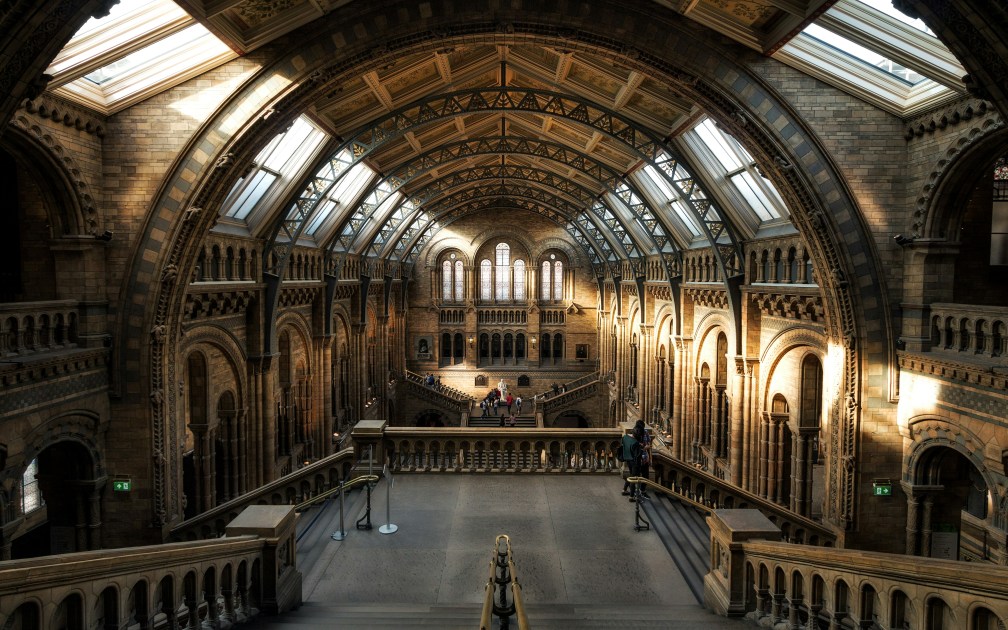
Interior of a museum

The Museum of Language

Interior of a museum
Photo by Claudio Testa

When celebrated linguist Dr Sophia Lindstrom dies, her soul is brought to the Museum of Language, which displays everything she’s ever said, written or thought in her life. The exhibits are set out like concordances, each entry displayed in a different room. 

The first room showcases Give and its phrasal-verb variants. Give up, give in, give out, give over. The words have a power Sophia did not recognise when she was alive. A stream of fluid light flows from her. She is, quite literally, drained.

The Take exhibit is similarly exhausting. Take in, take over, take up, take on, take down, take after, take back. A sombre burden has been placed upon Sophia’s ethereal shoulders. A tyrant’s epaulettes.

She pulls herself from the room only to find the other exhibits have been cordoned off. The implication—that her life has been nothing more than give and take—is too distressing to contemplate.

A benevolent docent appears and leads Sophia to a quiet, spacious room, empty but for one word. Inhabit. The in sits more stably as prefix to the Latin-derived verb, Sophia observes, than as particle in the Old English equivalent, dwell in. She does not dwell on the implications—that phrasal verbs may contribute to the growing segmentalization of analytic languages. Instead she settles herself gently into the armchair that may have always been in this room and allows her newly dead self the exquisite pleasure of inhabiting the language of her life.


Would you like to know more about this story? I discuss it in Episode 103 of Structured Visions. You can also sign up to the Grammar for Dreamers newsletter to get monthly updates on the ideas that inspire my work.

Whirling dervish with abstract brightly coloured ribbons swirling around

Coming of age

Whirling dervish with abstract brightly coloured ribbons swirling around

In the old days, the more hopeful days, when we knew the power of language, the second person came first. We would wrap the child in a cocoon of benedictions, the grammatical structure unchanging: [second person subject]-[copula]-[complement]. The complement always a compliment. 

You are precious. You are our great joy. You are valuable beyond measure. You are a gift. 

The clauses would nourish and protect the child until their inner voice, the incipient I, whispered it was time to emerge. Everyone would gather to unwrap the language-formed chrysalis, each of us unwinding one thread of syntax in a complex, joyful dance. A blur of bright Maypole ribbons unravelling. The gauze of second personhood removed, the I would now spin in its own abundant freedom, a dervish whirling with unbridled possibility.

No one now remembers the coming of age ritual. The young are still wrapped in language, but the complements are insults, and no one thinks to unwind them. The cocoons harden and fester, poisoning the person trapped within, condemned to stumble through the world like a mummified zombie, never to dance.


Would you like to know more about this story? Sign up to the Grammar for Dreamers newsletter to get monthly updates on the ideas that inspire my work.

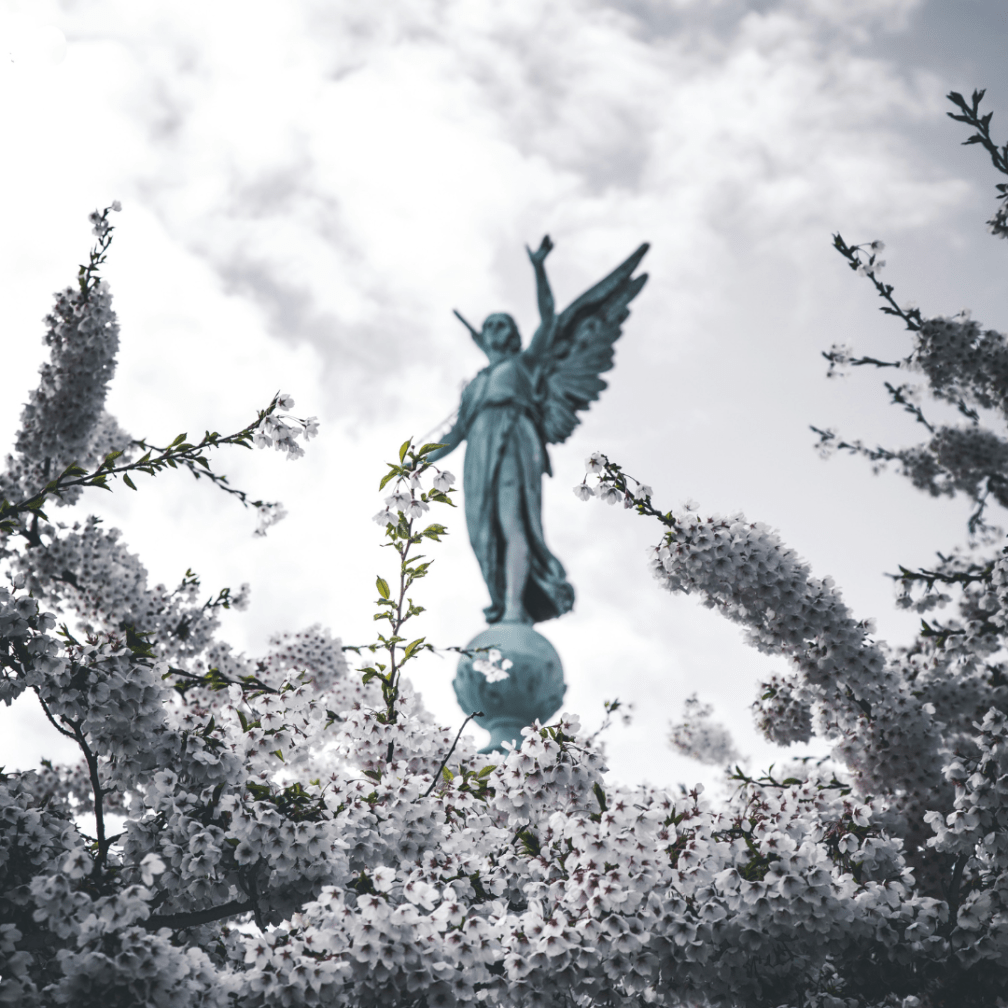
low angle photo of a statue of an angel framed by a blossoming tree

Ego angels

low angle photo of a statue of an angel framed by a blossoming tree
Photo by Kasper Rasmussen

The Bright Angels had just lost their war against the Dark over the fate of humankind. They were forced to concede to the Dark side’s plan to give the humans language. They proposed one condition: no pronouns.

Out of the question, protested the Dark Angels. It’s cumbersome to always have to call everything by its name. The humans would drop language entirely, and the Bright side would have won by default.

‘No personal pronouns, then.’

The Dark Angels agreed to remove one (but only one) as a gesture of goodwill.

The Brights chose the first-person singular. I, me, je, moi, yo, ego, etc. If the humans had no egos, perhaps not all would be lost.

All would be lost, as of course you know. It was the Bright side’s fault. One of their own angels, an overly enthusiastic fledgling called God, dropped down to Earth to show off a few Bright party tricks. 

‘Who are you?’ wondered the awestruck humans. 

‘I am that I am,’ he proclaimed. 

The Bright side gasped at the blunder.

But there was no turning back. Ego had wormed its way into the garden of human consciousness. Already it was preparing the soil where the Dark Angels would plant their miracles.


Would you like to know more about this story? I discuss it in Episode 101 of Structured Visions, You, me and big egos. You can also sign up to the Grammar for Dreamers newsletter to get monthly updates on the ideas that inspire my work.

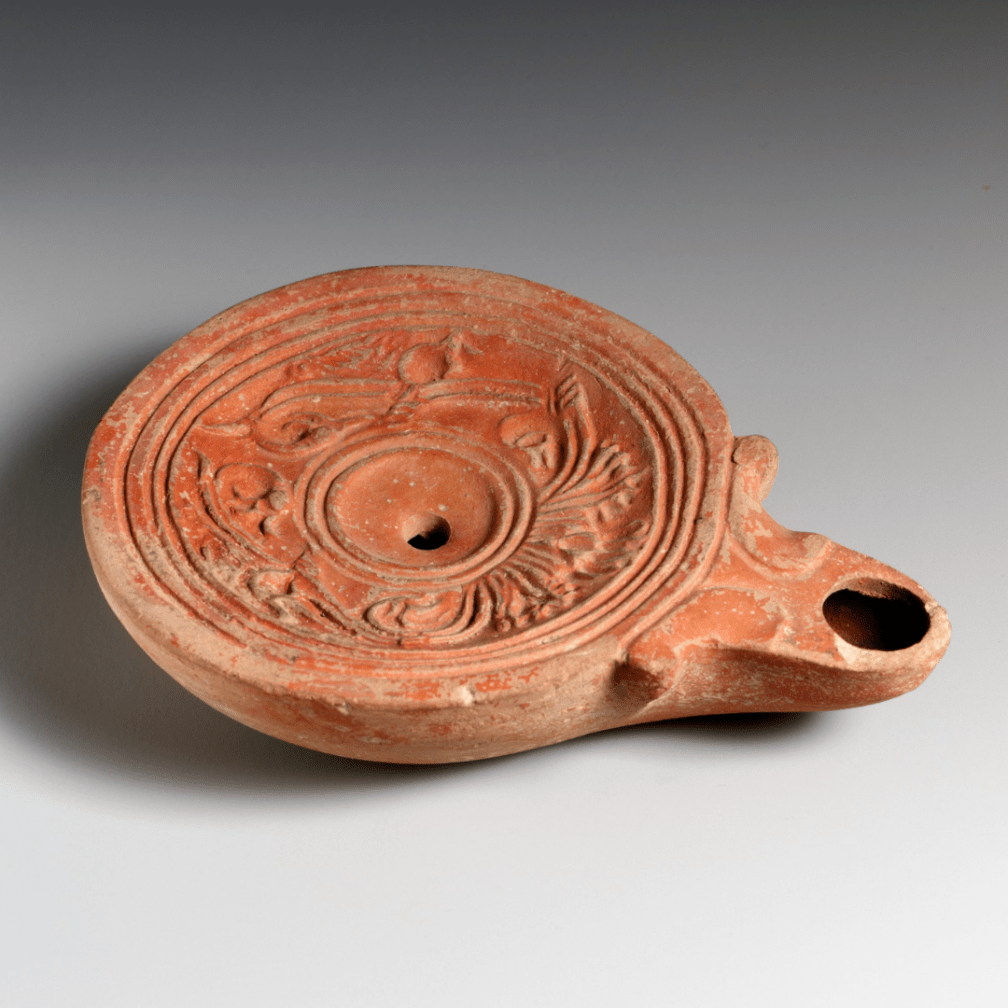
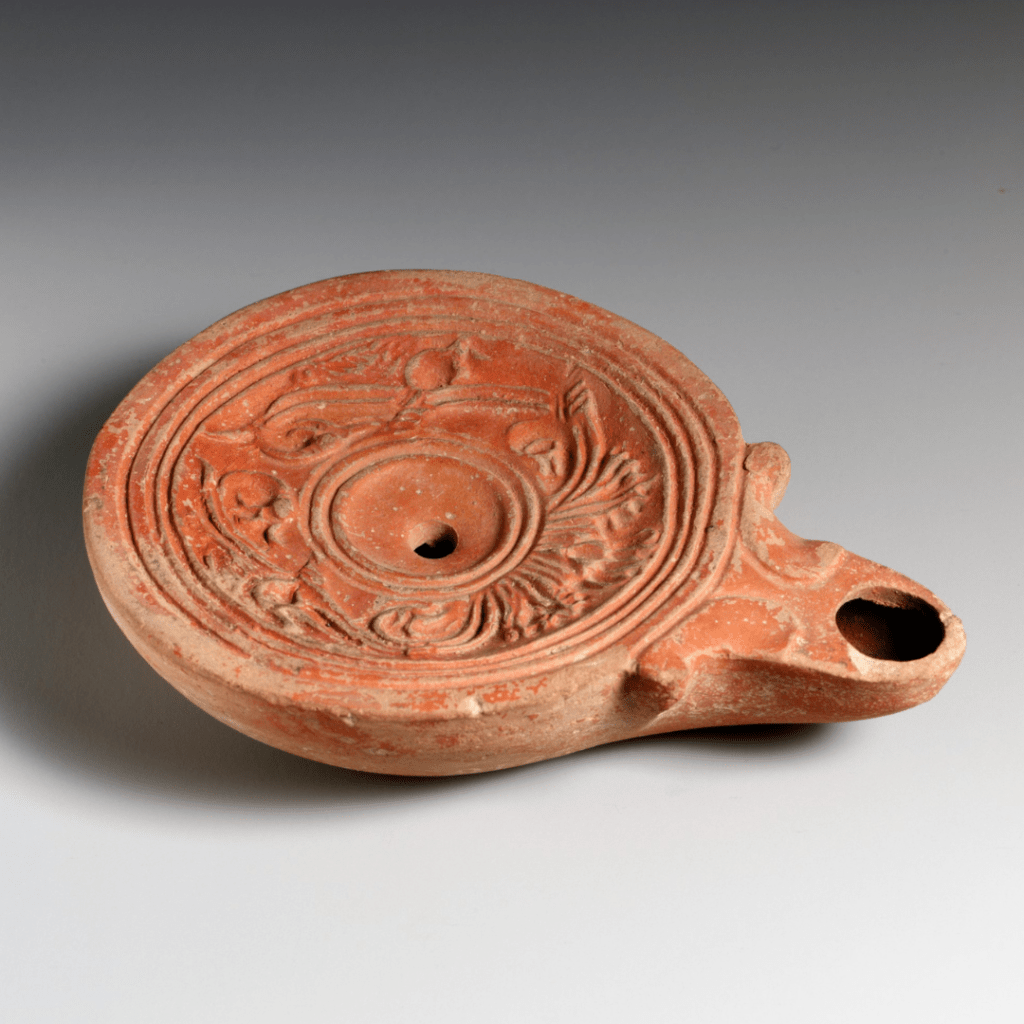
Ala’s lamp

Terracotta oil lamp
Image in the public domain, accessed from The Met

The first human language was found in a cave in sub-Saharan Africa. Ala, having stubbed her toe on something hard, reached down to find a vessel hidden in the dust. With her finger she traced the pattern etched on the exterior—a line, scrolling and resolute, like the tracks of a grysbok.

Her fascination released a hidden genius. Language emerged like a quill of smoke from a distant fire. When she inhaled, it inhabited her. 

The first human utterance began ‘I wish.’ What followed gave birth to all that we now know of self, family, nation, world.

The original stone vessel has never been found. Some hopeful archaeologists believe it was not emptied when language was released on its unsuspecting host. These describe not a receptacle, but a light source: Ala’s lamp. Inside they believe can be found one last mystery, the wish before the wishing utterance, the desire of language itself.


Would you like to know more about this story? I discuss it in Episode 100 of Structured Visions, ‘Selfish wishes for social change’. You can also sign up to the Grammar for Dreamers newsletter to get monthly updates on the ideas that inspire my work.

Beyond desire

Blurred colourful lines of script running on a computer monitor
Photo by Markus Spiske

‘Welcome to the History of Scientific Progress. It is my hope that as we explore the foundations of our everyday technologies, they will become a little less commonplace, a little more—I use this word advisedly—miraculous, and you will have a greater appreciation—even awe—for the advances we’ve made as a species.’

The virtual classroom is equipped with Destiny, the latest generation Linguistic Manifestor App, which Professor Allport has surreptitiously set to run in the background during the lecture. As she speaks she tracks the programme’s live scripts. She is unsurprised to see the irrealis clauses in her introductory remarks (they will become a little less commonplace…you will have a greater appreciation) successfully translated to realis.

A rush of enthusiastic responses suggests that it’s working. The everyday technologies are already less commonplace. The students are already in awe.

‘I’ll invite you now to think back to the time before we knew about the linguistic field. As you know, the linguistic field is more localised and thus more subtle than other fields—electromagnetic, gravitational, quantum, etc.—and much time was wasted in convincing the scientific community that it even existed.

‘As we’ll discover on this course, lay people often have intuitions about scientific phenomena prior to their discovery and validation in the academic community. This was the case with linguistic manifesting. Individuals who wished to manifest something in their lives would often make use of affirmations—painstaking processes of verbally translating the irrealis into the realis. People used affirmations to change their irrealis desires (I wish I were thin and attractive) to their realis expressions (I am thin and attractive).’

The students respond with giggling emojis. It’s amusing to them to think of a time when people weren’t thin and attractive.

‘Manifesting through a verbal channel is so slow and requires such consistent repetition that it very seldom produces results. With the discovery of the linguistic field, we’ve been able to bypass the verbal channel and change the programming from irrealis to realis instantaneously.’

The professor notes an aggressively toned message in the discussion feed and inwardly sighs.

What about hyperrealis?

Do they think the question is original? Every year the course attracts students who fancy themselves revolutionaries, pontificating in favour of the absurd idea that a mode exists that transcends realis and irrealis. 

Hyperrealis, they believe, is a ‘third space’ where desires are not immediately granted. Hyperrealis is supposed to usher in a new collective reality, a new way of being or thinking, beyond desire. 

‘Hyperrealis is a fantasy,’ she used to say, which inevitably provoked dissent.

Now she says nothing, but shoots her desire at Destiny. ‘I wish they’d not asked the question,’ she thinks.

They’d not asked the question transforms immediately into realis and the world is set to rights.

The question has never been asked.


Would you like to know more about this story? I discuss it in Episode 100 of Structured Visions, ‘Selfish wishes for social change’. You can also sign up to the Grammar for Dreamers newsletter to get monthly updates on the ideas that inspire my work.

Entanglement

It came to me in the shower. What if the linguistic systems on PA-99-N2 were somehow connected to ours on Earth? An entanglement, of sorts.

The models were showing an exciting possibility of intelligent life on the Andromeda planet, but we had no feasible way of contacting them. It would take over two million years for an electromagnetic signal to reach them, and at least as long to receive something back. 

But if entangled particles could transmit information faster than the speed of light, why not entangled languages?

Down the corridor my daughter’s bedroom door slammed. Determined not to let her teenage drama interrupt my Eureka moment, I wrapped my hair in a towel and headed to my desk to jot down some notes. What words or phrases were most likely to produce responses? 

Rose was weeping now, her wheezing, voiceless gasps breaching the sound barrier of the locked door. 

I pulled the towel over my ears and wondered what triggered this particular episode. Mud stains on her new shoes? An unacceptable item in the lunch I’d packed? My decision to shower in the middle of the day?

Greetings, I thought, are often returned with greetings. Hello? Woefully inadequate. Something more formal, perhaps? Peace be with you. 

The sobbing louder now.

Questions? I wrote. They invite responses.

Can I come in?

Relief from Rose as the door swung open and she threw herself into my arms. 

And astonishment later, when I returned to my notepad.

Please do. 

The handwriting not my own. The answer as miraculous as my daughter’s entangled embrace.


Would you like to know more about this story? Sign up to the Grammar for Dreamers newsletter to get monthly updates on the ideas that inspire my work.

Experiment

The experimentation protocol has been the most difficult thing to get right, specifically the initial briefing. How to explain to a participant what will happen when you strip them of their language? It might be easier if their assumptions about human language weren’t so ill conceived. 

We start by debunking their ideas about the relationship between linguistic expression and sensory data. The former, they inevitably believe, is a tool for communicating the latter. 

‘Not quite,’ we correct them. ‘Language restricts the information your senses gather. It filters, constrains, distorts.’ We guide them through a task designed to help them experience the limiting quality of linguistic structure: Look without describing (even inwardly) what you see. 

The task helps participants grasp the constrictive function of language, but it unhelpfully introduces a new bias. Now participants anticipate that being stripped of language will produce experiences of ‘oneness,’ nonduality, a world without distinctions, a blurring of boundaries. 

We’ve not yet been able to prepare them for what really happens.

Without human language, the world sharpens. It comes into greater focus. Objects don’t blur, they individuate. They resonate each to their own distinct harmonic, the world a symphony, inestimably complex, unyieldingly singular. 

Or so we believe. We have no corroborating reports. The participants, returned to their language, lack the capacity to describe the world without it. The experiment renders them bewildered and speechless, leaving as record only the ineffable yearning in their tear-glistened eyes.  


Would you like to know more about this story? Sign up to the Grammar for Dreamers newsletter to get monthly updates on the ideas that inspire my work.