The grammar of your beginning

A string of wooden and glass beads on a painted wooden surface
Image by Alexey Demidov

When did I begin?

You have never begun. You will not end.

This response never satisfies you, so I must tell a less true tale, of the time when you began to know beginnings.

Think of a treasured thing that is yours alone—a doll, a puppet—made after your image, perhaps, who knows nothing but how to love you.

One day an adornment appears on your doll’s neck—a filament, a thread—almost too fine to be perceived, draped restlessly between head and heart.

The thread is a razor-sharp, severing thing, a fibre of spun glass. 

It sets the doll’s soul to longing. Your own soul’s love is stronger than the loneliness this longing foretells.

One day the doll awakens to find a jewel box filled with iridescent beads and a needle for stringing. With the patterns she forms, she fashions the syntax of her own beginning.

Imagine that you knew, from the beginning, that in her beginning you would meet your end. 

Would you still offer your treasured thing the ornaments of your own destruction? Would you unearth these beads from deep beneath the sediment of your wisdom, grief and love?

You have never begun, and you will not end, but the grammar of your beginning spells the story of my end.

Possessed

Wolf pack on a rock formation
Photo by Thomas Bonometti

Each fibre of fur is a strand of awareness. Each press of paw pad on the earth a moment of contact. We gather under the full moon in a sacred geometry as aligned with the astronomical expanses as any stone circle. The finely tuned notes of this howling symphony transmit the Earth’s wisdom to the stars.

A litter of freshly whelped cubs is both a miracle and a liability. We watch them each diligently, perhaps obsessively.

At the first sign of possession, a decision must be made. By what might the youngster be possessed? Can such possession be outgrown?

We’re on guard for clear signs the taint is growing stronger. Possession becomes apparent in the grammar of the cub’s eyes as he stares at the mother. ‘Mine,’ he thinks. He notes a unique fleck of white below the dam’s chin. ‘Hers.’

Possession destroys unity and must be stopped before it can grow. A merciful killing is sometimes required. Such measures pain us, though, and howls become mourning songs.

If we are travelling near a place where people live, we’ll sometimes deposit the cub on the threshold of a human dwelling. We stay distant, waiting for the cub’s new owners to discover it there, their miracle puppy, their adorable stray.


Would you like to know more about this story? I discuss it in Episode 79 of Structured Visions. Subscribe on Apple podcastsSpotify or wherever you like to listen.

Grandmother’s broach

Young Black woman wearing chef's whites and an apron in an industrial kitchen
Photo by Jeff Siepman

Her grandmother’s mental decline has coincided with Lisa’s own intellectual ascendance. Soon after finding a discipline worth pursuing at master’s level—linguistics—Lisa lighted upon a topic for her capstone project.

She first discovered it when listening to Nana’s verbal ramblings. There’s a structure to them, she thinks, something she’s not yet seen discussed in the literature. 

The pattern becomes even clearer as Lisa transcribes the data. Her grandmother consistently speaks in clauses without subjects.

‘Worked in the bakery.’ Lisa took the recordings at her grandmother’s bedside in the assisted living facility. Now she meticulously captures the many times Nana has repeated this same subjectless utterance.

Finally she hears her own voice interrupt the pattern. ‘Who did?’

Her prompt seems to have pushed the conversation forward. ‘Always covered in flour. Head to toe in flour. Always baking, always kneading. I kneaded, too.’

Lisa pauses the recording, noting the first occurrence of a clause with a subject—the first person singular—and puzzles over her transcription of the past tense verb. Kneaded. She hesitates, reflecting on the homonym, and types [needed?] in brackets.

I needed, too.

The more she listens, the more she’s inclined to think need is the intended verb.

It’s a love story she’s recorded, she realises, and the baker lover is clearly not Nana’s husband. Lisa’s grandfather was never a baker, as far as she knows. He worked as a partner in his father’s law firm.

Like a detective pursuing a lead, she types out the subjectless clauses and rewrites them, filling in the blanks.

My first love worked in the bakery, she tries. He was always covered in flour. He was always baking, always kneading.

She plays the next segment.

Sixteen years old. Owensboro.

A quick text to her mother confirms her suspicions: 

Where did Nana live as a girl?

Owensboro, KY. Why do you ask?

Thanks! Will explain later. Lisa does not notice the family resemblance in her own subjectless reply. 

She Googles ‘Owensboro’. One fact about the town’s history stands out: it was the site of the last public hanging in the US. Families travelled from far and wide to enjoy the event, their children gorging on hot dogs as they watched the dead man swing. 

That was in 1936, the year Nana turned 16. The condemned was a Black man. 

She tucks the information away in the files of her mind. Best to avoid distractions, she thinks. She plays the next bit of the recording.

‘Head to toe in flour,’ she hears. ‘Used to tease me. White, like you.’

Lisa amends her transcript to place the last utterance in quote marks. Context dictates that it would have been the baker lover, not Nana herself, who was covered in flour. ‘White, like you’ would have been the teasing remark.

What she now knows about the dangers of Owensboro, Kentucky in 1936 has pushed itself tenaciously to the forefront of her mind, like the noun phrase at the upper left position in the top branches of a syntax tree. The subject.

If her grandmother’s lover teasingly described his flour-covered self as ‘White, like you’, then Nana’s first love could not have been, himself, White.

The next line of the transcript reveals a subject even more taboo.

‘Warm and sweet. Breasts like cinnamon buns.’

Her headphones convey the girlish giggles of her former, senseless self. ‘It’s probably not a good idea for me to write about your breasts in my paper, Nana.’

Her grandmother’s response travels forward, to the future subject, whose ears are pricked to pick up what her earlier version could not hear.

‘Not my breasts. Hers.’

With the possessive feminine pronoun, Lisa realises, her grandmother has revealed the missing subject. The subject itself possessive and feminine. The subject as object—of a forbidden love story, Black and female, lost to time and history, like so much that is Black and female, never broached until now, in this place of syntactic safety, where words will no longer condemn.


Would you like to know more about this story? Check out my behind-the-scenes post on Patreon.

Astray

computer cell processer
Image by Brian Kostiuk

The only thing Chuck Quince can remember about his trip to the future was that they’d invented a machine that could make a book as big as the Bible so small that it would fit on the head of a pin.

The idea of all those verses pressed together so tightly made Chuck nervous. Important words could get squeezed out, like the ‘not’ in ‘Thou shalt not commit adultery’, and folks would be led astray.

It was bad enough knowing that time folded over on itself, and that all it would take to shoot him onto some future layer was making it to the bottom of a couple of jars of Jim O’Grady’s moonshine.

But all the words of a whole book curled up all together, small as a mustard seed?

Surely the meanings would get twisted too, like the twists and turns of fate, like the confounded syntax of Chuck’s roiling thoughts.


Would you like to know more about this story? Check out my behind-the-scenes post on Patreon.

Finite

Silhouette of people standing on a rock at sunset, their hands in the air
Photo by Natalie Pedigo

Sentences losing binding power.

Verbs shaking loose from subjects.

Clauses dropping phrasal components.

Words falling away, like pearls untethered from strings.

The mass extinction eventually happened, yes, but it was not human lives that were lost. It was human language. It had occurred to no one that syntax was a non-renewable resource.

Humans populated the planet as widely as before, but now they remained speechless. Textless.

A collective human silence rose to the starry heavens, bearing strange melodies on its wings, songs that may have always existed, but that no one before ever could hear.

The planet was at peace. Its people were finally happy.

The stores of language replenished, very gradually at first. 

Once every decade or so a child would be born who was notably different from the others. 

Agitated, problem children, they seethed with an inner, unexpressed flare of fury. Their families feared them.

These were the children to whom language had returned.


Would you like to know more about this story? I discuss it in Episode 72 of Structured Visions and in my behind-the-scenes post on Patreon.

Whale song

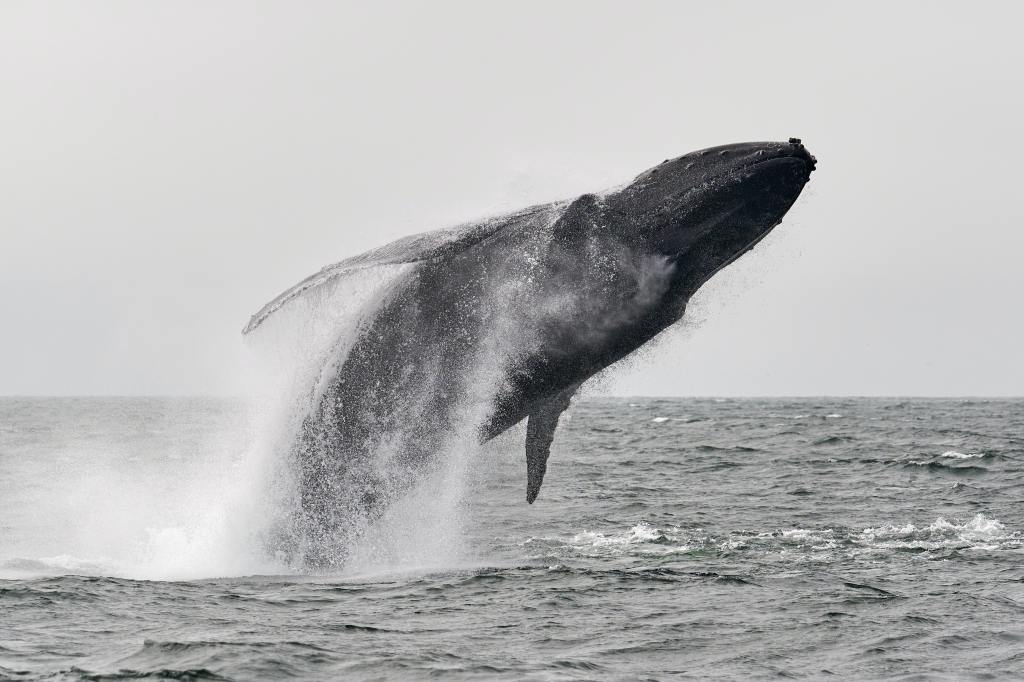
Greyscale photo of a humpback whale leaping from the ocean
Photo by Mike Doherty

‘You’re frigid, you’re rigid and you have no soul.’

Jack’s break up words played in Evie’s head like a haunting melody on repeat. 

These were not his exact words. What he’d actually said was something like, ‘I dunno, babe. I can’t put my finger on it. It’s like it’s impossible to loosen you up. Sometimes I look at you and it’s like, you’re not even there. Nobody home.’

He was a little stoned when he said all this, but she knew he didn’t regret it, because he got together with Cassandra Carrington the next day. They were relentless in their mutual affection. They both signed up to do a summer semester at sea so they wouldn’t have to spend their vacation apart.

Against her better judgment, Evie signed up to the same program. She’d imprinted on Jack like a duckling on a pitbull. She couldn’t keep herself away from him, no matter how cruel he was to her.

They were learning about marine mammals. Evie couldn’t concentrate. She wasn’t good at environmental science or biology. These subjects were too messy, fraught with error and doubt. She preferred math. Computer science. Linguistics.

A specialist on whale songs joined their boat when they reached Maui. She taught them that male humpbacks sing to each other in low frequencies that can span up to 10,000 miles of ocean. She played them some of their melodic sequences, and pointed out how the whales changed them slightly over time. The students listened to her recordings with appropriate awe.

‘That’s a beautiful song,’ Jack crooned, his hand stroking the back of Cassandra’s neck.

A beautiful song.

The phrase jolted through Evie like an electric current. It was decidedly not a beautiful song. It was absurd to say such a thing. It was—what was the term?

Ill formed. 

The term they used in linguistics to label an expression that a native speaker would never utter.

The whales would never say it was a beautiful song

They’d say—they were saying—singing—that it was a gathering song.

The humpback songs were not just melodies, they were strings of syntax—a series of noun phrases, with the noun and indefinite article remaining ever constant: a song, a song, a song. What varied was the adjective that preceded the noun. It never-failingly referred to the song’s purpose.

A gathering song.

A loving song.

A healing song.

A journeying song.

Sometimes, in the response times, the whales would insert an evaluative adjective, but this new addition never occurred alone in the phrase. It always accompanied, and preceded the purpose adjective.

A beautiful gathering song.

A raucous loving song.

A helpful healing song.

A circuitous journeying song.

The whales would never utter ‘a beautiful song’. A phrase without a purpose adjective would always be ill formed.

Evie listened to recording after recording to validate her findings. A new tune formed in her own mind, a response to the whale melodies. A discovery song.


Would you like to know more about this story? Check out my behind-the-scenes post on Patreon.