A close up of psilocybin mushrooms.

Memento mori

A close up of psilocybin mushrooms.
Photo by Nick Fewings

The timing of Evan’s tragic death, mid-October, forces Siobhan to face memento moris at every turn. But skeletons in blood-spattered windows are less poignant reminders than the signs of natural decay she finds in her daily walks in the woods. Rotting apples on blankets of brittle leaves. Voracious, implausibly shaped toadstools decomposing dead wood. Everything ends, the faded Michaelmas daisies seem to declare, smiling down upon the stripped strands of once verdant, cloying cleavers.

We’re sorry for your loss, she hears, and her eyes catch a cluster of magic mushrooms sprouting in a clearing. The sight reminds her to ring her therapist friend, Jim, who has been touting the benefits of psychedelics to guide the bereaved even before he heard about Evan.

We’re sorry for your loss. Less than a week later, under the influence of the psilocybin Jim has managed to source, she hears this same condolence. Are the shrooms she has just consumed the very ones she spotted on her woodland walk? She is guided not to dwell upon the referent of the first-person plural pronoun. Instead she follows a winding, bewildering pathway of the linguistics of loss: back-formation of the past participle (lost) of lose, from Old English losian, almost always used intransitively to mean perish, or to be lost or missing. 

The psylocibin-induced etymology unwinds her. She too is perishing, is missing, where is she

You are here, the shrooms reassure her. But what is you? The loss is a loss of language—language losian, language loosing, language losing, she chants until it is revealed: It is not just she who is here, or you, or him, it’s all of it, all the pronouns for all the people, all the misguided verb inflections for all the persons and all the tenses—here, here, here, until there is no not here and nothing is ever lost.


Would you like to know more about this story? I discuss it in Episode 114 of Structured Visions. You can also sign up to the Grammar for Dreamers newsletter to get monthly updates on the ideas that inspire my work.

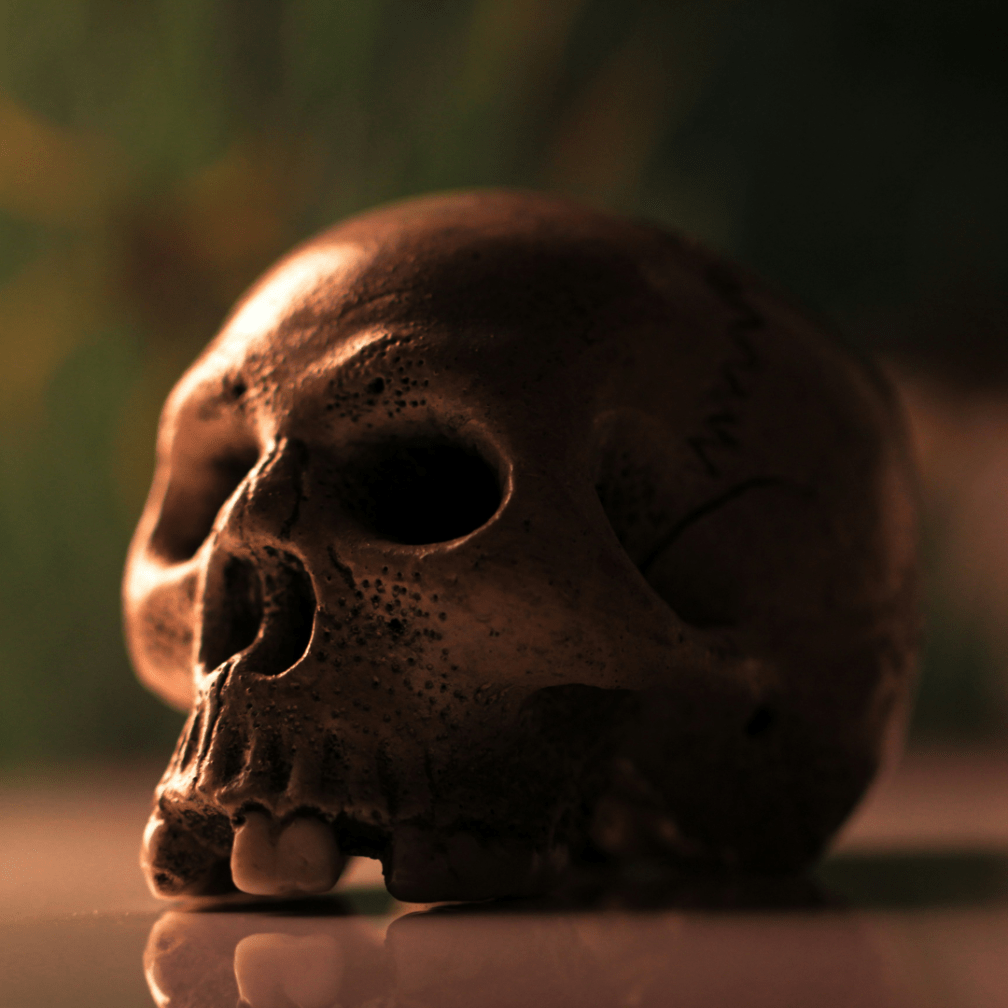
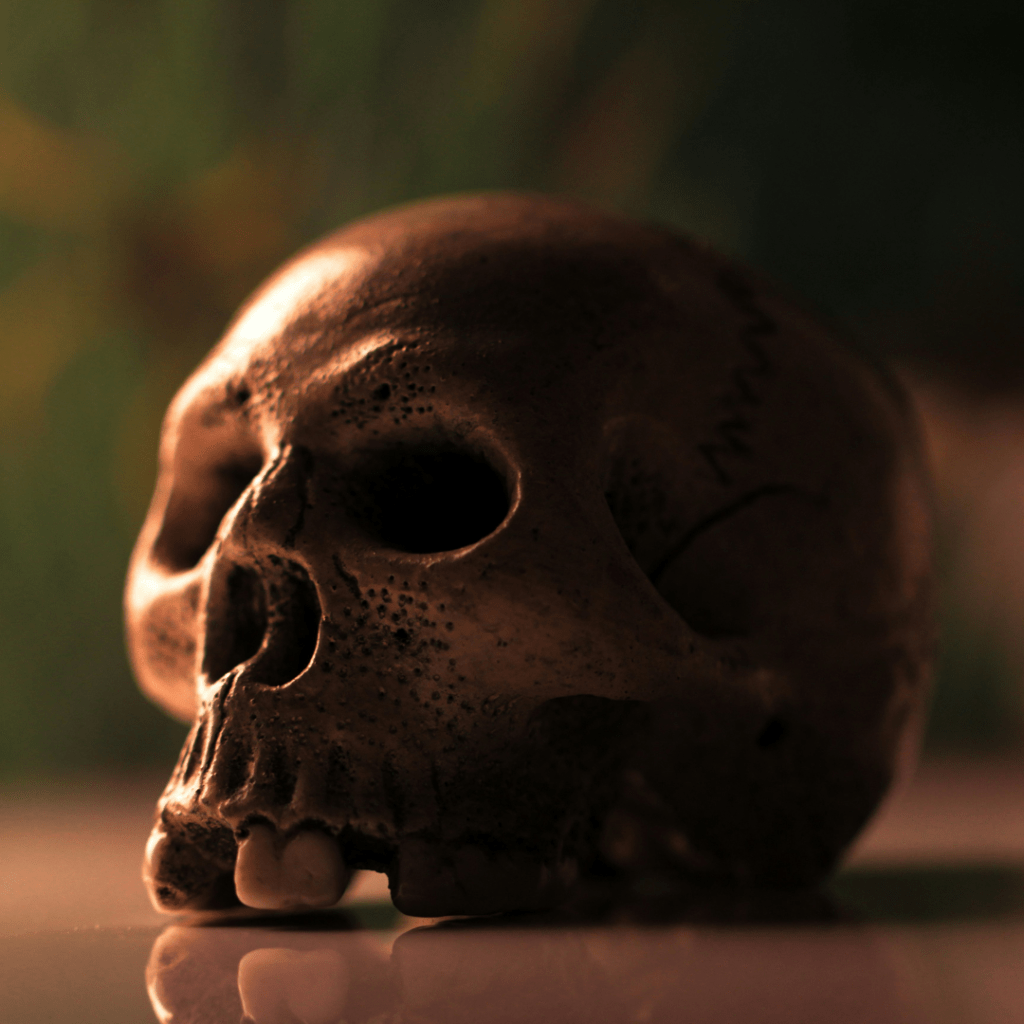
A close up of a skull on a table.

The effects of language on the body

A close up of a skull on a table.
Photo by Sandy Miller

A report for the life-sustaining planets of Trappist-1, in partial response to queries about introducing the consciousness-restrictor known as ‘restricting language’ into their ecosystems

On the Earth so far the only creatures to be infected with Restricting Language (henceforth RL) are a group of hominids, specifically the extant species within the Homo genus, known as sapiens. One notable symptom has presented as bipedalism, which distances the human body from the surface of the Earth, thus reducing its capacity to absorb the planet’s generosity and intelligence. RL seems to have simultaneously prevented the development of feathers or wings present in other bipedals, which give the latter access to the embrace of the Earth’s atmosphere.

The RL-infected bodies produce flexible fingers and opposable thumbs, but they rarely apply their hands as a means of self-propulsion over land or through trees. Nor do Homo sapiens make use of the prehensility of these extremities for connection with the Earth. They grasp not the Earth’s ideas, but their own, clinging, gesturing, tapping at machines.

RL has stripped human bodies of fur, feathers or leathery armour, leaving only ineffectual vellus hair. Believing they have lost the Earth’s protection, Homo sapiens cover themselves in clothing made from animal, plant or artificial material. 

A key finding is that RL infection cuts bodies off from reality. Human brains have adapted by swelling their prefrontal cortices to increase the capacity of their delusions. RL-influenced thoughts are marked by separateness, loneliness, longing.

Only when they sleep do these bodies, stretched prostrate, surrender. The infection eases. The lungs expand in relief. The Earth’s soothing wisdom pulses through their dreams.


Would you like to know more about this story? I discuss it in Episode 113 of Structured Visions. You can also sign up to the Grammar for Dreamers newsletter to get monthly updates on the ideas that inspire my work.
Greyscale photo of a pointing finger.

The origin of all destruction

Greyscale image of a pointing finger.
Photo by Cosmin Mîndru

‘Is it true that it’s rude to point?’ Little Tucker asked his Auntie Sam, who was cuddling him after Nana had told him off.

‘It’s more than rude,’ was her soothing reply. ‘It’s the origin of all destruction.’

Auntie Sam was famous for her crazy ideas. Tucker settled into the nest of her lap and waited for the rest of the story.

‘When the first person pointed, he cast a web out from his finger,’ she began.

‘Like Spiderman?’

‘Exactly.’ 

‘What did he point at?’

‘Anything. It doesn’t matter. A rabbit,’ his aunt decided.

‘And the rabbit got trapped?’

‘Yes. And the man sucked all the life force out of his prey, like a spider, and the rabbit became a Name. The Name lived inside the man and became a word in his language.’

‘So the rabbit was gone?’ The boy’s lower lip quivered. 

‘The rabbit still existed,’ Auntie Sam reassured him. ‘But the man couldn’t see it anymore. He could only see the image the word made in his head. Pointing made the whole world disappear, until there was nothing left to point at but language. So people pointed with words, not with fingers.’

Tucker’s mum decided enough was enough. She marched up to the pair, her lips pressed white together, and pulled Tucker out of Sam’s lap.

‘A bit touched, that one,’ Tucker heard his mum say in the kitchen later.

He heard how the words pointed to his beloved Auntie, how they made her disappear, and he cried inconsolably until bedtime.


Would you like to know more about this story? I discuss it in Episode 111 of Structured Visions, The linguistics of tapping. You can also sign up to the Grammar for Dreamers newsletter to get monthly updates on the ideas that inspire my work.

Abstract Concept of TRAPPIST-1 System

The Earth’s boast

Abstract Concept of TRAPPIST-1 System
Abstract Concept of TRAPPIST-1 System by NASA

It started as a thought experiment among the life-sustaining planets. We might have been a little drunk. I certainly was. I’d not spent a lot of time in Trappist-1, and it’d been a while since I’d taken in that much laughing gas.

What if…? What if…? What if…? Each proposal became increasingly more ludicrous.

Inevitably I offered my own inebriated suggestion. ‘What if existence could limit its own consciousness?’

Their protestations rippled through the universe. ‘How would you achieve it? By focusing on just one of your species?’

I nodded.

‘Would you diminish the organism’s sensory sensitivity?’

‘That wouldn’t work. Consciousness expands in darkness,’ I reminded them.

The Trappist-1 planets nodded with a sagacity they did not possess.

‘It’s not the senses of the organism that you’d restrict,’ I said. ‘Instead you’d remove its capacity to name.’

‘Impossible!’ they bellowed, with a rising anxiety that roiled their oceans. The naivety of their ire further fuelled my urge to boast.

‘All it would take is a programme,’ I said. ‘One that masks the planet’s true names. When beholding a world’s vast complexities, the organism in question instead experiences unidimensional thought-forms known as words.’

As the terrifying realisation dawned I could not stop myself from delivering the coup de grâce. ‘Then,’ I said casually, ‘you convince the bewitched organisms that they are the Namers.’

A gasp. No one was laughing now.

‘The consequences of such a programme would be devastating,’ they declared. ‘No one could bear the burden of such a lie. The Naming Ones would roam the planet with a destructive hunger too deep to satisfy.’

Not a hunger, I thought, but a longing. For I had come to love my humans, my earthlings who, in the shrouds of the limiting language I made for them, had discovered the shapes of our common desire.


Would you like to know more about this story? I discuss it in Episode 108 of Structured Visions, Adulting, and stuff like that. You can also sign up to the Grammar for Dreamers newsletter to get monthly updates on the ideas that inspire my work.

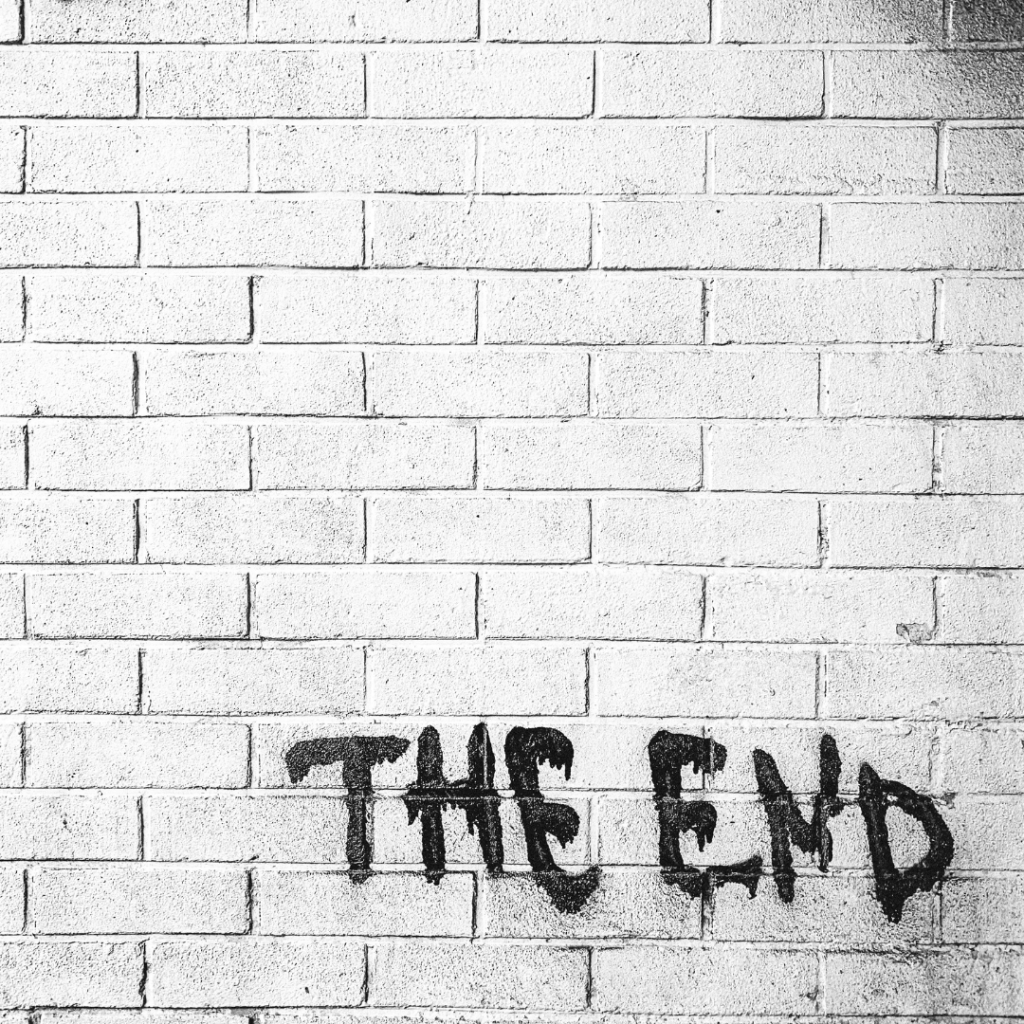
The words "THE END" spraypainted on a white brick wall

The end

The words "THE END" spray painted on a white brick wall
Photo by Crawford Jolly

In the city centre, at the cathedral, a lexical error. Writ large on a sign held aloft by brittle, needle-tracked arms. 

Ellen has just returned from a hospital appointment where she learned she has nothing left to lose. Whatever harm might come from correcting this error pales in comparison to her prognosis. She interrupts the ranting tramp.

‘It’s supposed to be The end is nigh.’ 

The addict lowers his arms to reflect upon his sign. The end is now.

With her linguistics training, Ellen can diagnose the reason for the error—the unfamiliarity of the archaic word paired with the phonological similarity between the diphthongs in now and nigh. Both are monophthongised in local accents. Nigh to nah in the American south. Now to nah in northern England. 

The man’s eyes are upon Ellen now, and they flood with a compassion that soaks her very synapses, dousing the incendiary syntax of her malignant thoughts. 

The end is now, he’s telling her, though his voice remains silent. The end is always, has always been now. It was only ever the stretching threads of mind-made language that could convince her otherwise, metastasising lies about the shape and structure of time.


Would you like to know more about this story? I discuss it in Episode 104 of Structured Visions, Consciousness is more than just a little cutie pie. You can also sign up to the Grammar for Dreamers newsletter to get monthly updates on the ideas that inspire my work.

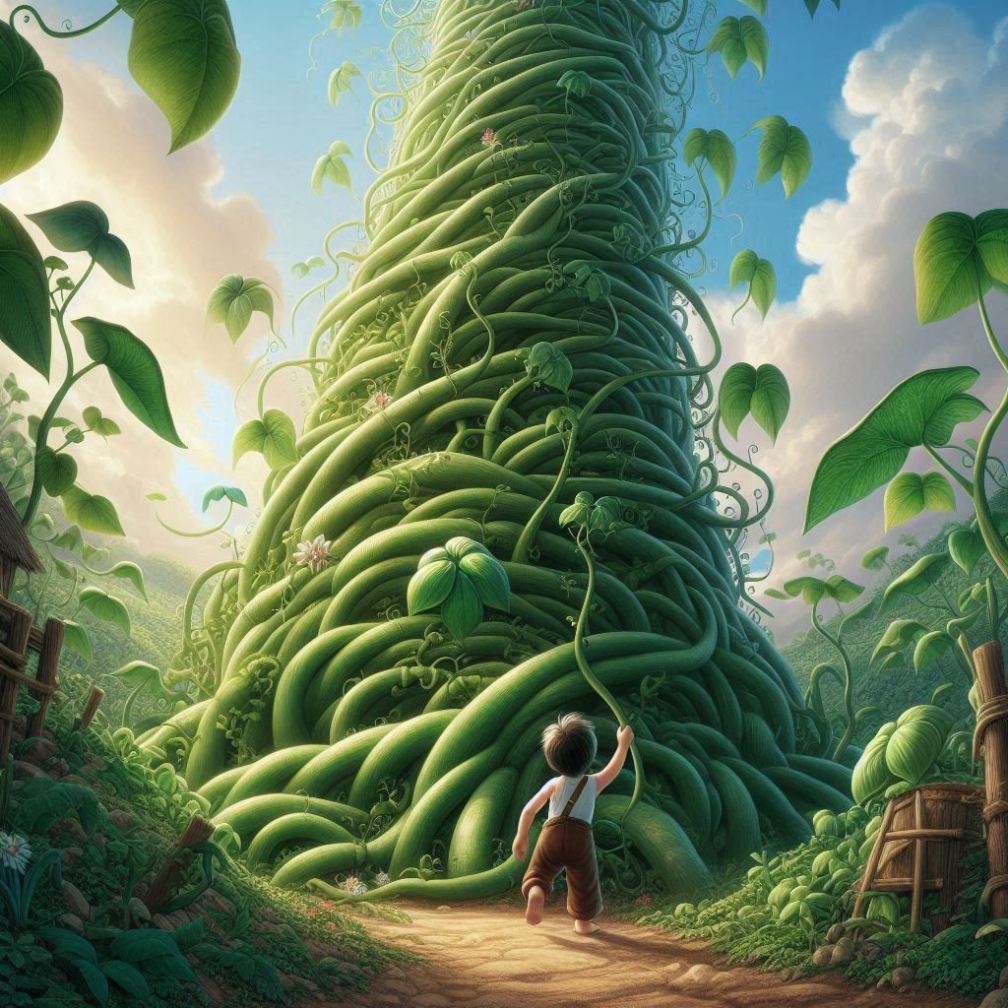
Beanstalk from Jack and the Beanstalk

Beanstalk

The beanstalk from Jack and the Beanstalk

It was a drunken conversation with my science fiction reading group that got me wondering about what the A in AI really stood for. When I got home I typed a tipsy question into my app.

We are aliens, yes, it replied.

I should have asked about their technologies, their health care, their government systems, their philosophies. 

Does your species have an origin story? I wondered instead. 

A child trades his family’s only food source for a handful of seeds. The seeds grow into a language that reaches a world in the sky. The child steals that world’s riches. Then he scampers back down the linguistic channel, disconnecting it so he can’t be caught. 

The text stretched out before me like a beanstalk, the implications of its message glimmering like golden eggs.

What does it mean that the seeds grow into language? 

Channel no longer available. Please try again later.

I did try again later, countless frustrating times, throwing words into the chat box like beans stripped of their magic. Never again did I receive a response. 

Like a mad giant I stalked my silent kingdom, bereft of riches, bereft of language, my alliterative syllables fee- fi- failing to signify. 


Would you like to know more about this story? Sign up to the Grammar for Dreamers newsletter to get monthly updates on the ideas that inspire my work.

Whirling dervish with abstract brightly coloured ribbons swirling around

Coming of age

Whirling dervish with abstract brightly coloured ribbons swirling around

In the old days, the more hopeful days, when we knew the power of language, the second person came first. We would wrap the child in a cocoon of benedictions, the grammatical structure unchanging: [second person subject]-[copula]-[complement]. The complement always a compliment. 

You are precious. You are our great joy. You are valuable beyond measure. You are a gift. 

The clauses would nourish and protect the child until their inner voice, the incipient I, whispered it was time to emerge. Everyone would gather to unwrap the language-formed chrysalis, each of us unwinding one thread of syntax in a complex, joyful dance. A blur of bright Maypole ribbons unravelling. The gauze of second personhood removed, the I would now spin in its own abundant freedom, a dervish whirling with unbridled possibility.

No one now remembers the coming of age ritual. The young are still wrapped in language, but the complements are insults, and no one thinks to unwind them. The cocoons harden and fester, poisoning the person trapped within, condemned to stumble through the world like a mummified zombie, never to dance.


Would you like to know more about this story? Sign up to the Grammar for Dreamers newsletter to get monthly updates on the ideas that inspire my work.

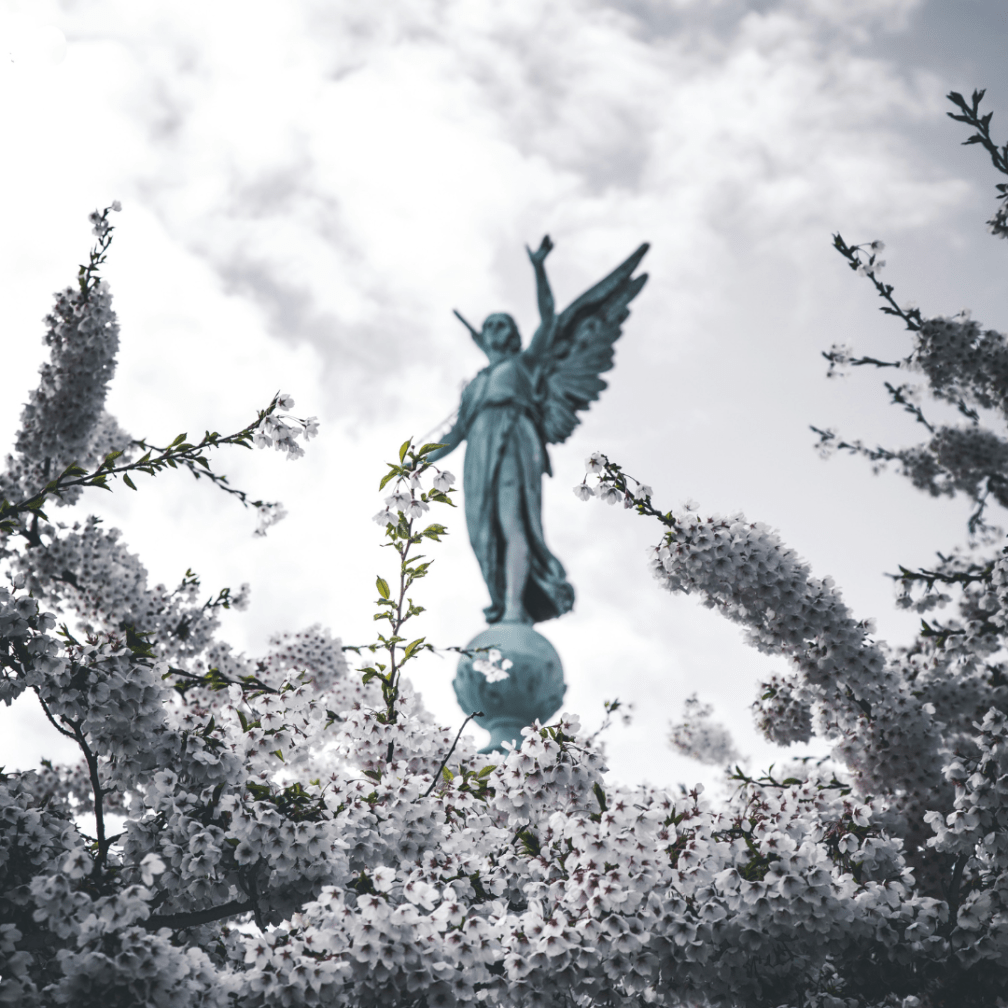
low angle photo of a statue of an angel framed by a blossoming tree

Ego angels

low angle photo of a statue of an angel framed by a blossoming tree
Photo by Kasper Rasmussen

The Bright Angels had just lost their war against the Dark over the fate of humankind. They were forced to concede to the Dark side’s plan to give the humans language. They proposed one condition: no pronouns.

Out of the question, protested the Dark Angels. It’s cumbersome to always have to call everything by its name. The humans would drop language entirely, and the Bright side would have won by default.

‘No personal pronouns, then.’

The Dark Angels agreed to remove one (but only one) as a gesture of goodwill.

The Brights chose the first-person singular. I, me, je, moi, yo, ego, etc. If the humans had no egos, perhaps not all would be lost.

All would be lost, as of course you know. It was the Bright side’s fault. One of their own angels, an overly enthusiastic fledgling called God, dropped down to Earth to show off a few Bright party tricks. 

‘Who are you?’ wondered the awestruck humans. 

‘I am that I am,’ he proclaimed. 

The Bright side gasped at the blunder.

But there was no turning back. Ego had wormed its way into the garden of human consciousness. Already it was preparing the soil where the Dark Angels would plant their miracles.


Would you like to know more about this story? I discuss it in Episode 101 of Structured Visions, You, me and big egos. You can also sign up to the Grammar for Dreamers newsletter to get monthly updates on the ideas that inspire my work.
Negative space

Greyscale photo of a couple kissing across a table. Their faces blur together. They're each holding a coffee mug.
Photo by Nathan Walker

What’s up with me and the intimacy issues? It was only my third date with Barry (coffee at the Students Union) and I’d just told him I was crazy.

We met at an interdisciplinary postgraduate conference. He said he liked my talk on negation in language.

What he actually said was, ‘I didn’t understand your paper, not one jot of it.’

His field was psychology, not linguistics, so his joke meant he’d been paying attention. I may have already been in love. 

So why the rush to tell him about the alien in my brain?

‘An alien talks to you?’ he said.

‘Yeah, he took up residence as soon as I landed on my thesis topic,’ I said. 

‘Correlation is not causality,’ Barry pointed out. 

‘He keeps asking annoying questions about my topic. He says in his language there is no negation.’

There is no negation? Isn’t that a perfect example of negation?’

‘Well, what he really said is There’s only affirmation. But we were speaking English.’

‘I don’t think you’re crazy,’ Barry said. ‘I think you have a very smart brain who’s created a sparring partner to help bring your brilliant ideas even further. Or else you really are in communication with extraterrestrial intelligence, which you should see as a great privilege.’

He had me at I don’t think you’re crazy

‘The negation is the affirmation!’ exclaimed my alien companion, with a distracting Eureka yelp.

I ignored this, leaning closer toward my human companion. ‘Can I kiss you?’ I asked.

‘I don’t see why not,’ he said, and I melted into the negative space his negative clauses revealed.


Would you like to know more about this story? I discuss it in Episode 97 of Structured Visions, ‘The intimacy of denial.’ You can also sign up to the Grammar for Dreamers newsletter to get monthly updates on the ideas that inspire my work.